-
Sevilla Cathedral and Giralda: Dec. 1, 2024
When planning a visit to the extremely popular cathedral and Giralda tower, I highly recommend buying the 12 EUR ticket online to avoid the paper ticket queue. I also suggest a later entry time to avoid the pressing crowds, especially when walking up to the top of the Giralda. I was through the line and inside the cathedral in under ten minutes.
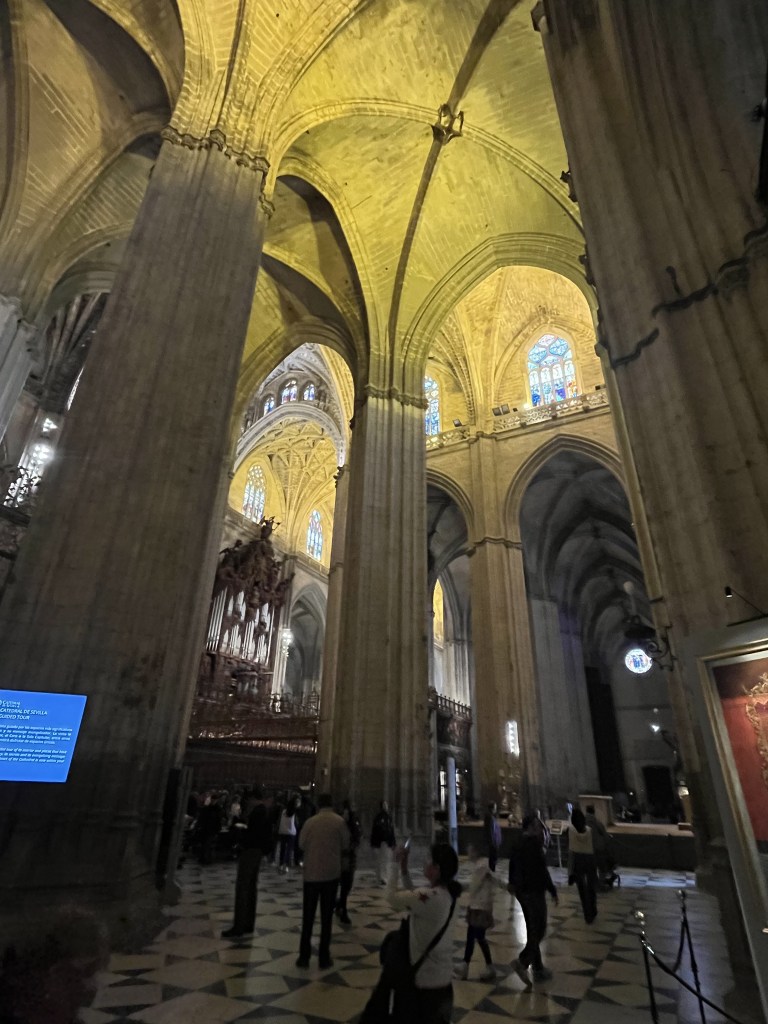
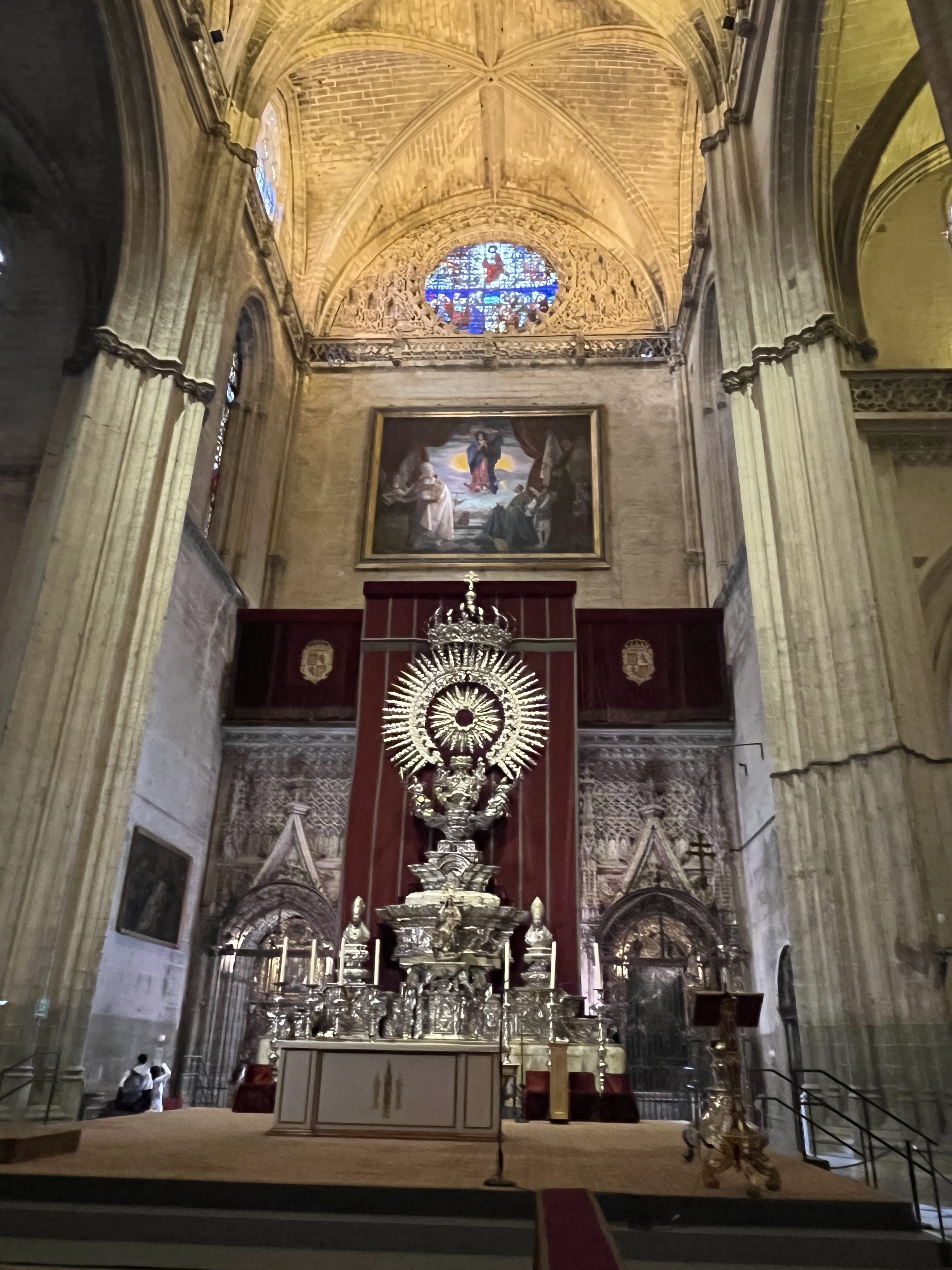
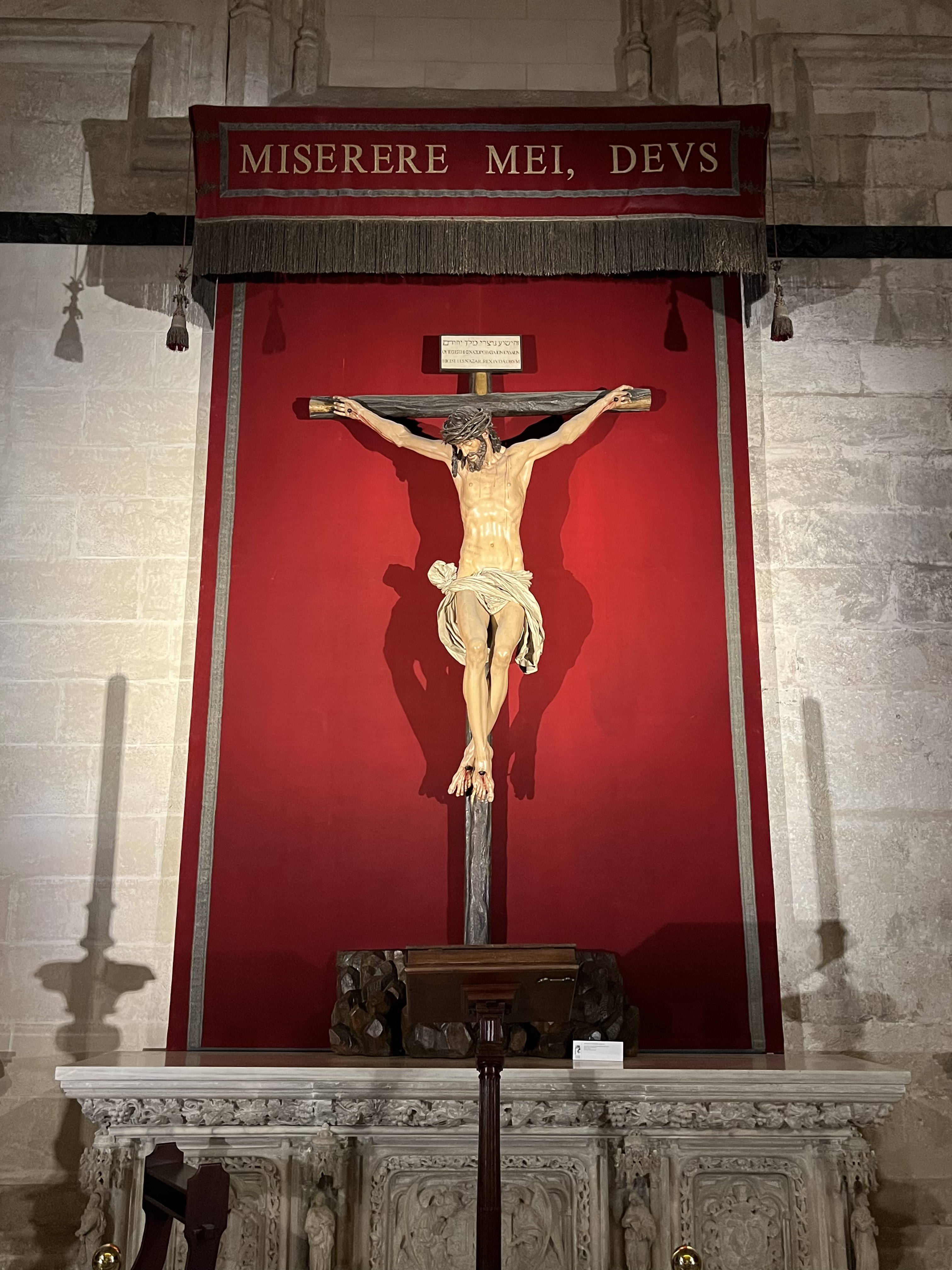
The Cathedral of St Mary of the See, as it’s officially known, was consecrated in 1507, 15 years after the fall of Granada and the full reconquest of Spain by Isabella and Ferdinand. It’s immense and, as I wrote earlier, full of world-class paintings and sculptures of most of the Spanish Masters, including Goya. It’s second only to El Prado in Madrid in the size and prominence of its collection. The silver and gold alone must be worth over a $100 million.
The wealth of the Spanish church during the Age of Discovery and for centuries afterward was beyond belief. During its imperial height, Spain colonized much of the Americas, parts of India and the Philippines, named after Philip II. With the massive trade in spices and precious metals, the Catholic Church was the beneficiary of royal patronage and wealth. Although Spain is largely non-religious today, for centuries Spain practiced a particularly intense and omnipresent Catholicism.
The Church exemplified the Catholic doctrines of The Church Militant and The Church Triumphant. It originated The Inquisition during Isabella’s reign, ostensibly to root out heresies suspected of the Conversos and Moriscos, respectively Jews and Moors who converted to Catholicism. Spain also secured approval from the Vatican to appoint its episcopacy without papal permission. The wealth of the Church ultimately engendered fury from the largely illiterate and poor masses, who viewed it as an oppressive overseer. This culminated in waves of anti-clericalism, especially after the election of the Popular Front government in 1936, when many churches, seminaries and monasteries were closed and priests and nuns were executed and imprisoned. The military coup against the Republic quickly seized Sevilla which is why the riches of the Cathedral were spared. During the three-year war the Nationalists, under General Franco, ultimately defeated the Republicans. The former were supported by Hitler and Mussolini, while the former were helped by the USSR and the International Brigades, about which Hemingway and many others wrote.
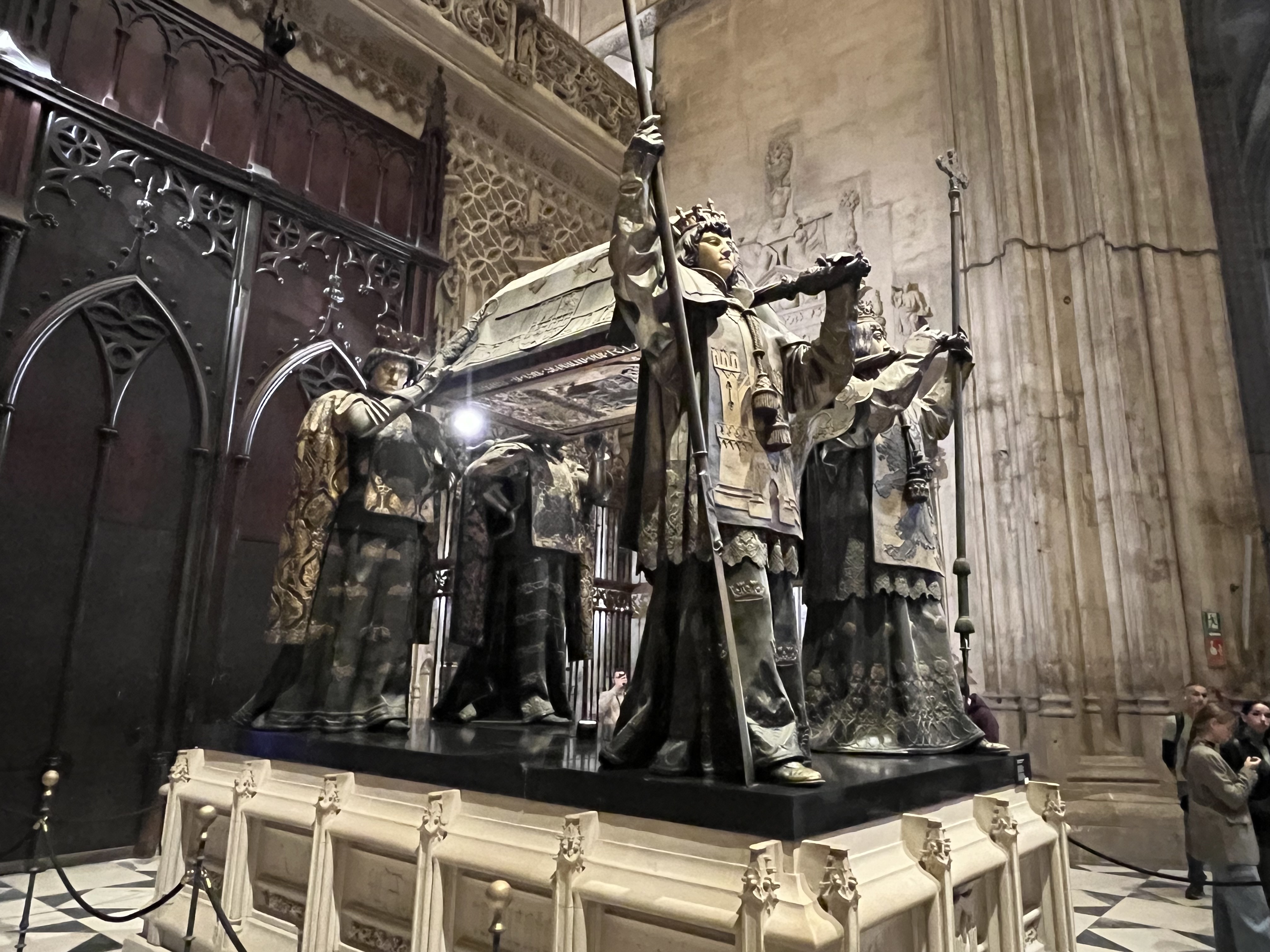
I’ll insert two slideshows: one of the cathedral itself, including Columbus’ tomb, and then pics taken from the tower.
At the top of the tower, the views of the city are amazing.
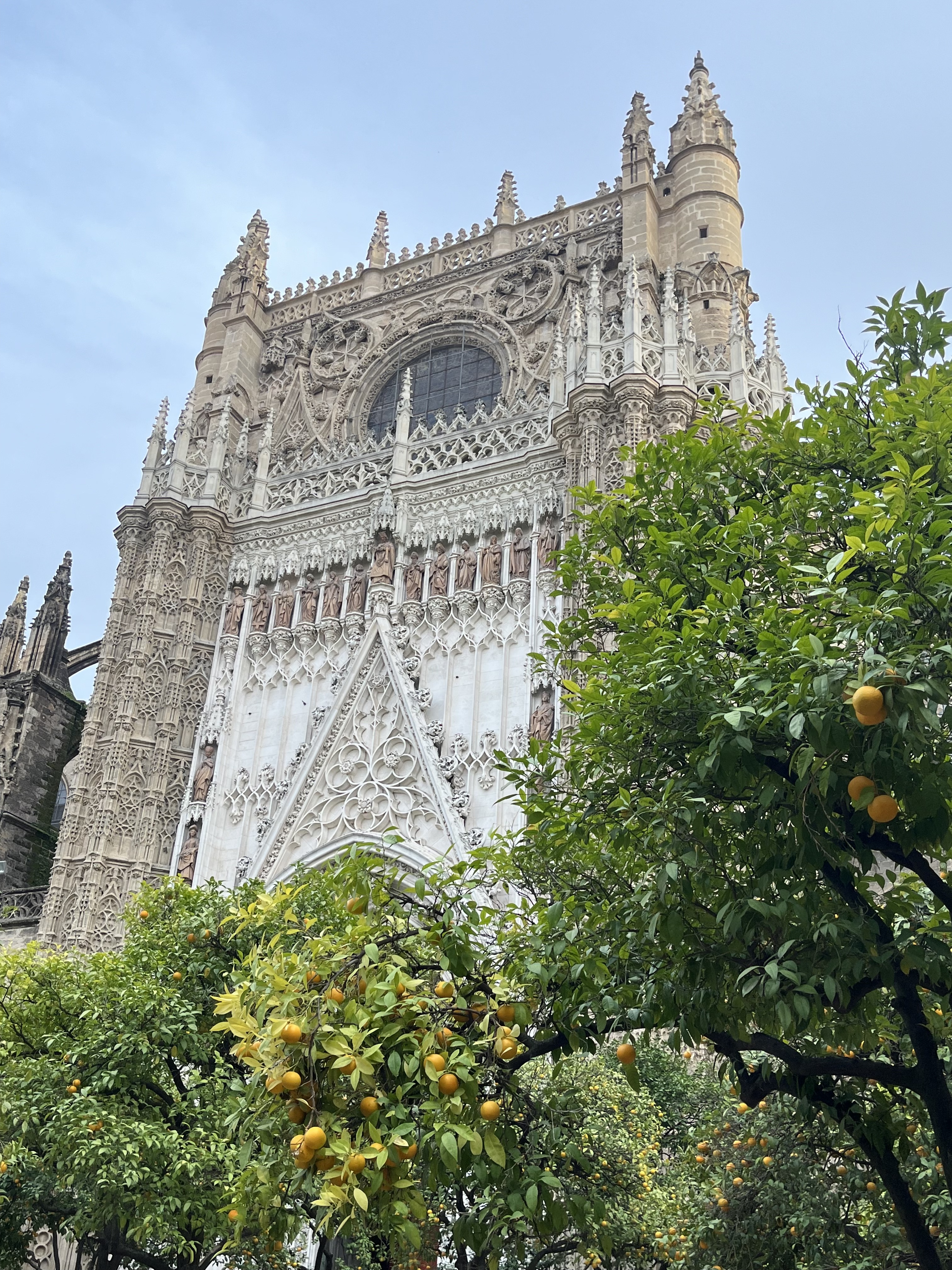
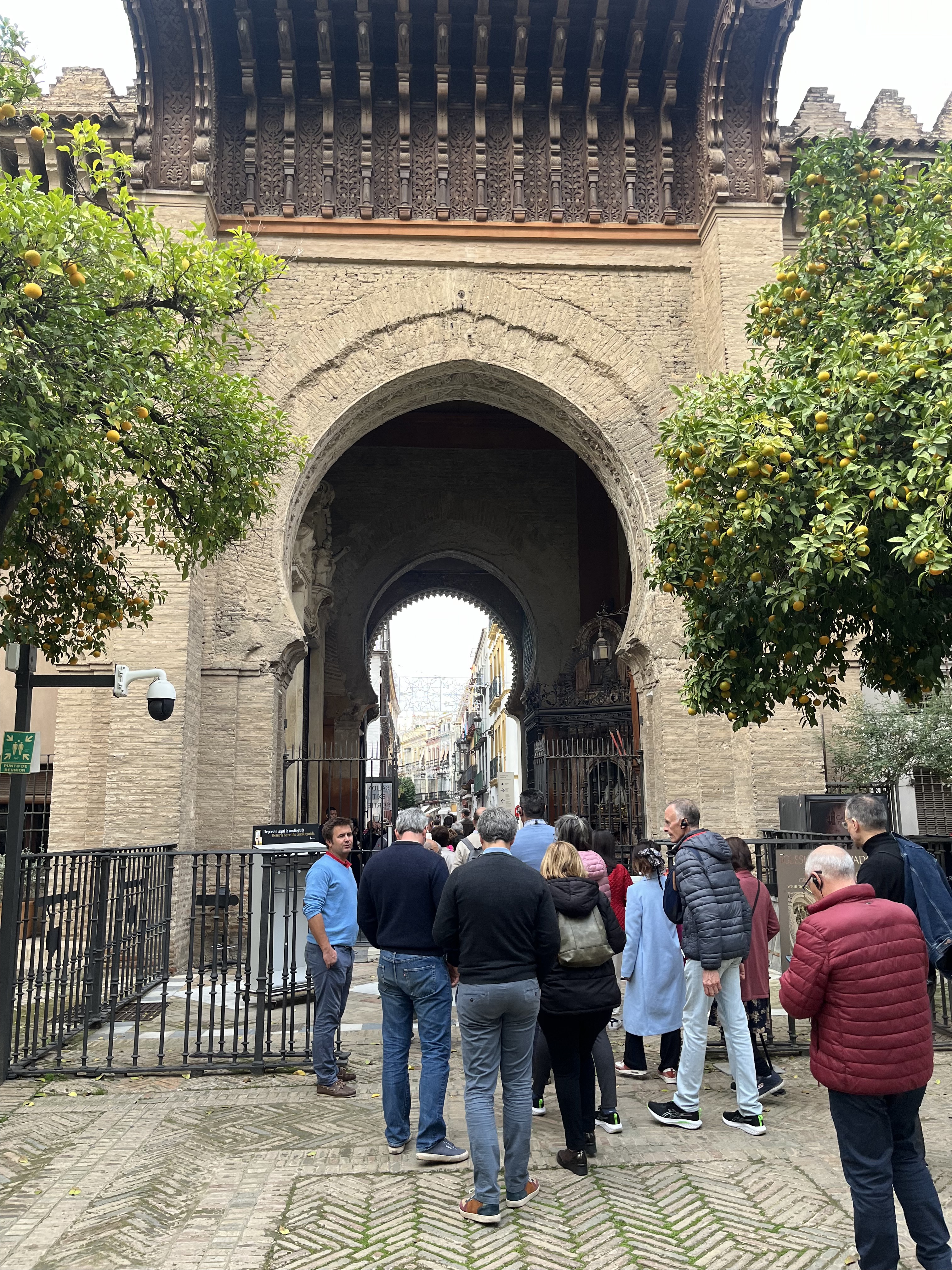
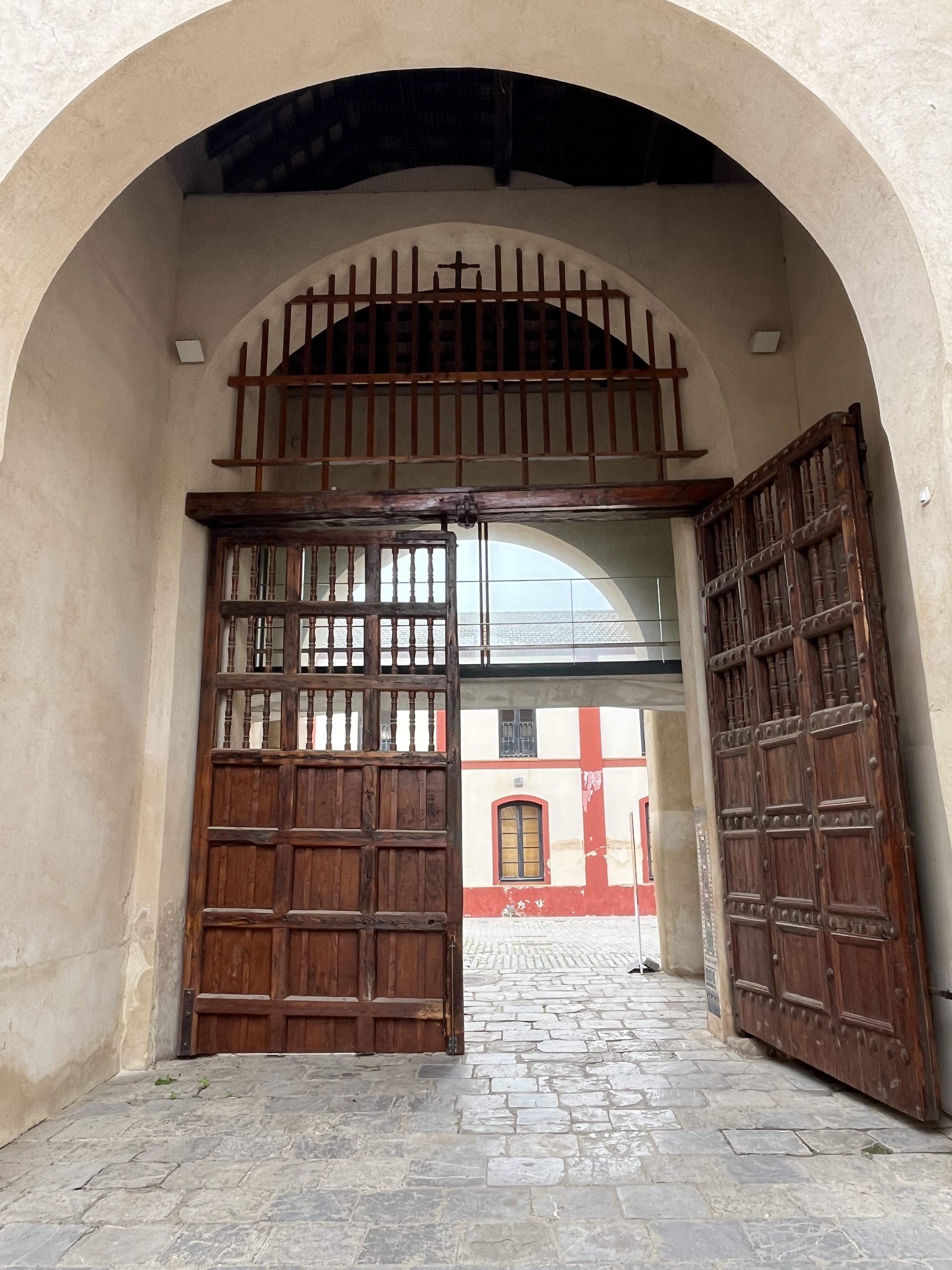
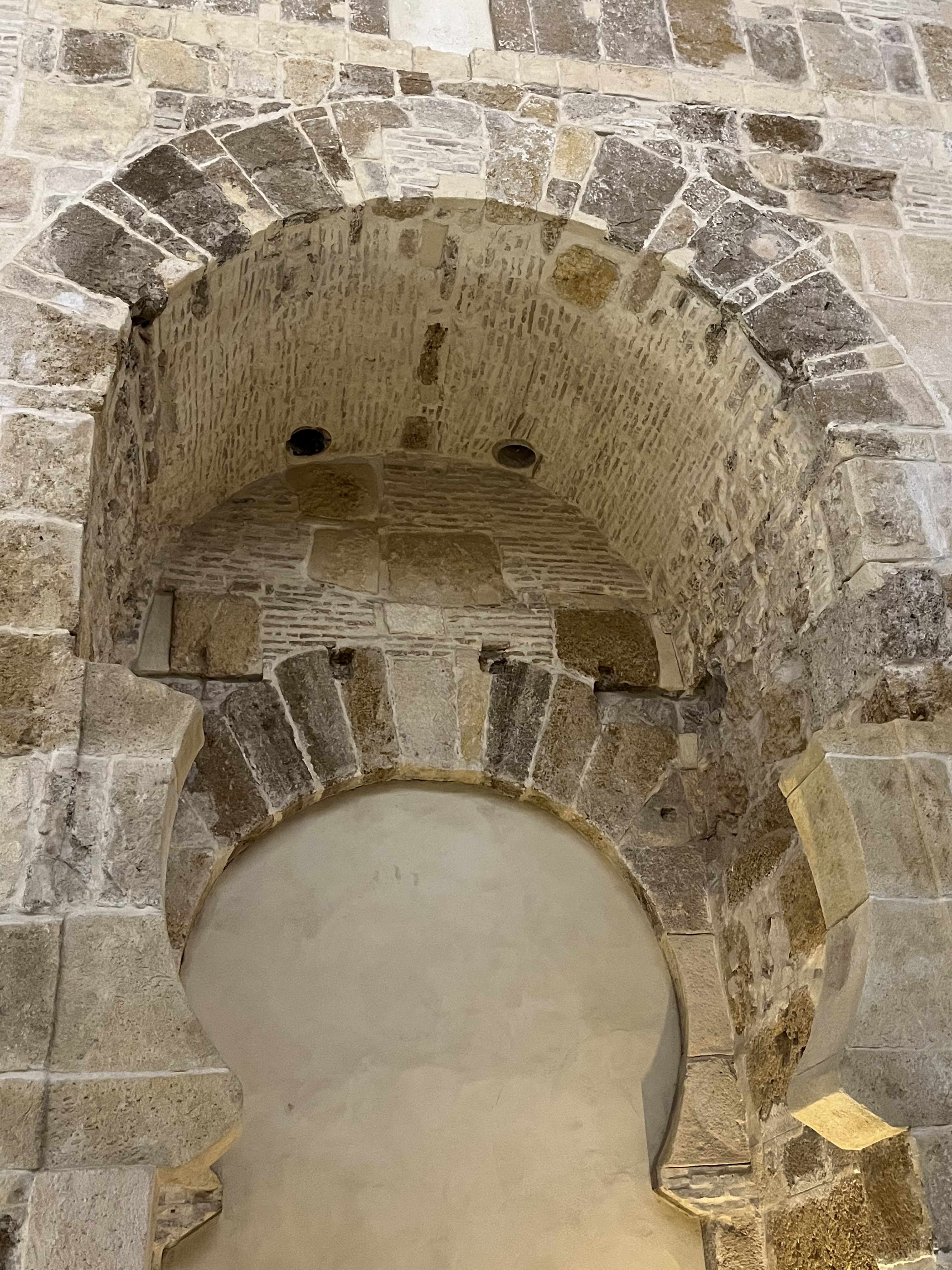
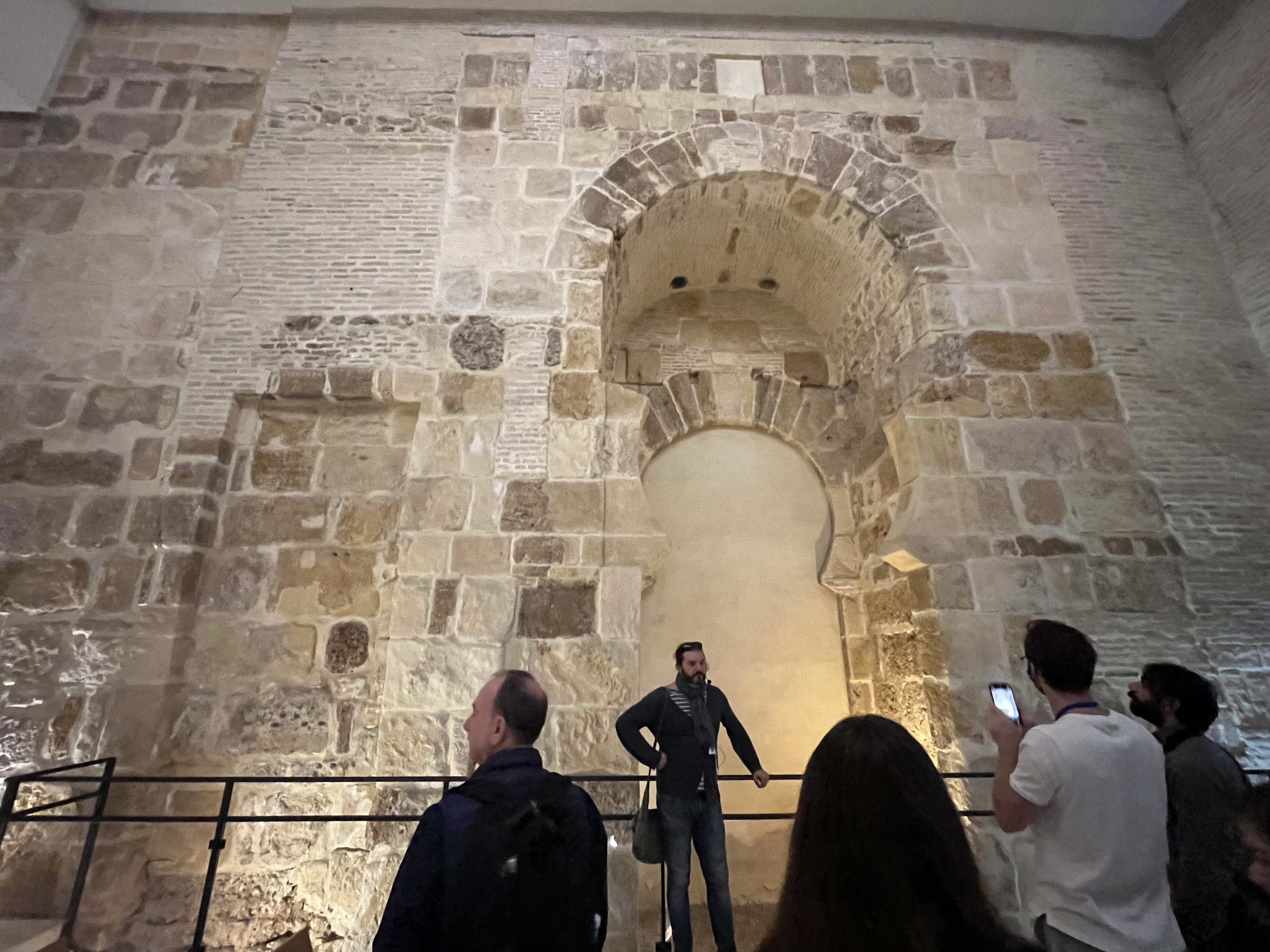
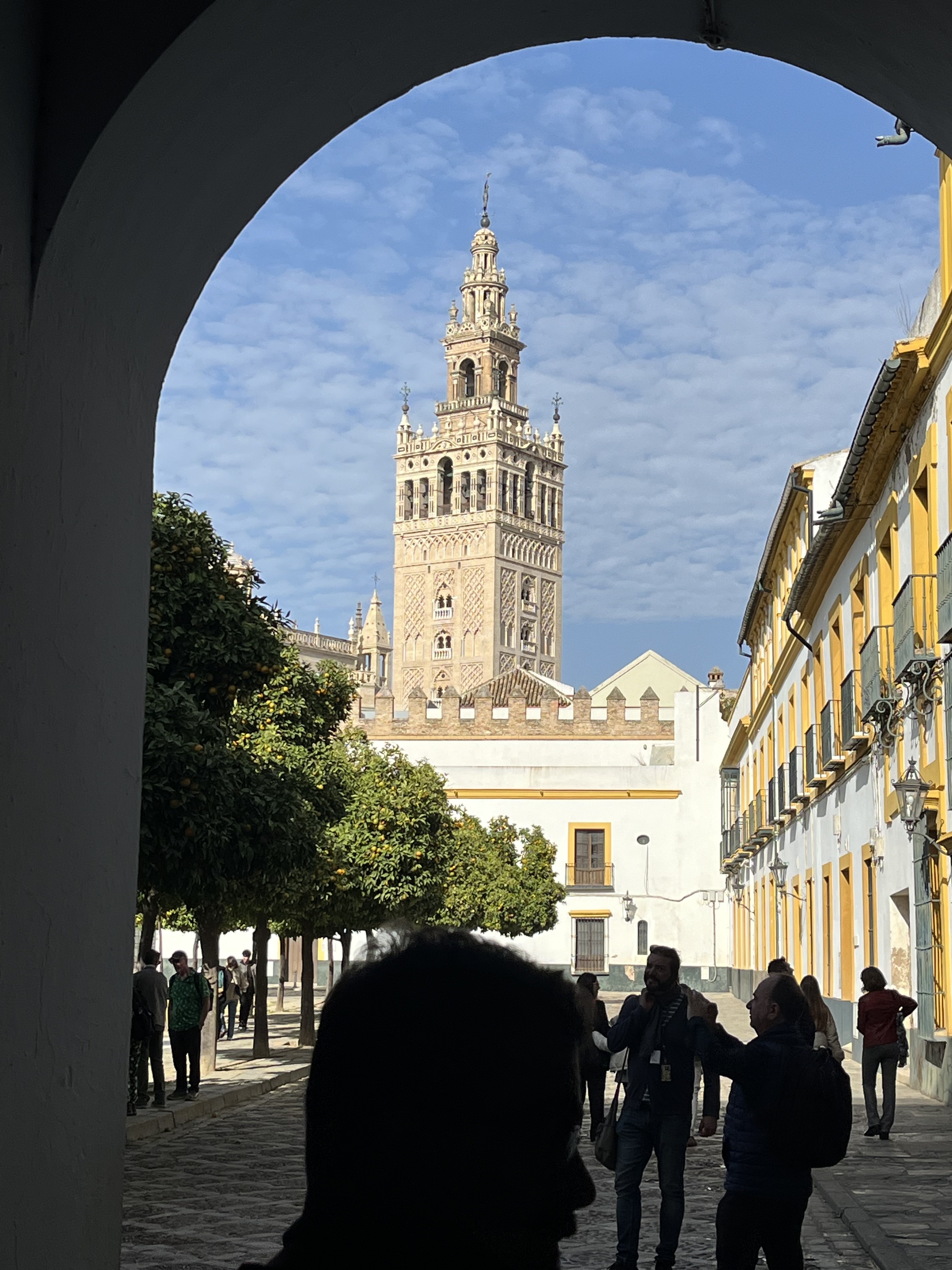
After exiting the cathedral, I took a few shots of the tower and the Gothic facade, with the ubiquitous orange trees in the foreground. The last photo is of the original main gate of the former Great Mosque, upon whose ruins the cathedral was built.
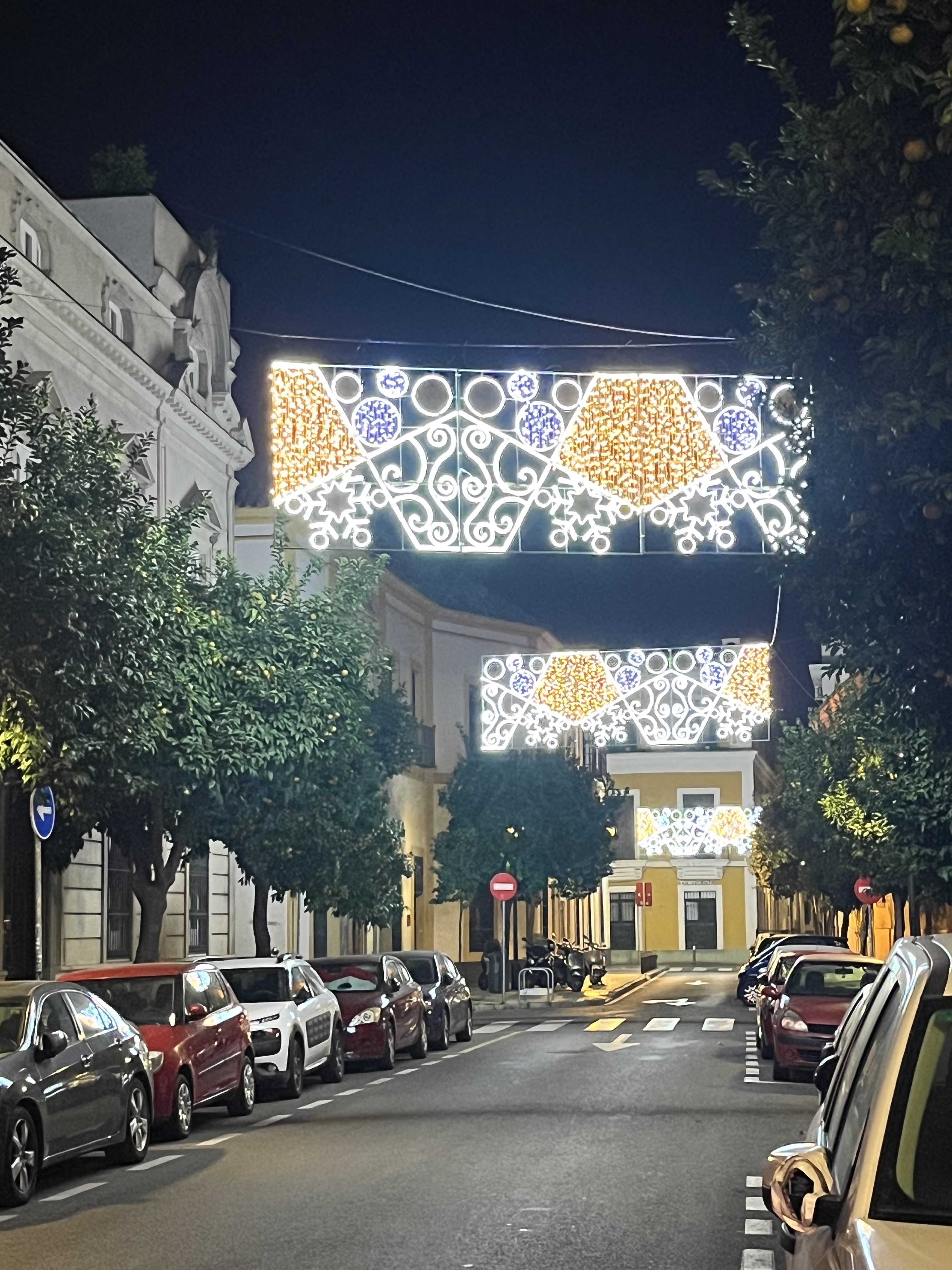
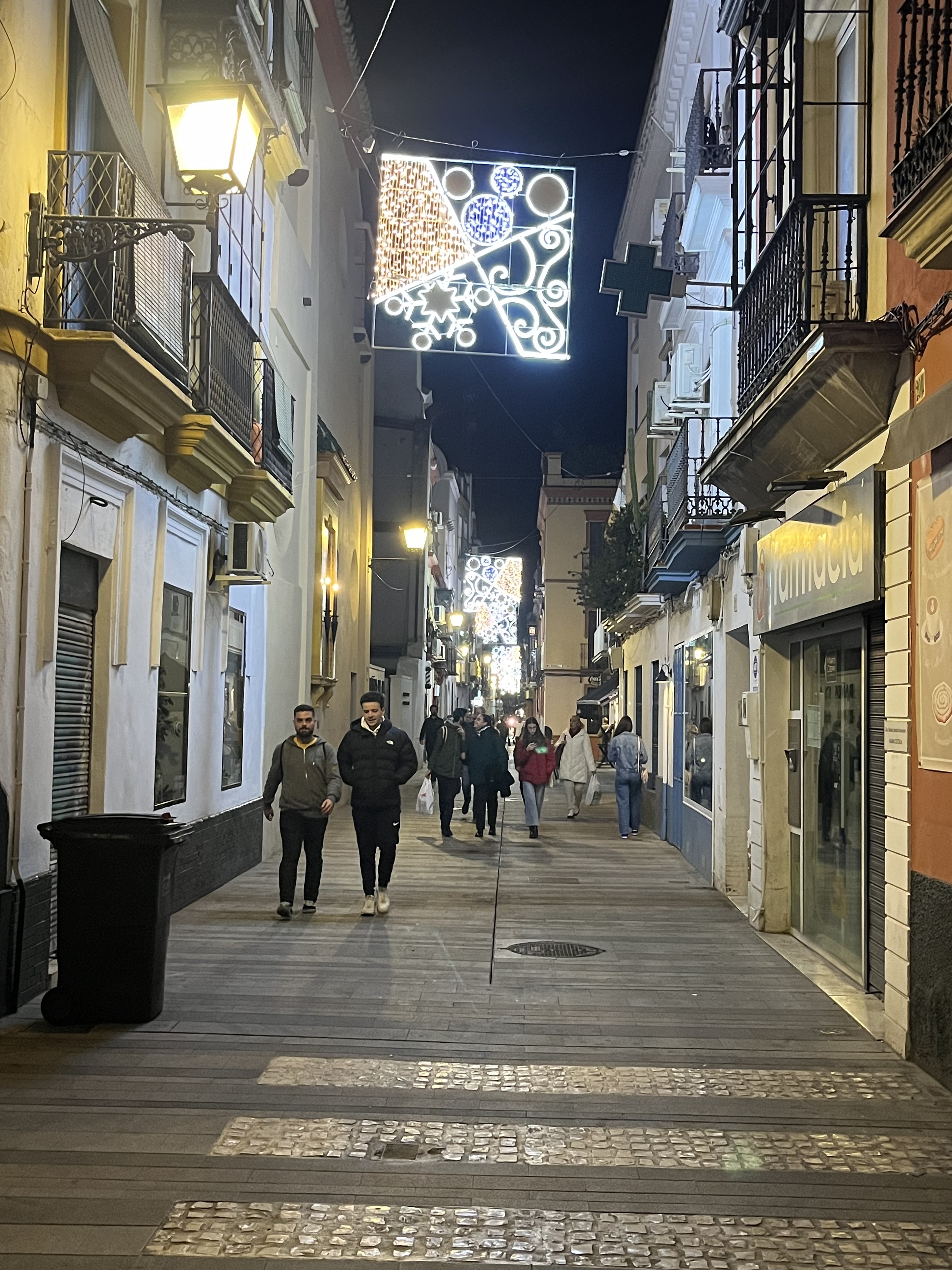
Heading back to my Airbnb and dinner, I snapped some shots of the Christmas decorations and the window displays of El Corte Inglés, the upscale Spanish department store chain.
-
A Walk on the Other Side: Cartuja Island
I decided to check out the modern area of Sevilla and crossed over the river to the Isla de Cartuja. Just before crossing the bridge, I turned on Strava since I intended to take a fairly long and brisk walk. In the center, it’s hard to walk fast given the crowds.
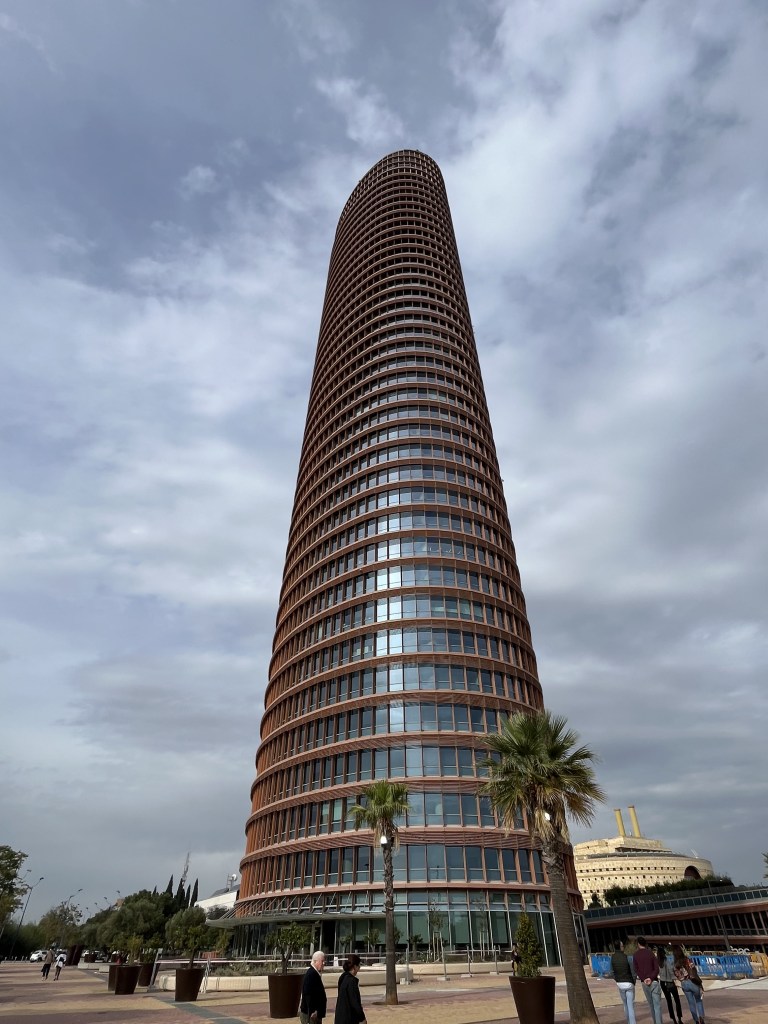
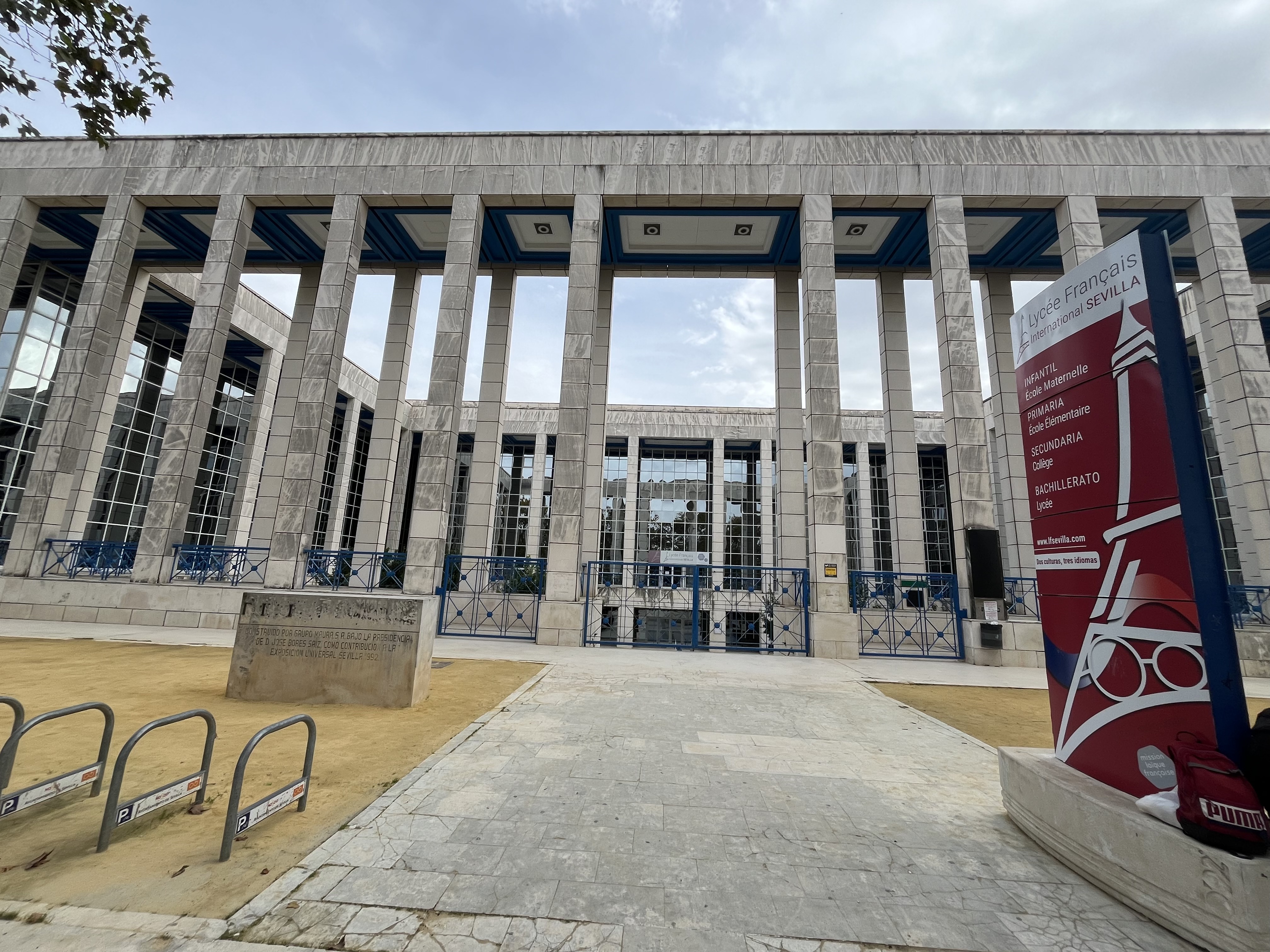
The tallest building in Sevilla is the 592′ Cesar Pelli-designed Torre de Sevilla, completed in 2015. The Caixa Forum, a shopping mall, is next door. Nearby is the massive tower of the Junta de Andalusia, designed after the Castello di Sant’Angelo in Rome. The last building is the Lyceé Français.
Beyond the commercial and corporate district is a busy six-lane boulevard, the Avenida de Carlos III. I crossed over to a wooded area and was shocked to see a miles-long expanse of what appeared to be an abandoned city with bare asphalt and a line of massive towers. After a little research, I learned that it was the site of Spain’s Expo 1992. I walked for a few miles to an isolated and empty high-speed rail terminus without encountering a soul. It was spooky, and my vivid imagination conjured up its repurposing as an internment camp in some future totalitarian dystopia. The area across from this stretch was a fenced-in enterprise zone with an adjacent, and eerily quiet, amusement park. I doubt that this area is on any tourist agenda; however, I’m strangely attracted to abandoned places.
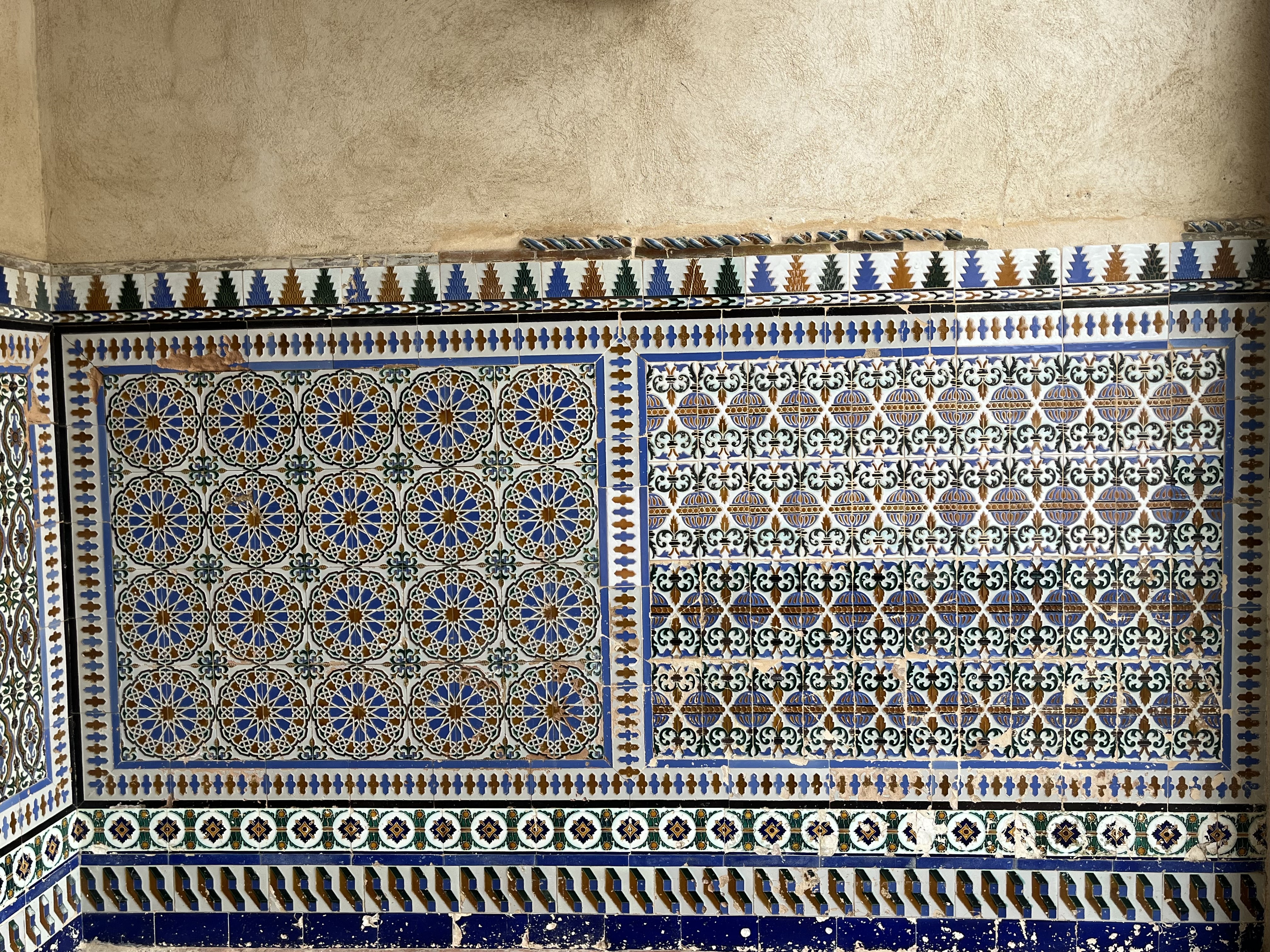
On my return, I popped by the famous ceramics works, which is now the venue of the Museum of Contemporary Arts.
The tiles reminded me of the azuzuelas in Lisbon. From there I made my way back to my place across the river after a 5.26 mile walk. I bought an online ticket for 4:10 at the Cathedral and Giralda Tower which I’ll post later.
-
Exploring Sevilla: Nov. 30, 2024
I spent most of Friday afternoon on the plane from Palma to Madrid and then a transfer to the flight to Sevilla, which was less than an hour. When I booked the flights on Iberia Express, I took advantage of a bargain fare to upgrade to business class on both legs so that I could carry on my two bags, since I always avoid checking luggage. The middle seats were empty on both flights and the service was excellent. Unlike many US flight attendants who often act like Aeroflot veterans, the Iberia staff are always smiling and gracious.
When I arrived at Sevilla, I jumped into a taxi and went to my Airbnb, which was easy to find and, unlike many European apartments on upper floors, had an elevator! The apartment is large and perfectly upgraded, with three balconies overlooking narrow lanes largely closed to traffic, so the place remains quiet throughout the day and night.
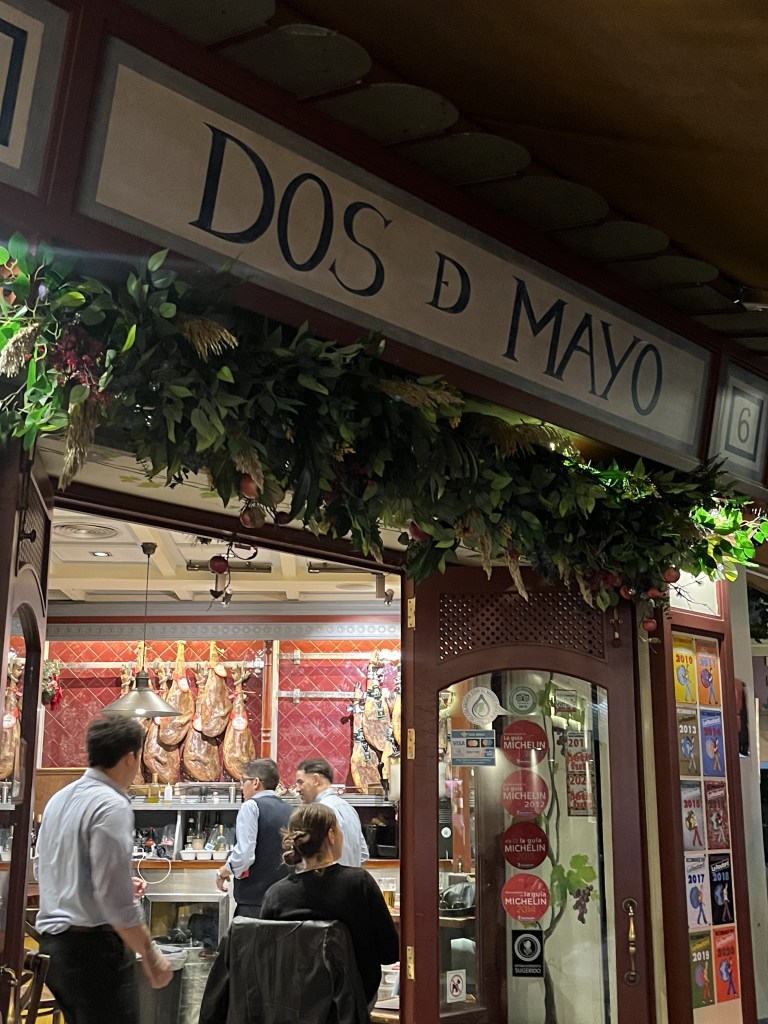
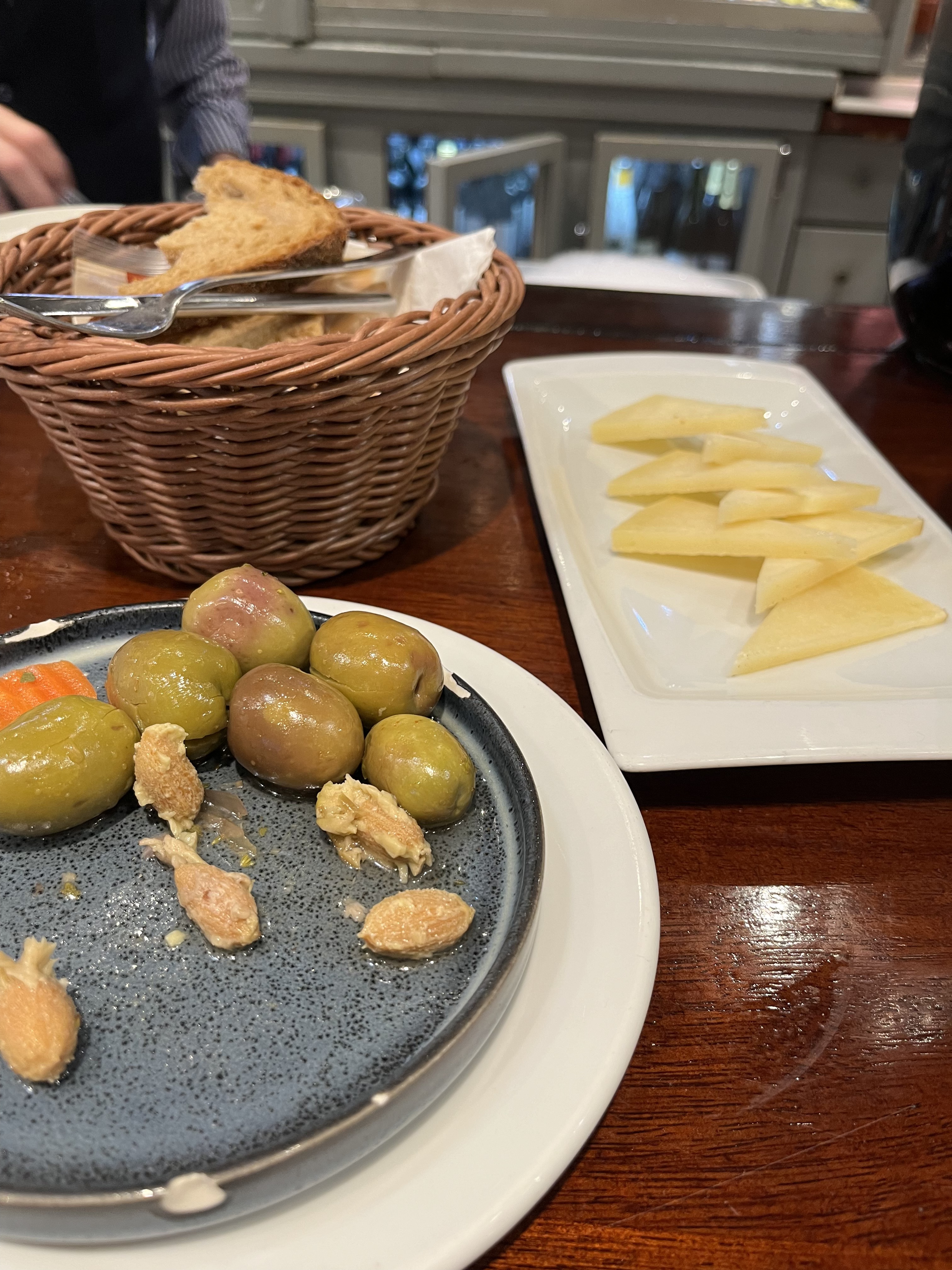
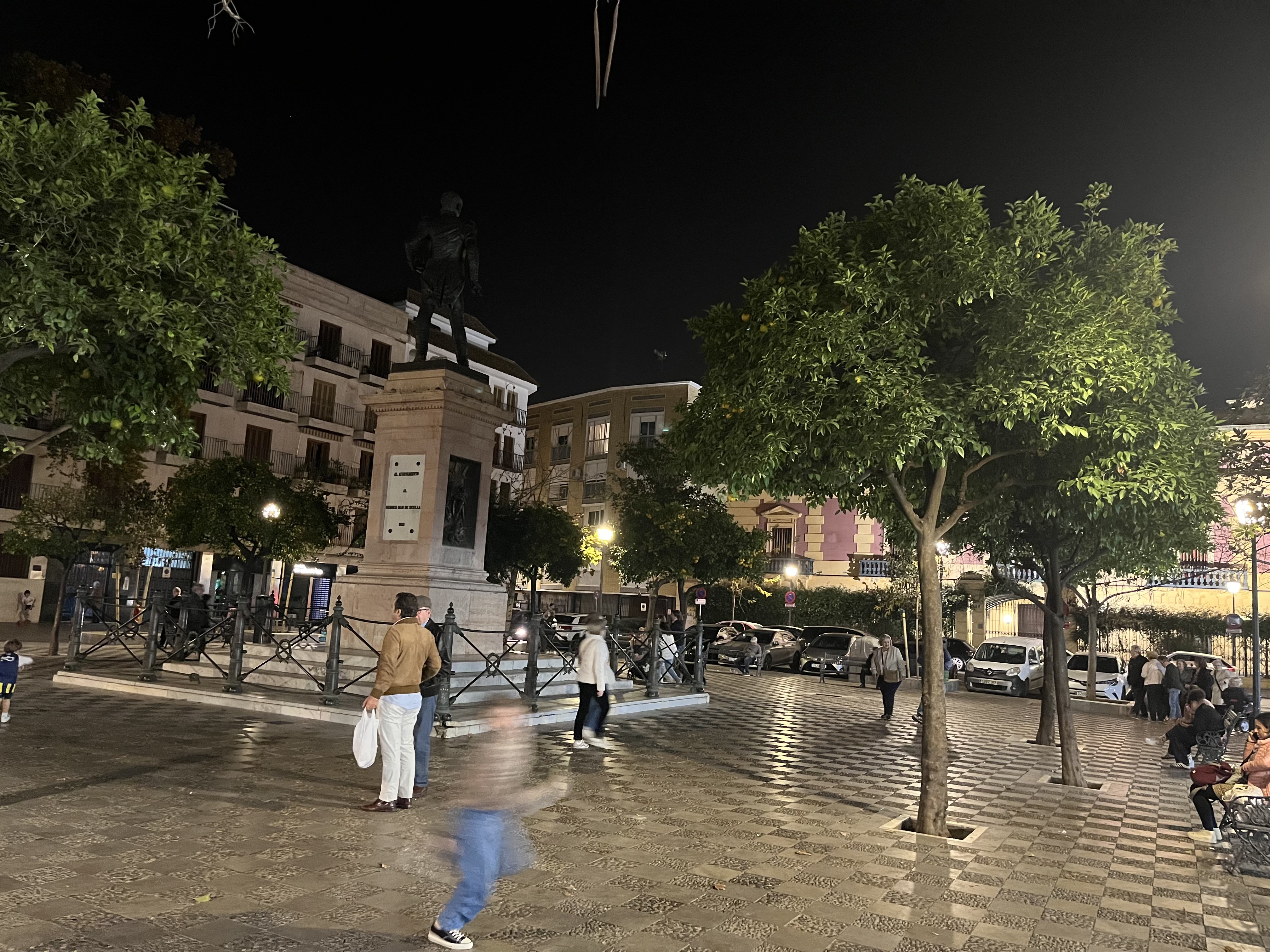
Since I arrived around sunset, I unpacked and went for a stroll and ended up at a cool tapas bar, Dos d Mayo, on a quiet plaza about 600 meters from my place
The next morning I booked a walking tour of the historical center and headed over to the meeting spot after a few cups of coffee.
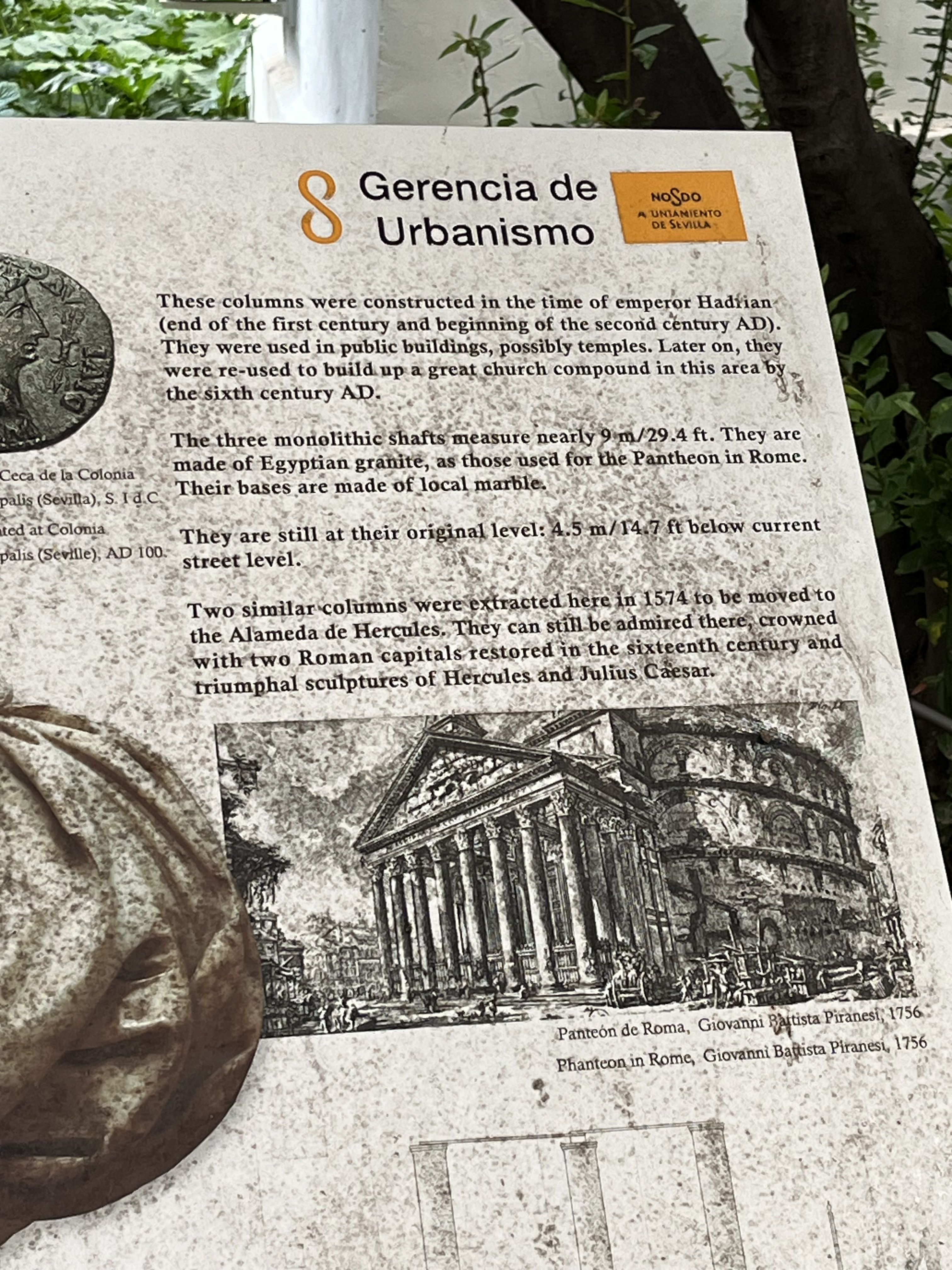
Some background on Sevilla: According to our guide, Sevilla is the oldest city in Europe, although other cities undoubtedly claim that distinction. It was originally a trading spot for the Phoenicians beginning 2,500 years ago. They discovered gold and silver nearby and thus began Sevilla’s good fortunes. The city lies on the Gaudalquiver River close to the Atlantic, making it the biggest inland port in Spain. The Romans arrived under Julius Caesar, who established Sevilla as an important outpost. Caesar built a wall around the city, little of which now remains. After the fall of the Western Roman Empire in the 5th century, the area was conquered by the Visigoths, who eventually succumbed to the Moors, who invaded from Morocco and took over around 712 AD. There are extensive Roman ruins nearby in Italica, which I would visit if I had a car. There are two columns remaining in the center that were built during Hadrian’s reign at the end of the first century AD. Hadrian and Trajan were two Roman emperors who were born in the region.
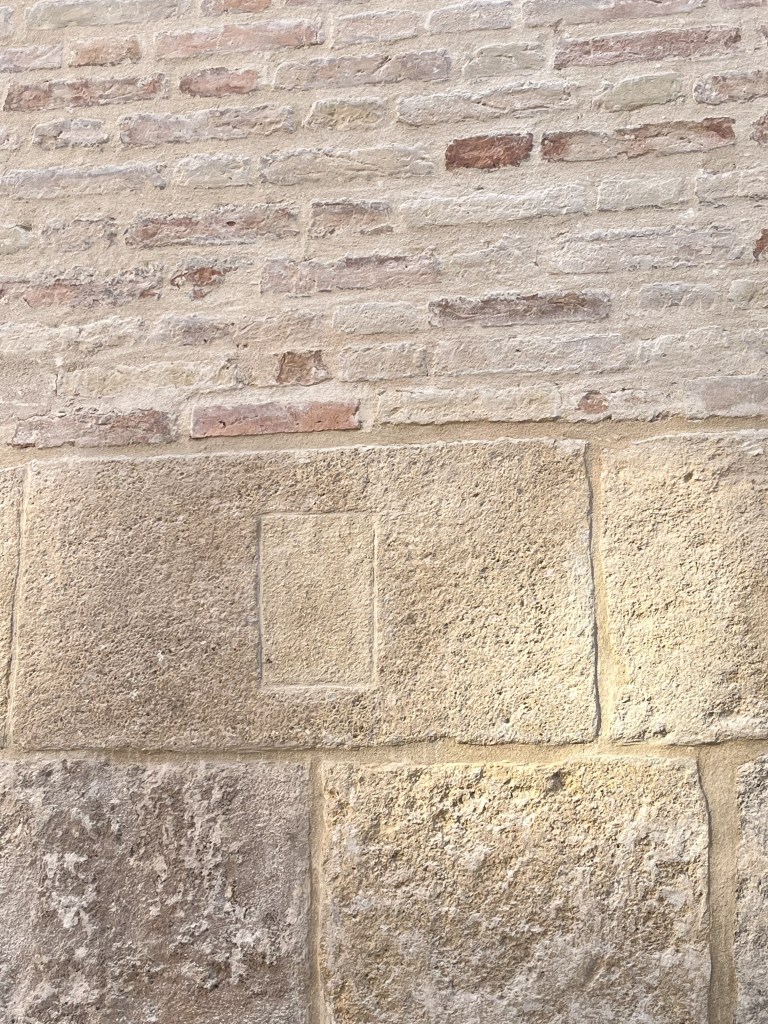
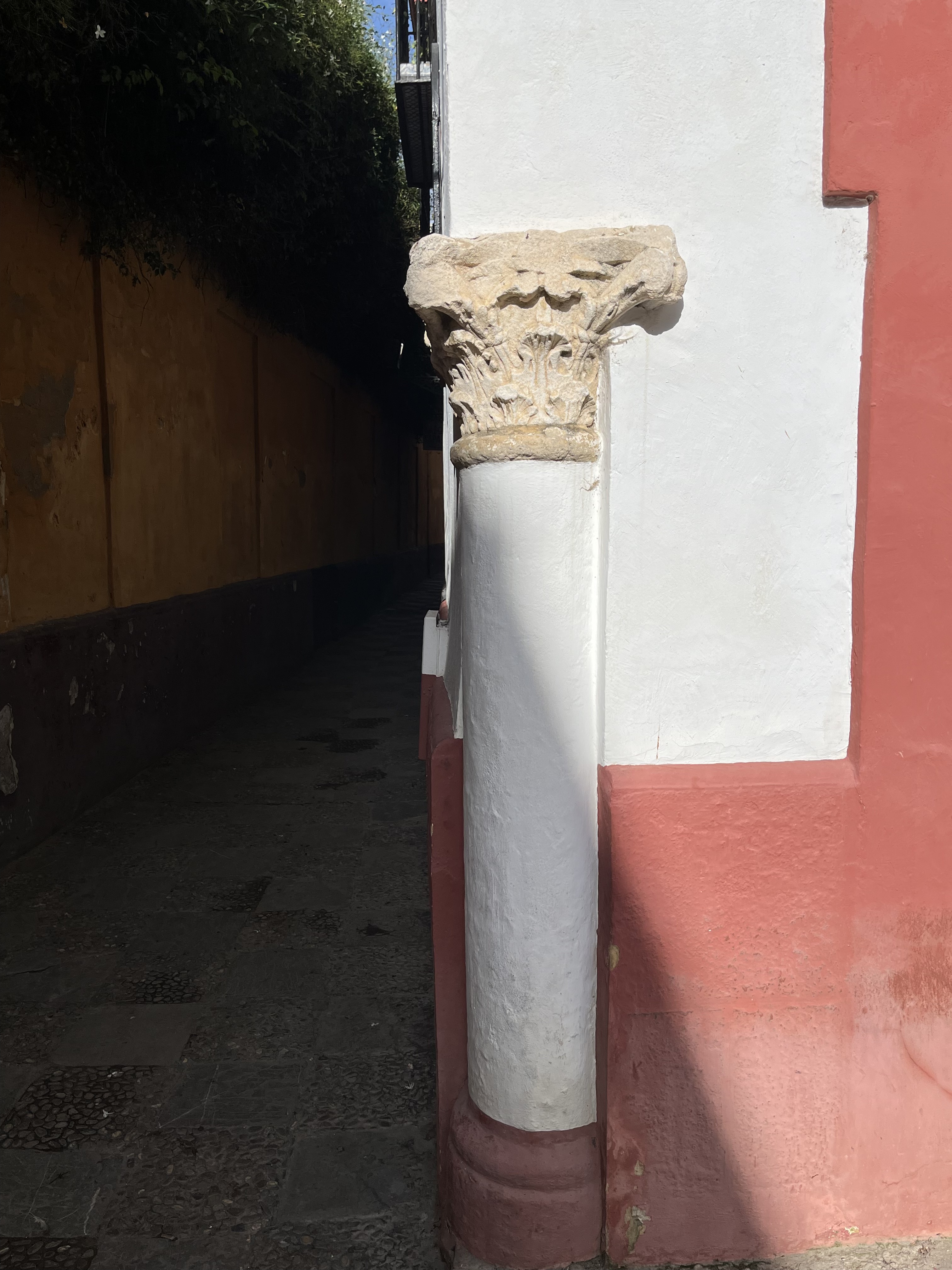
As in many ancient cities, successive conquerors reused the Roman temples and buildings to construct their own monumental buildings, including the Moors, who were renowned builders and architects and whose legacy is found everywhere on the Iberian Peninsula. For example, first mosques, and then cathedrals, reused granite and marble from Roman ruins to build the bases of their buildings. Roman columns were widely used on street corners to prevent horse-drawn carriages from smashing corner houses. Below are examples of the foundations, corner protectors and part of the remaining Roman walls.
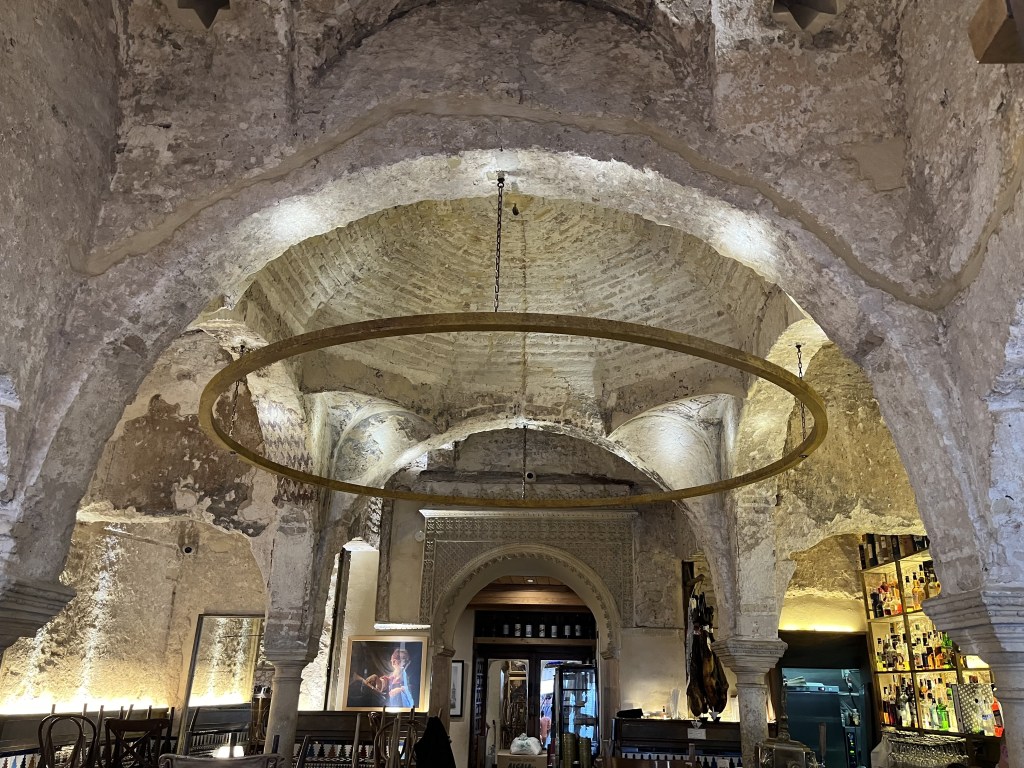
Our tour guide was outstanding, having been born and raised in Sevilla. He pointed out some hidden gems that he said even natives weren’t aware of, including the interior of a restaurant where an ancient Moorish bath was discovered during remodeling and also a conference center built inside what remains of the only surviving mosque.
Because of the torrid summers in Sevilla, the Moors built narrow stone streets that let breezes form to cool the outside. Their houses always had a space between the entrance and the main house, including an open foyer that allowed cooler breezes to rise and cool the upper floors. There are countless examples in the old town.
The jewel of Sevilla is the largest Gothic cathedral in Europe, which is also the third largest Christian church after St Peter’s Basilica and St Paul’s in London. It was constructed during the 15th century, several centuries after the recapture of the city by the Christians under Ferdinand III in 1248. Here are views of the cathedral and iconic symbol of Sevilla, the 166′ Giralda, originally built as the minaret for the Great Mosque of Seville in 1198. The mosque’s original doors still remain, with Arabic script.
From the cathedral, we made our way through the ancient Moorish streets and plazas to the Plaza de España. You can see the charm and beauty of the old city in the following slideshow. Later in the afternoon, I wandered through other narrow streets and discovered even more old houses, palaces and plazas.
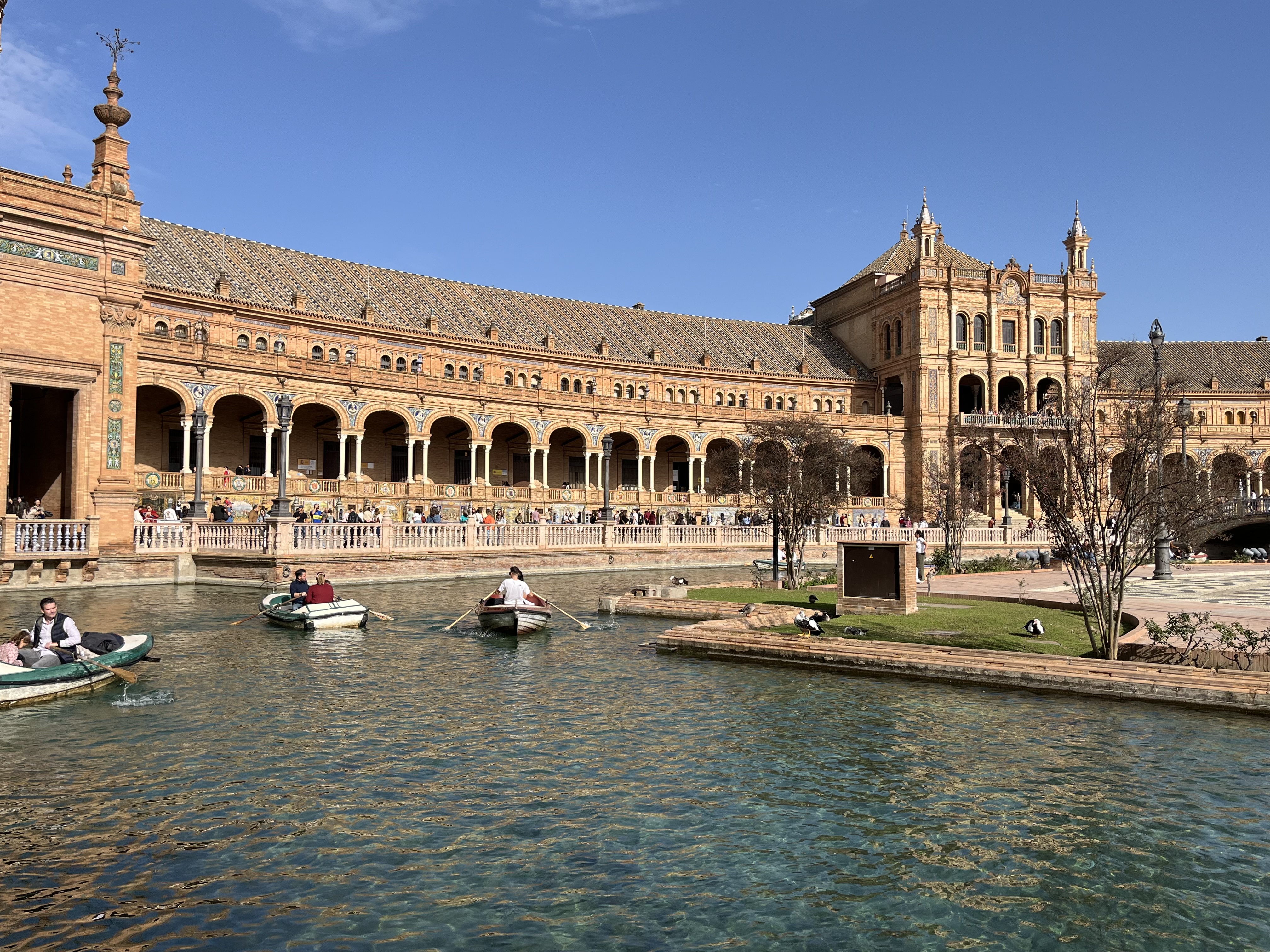
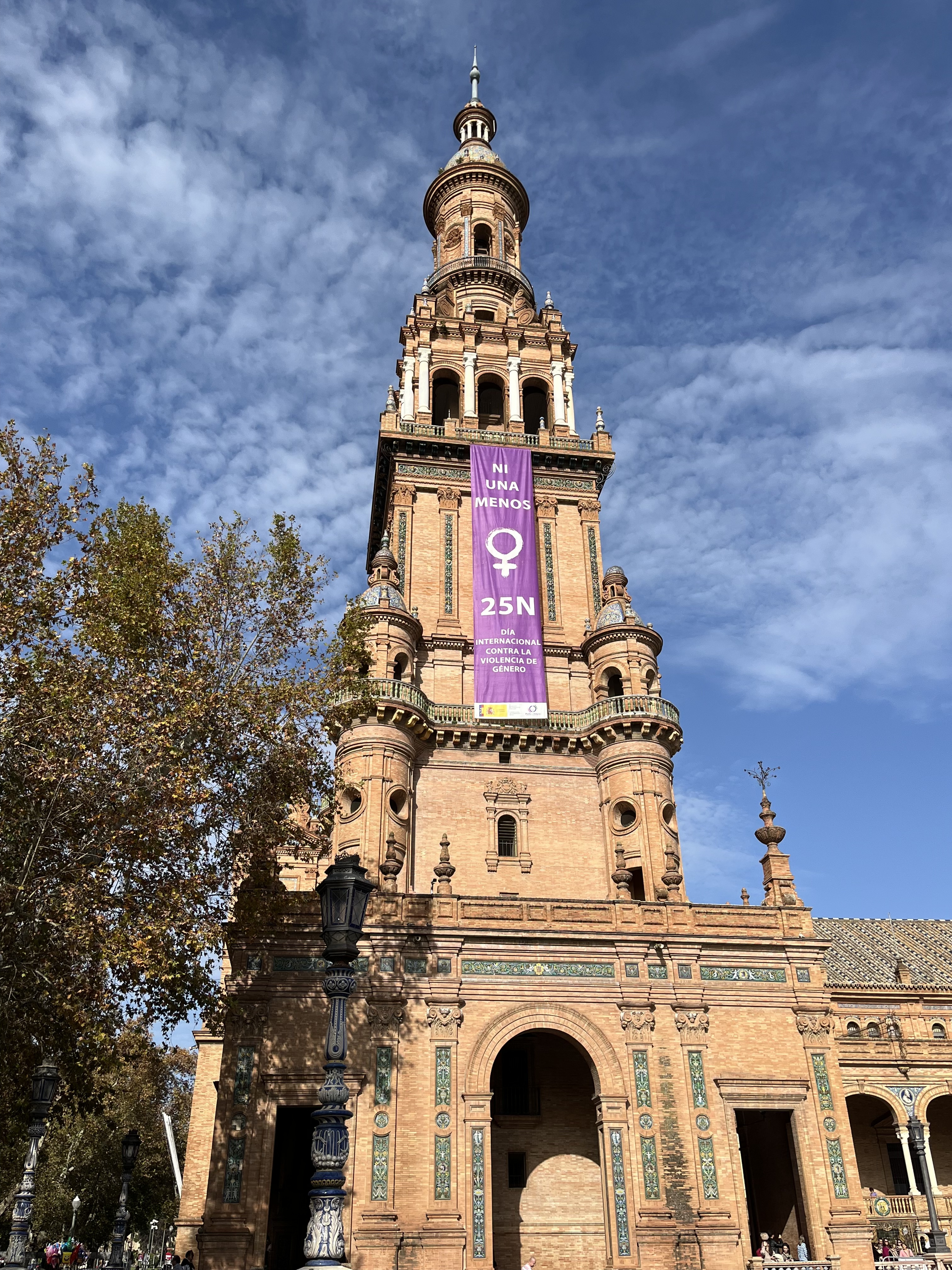
We passed the Torre de Oro and the University of Sevilla en route to our final stop, Plaza de España, built in the 1920’s and completed in 1929 for the Pan-American Exposition. It’s the largest plaza in Spain and was designed in an eclectic style by the famous architect Anibal Gonzalez and is the main meeting plaza in the city.
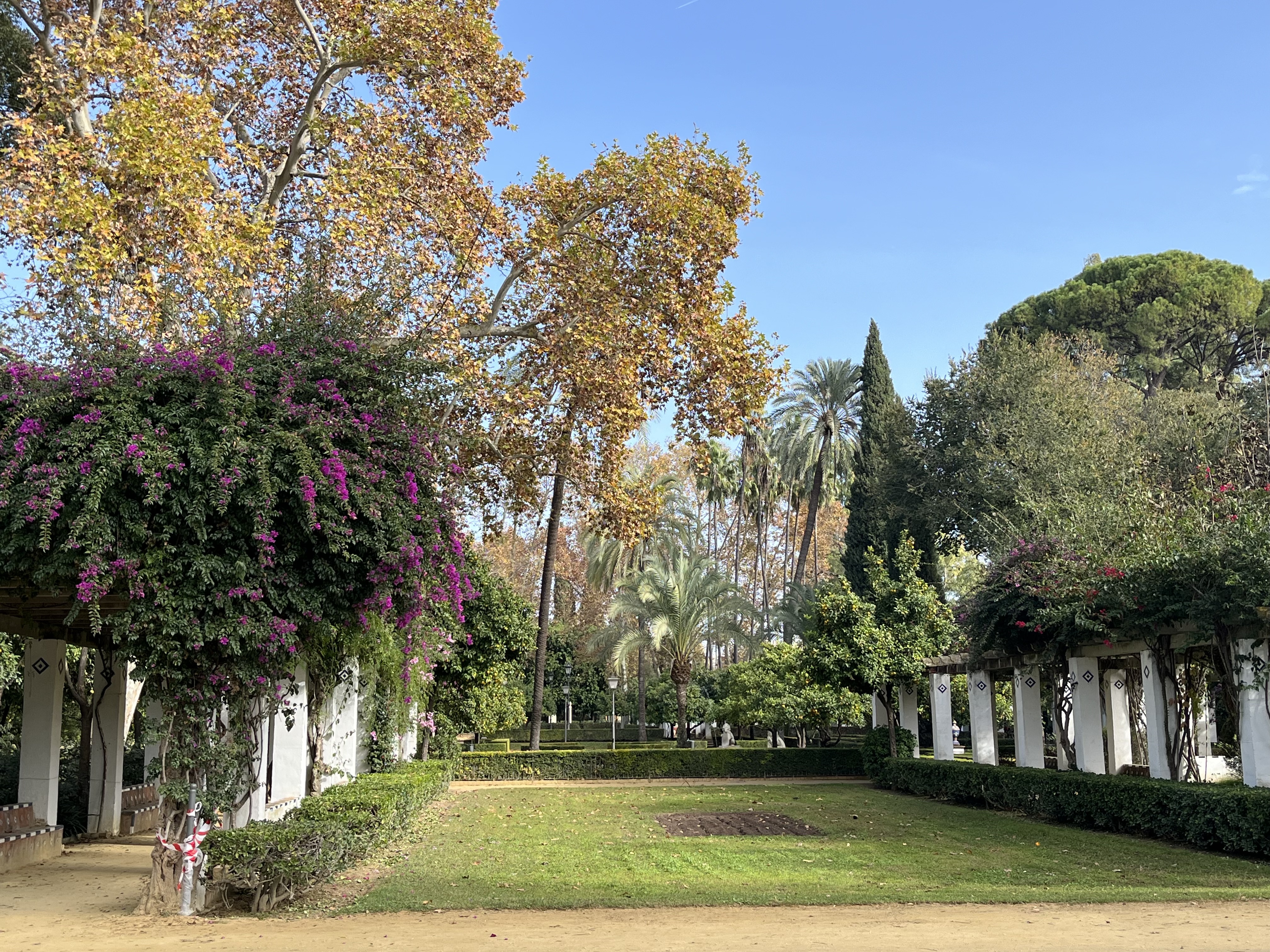
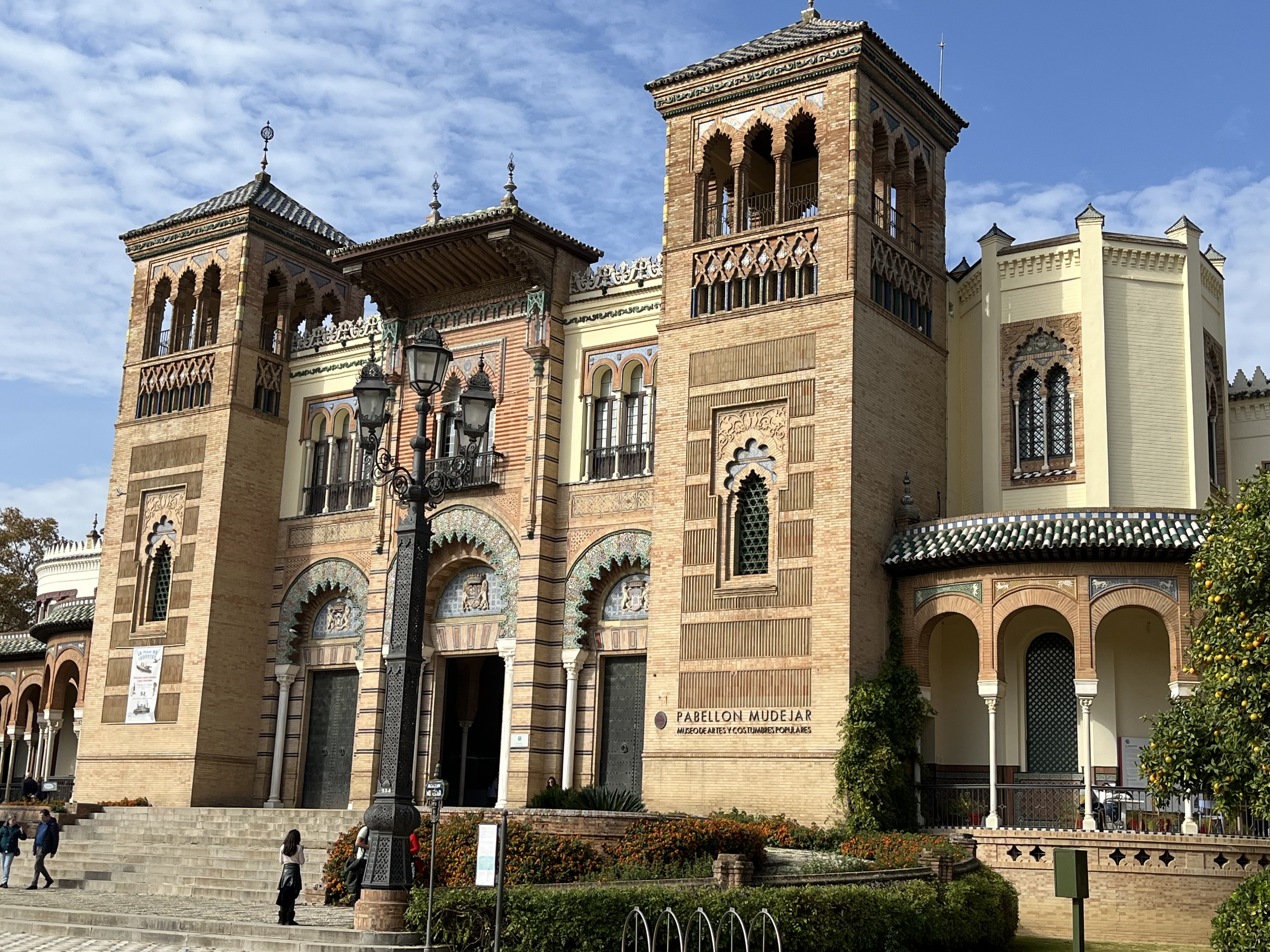
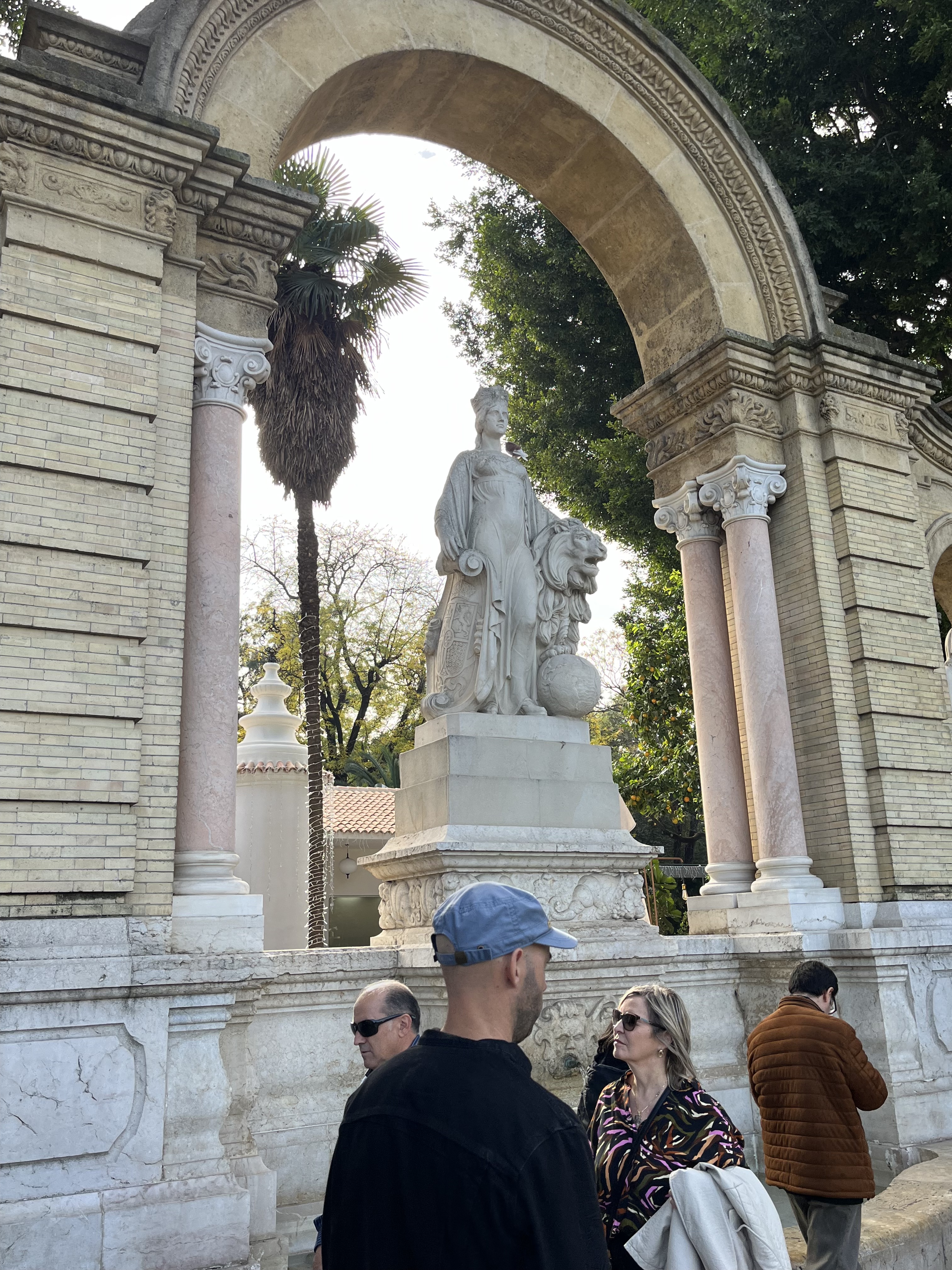
Across from the Plaza de España is the beautiful Parque de María Luisa, which is full of statues, tropical plantings and the Museum of Archeology and the Museum of Fine Arts and Crafts. Like all parks in Spain, it’s litter and graffiti-free.
I also walked around the stately university grounds.

After another few miles of exploring, I found a great little bistro for a late lunch. When traveling solo, my routine is to have a very late lunch at a fine restaurant when it’s easy to grab a table for one before the rush. I was craving vegetables and finally found a spot to enjoy a huge grilled vegetable plate.

Tomorrow, I’ll go for a long walk before my reservation for a tour of the cathedral and the Giralda. Reputedly, the cathedral has the finest art collection in Spain other than El Prado in Madrid.
-
Thanksgiving in Palma de Mallorca
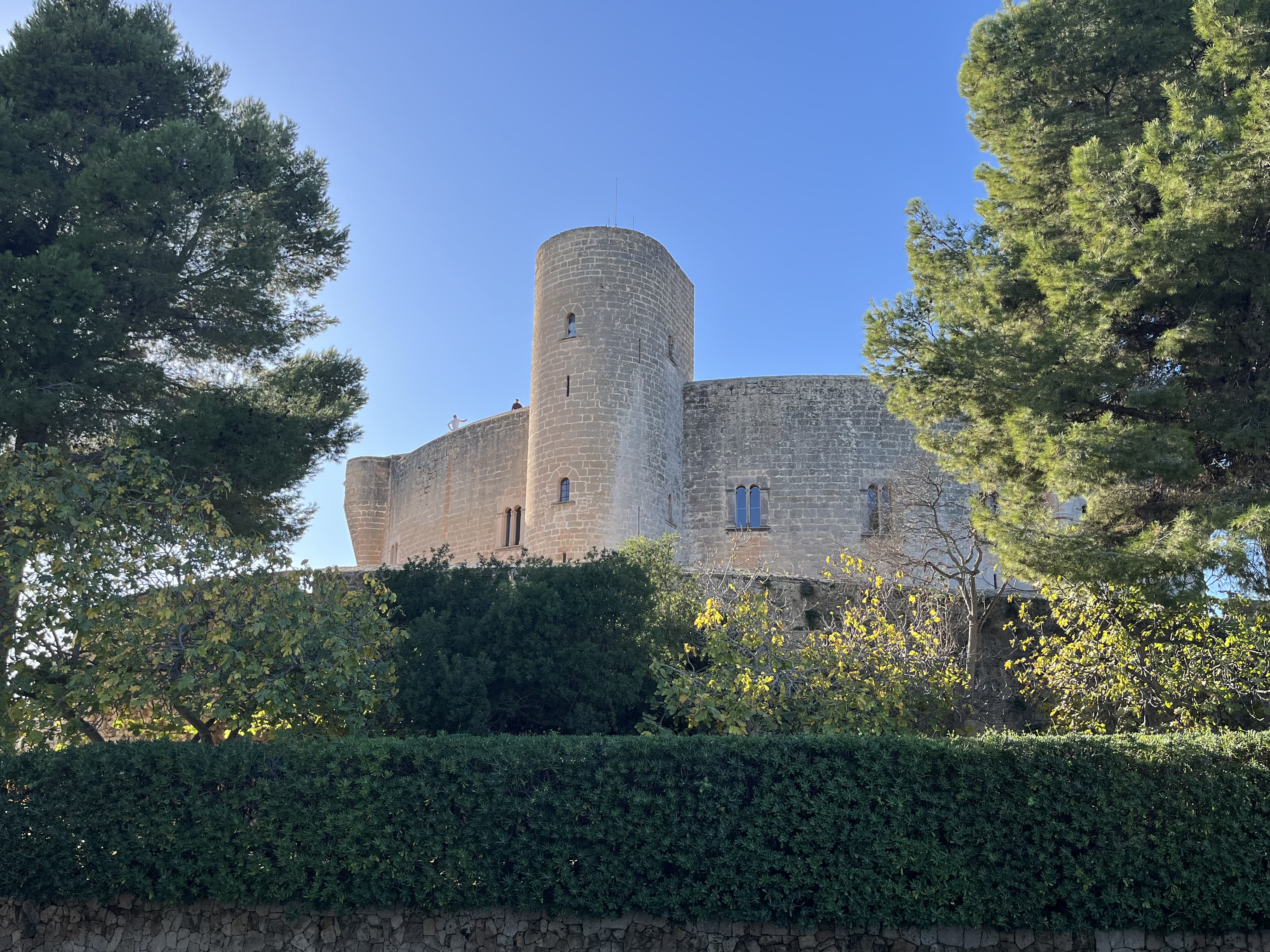
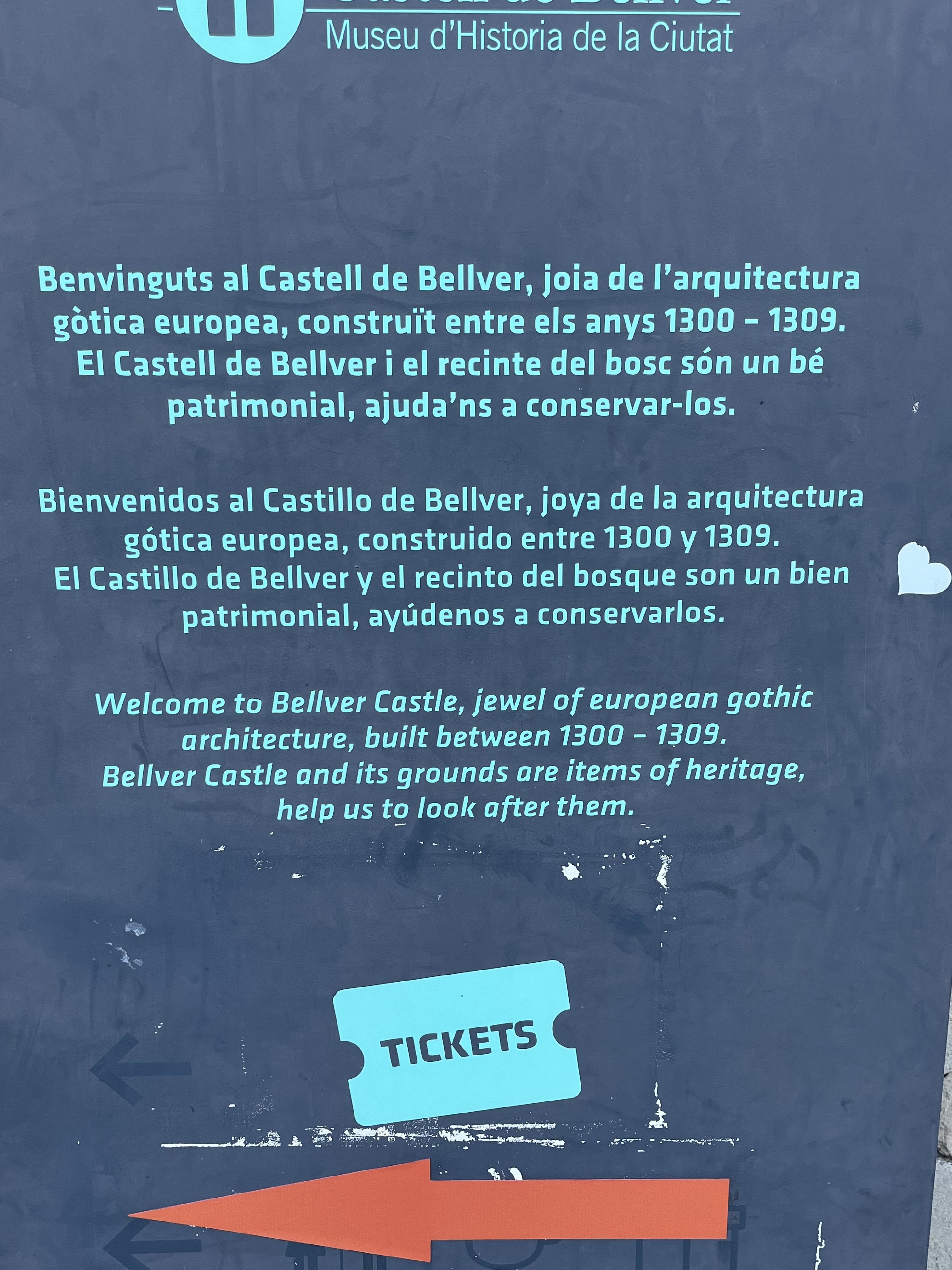
My friends decided to get massages and go shopping during the day, so I decided to go for a long walk up to the Castell de Belver, built between 1300 and 1309. I logged in 12 mile altogether.
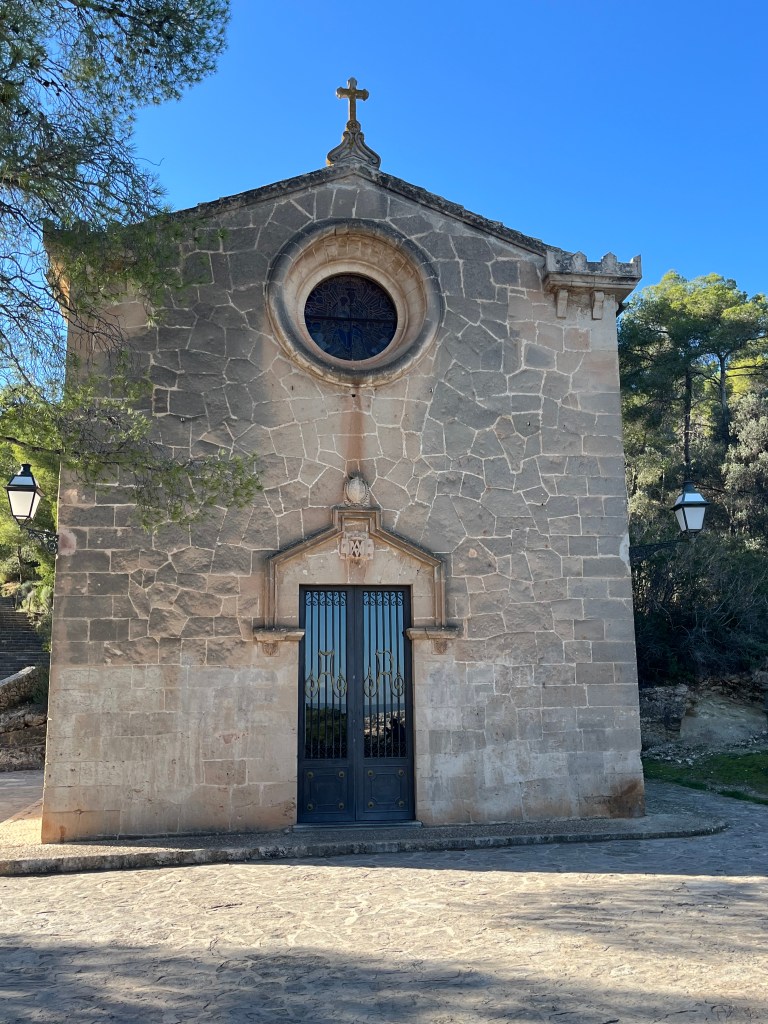
The views from the Castell were spectacular. Since it was the off-season, the park around the Castell was virtually empty.
As I’ve mentioned before, the American retail and cultural influence in Europe is profound. They’ve even adopted Black Friday. At least they wait until the end of November to put up Christmas decorations. I did break down and buy a pair of Persol sunglasses that were 30% off, which I’ve never seen in the US. With the VAT refund, they were a real bargain. As for the VAT refund, it was the easiest ever. The desk manager at the great Arts Hotel told me to walk over to the local branch of the big Spanish department store, El Corte Inglés, and go to the VAT desk, where the very helpful agent scanned my receipt and refunded the VAT directly to my Amex. Now I don’t have to queue up at the Madrid airport on Tuesday morning.
Christmas decorations in Palma:
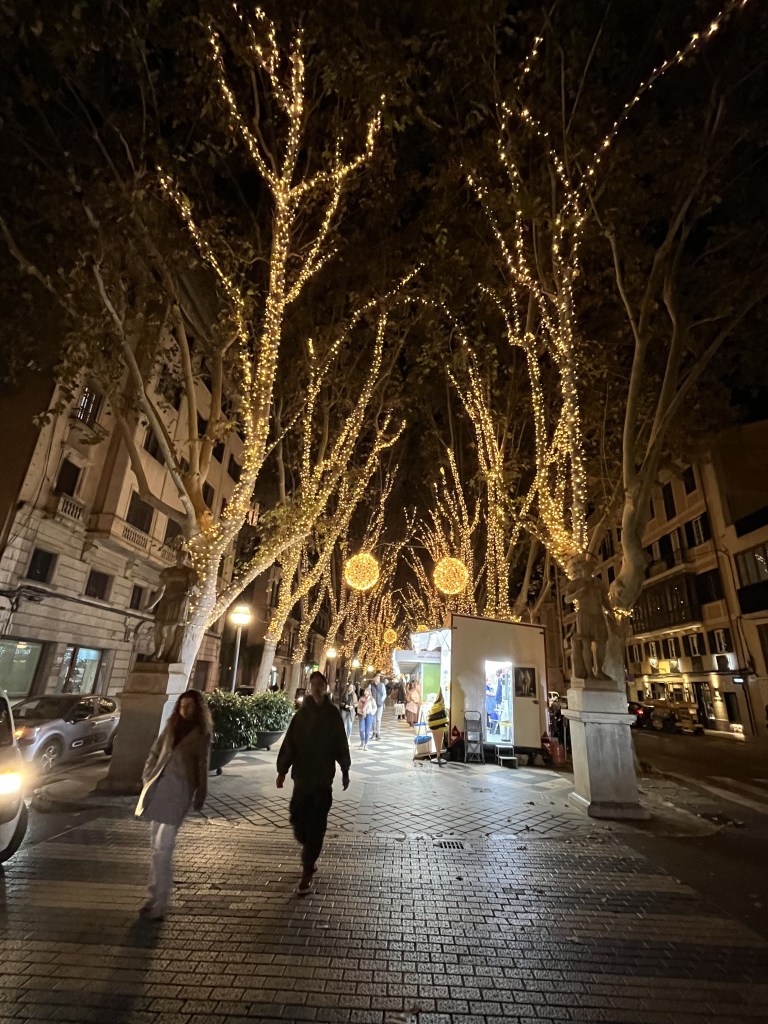
Since my friends had a 7:00 am flight the next morning, we met for a light dinner at a recommended tapas restaurant. Although we didn’t have reservations, the hostess seated us at a table in the annex with the proviso that we spend no more than 90 minutes. We were out in an hour.
The Spanish cuisine is heavy on meat and potatoes, so when I get to Sevilla I’m going to eat at a vegetarian restaurant at least once!
Since I had an afternoon flight on Friday, I sat in the lobby and had a nice conversation with the night desk manager, Lenka, who is from Prague. She poured me a glass of Cava and gave me an overview of life in Palma.
The Palma metro area has about 650,000 people. She said that the sections of the city are divided by nationality. For example, she lives in the German district. Tons of Germans live in and visit the island because of the superb weather and lifestyle. There are also sections that are Irish, English and Swedish. She stated that few Americans live there, although this year the number of American tourists skyrocketed. 80% of the jobs are related to the tourist industry. Many hotels and restaurants close for long stretches in the winter, so she travels extensively at that time. She loves to travel to the US, especially Hawaii.
The other front desk clerk, who was equally helpful, is from Argentina. She mentioned that many Argentines also live in Spain. She plans to spend a month back in Argentina with her family, where it will be early summer.
It was also interesting to learn that both of the hotel employees knew so much about American politics and seemed pleased with the election results. I doubt if 2% of Americans know that Pedro Sanchez in the current Spanish PM. From random conversations, it seems Spaniards dislike their government, which seems to be a common sentiment in the West these days. They are especially outraged by the incompetent response to the recent València floods. Nonetheless, they continue to enjoy their lives in a sunny and culturally delightful country.
-
Notes on Posting: November 29, 2024
I apologize for the lack of photos and the occasional grammatical error. I’m finding WordPress to be increasingly frustrating to use on my iPad. Earlier this year, during my trip to Germany and the Czech Republic, I could easily post multiple photos and easily edit posts. Now that’s impossible. I’ll try posting from my MacBook this evening when I’m in Sevilla and see if I can edit additional posts and resume posting multiple pictures. I’m also planning not to renew unless these critical flaws are resolved.
Also, a belated Happy Thanksgiving to all!
-
Driving from Söller to Palma via Can Axartell: Wednesday the 27th
More on the winery here: https://canaxartell.com/en/
What makes this winery unique is the use of gravity exclusively during the winemaking process. In addition to wine, the finca (farm estate) also has an ancient olive oil press where they produce their oil from trees as old as 1,000 years.

After the tour, we proceeded to the tasting room where we sampled a range of varietals but, again, I had to restrict myself to sips since I was driving. Since I’d skipped breakfast, I dove into the hors d’ouevres.

One of the group was celebrating her birthday. She and her husband bought a finca several years ago. Originally from Australia, they are raising their two children on the island. Her husband is a renowned vet and works in London several days per month. The other couple own hotels and an antiquarian bookstore in Palma. Christopher was born in Madrid but went to boarding school in England. His wife, Cecilia, is from the Dominican Republic. Christopher became slightly tipsy and was telling me how awful the politics and bureaucracy in Spain are. For example, it took them four years to get all the permits for a major remodeling job. The other friend was alone and is married to a Frenchman, who was at work.
After the tour, we drove to the airport to drop off the car. I forgot to refill the diesel fuel, but convinced the agent to waive the penalty and simply charge me for the fuel. Unlike the US, they simply charge the same rate as the fuel station. It’s refreshing to avoid the nickel and dimming in the US.
Palma is quite large, but was thankfully largely free of the tourist hordes in late November. I took a long walk along the waterfront and walked past the Gothic cathedral. Later that night we enjoyed a chef’s table experience.
-
Mallorca Winery Tours: November 27
In the morning we drove to Ribas, one of the prominent wineries on the island, to meet our Nicole, our former neighbor from Nashville now living in Dallas. The X3 was fun to drive on the country roads and the autopista. We arrived around 11:00 and were met in the parking area by our guide, who gave us a comprehensive tour of the winery and explained the local varietals. In addition they plant Syrah, Merlot, Chardonnay and Viognier. Here’s a brief guide. https://www.spanishwinelover.com/learn-610-the-rich-heritage-of-local-varieties-in-mallorca
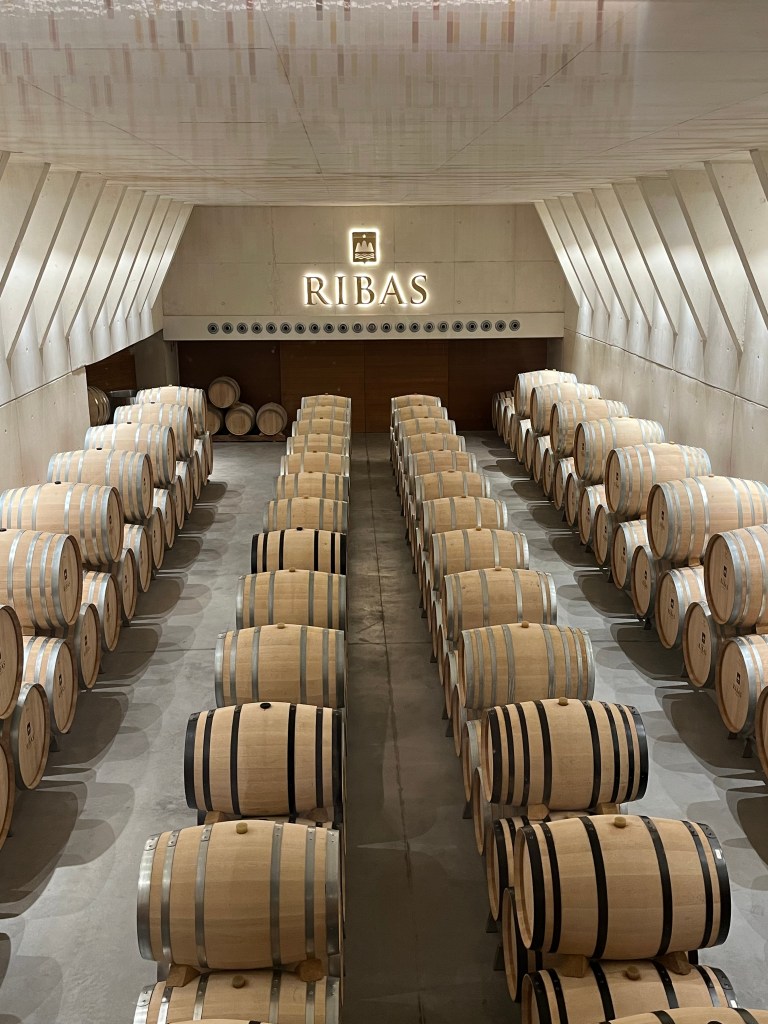
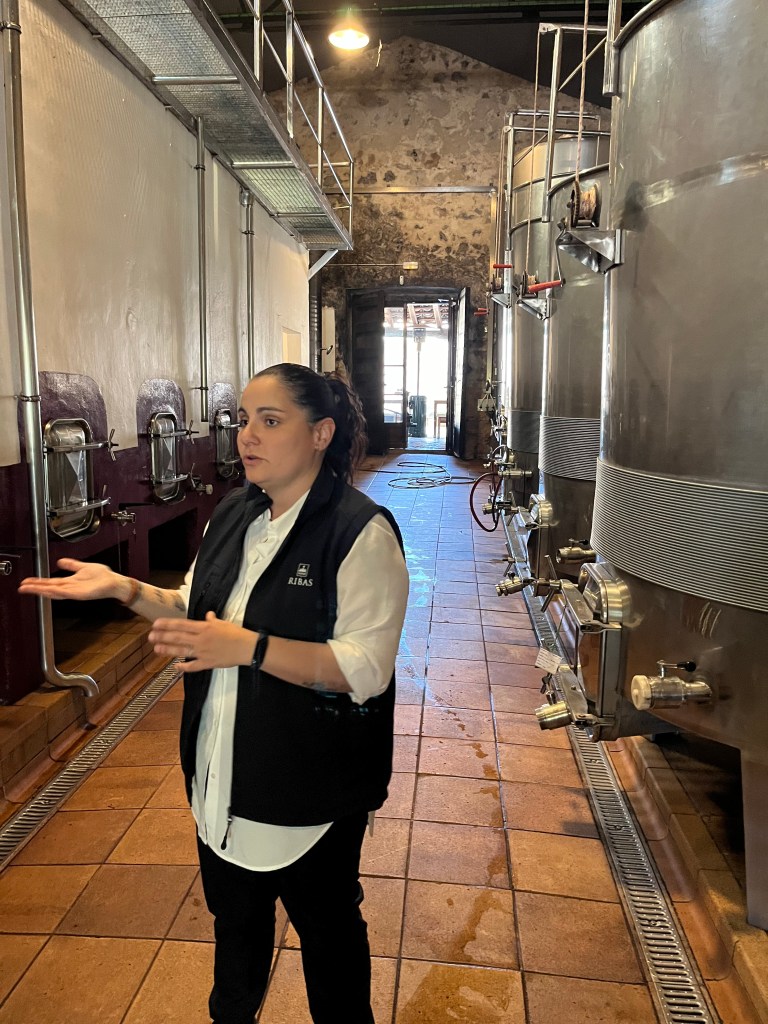

After the tour we enjoyed a tasting and hors d’ouvres in the kitchen of the 300 year old main house. As the chauffeur, I restricted myself to small sips, sadly.
From Ribas we made our way to the second winery, where we were the sole visitors. The guides provided us with a brief history of the finca and then served us an array of their whites, rosadas and reds. Again, I had to restrict myself to small sips.


After Bodega Son Prim https://www.sonprim.com/en/home-2/ we drove back to Söller via the scenic mountain route through Validemossa and onwards past Deià again, which Nicole hadn’t seen, and then down the hairpin road overlooking the sea back to Söller. After dropping my friends off at their hotel, I had the frustrating experience of maneuvering through the narrow medieval one-way streets and, after a few passes, finally found a parking spot. Shortly after, Nicole and Leah came by for some wine and then we walked to one of the few restaurants still open and had an excellent dinner.
I’ve mentioned the excellent infrastructure in Spain before, but driving on the local roads and highway I was struck by the superb road conditions, lack of litter and excellent signage. It’s a pleasure to drive on Spanish roads!
-
València to Mallorca and Söller: November 24 & 25
Since there are only two flights a day from València to Palma de Mallorca, I opted for the 8:40 flight. The València airport is easy to navigate and security was a snap. The security personal were polite and smiling, unlike the often dour Soviet-style TSA agents, although the TSA in Nashville are a bit more cheerful. The flight was uncrowded and fast. When I got to the National counter, I upgraded to an automatic BMW X3 for a modest upcharge and headed up island to Söller, where I had booked an Airbnb. Parking was challenging, since my place doesn’t have any spaces, but I found one about 50 meters from the apartment, so no big deal. The Airbnb is really fantastic. The owner is an English woman who lives in the place next door. The interior of the 1901 house has been tastefully remodeled. It’s the largest space I’ve ever rented, with a big terrace featuring views of the surrounding Tramuntanas. As in València, the local language is Catalan, although everyone speaks Castilian (Spanish).
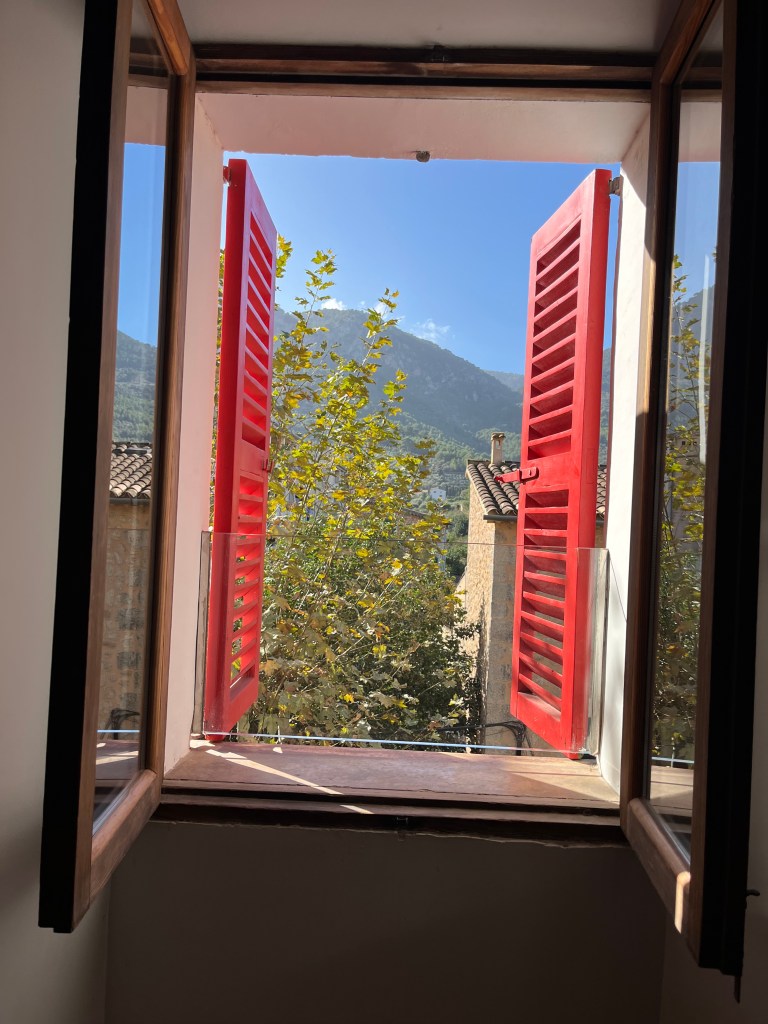

Before meeting my Nashville neighbor Leah for drinks and dinner, I ventured up the much steeper than expected Ca de Rocafort trail. On the map it looked a lot shorter. I decided to turn back after a few kms. since I didn’t want to get caught in the dark. When I got back to the central plaza, I met Leah at her hotel terrace and enjoyed some charcuterie and a local Mallorcan red before walking over to a relatively new place called Chez Junior Söller, which was pretty upscale but cheap by Nashville standards. We enjoyed martinis before dinner, mine with gin, hers with vodka. The meal was superb as was the service. After a long dinner, I walked back to my place for a deep sleep.

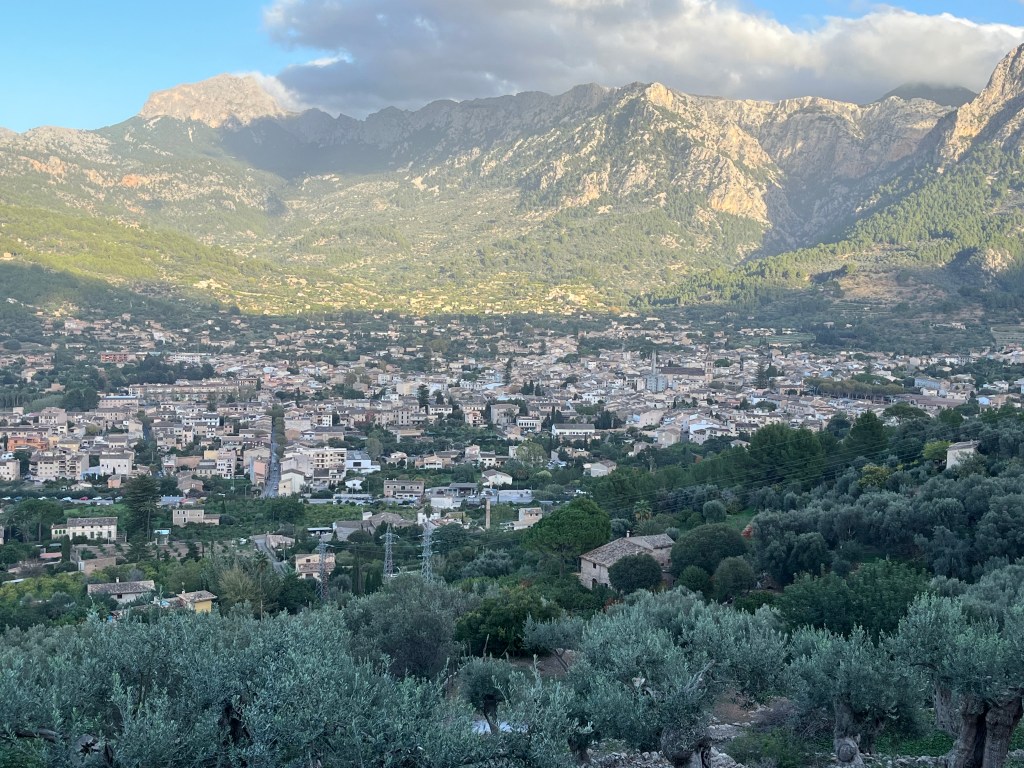

This morning I had Leah over for breakfast, after which we decided to hike over the mountain to the highly recommended village of Deià. The trail was an old mule track, quite rocky and initially pretty steep. We gained almost 1,800’ in altitude. The trail wove through olive trees, citrus, pines and live oaks. The day was cloudy and quite gusty. After a few miles we encountered more hikers, including two women with whom we chatted. They were heading to Sollër and asked if we were heading to Deià, which we affirmed. They told us that they’d met two Irish guys at a pop-up fresh orange juice hut further down the trail, which I found interesting. They told us one of the guys left his mobile at the OJ stand and asked if we could drop it off for them there. Of course we agreed, and fortunately “Johnie” called the number and we agreed that we’d bring it to Deià where he’d reclaim it. One of the women, Anja, was from Berlin, Prenzlauerberg to be precise. We chatted about my visit to Berlin earlier in the year. Her friend was an attractive blue-eyed Spanish woman from Barcelona who was equally pleasant.
We arrived at the orange juice hut just before the owner ran out of oranges. The juice was amazing, as was the view. We chatted with two guys from San Francisco and a woman from Denmark. The drinks were pricey, but where else would one find something like this in the middle of a mountain pass!


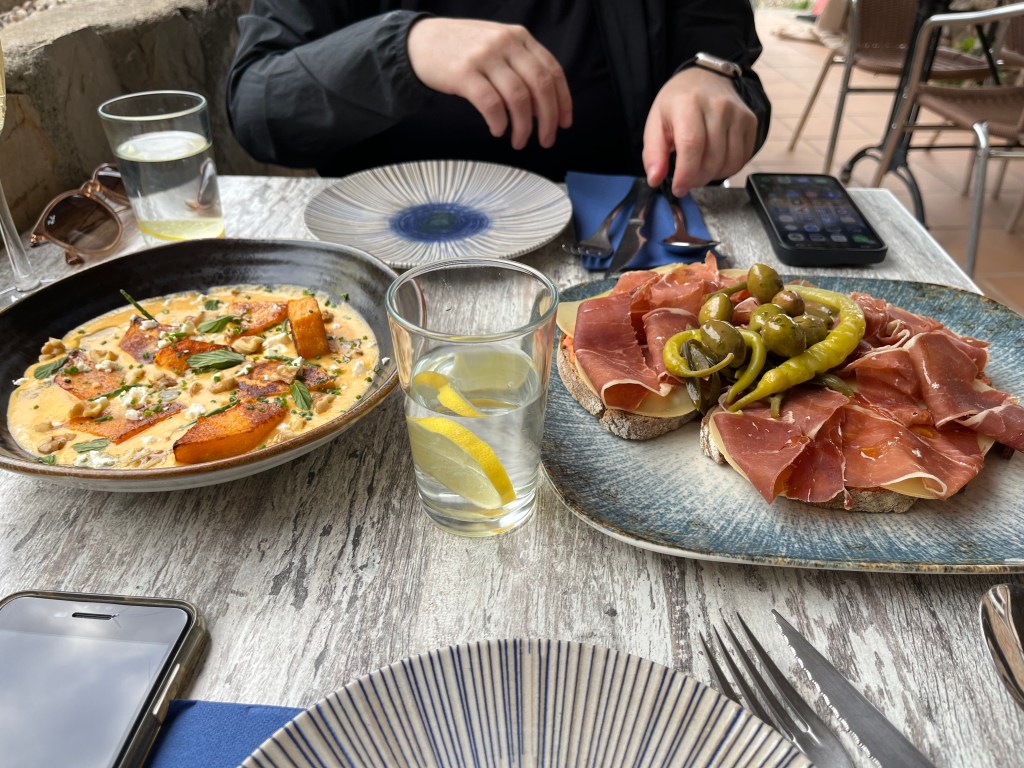
When we finally got to Deià we dropped by Cafe Deià for some cava and charcuterie and a creamy beetroot plate. I was flattered that our server understood my Spanish!
Afterwards, we grabbed the bus back to Söller. En route, we were stopped by the policía on a road that reminded me of Highway 1 in Big Sur. An SUV missed one of the perilous turns and dropped into a ravine. The tow truck had to use a crane to pull it out.

Needless to say, the vehicle sustained major damage.
After I dropped Leah off, I finally found a parking spot on the street near my Airbnb. It’s mildly annoying that one must use an old-fashioned meter that only allows for two hours’ parking until 8 pm. I wish they had an app as in the US where one could simply add more time online. Oh well, the quaintness of Söller absolves it of guilt for forgoing 21st century convenience.
Leah came over for wine on the terrace. The winds all day were prodigious, but luckily the terrace is on the lee of the building. We walked to dinner at a charming tapas restaurant midway between our places and enjoyed a light dinner.

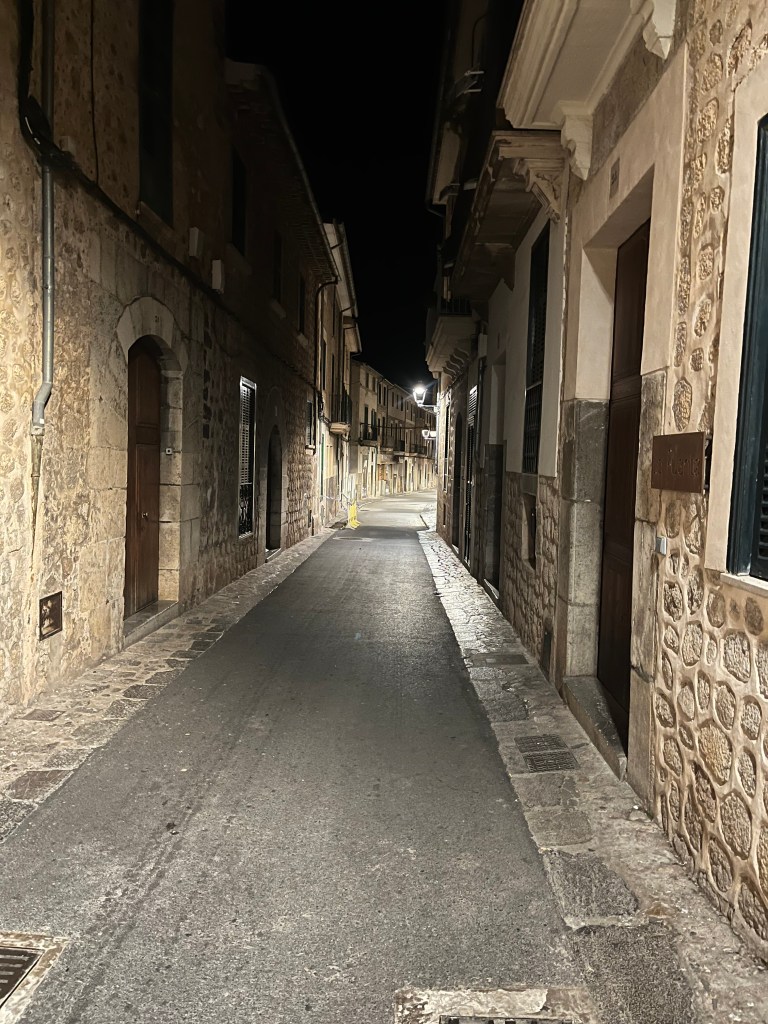
Afterwards I headed back through enchanting streets to my apartment to finish this post.
-
València: Day 2 November 22, 2024
I’m writing this on Saturday since I never got around to posting yesterday.
València is truly a gem! Spain’s third largest city is worth visiting. It’s much better that Barcelona, and in late November there are virtually no tourists. The horrible floods earlier this month mainly affected the southern suburbs, sparing the city center. After a horrific flood in 1957, the Franco government embarked on a major infrastructure project to reroute the Rio Turia away from the center to the south. The former riverbed was transformed into a stately kilometers-long park, the Jardí de Turia, along which I took an extensive walk yesterday. The park is filled with exquisite trees, including orange trees, soccer fields and running trails. It’s the largest city park in Spain. Among its attractions is the science and arts complex, which adjoins a prominent oceanographic museum. The Museum of Sciences was finished early this century and was designed by the famous architect Santiago Calatrava. The modest admission of €7 provides access to four levels of amazing scientific and environmental exhibits.

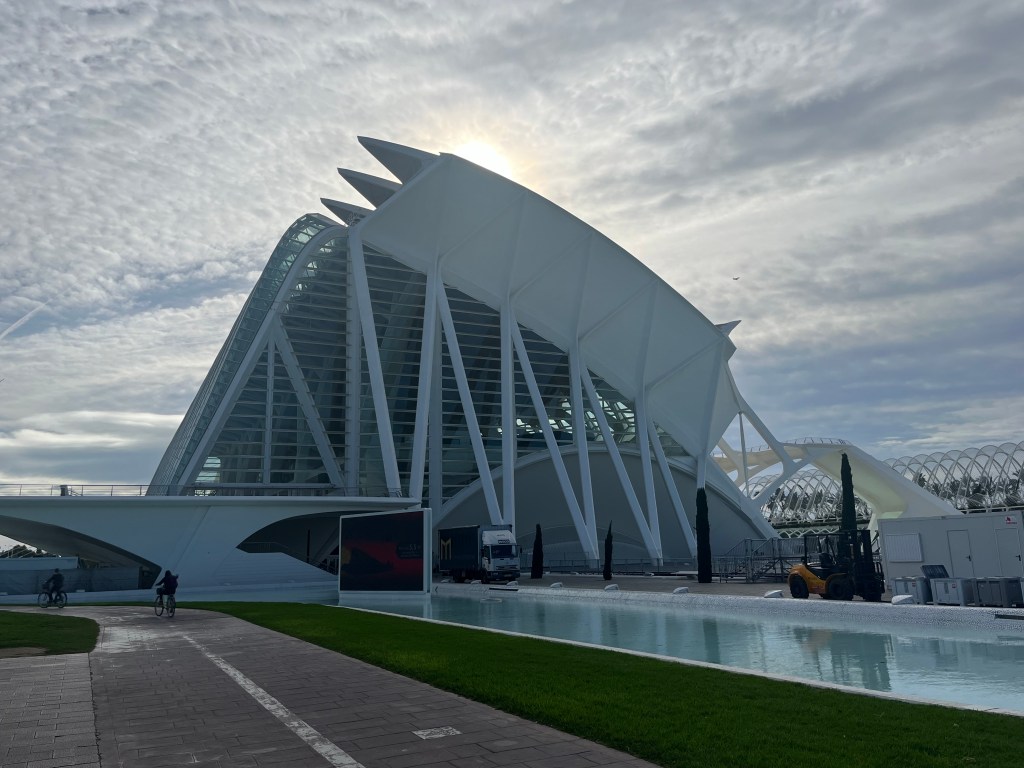
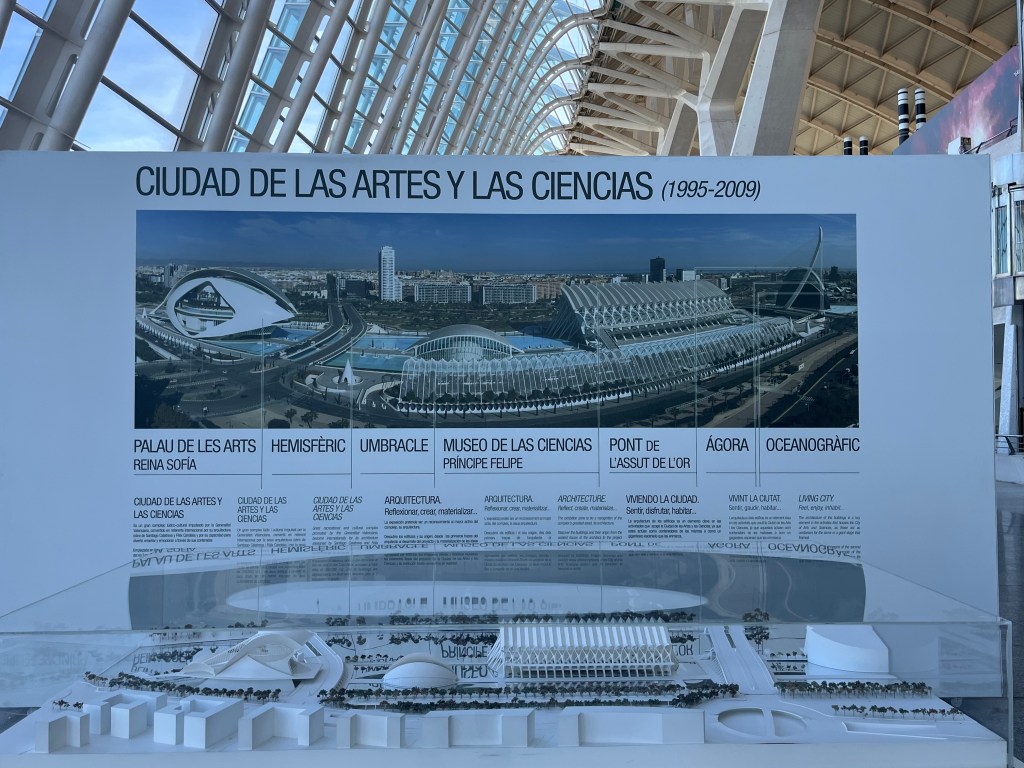
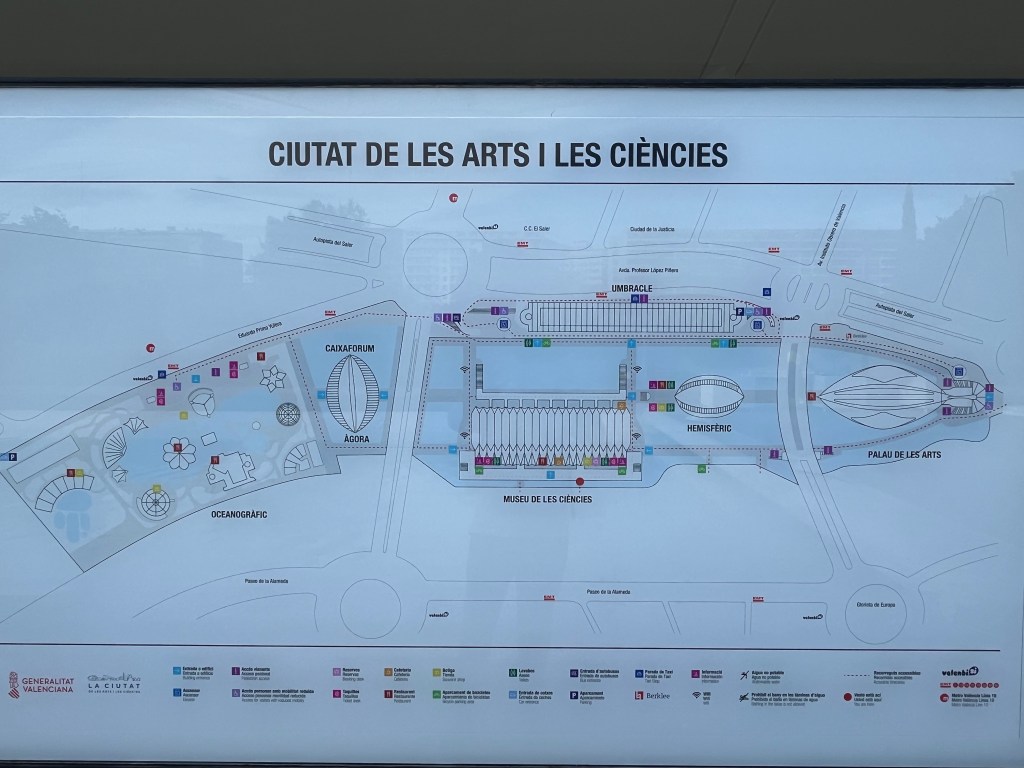
The complex also features a modernist concert hall, the Palau des Arts.

I walked almost four miles through the Jardí to the Torres de Serrans, built in 1392, which I visited on Thursday. From there I made my way through the old town to the highly-recommended Puerta del Sol, where I enjoyed an excellent sea bass accompanied by a dry vino blanco.

This morning I went to an adequate gym for a much-needed lifting session. Cuzco Gym and Fitness was an 8-minute walk from my apartment and was staffed by a lovely Dutch expat. The fee was only £10, and the gym was thankfully rather empty, so I could go about my normal routine. Afterwards I headed back to my place to run a wash, after my hostess explained how to run the always mystifying European washers!
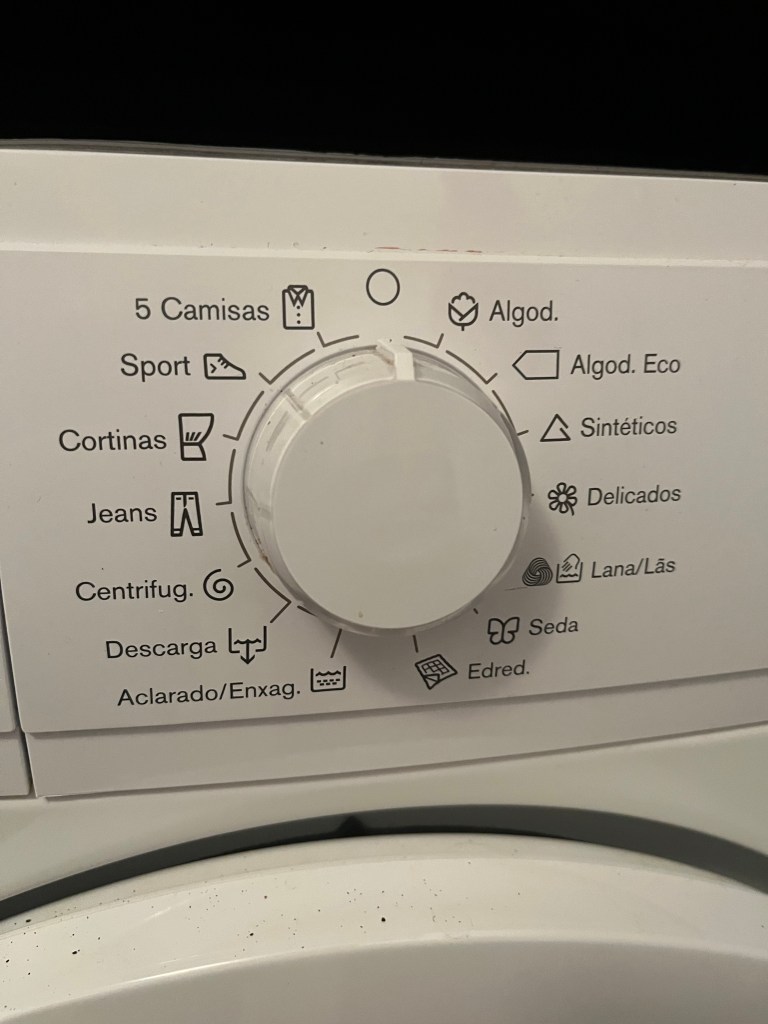
I received several great restaurant suggestions, so after some more walking through the city, I’ll have my usual late lunch.
Before closing, I’ll comment on the well-reported migrant crisis. Since it’s a shoulder season in terms of tourism there are virtually no foreign tourists in València. The vast majority of the people one sees on the streets are native Spaniards. While in Madrid there were a handful of women with headscarves, they appeared to be rather fair, so I’m assuming they were from former Spanish Morocco. I spoke to a few and they seem well accepted. Of course, as I wrote earlier, the Moors ruled Spain for centuries and the Spanish language is filled with Arabic words. Perhaps some of the immigrants are distantly related to the Moriscos who were expelled from Spain by Philip III in the early 17th century.
Even though Spain has a disastrously low total fertility rate, I noticed a number of strollers in València. The parents, however, are generally in their late 30s or early 40s. The children are well-behaved and well-dressed. Even though the per capita GDP is less than half that of the US, the people seem to live well and are uniformly height and weight proportionate, without the endemic obesity and slovenliness of many “richer” Americans. The stores are thriving and the restaurants are well patronized. As has been reported, there are a thousand additives forbidden in the EU that are allowed in the US. Hopefully, Americans can recover from chronic obesity and disease.
-
Madrid to València
Before heading to the Chamartín high-speed rail station this morning I took a nice walk down to the Royal Palace. As a frequent traveler to continental Europe, I am always impressed with the cleanliness and order of many European cities. I saw municipal workers sweeping up leaves and cigarette butts (no leaf blowers). The other striking feature is the absence of homeless people. Like most of its EU partners, Spain is a liberal democracy; yet its streets are free of the homeless and the associated litter and human waste matter. There’s something terribly wrong with the governance of most US cities. It’s not fair to ascribe this to liberal leadership; rather, it’s what I call “abdicationism”, the willful refusal to police the existing laws, thus making life miserable for law-abiding citizens.
I’ve also commented on the aesthetic superiority of European (and certainly East Asian) infrastructure. While the US builds cheaply, with its reinforced concrete sidewalks rather than pavers, Spanish city streets are smoothly paved, with no potholes, and the transit system is superb. While en route to Valencia on a high-speed train, I saw several other high-speed trains on adjacent tracks rushing passengers to their destinations at 130 mph. The trains themselves are spotless. Even the toilets are sparkling.
València is a lovely old city. Fortunately , the disastrous floods earlier this month spared the city itself. I noticed that all the signage is in Spanish and Catalan. There’s a reason behind this. After defeating the Moors in 1278, King James I established the Kingdom of València, which thrived for centuries. It’s now the third largest city in Spain, with a population of 2.5 million (metro). The reason for the adoption of Catalan is attributed to the importation of women to València from Catalonia, since the departure of the Moors left the city depopulated. The king invited women from the north to move to València to marry his soldiers.
As I typically do on the first day of visiting a new city, I booked a free city tour, which began at 4:00 pm. The guides are always excellent since they receive more in tips than many private guides do. However, today’s guide was somewhat hard to understand and was kind of a bore, blabbing about paella and other uninteresting topics. I was the only American and had a delightful chat with a German couple afterwards. They didn’t seem alarmed by our recent election. I guessed that they were conservatives. They appreciated my information about the Electoral College, which generally is well-received by non-Americans.
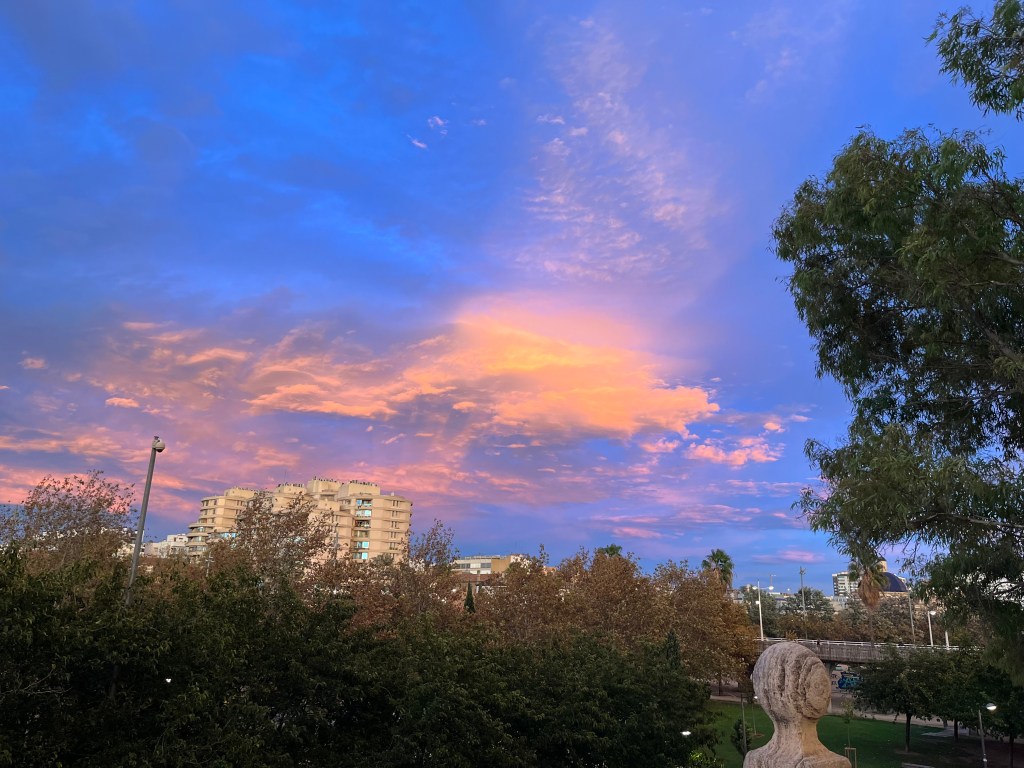
After passing through the Serrans gate, I was able to grab a shot of the dramatic sky in the east.
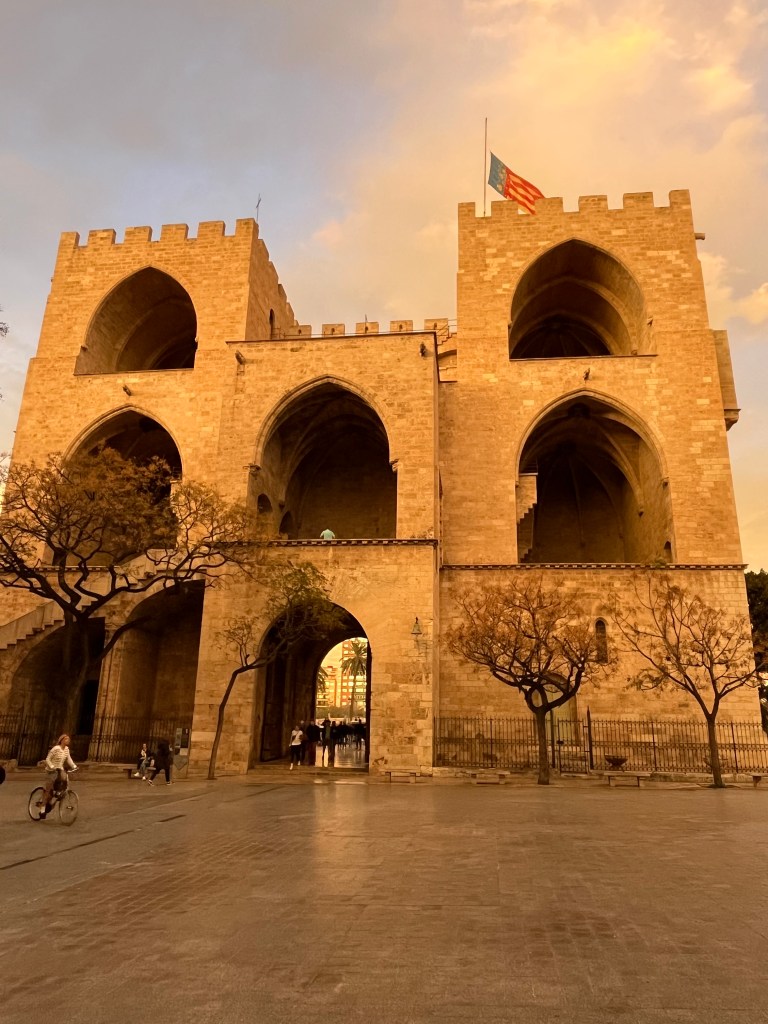
Torres de Serrans, the largest gate in Europe 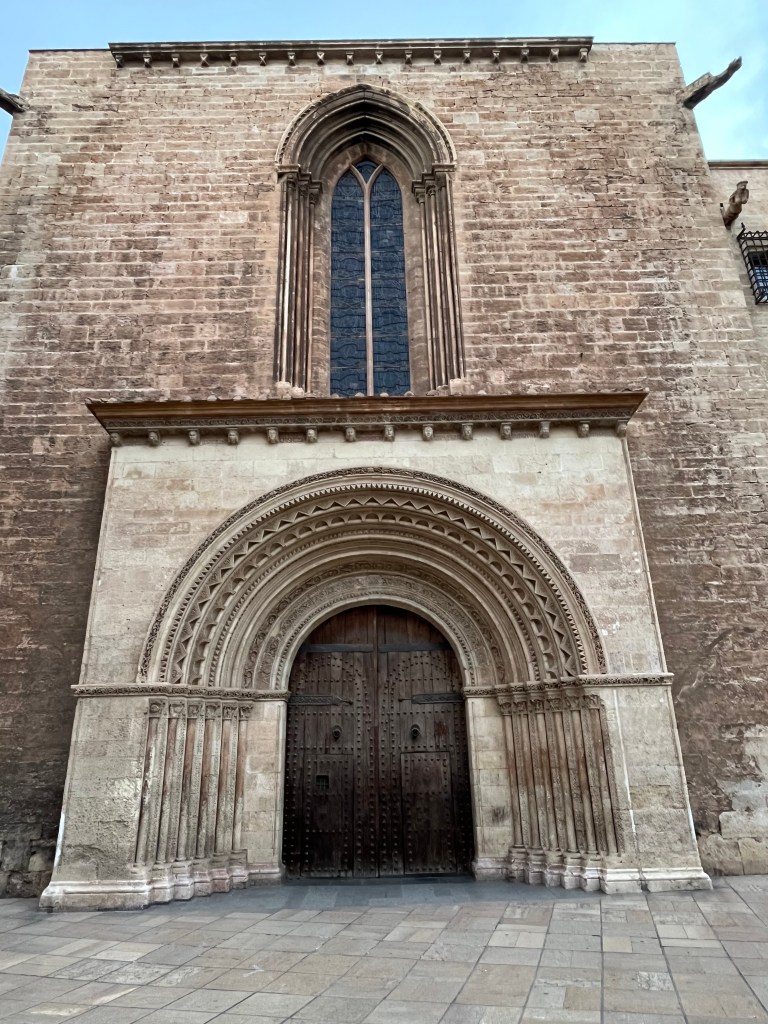
Romanesque portal 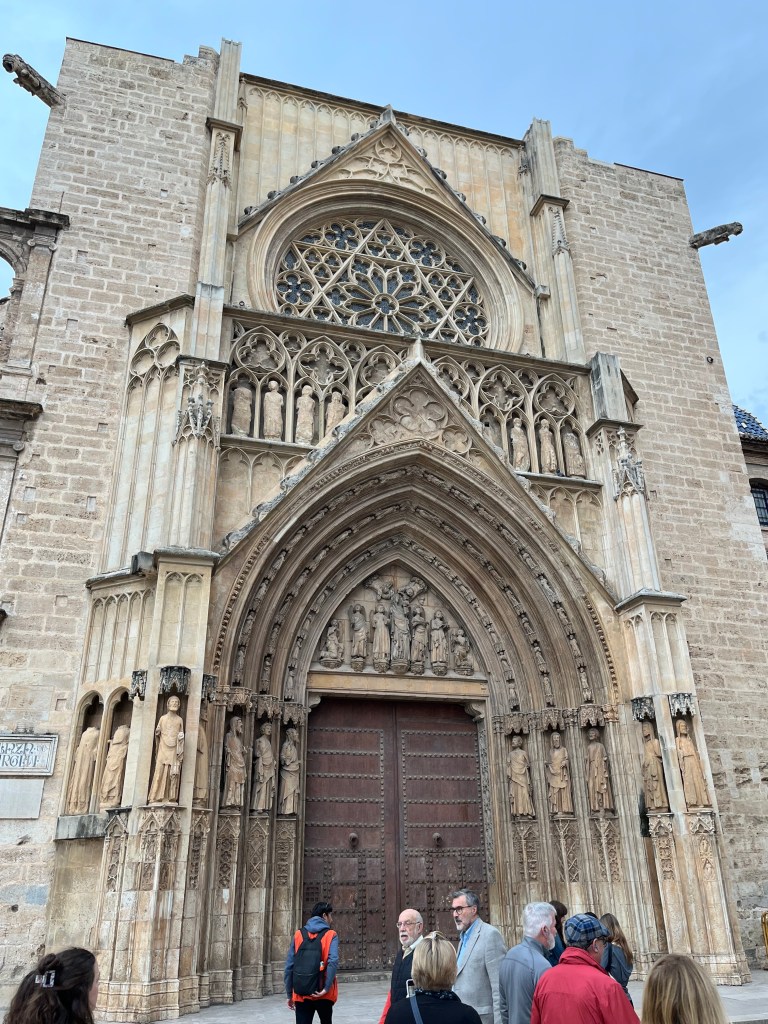
Cathedral entrance 
Historic water tower, tallest structure in València 
Baroque main entrance to the cathedral 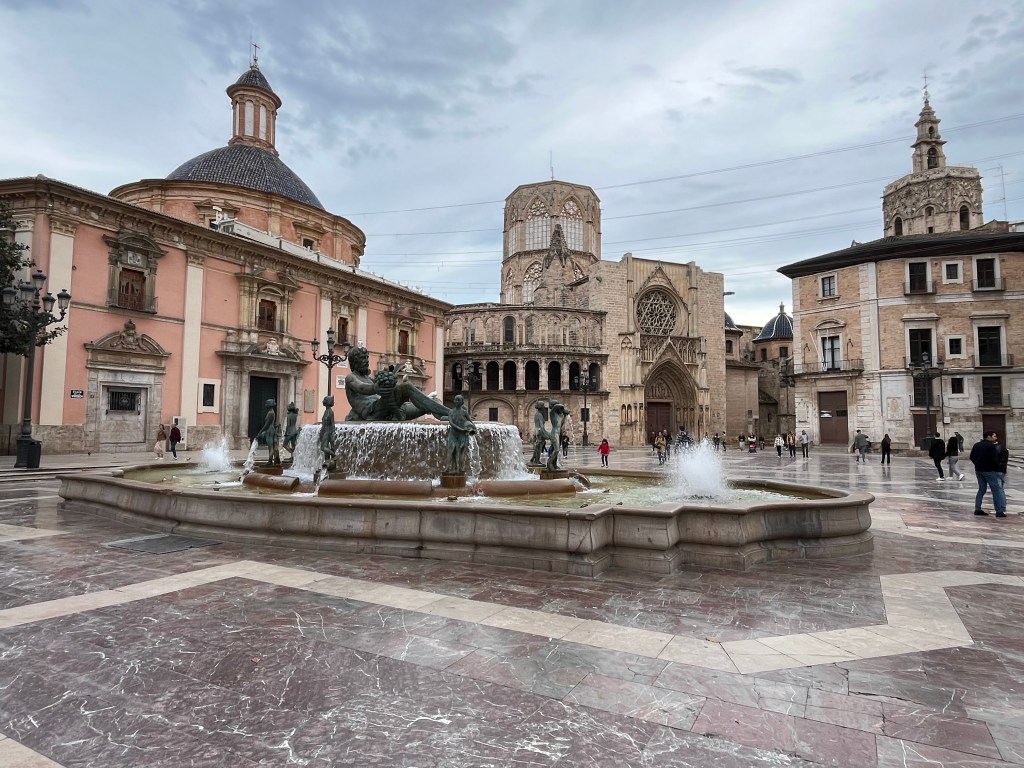
Plaza de la Virgen 


València’s medieval quarter is charming and full of artisanal shops and inviting restaurants. Tomorrow I plan to delve more deeply into the city and perhaps rent a bike to explore the vast green area just to the east of town, with a trek to the Mediterranean coast if possible after the floods.




























-
Subscribe
Subscribed
Already have a WordPress.com account? Log in now.
 Curated Carlos