As I’ve written in the past, the free city tours are always the best, since the guides make far more from tips than the guides who work for an agency. Generally, each person on the tour tips €20. Today there were 11 on the tour. I was the only American. Our guide was excellent. We stayed in the historic center, when most of the notable sites are located.
Like most major German cities, Leipzig was practically razed during the war. Since it ended up in the DDR, restoration was sporadic. Instead, the DDR built ugly replacement buildings. It wasn’t until after the 1990 reunification that the federal republic invested billions in restoring most of the significant landmarks. Today, it’s impossible to imagine that many of them were almost completely rebuilt.
We started 300 meters from my Airbnb in Augustus Platz, which is dominated by two decent DDR structures: the renowned Gewandhaus Orchestra and the Opera House. In the center is a majestic fountain.
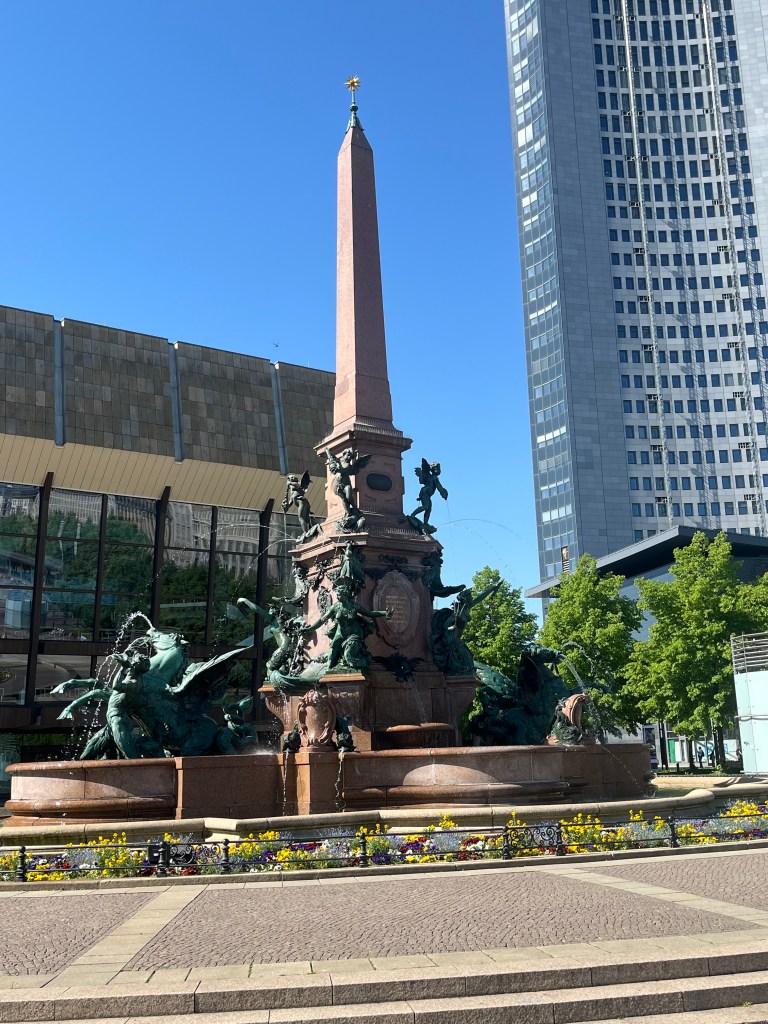
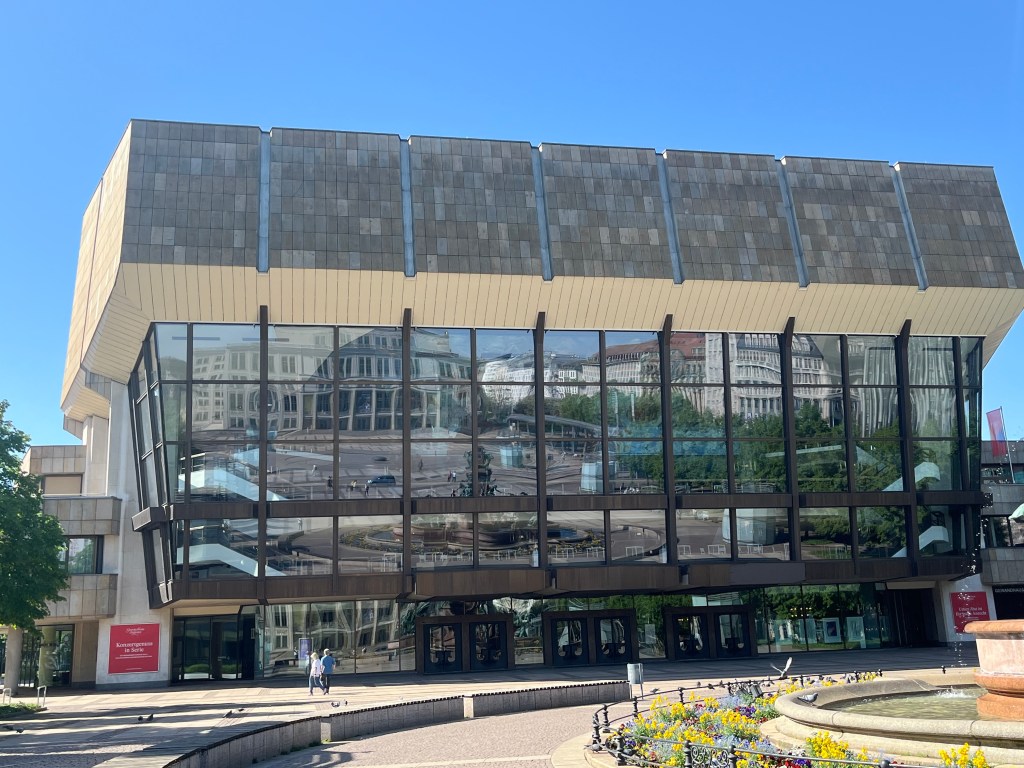
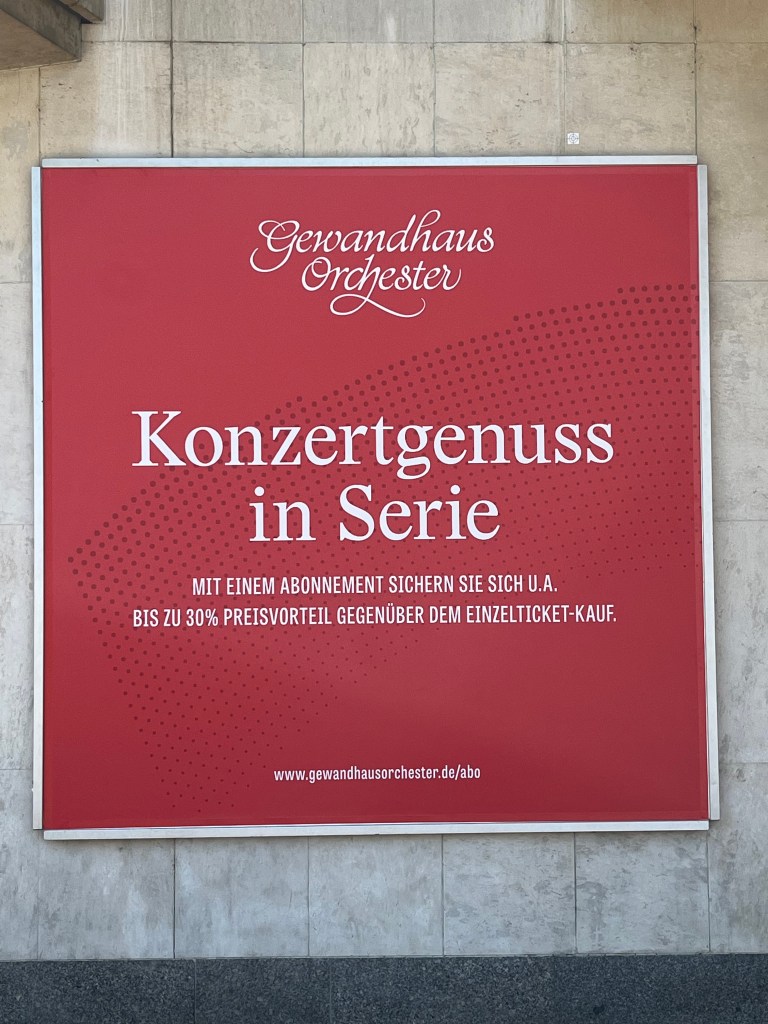
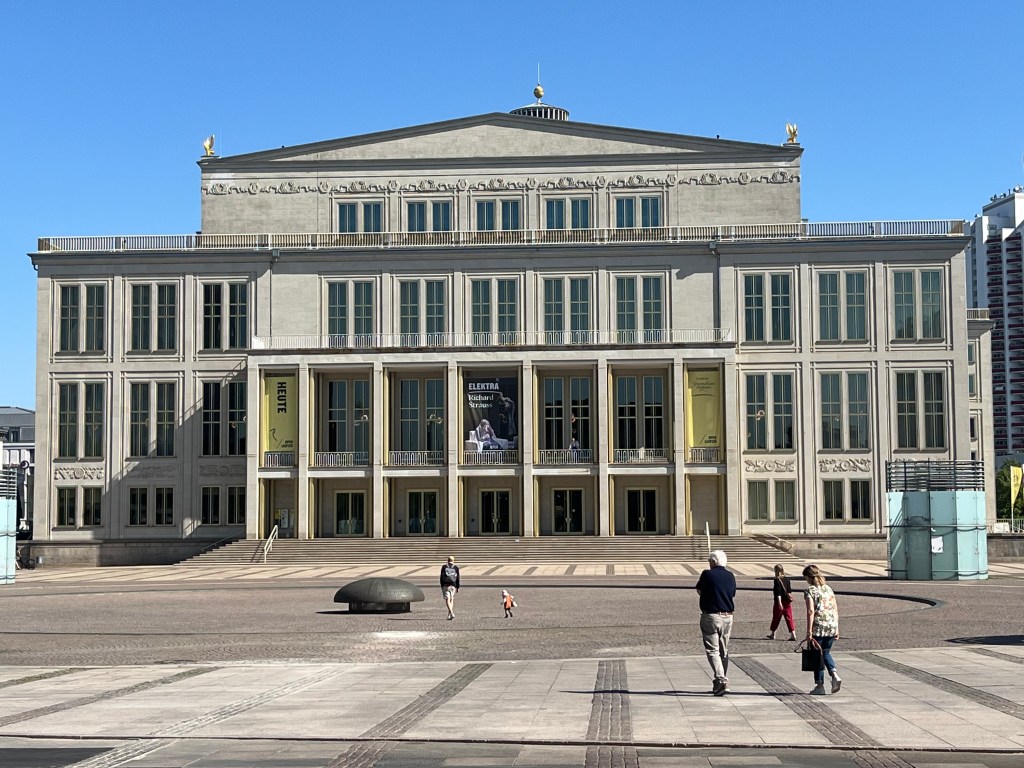
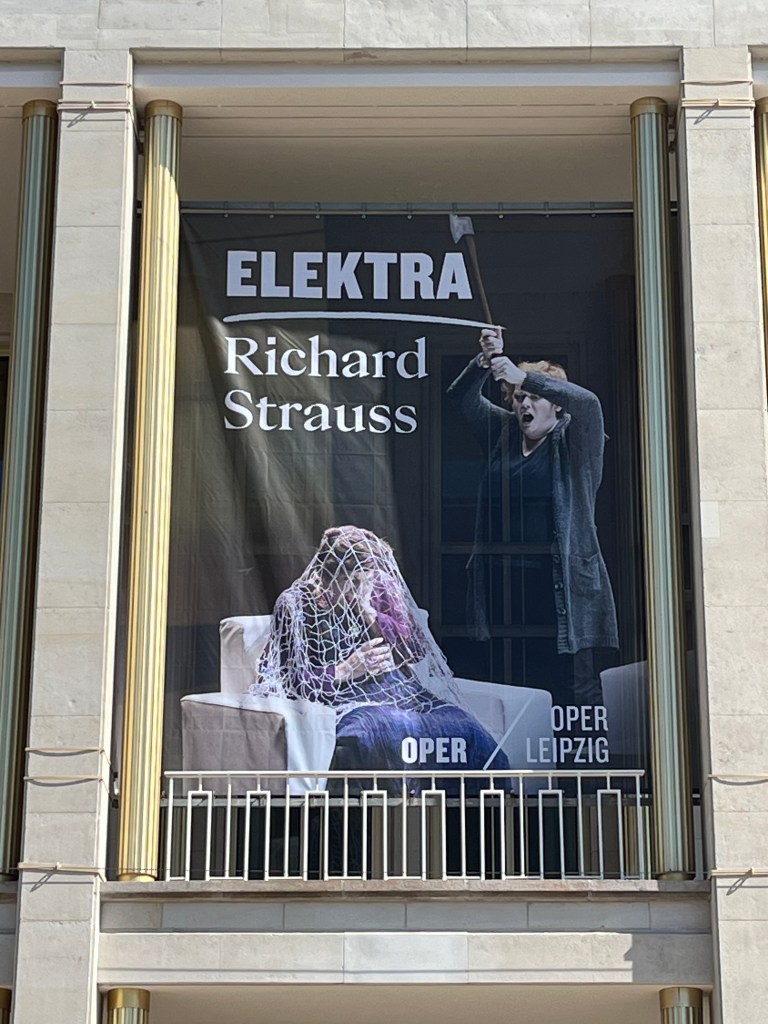
From the Augustus Platz we made our way to the University of Leipzig, established in the 15th c. Some of its famous alumni and professors include Goethe, Nietzsche, Heisenberg, Wagner, Leibniz and Angela Merkel. The university boasts of 14 Nobel Prize winners. The DDR elected not to rebuild the beautiful 18th c. main building and built a ghastly prefab building instead and also leveled the adjoining 16c. Lutheran church. The German government funded a new main building in the early 2000s.
After 1800, Leipzig grew rapidly, as its commercial fairs made it a major center of European commerce. Messe is the German word for fair and an idealized “M” is the symbol of the city. In the 19th c. the city relocated its Rathaus (city hall) to the site of an old castle, which is now the hub of a series of upscale galleries, shops and restaurants.

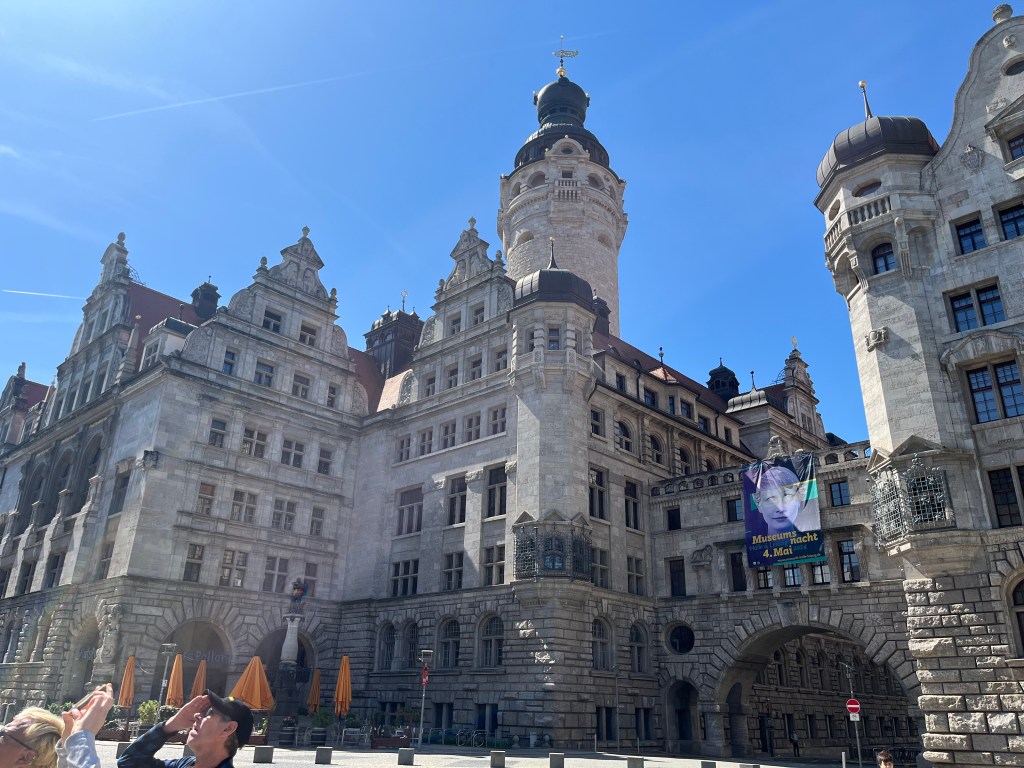


Few cities can rival Leipzig’s musical and literary pedigree. Both Schiller and Goethe lived here. All Germans read Goethe’s “Faust” in high school. The city’s famous composers include Bach, who was resident at St. Thomas Church, which also has an internationally acclaimed boys choir, Richard Wagner, who was a friend of Goethe’s, Felix Mendelssohn and Robert Schumann and his wife, Clara.


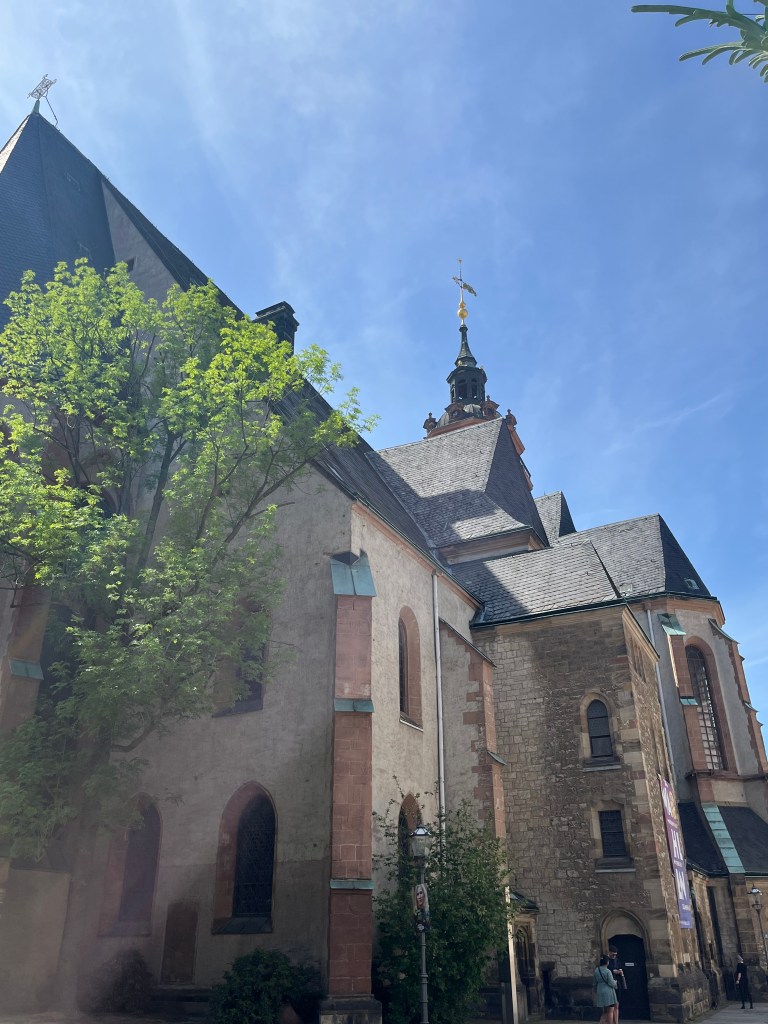
After the war, Leipzig’s population fell from over 750,000 to 550,000. The bulk of the population loss was attributed to those who fled the Soviet Zone to the West before the DDR border was sealed. During the DDR life was grim and the city became heavily polluted as the state built heavy industry and used coal as its principal energy source since Saxony was a major coal region. By 1979, the nascent protest movement began as one focused on the environment. Since the DDR surprisingly had a relatively hands-off policy vis-á-vis the Lutheran Church, the churches became the loci of anti-regime activity. By 1989, St Nicholas Church in Dresden hosted Monday night services that attracted thousands who were committed to peaceful protests. Two days after the huge East Berlin commemoration of the DDR’s 40th anniversary, 10,000 protestors marched from St Nicholas Church to the Martin Luther Ring. Because a trade fair had recently concluded, West German TV reported on the protests. Since many citizens of Leipzig were able to receive West German TV signals, the demonstration grew to over 200,000, followed by similar mass demonstrations elsewhere in the DDR. While the Stasi wanted to take harsh measures, the Politburo, sensing the end was near, forbade any police repression. Less than a month later, the Wall fell. A few days after the Leipzig demonstrations, the Politburo dismissed the Honecker government.
Three views of St Nicholas Church, with the October 9 plaque and memorial.




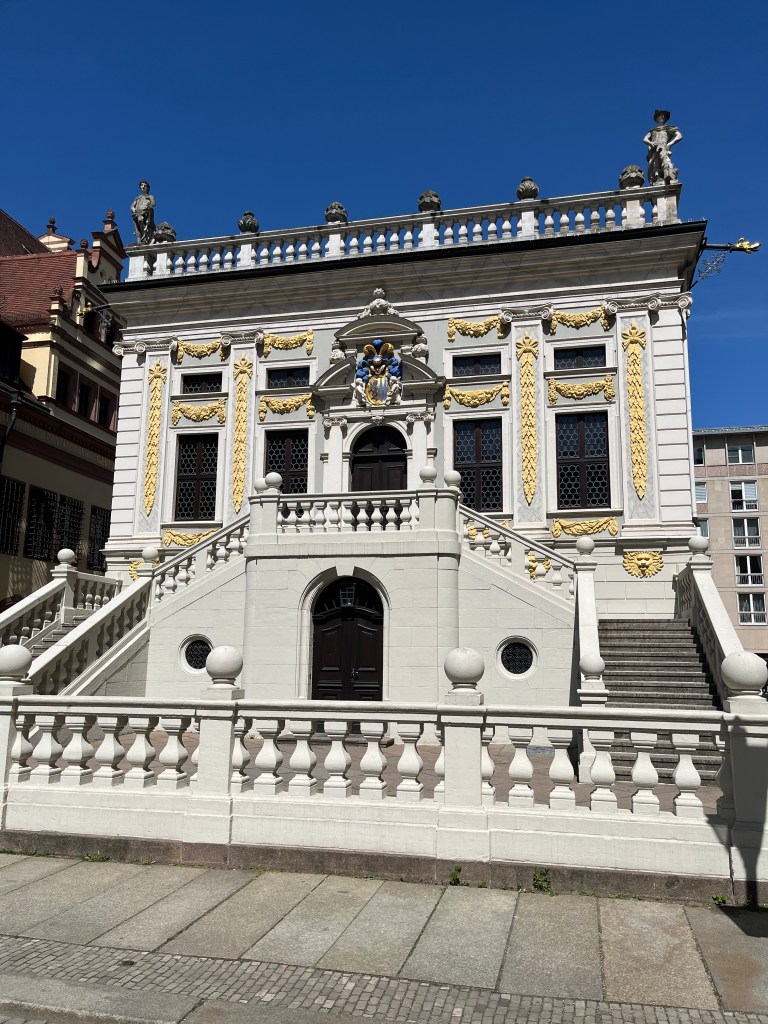
At the end of the tour, we viewed a famous Art Nouveau coffee shop and the renovated Stock Exchange, one of the three oldest in the world.


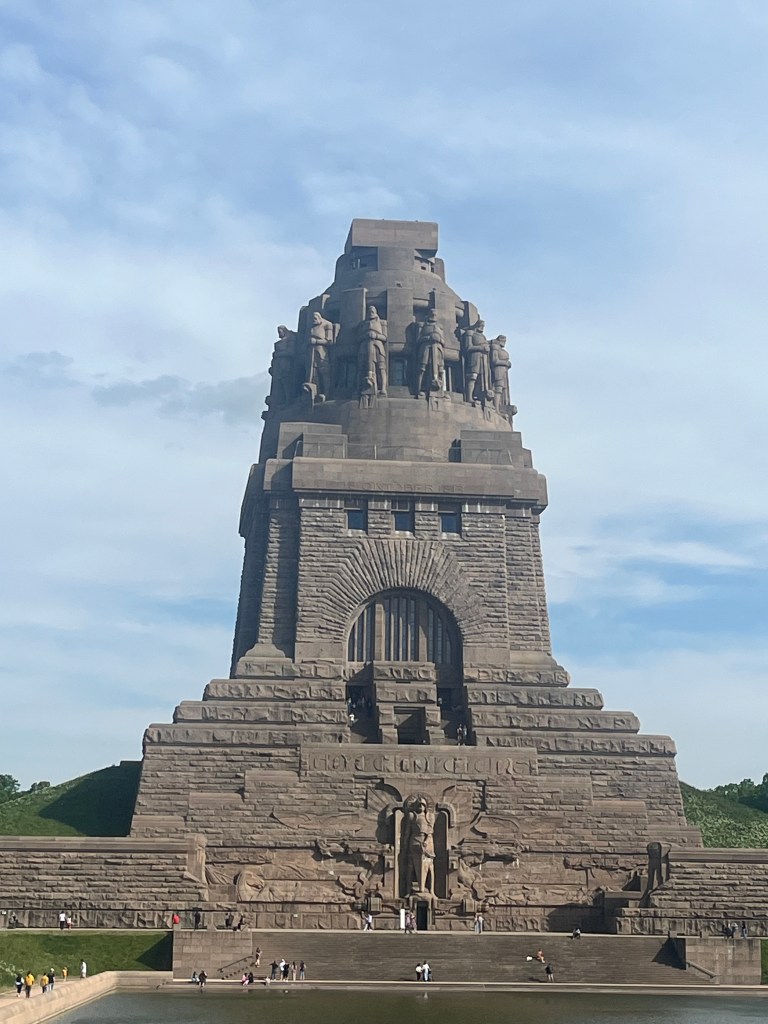
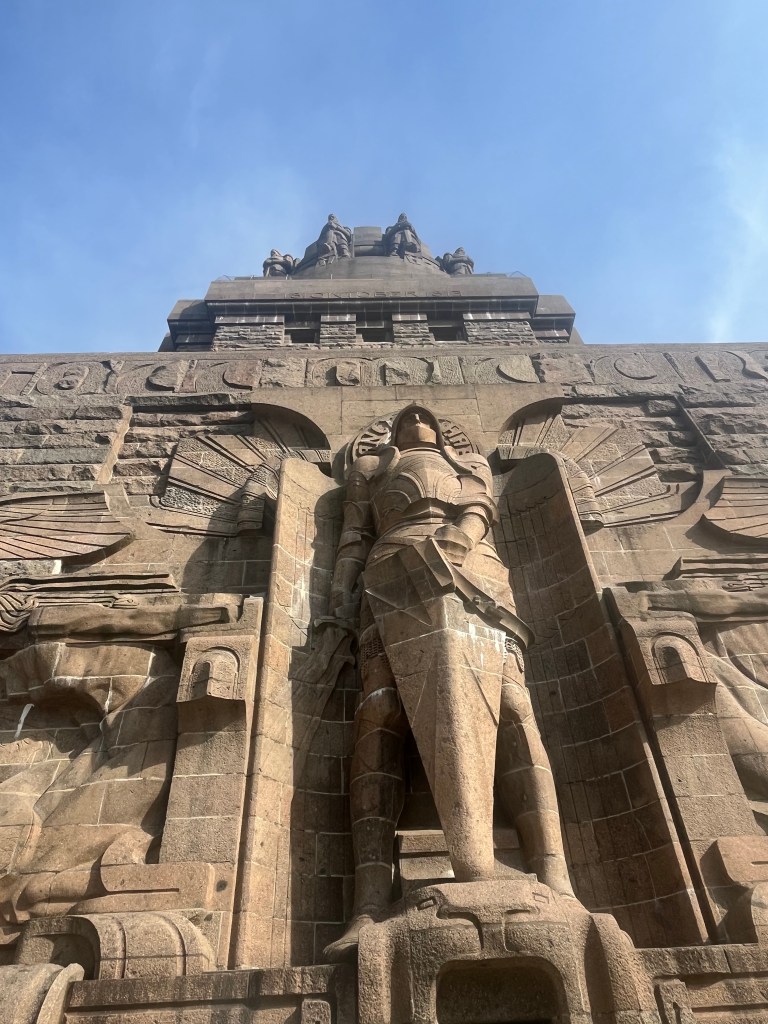
After a late lunch, I took a five-mile round trip walk down Pragersraße to the Völkerschlachtdenkmal (Battle of the Nations Monument) built in 1813 to commemorate the defeat of Napoleon’s retreating army by the forces of Prussia, Austria, Russia and Sweden. Over 600,000 troops were involved in the Battle of Leipzig and there were 120,000 casualties, the biggest battle in European history until the First World War.
The monument stands over 330 feet high.

 Curated Carlos