This morning I went for another walk around the Altstadt and visited the Staatliche Kunstammlungen to view the religious objects on loan from St Vitus Cathedral in Prague. There were a number of macabre reliquaries with actual pieces of flesh and fingers from saints. The exhibit also featured a small collection of icons and metal busts of prominent Bohemian nobles and bishops. It was coincidental that I was heading to Prague later that day.

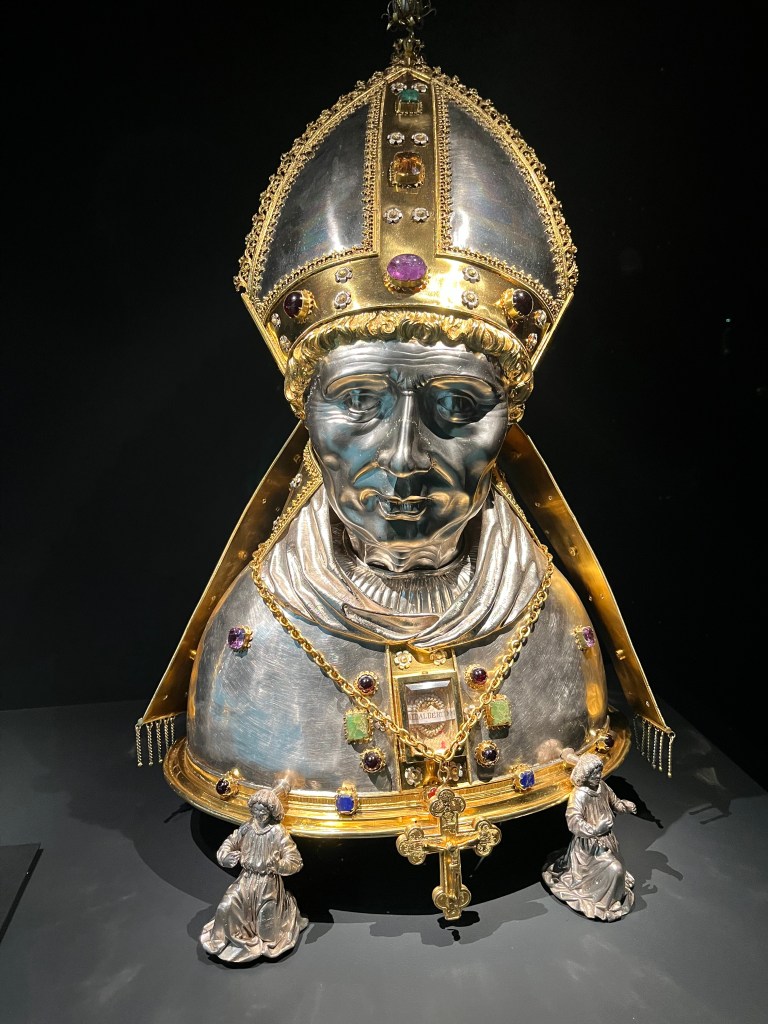


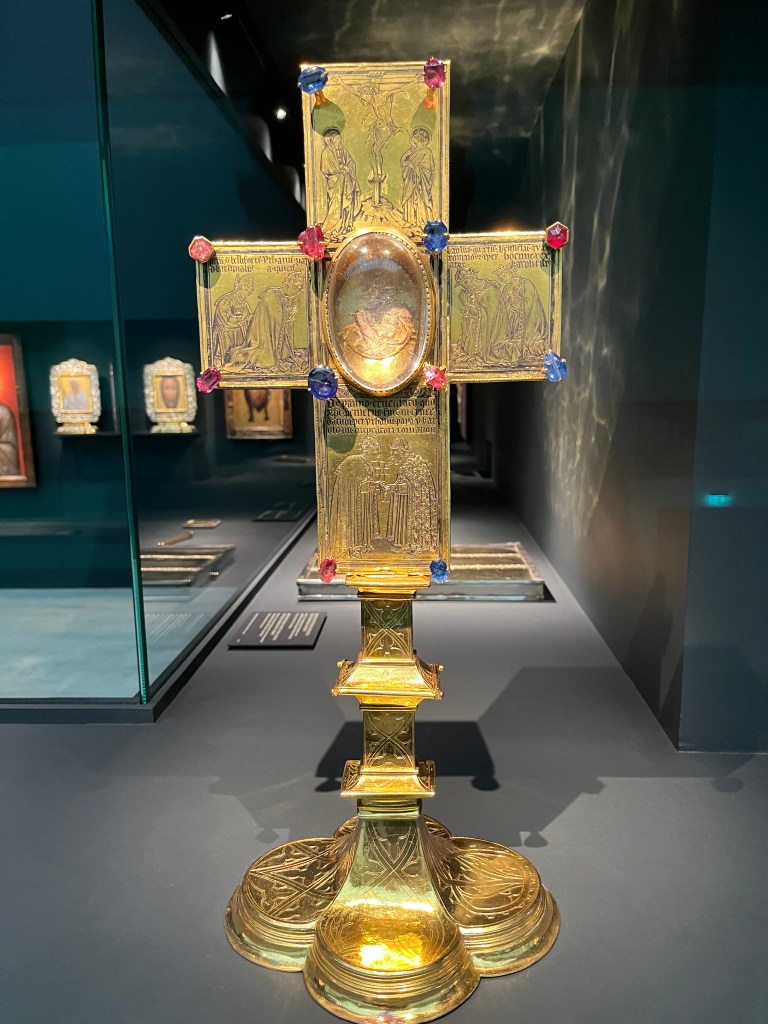

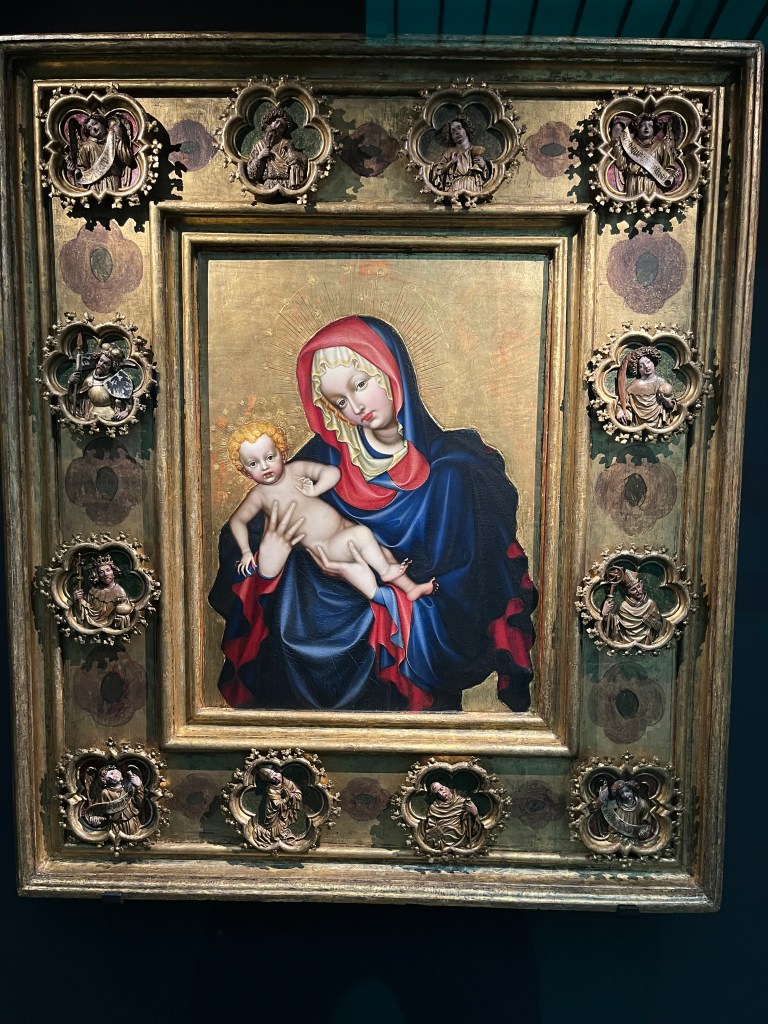

After checking out from the excellent Gewandhaus, I grabbed the tram to the Dresden Hbf and waited for the train to Prague, which arrived on time. With my injured right bicep, I have to be super careful taking my luggage down from the overhead rack or else! Fortunately, I’ll have flight attendants to help me on my return to the US.
For the duration of my trip so far, I’ve been in flat terrain, so it was nice to see some hills and crags once we crossed the Czech border.


The trip was about two hours and I was able to grab an Uber to my Airbnb in Mala Strana, coincidentally the same neighborhood on the Vltava near the famous Charles Bridge where I stayed in fall of 2001. My driver spoke perfect English and offered that the Czechs are growing tired of the 400,000 Ukrainian refugees, many of draft age, who are receiving benefits from the Czech government. He said there are a million in Germany and 900,000 in Poland. What irks the Czechs is that so many are draft dodgers. Apparently, the military age men have to return to Ukraine if they want to renew their passports, where they’ll most likely be sent to the front. One learns a lot from drivers.
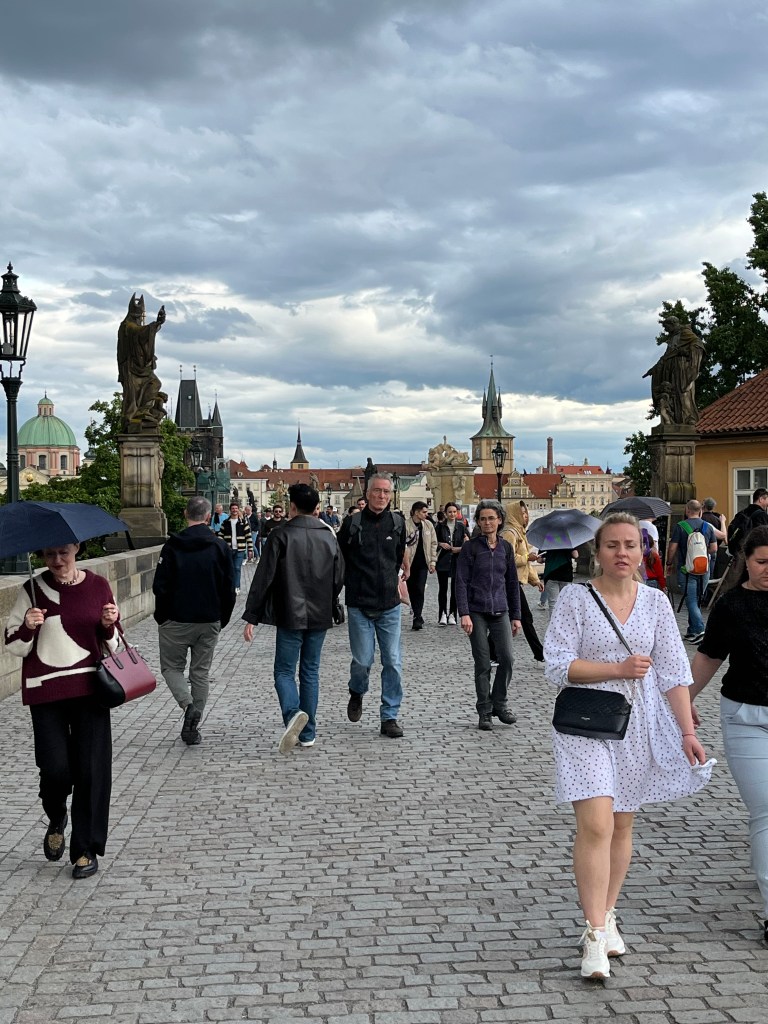
My Airbnb is perfectly situated in a remodeled old building in Malá Strana, a few meters from the Charles Bridge. After unpacking and icing my right bicep, I walked up the steep cobblestones hill to revisit the Hradčany (Castle) district, which was mercifully free of tourists later in the day. I knew that Staré Město and Novo Město would be thronged with tourists.
Ascending the hill, I noticed a number of changes over the ensuing 23 years. First off—the weed stores. I hadn’t realized that pot was now legal in Prague. Also, the tourists. Of course, I last visited shortly after 9/11 so the city was fairly empty. I’ll revisit the flat Old and New Towns in the morning before the narrow streets become impassable. That said, Prague is still the unrivaled jewel that I remembered.
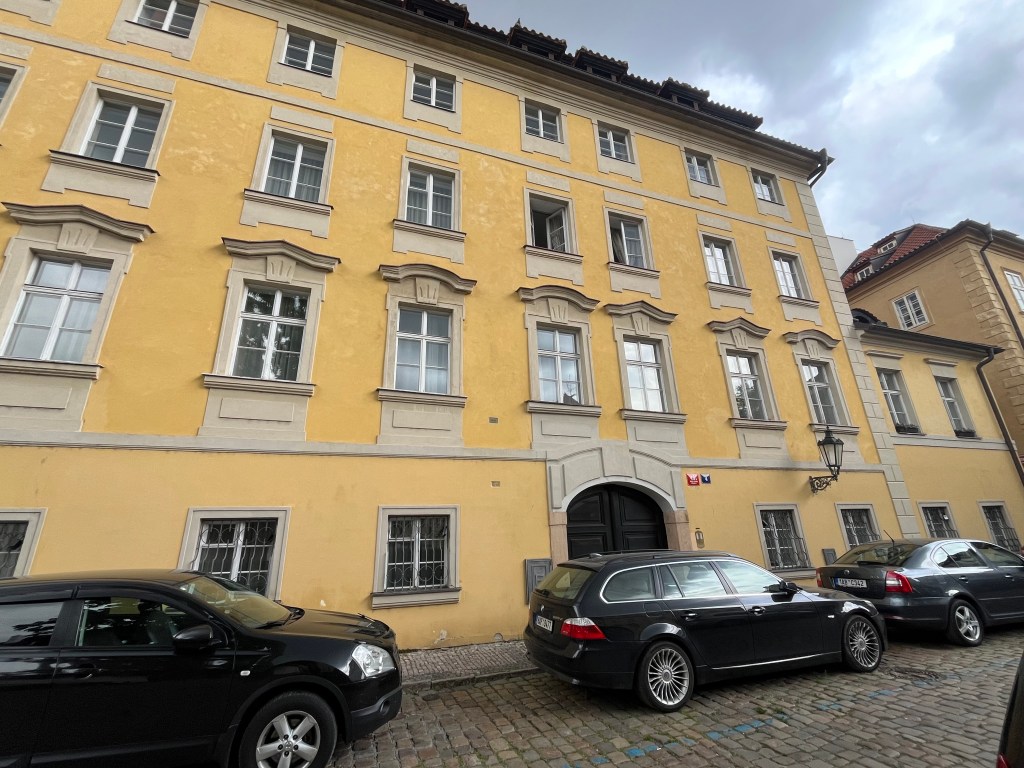

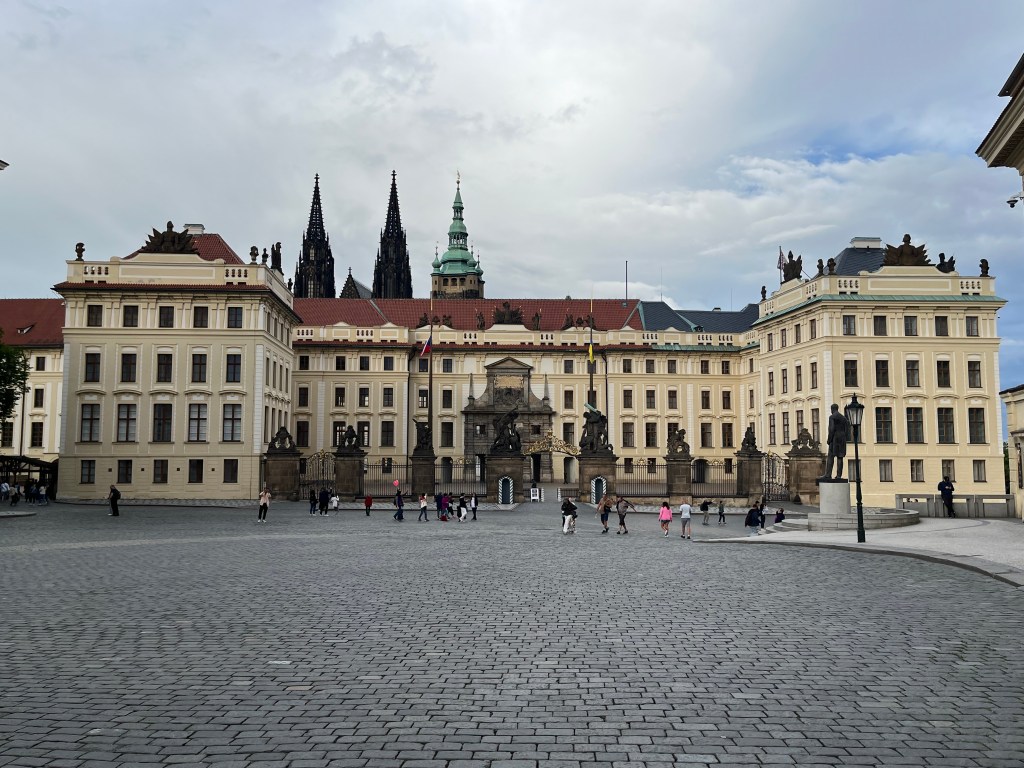
As I walked across the plaza near Prague Castle and its Gothic masterpiece, St Vitus Cathedral, the crowds thinned significantly. The castle was rebuilt by Emperor Charles IV, who was a prolific Hapsburg builder, in the 1540s and is the residence of the Czech president.
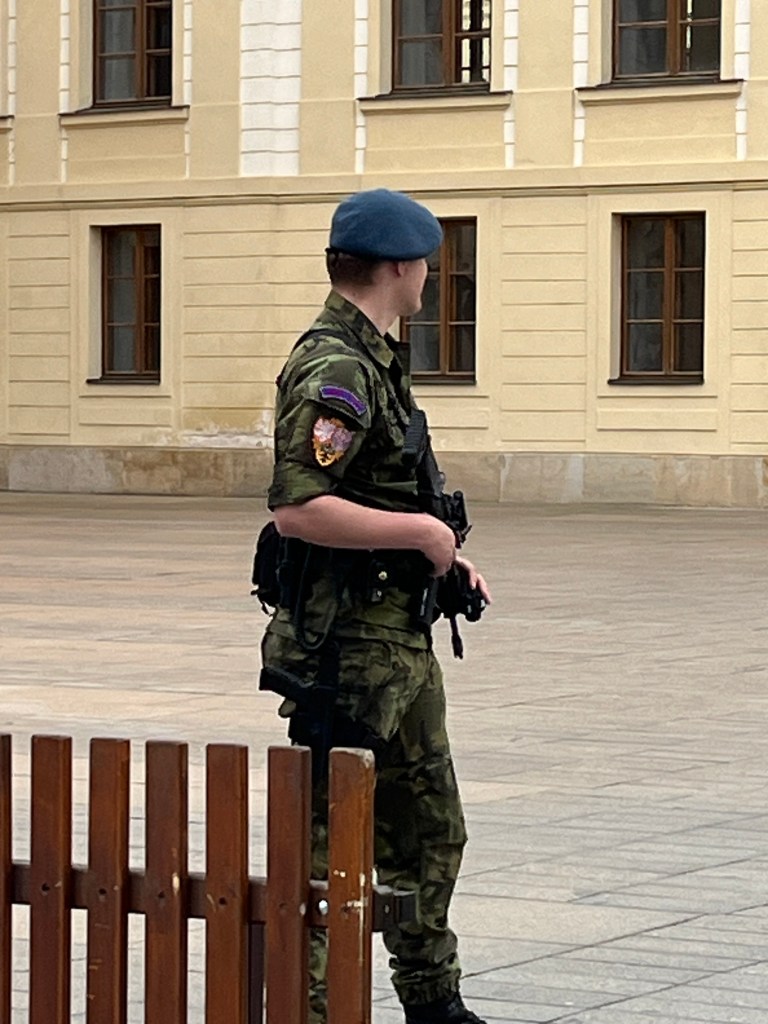

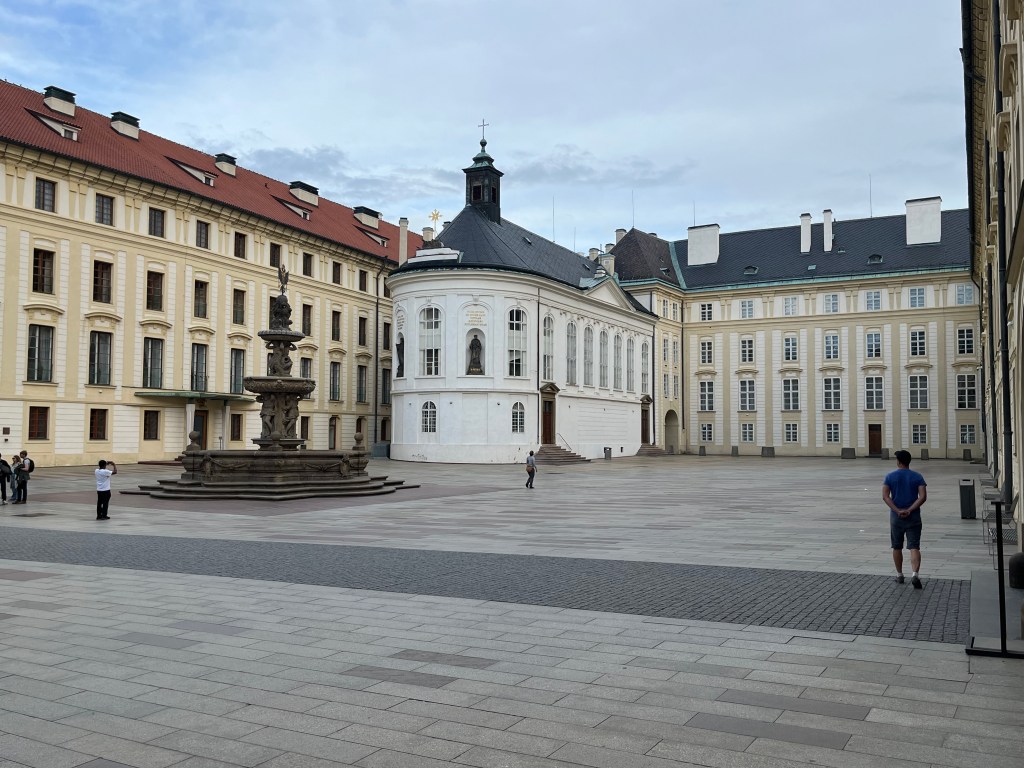
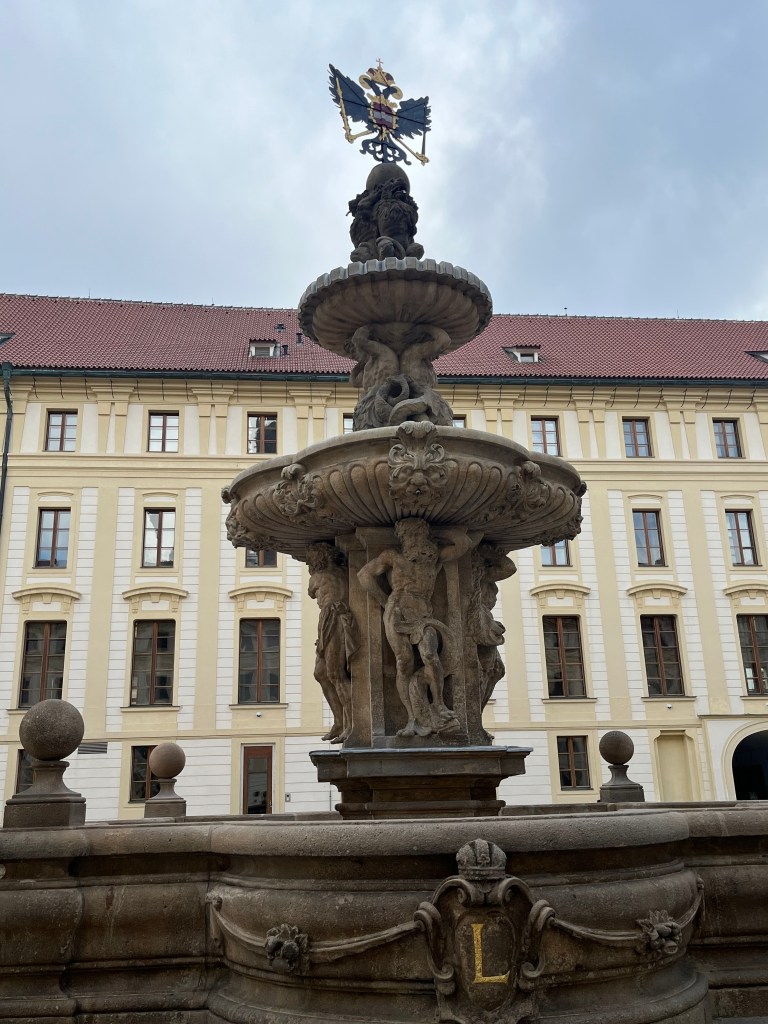


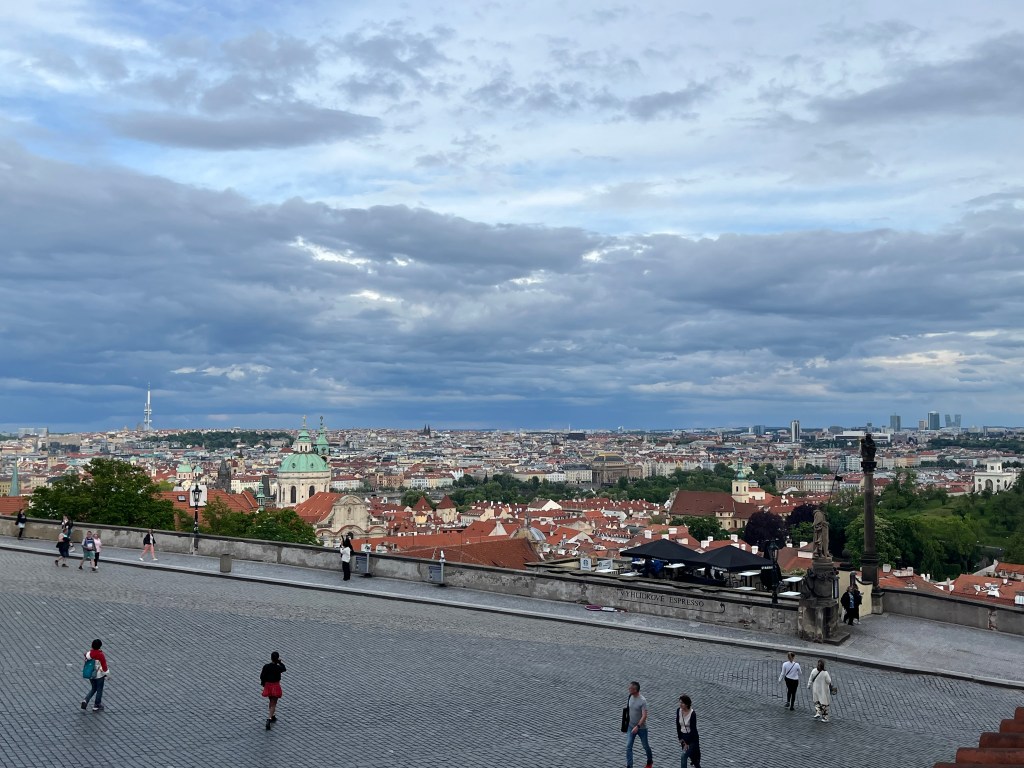
The Czechs are famously anticlerical, especially after the Reformation. Much of this stemmed from centuries under Austrian rule, especially Maria Theresa in the 18th c., who was part of the passionately Catholic Hapsburg dynasty. Despite that, the post-1918 Czechoslovakia, and even the Communists, left the dozens of grand churches and palaces unscathed as part of the national patrimony. After the 1989 Velvet Revolution that overthrew the totalitarian state, the new Czech Republic, after its amicable divorce from Slovakia in 1994, lavished funds on the restoration and maintenance of its medieval and baroque core, which has paid enormous dividends as Prague has become one of Europe’s foremost tourist destinations.
Beyond the castle lies a sloping plaza surrounded by Hapsburg area palaces which are now museums and government ministries. A few hundred meters to the west lies the hulking Ministry of Foreign Affairs, Toskánsý Palác, finished in 1691, where Foreign Minister Jan Masaryk fell from a third-story window to his death, a favored Russian tactic even to this day. The communist coup d’etat of 1948 dispelled the promise of a democratic post-war Czechoslovakia.


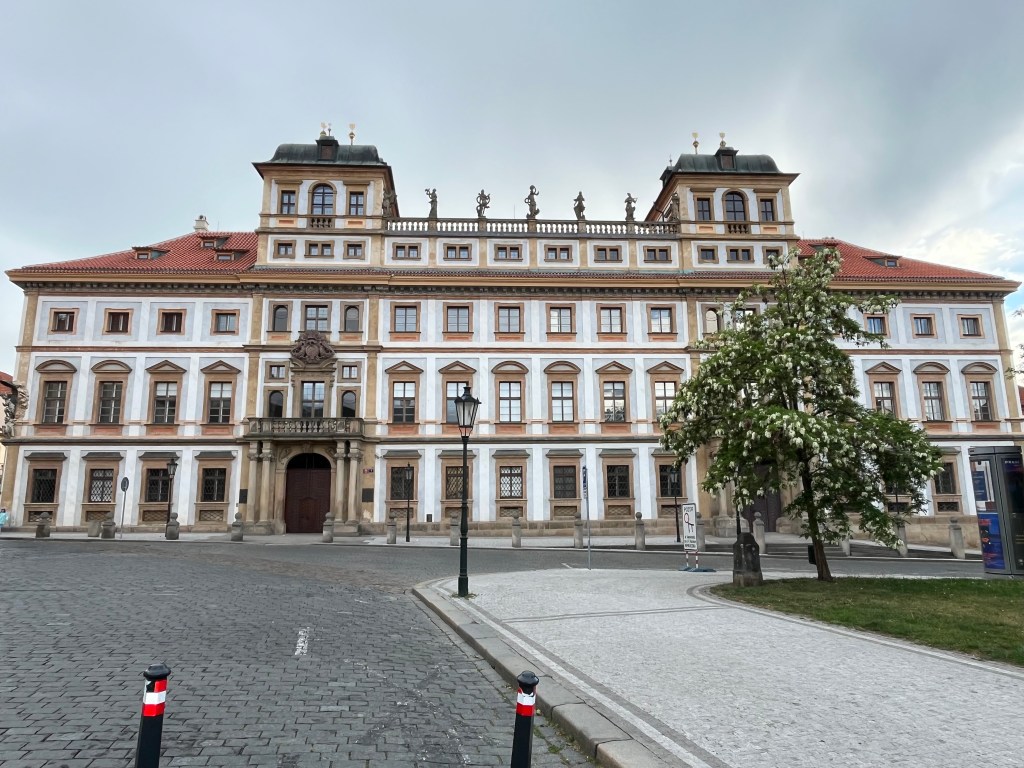

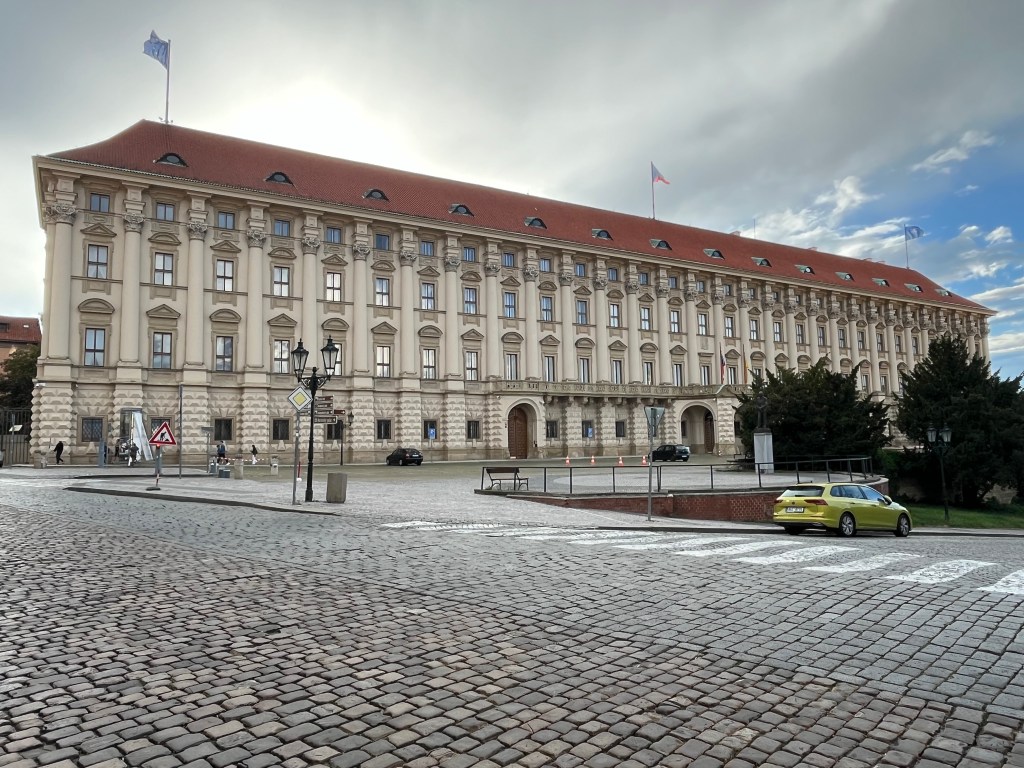
After so many years, I still remembered this particular area, especially the baroque 17th c. Loreta and my favorite ancient neighborhood down the hill, Nový Svět, where the astronomer Brahe lived. It’s one of the most atmospheric places in Europe and is largely off the tourist track. I didn’t encounter any tourists until I was leaving. There, an Italian couple from Milan were concerned about a drumming noise coming from a parked VW. We had a lovely conversation about my three trips to Italy and conditions around Europe today.


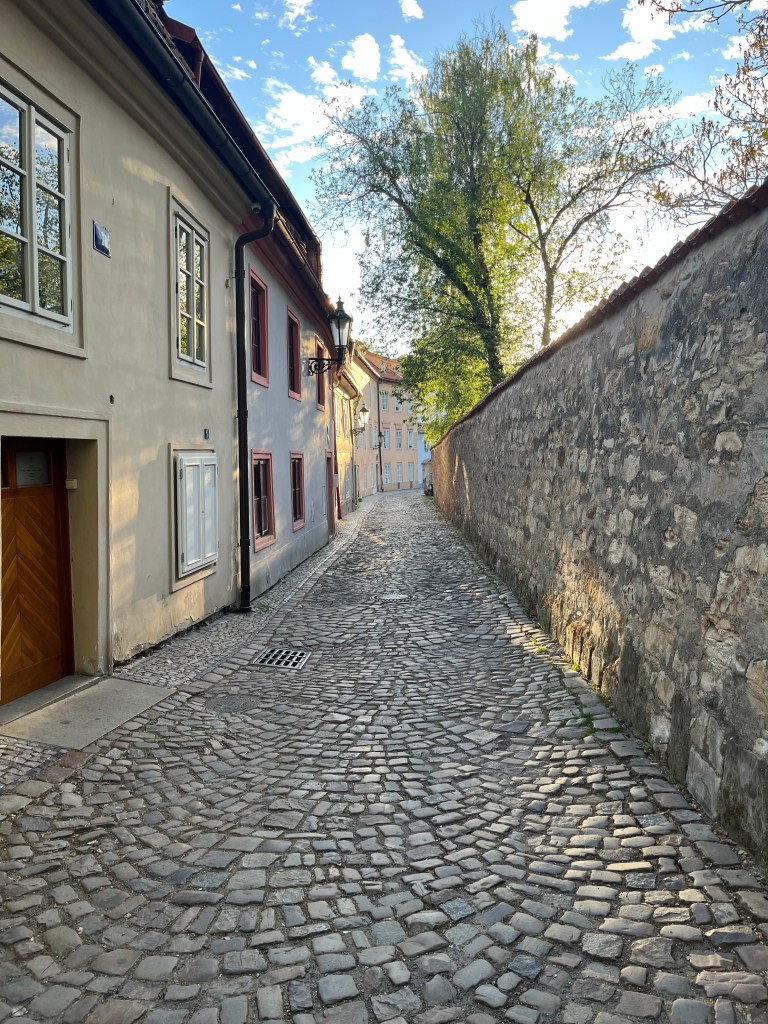
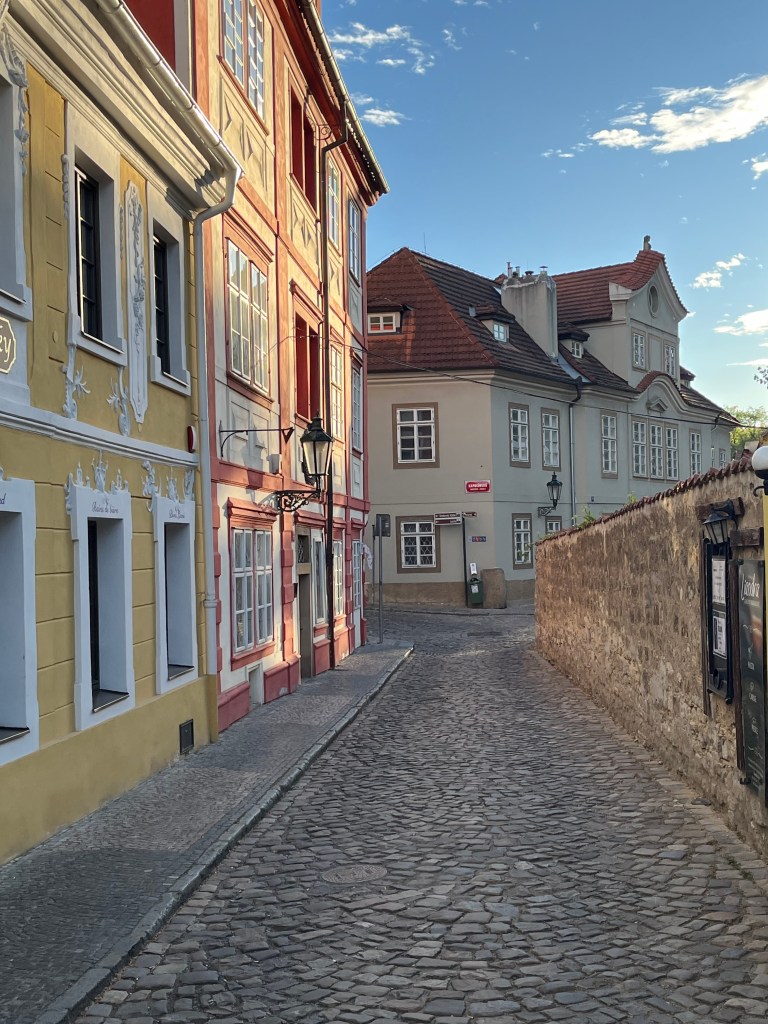
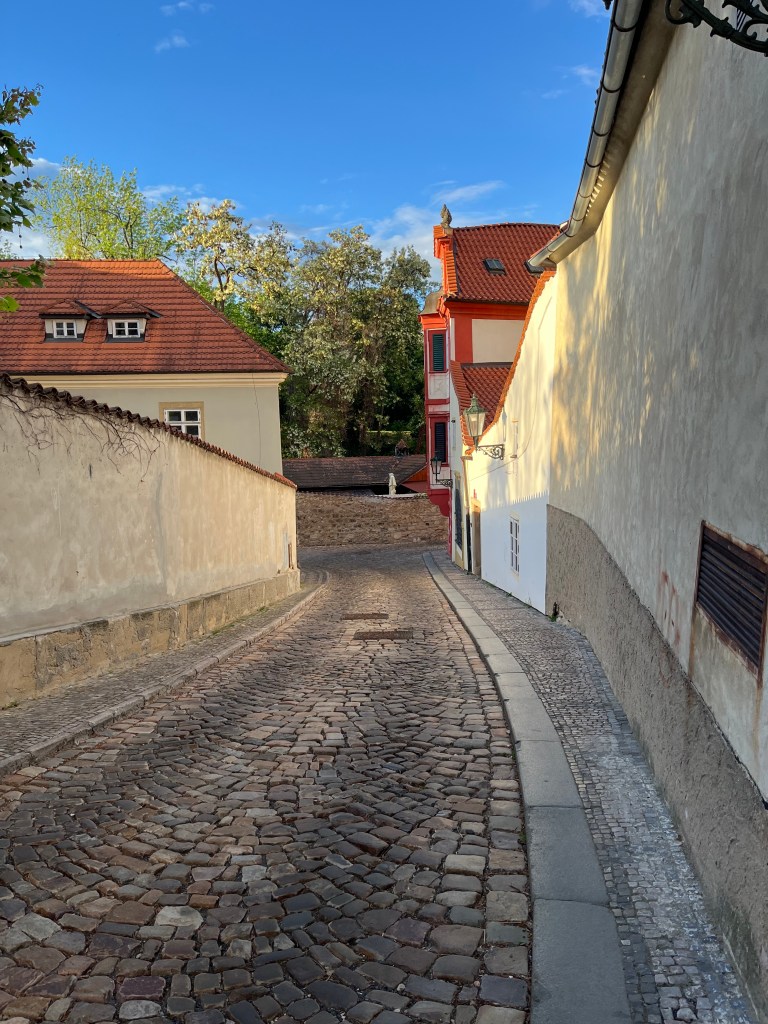
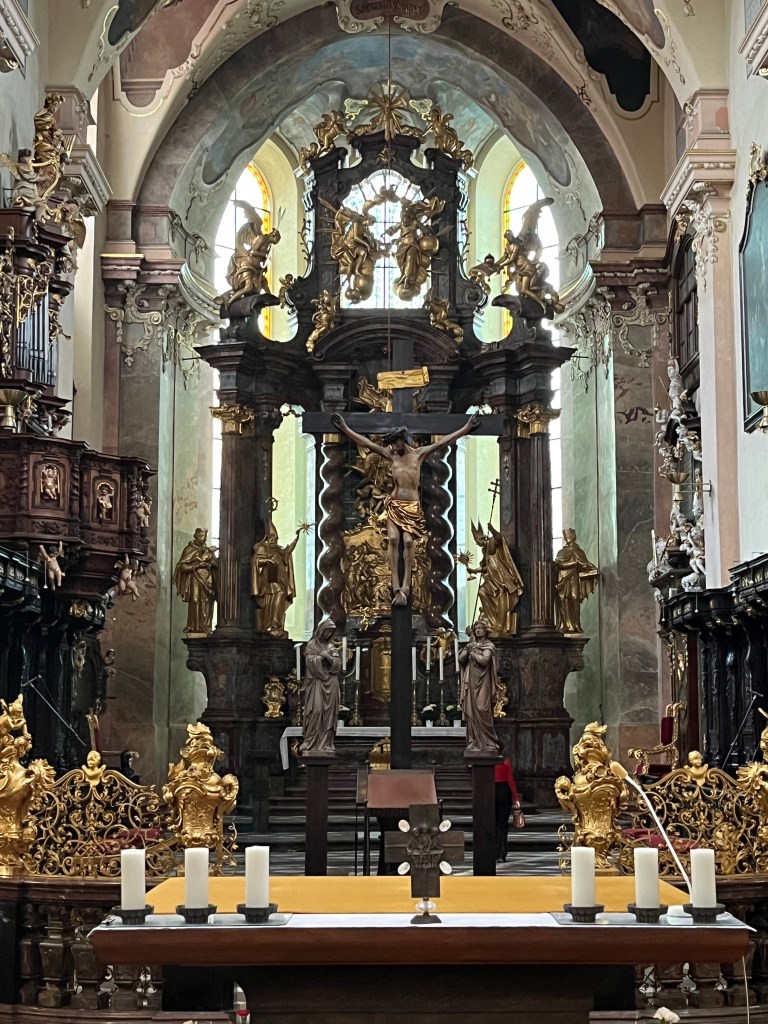
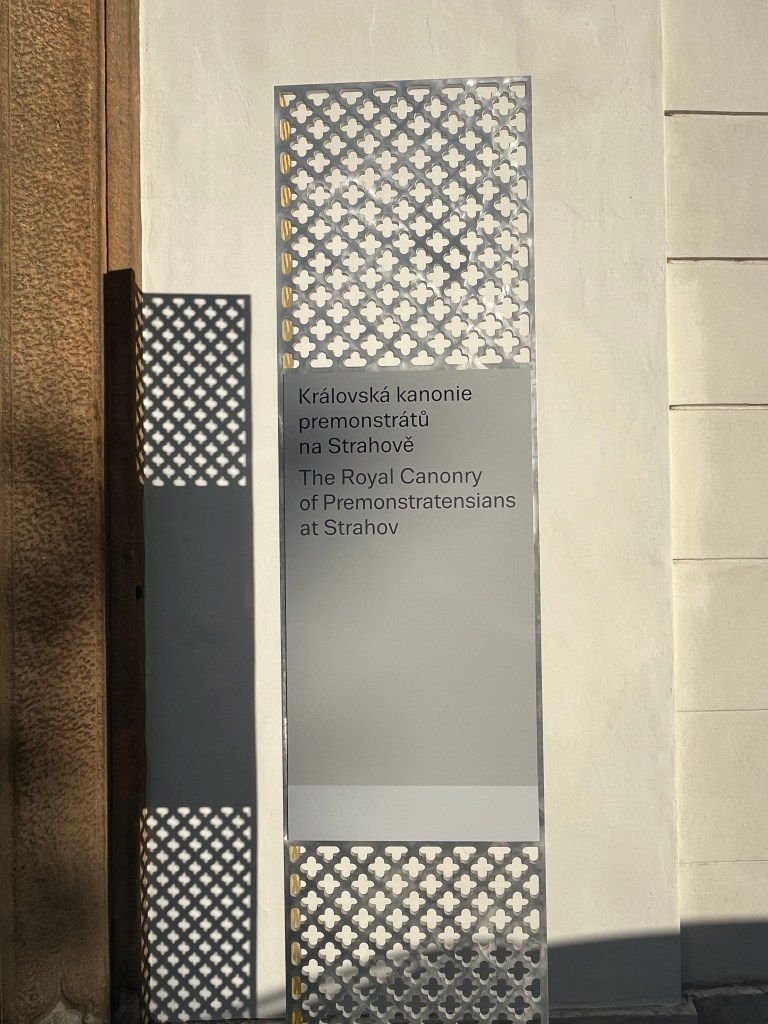
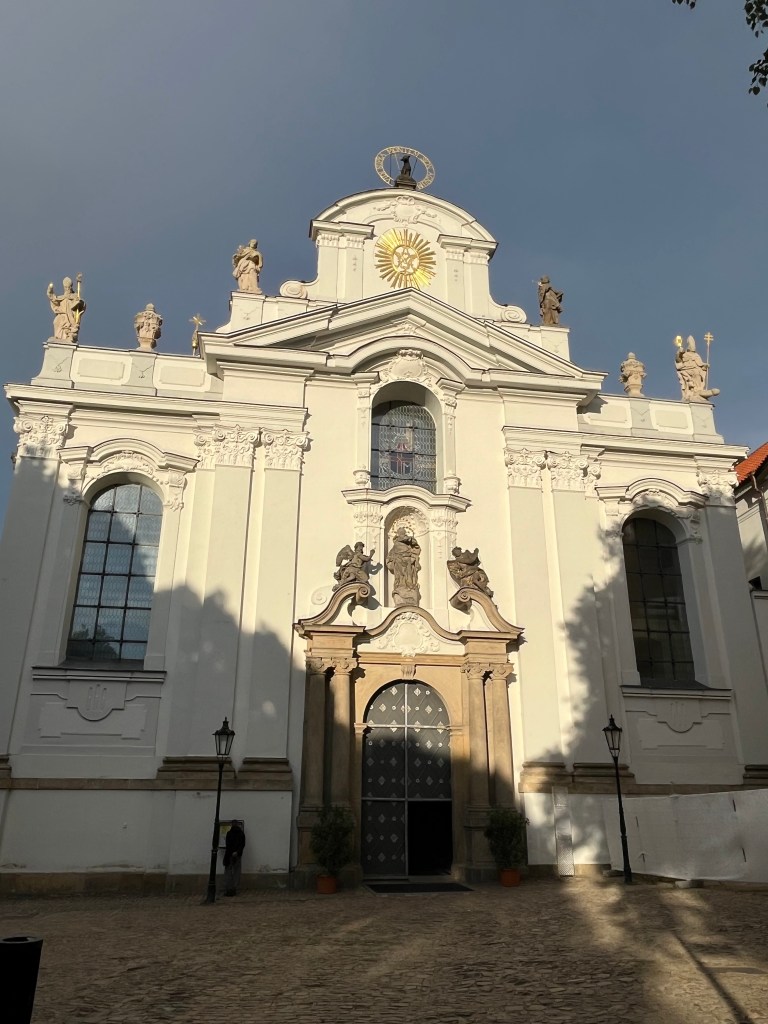
From Nový Svêt, I made my way back up the hill towards the Hrad to revisit Loreta and the famous Strahov Monastery, founded by an austere order in 1140 and rebuilt in the Gothic and Baroque styles later. It’s still a functioning monastery. When I walked inside, a priest was lighting the Pascal candle.



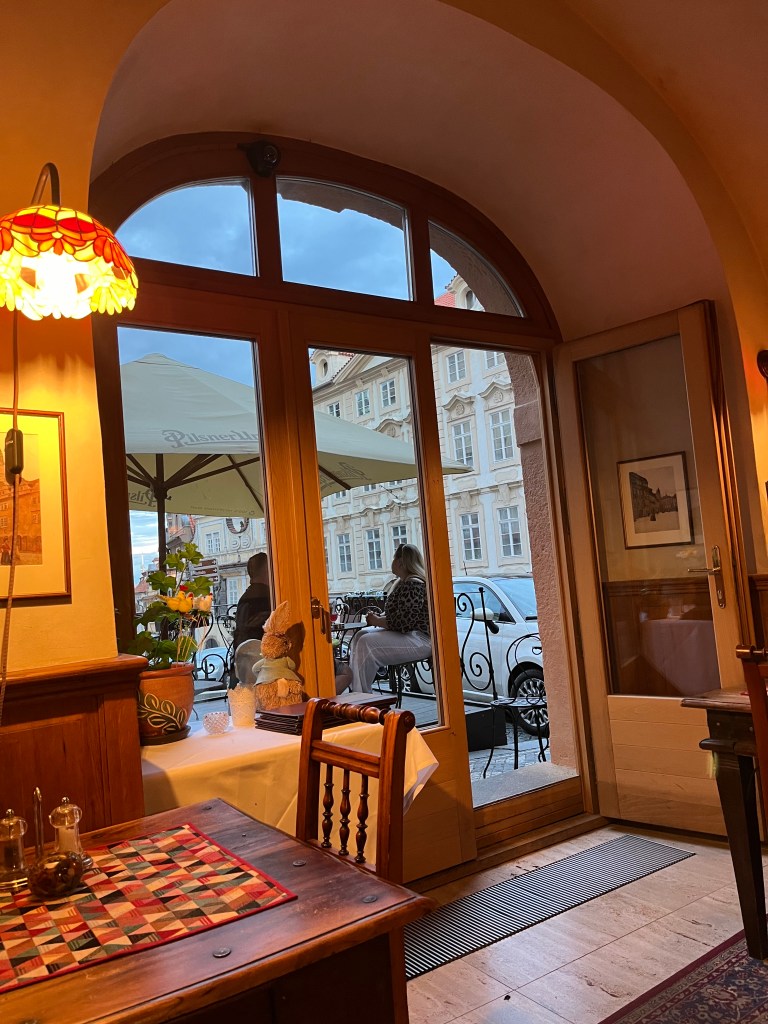
As it was getting late and I hadn’t eaten since late morning, I popped into The Golden Bull, a traditional Czech restaurant, and enjoyed roast pork with dumplings and sauerkraut, preceded by an excellent Caprese salad. The server suggested I visit Brno, the capital of neighboring Moravia, where the noted wine region is. Since I’ve seen all of the major sites before, I’m considering going there on Tuesday, when it’s expected to rain.


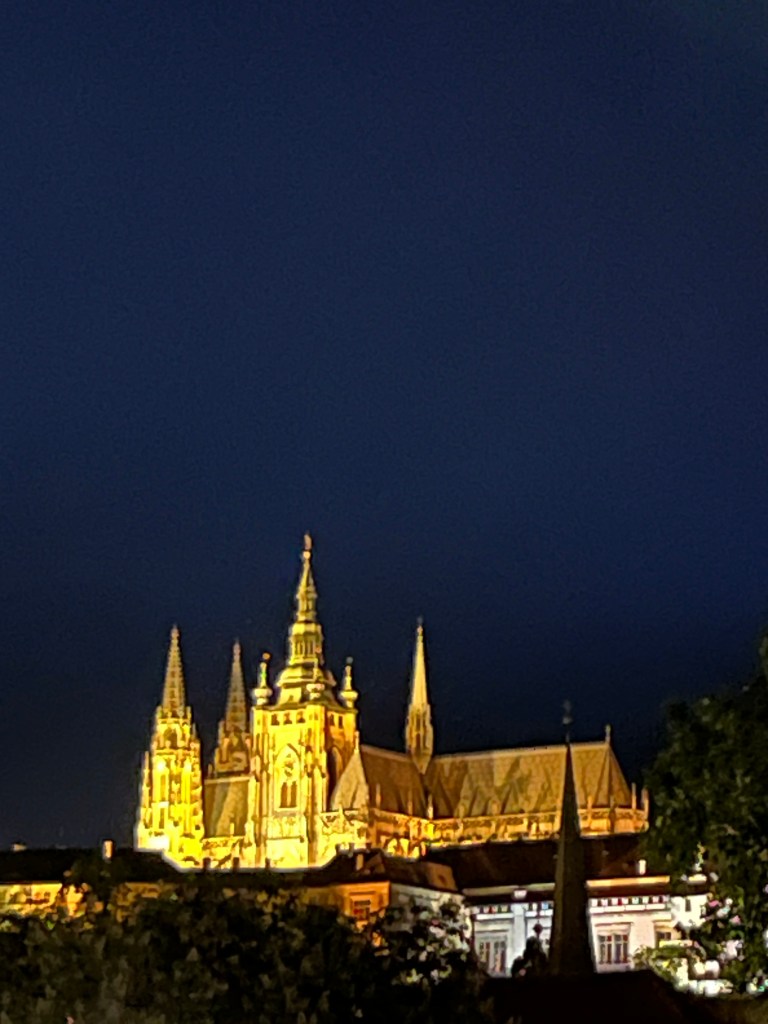
Returning to Malá Strana, the tourist throngs were out in full force for a night of drinking. I snapped a few pics of St Vitus Cathedral up on the hill and returned to my Airbnb after clocking ten miles.


 Curated Carlos