As I wrote in my last post, I slept for almost eleven hours last night after a long day and a red eye flight to Madrid. I woke up energized and ready to explore.
I headed down to the Plaza del Teatro and had brunch across from the Teatro Real, Madrid’s opera house. They’re staging a Handel opera, but unfortunately the next performance isn’t until tomorrow night, when I’ll be in Valéncia. The scrambled eggs, avocado, smoked salmon and small arugula and tomato salad was excellent.
After brunch, I headed over to the Royal Palace grounds. I toured the palace in 2013, so this time I simply walked the grounds and bought a ticket to the Almudena Cathedral, which I missed the last time. The Royal Palace is the largest in Europe and is administered by the Patrimonio Nacional, which preserves and safeguards national monuments and the national patrimony. It’s a concept I’ve long admired. It also maintains two sites that I toured in 2013: El Escorial and El Valle de los Caidos, located in the Sierra west of the city. When I visited the Valley of the Fallen in 2013, the tombs of Francisco Franco and José Antonio Primo de Rivera were still intact. They’ve been disinterred in recent years under political pressure. Views of the Palacio Real:
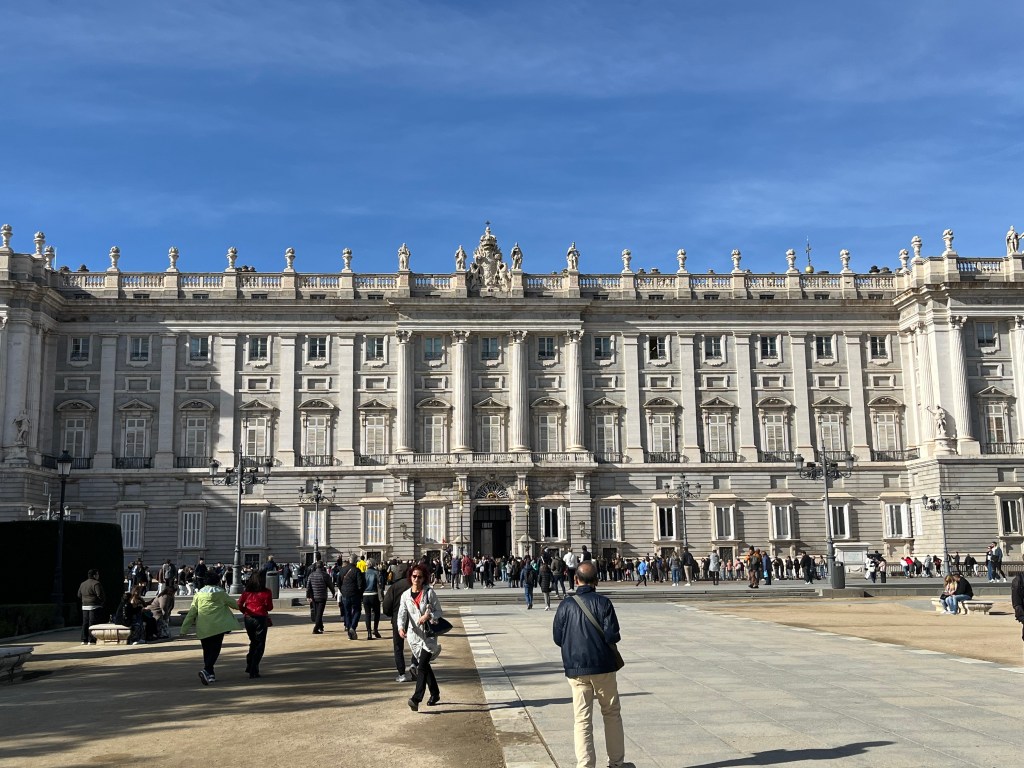


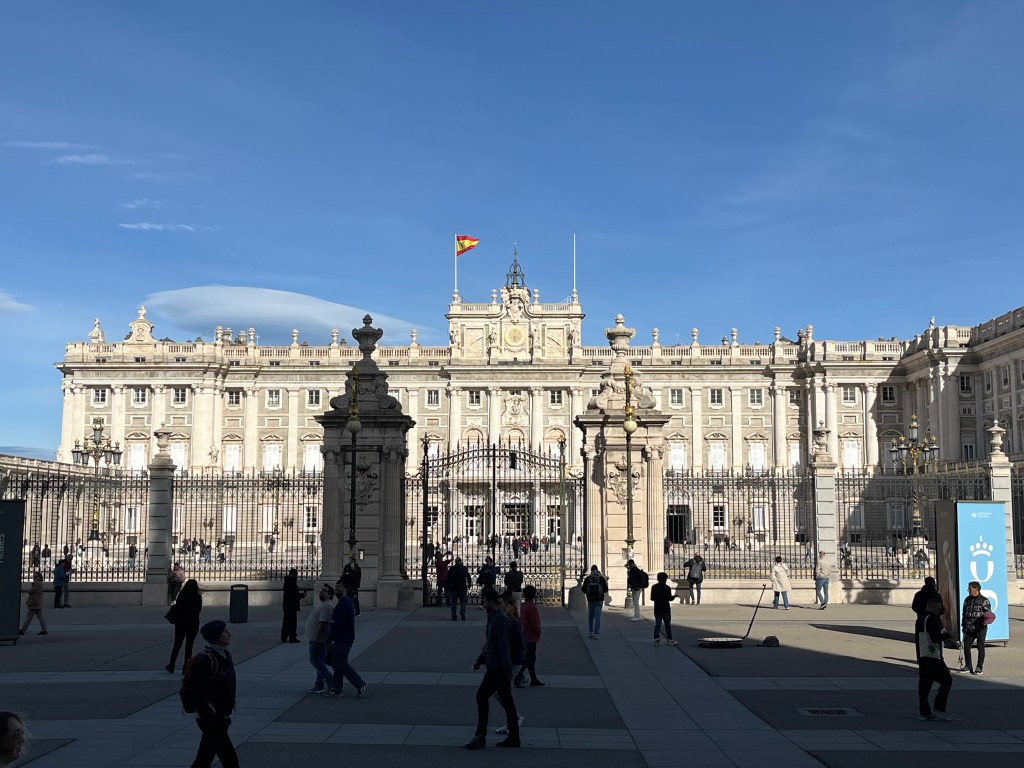
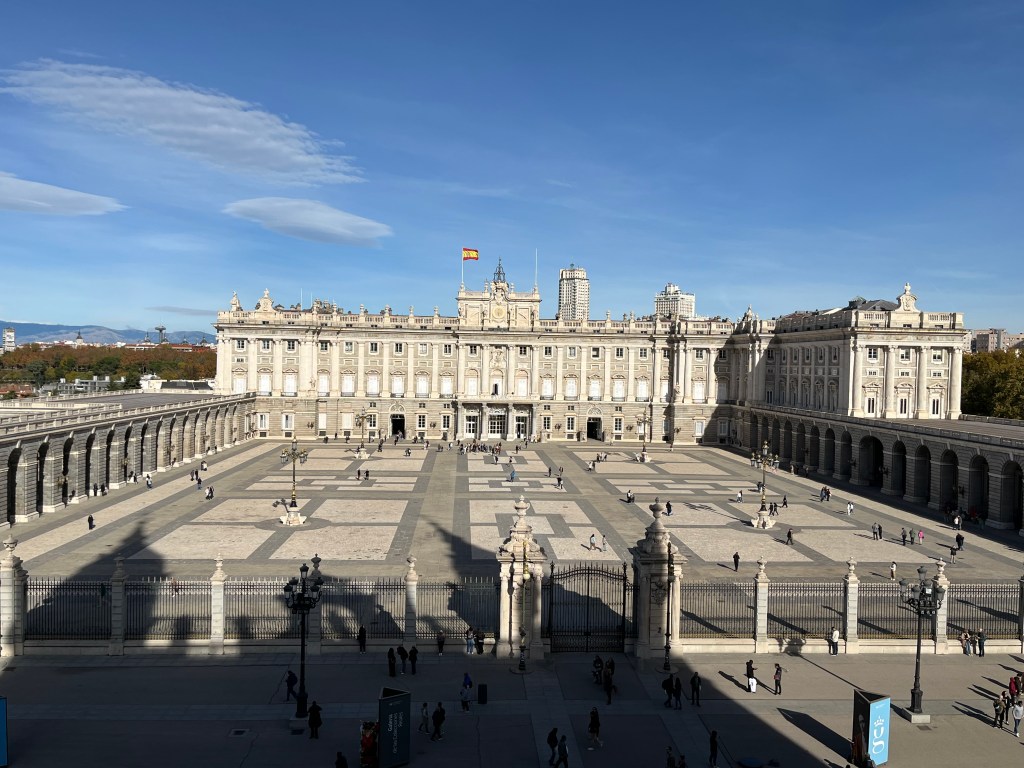

Directly across from the Royal Palace stands the Almudena Cathedral, which was built over a span of 100 years beginning in 1893 in the French Gothic style. A modest entrance fee allows visitors to tour the interior and walk up to the dome, where one can take in panoramic views of the the Hapsburg-inspired royal district of Madrid, including the temporarily closed Campo del Moro, formerly a royal hunting ground. Views from the cathedral below.
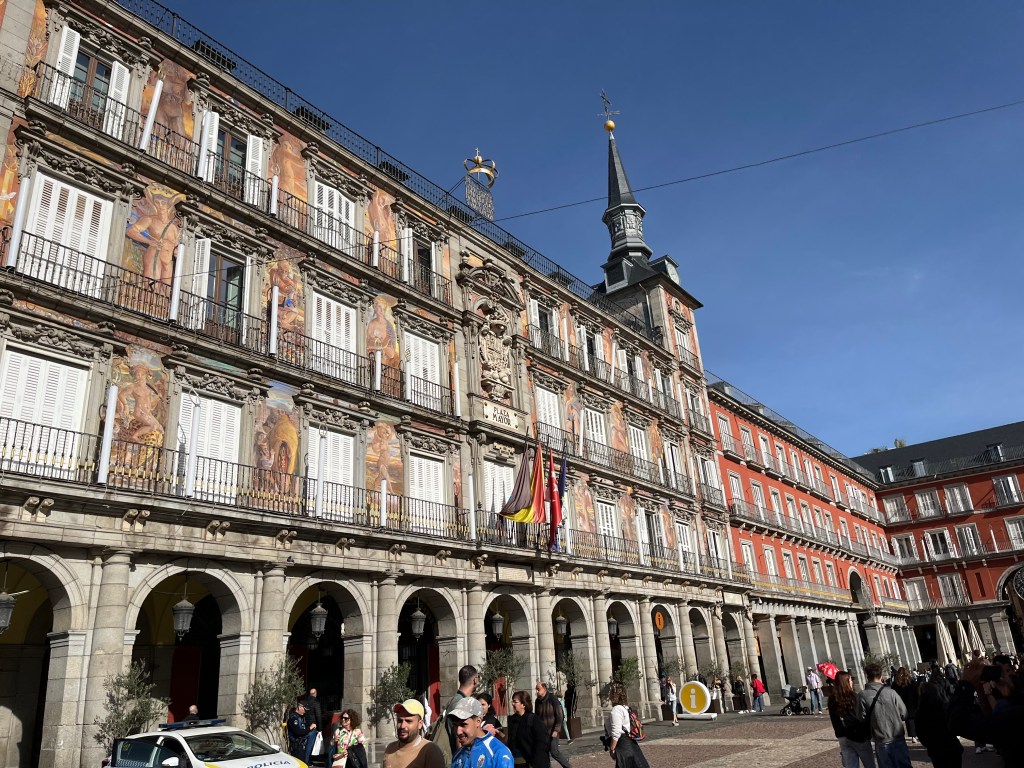
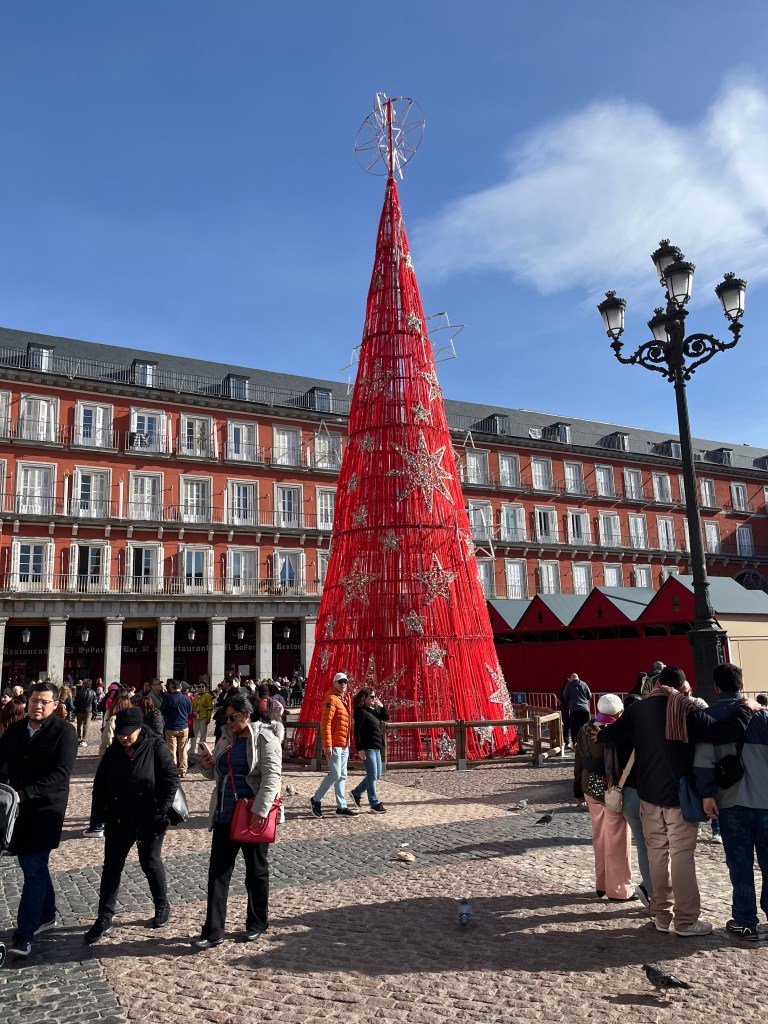
I then revisited the Plaza Mayor, the Habsburg-inspired main plaza. Most are unaware that the Hapsburgs ruled Spain from 1516 to 1700 when the Spanish Empire was at its zenith. Charles V and Philip II were two noteworthy kings. It was also under the Hapsburgs that hundreds of thousands of Moriscos were deported from Spain. The Moriscos were Moors who had converted to Christianity after the Reconquista. The Church and the King were always suspicious of the Moriscos’ true intentions in converting to Christianity and planned their removal. Part of this was related to the concept of Limpieza del Sangre, or purity of the blood, in this case referring to the true Catholic Spain of Visigoth and Celtic origins. Although many nobles who employed the Moriscos on their estates objected to losing their valued and talented vassals, the reactionary elements of the Inquisition and Philip III persevered. This period is a fascinating yet largely forgotten part of Spanish history. Plaza Mayor with Christmas tree prep:

Neighboring the Plaza Mayor is the splendid Mercado de San Miguel, a food emporium. I grazed the stalls for dinner tonight. This is similar to the TimeOut market in Lisbon that I described in September 2022.

Since WordPress’ upload function on photos from IPhone has become impossibly tedious and capricious, allowing only one photo at a time, my blogging going forward is likely to become increasingly terse. I won’t be renewing next year.
Later in the afternoon, I did a circumnavigation of the Retiro park. Tomorrow I leave for Valéncia.
 Curated Carlos