I spent most of Friday afternoon on the plane from Palma to Madrid and then a transfer to the flight to Sevilla, which was less than an hour. When I booked the flights on Iberia Express, I took advantage of a bargain fare to upgrade to business class on both legs so that I could carry on my two bags, since I always avoid checking luggage. The middle seats were empty on both flights and the service was excellent. Unlike many US flight attendants who often act like Aeroflot veterans, the Iberia staff are always smiling and gracious.
When I arrived at Sevilla, I jumped into a taxi and went to my Airbnb, which was easy to find and, unlike many European apartments on upper floors, had an elevator! The apartment is large and perfectly upgraded, with three balconies overlooking narrow lanes largely closed to traffic, so the place remains quiet throughout the day and night.
Since I arrived around sunset, I unpacked and went for a stroll and ended up at a cool tapas bar, Dos d Mayo, on a quiet plaza about 600 meters from my place
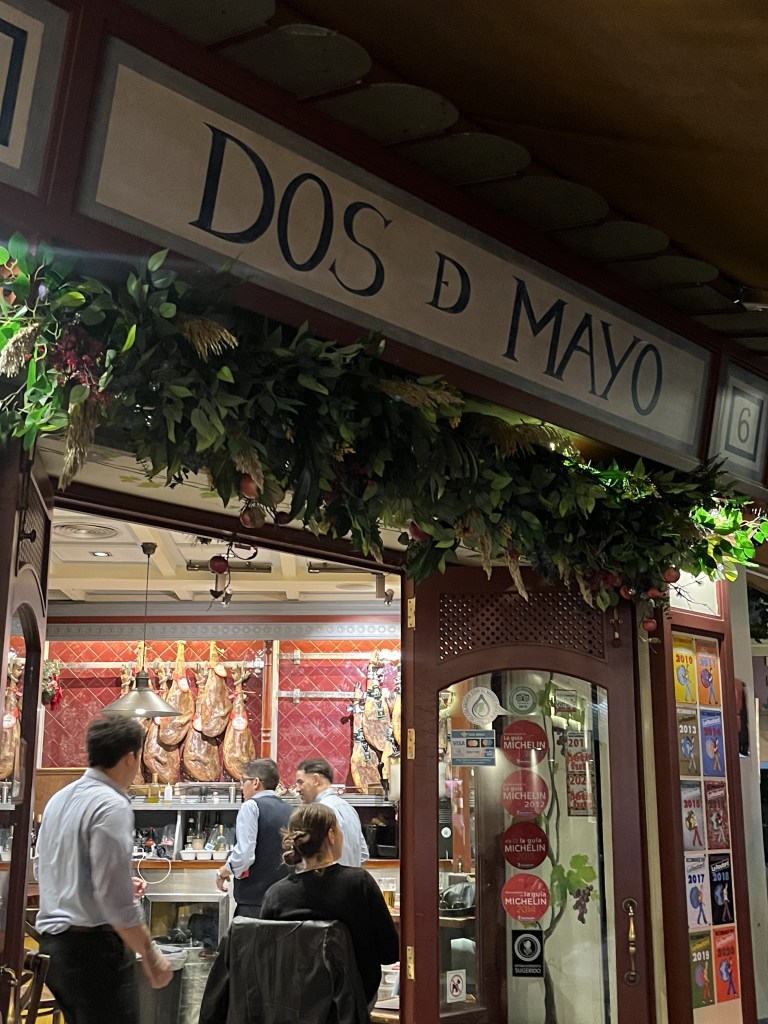
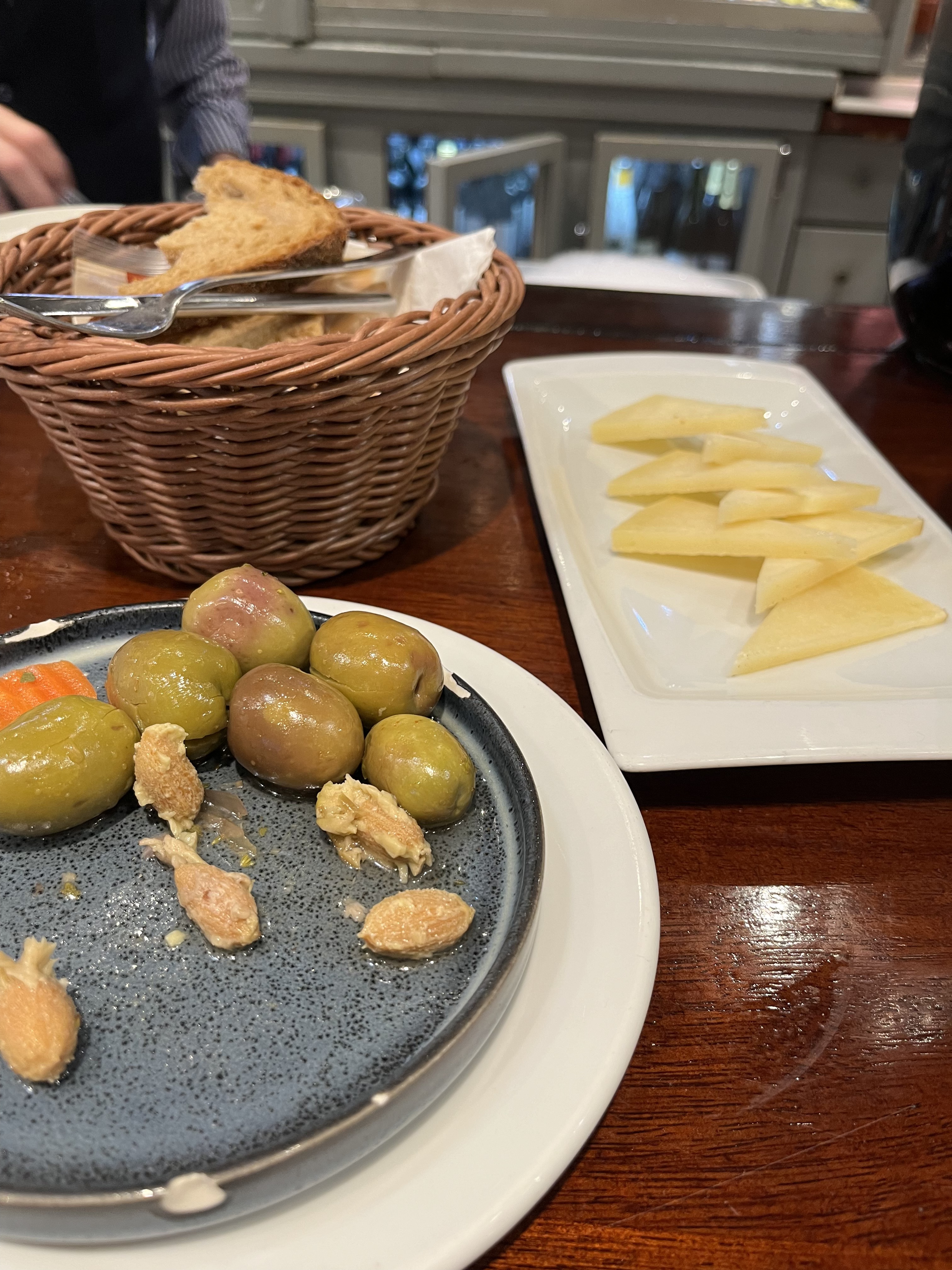
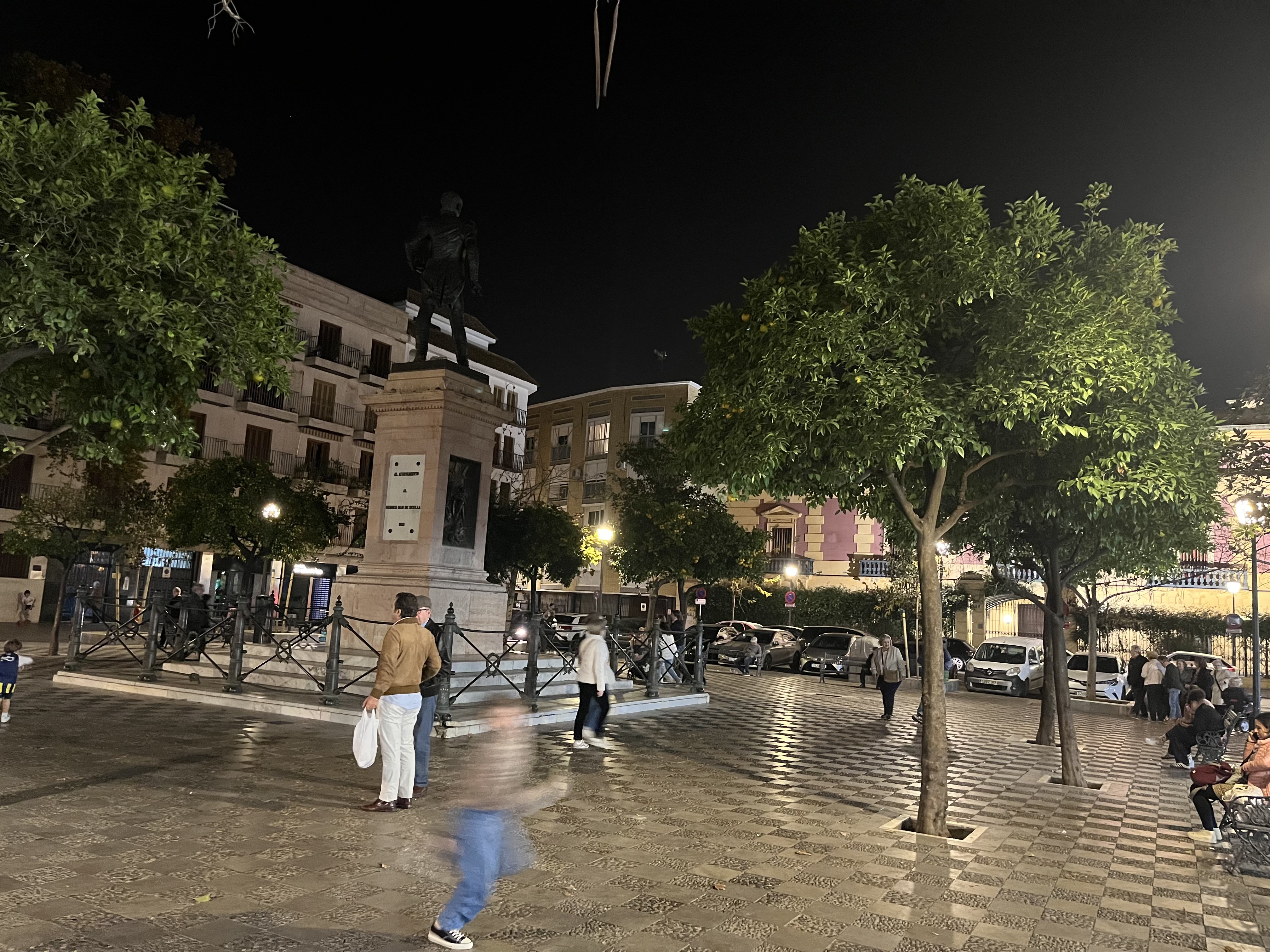
The next morning I booked a walking tour of the historical center and headed over to the meeting spot after a few cups of coffee.
Some background on Sevilla: According to our guide, Sevilla is the oldest city in Europe, although other cities undoubtedly claim that distinction. It was originally a trading spot for the Phoenicians beginning 2,500 years ago. They discovered gold and silver nearby and thus began Sevilla’s good fortunes. The city lies on the Gaudalquiver River close to the Atlantic, making it the biggest inland port in Spain. The Romans arrived under Julius Caesar, who established Sevilla as an important outpost. Caesar built a wall around the city, little of which now remains. After the fall of the Western Roman Empire in the 5th century, the area was conquered by the Visigoths, who eventually succumbed to the Moors, who invaded from Morocco and took over around 712 AD. There are extensive Roman ruins nearby in Italica, which I would visit if I had a car. There are two columns remaining in the center that were built during Hadrian’s reign at the end of the first century AD. Hadrian and Trajan were two Roman emperors who were born in the region.

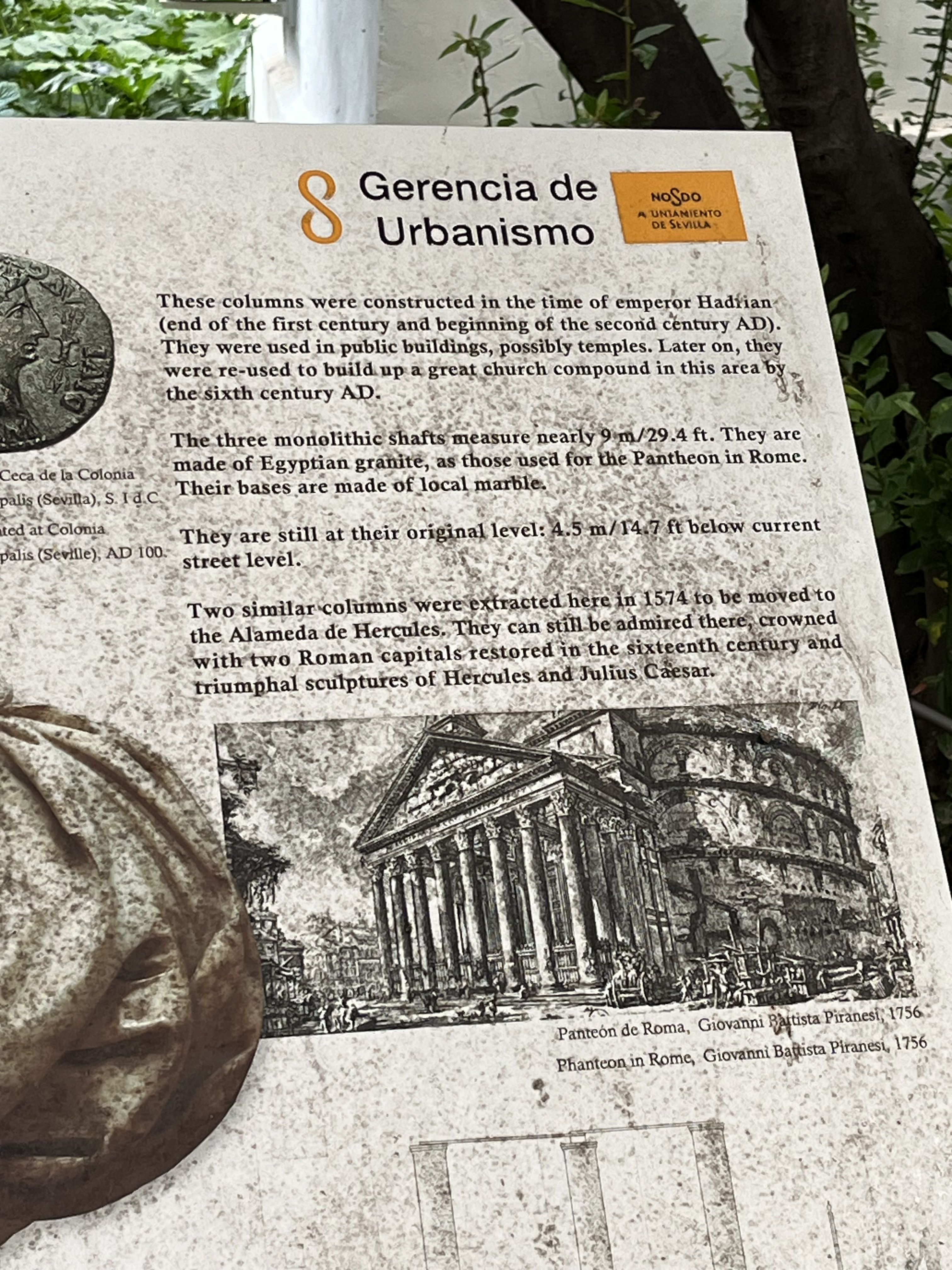
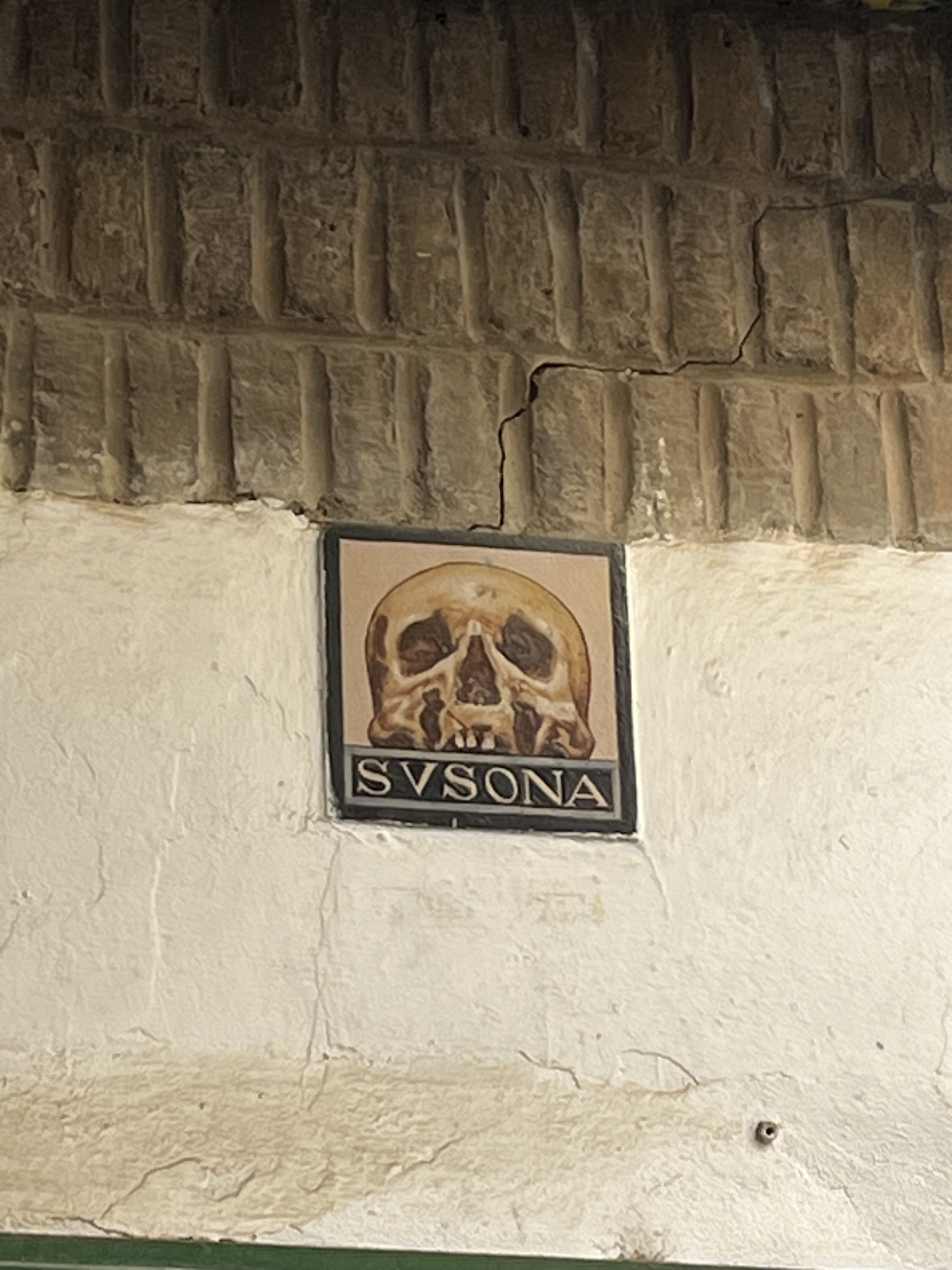
As in many ancient cities, successive conquerors reused the Roman temples and buildings to construct their own monumental buildings, including the Moors, who were renowned builders and architects and whose legacy is found everywhere on the Iberian Peninsula. For example, first mosques, and then cathedrals, reused granite and marble from Roman ruins to build the bases of their buildings. Roman columns were widely used on street corners to prevent horse-drawn carriages from smashing corner houses. Below are examples of the foundations, corner protectors and part of the remaining Roman walls.
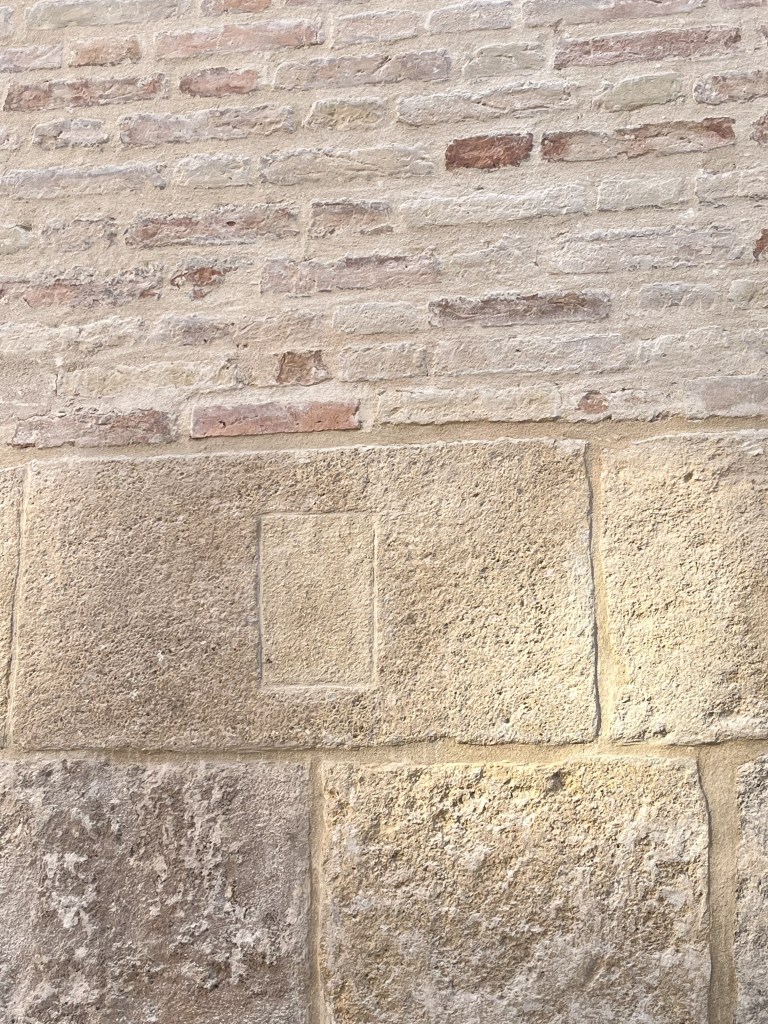
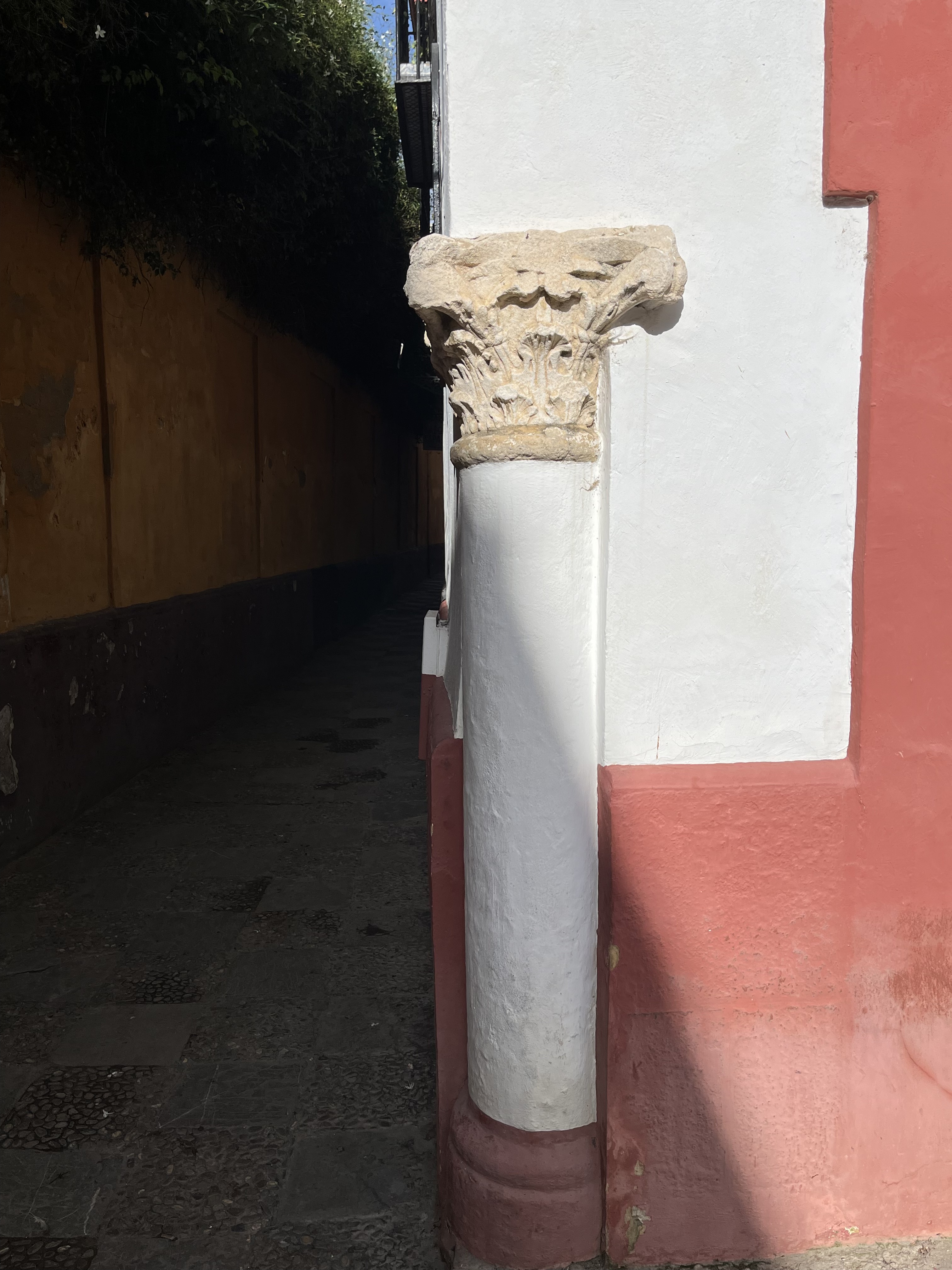

Our tour guide was outstanding, having been born and raised in Sevilla. He pointed out some hidden gems that he said even natives weren’t aware of, including the interior of a restaurant where an ancient Moorish bath was discovered during remodeling and also a conference center built inside what remains of the only surviving mosque.
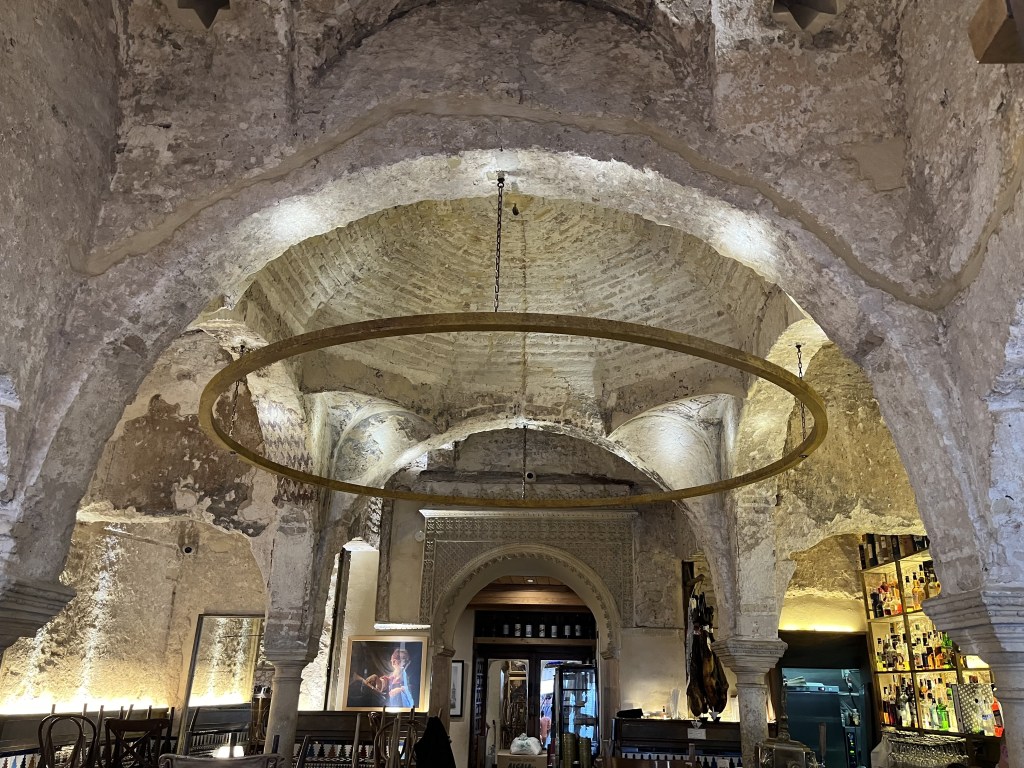
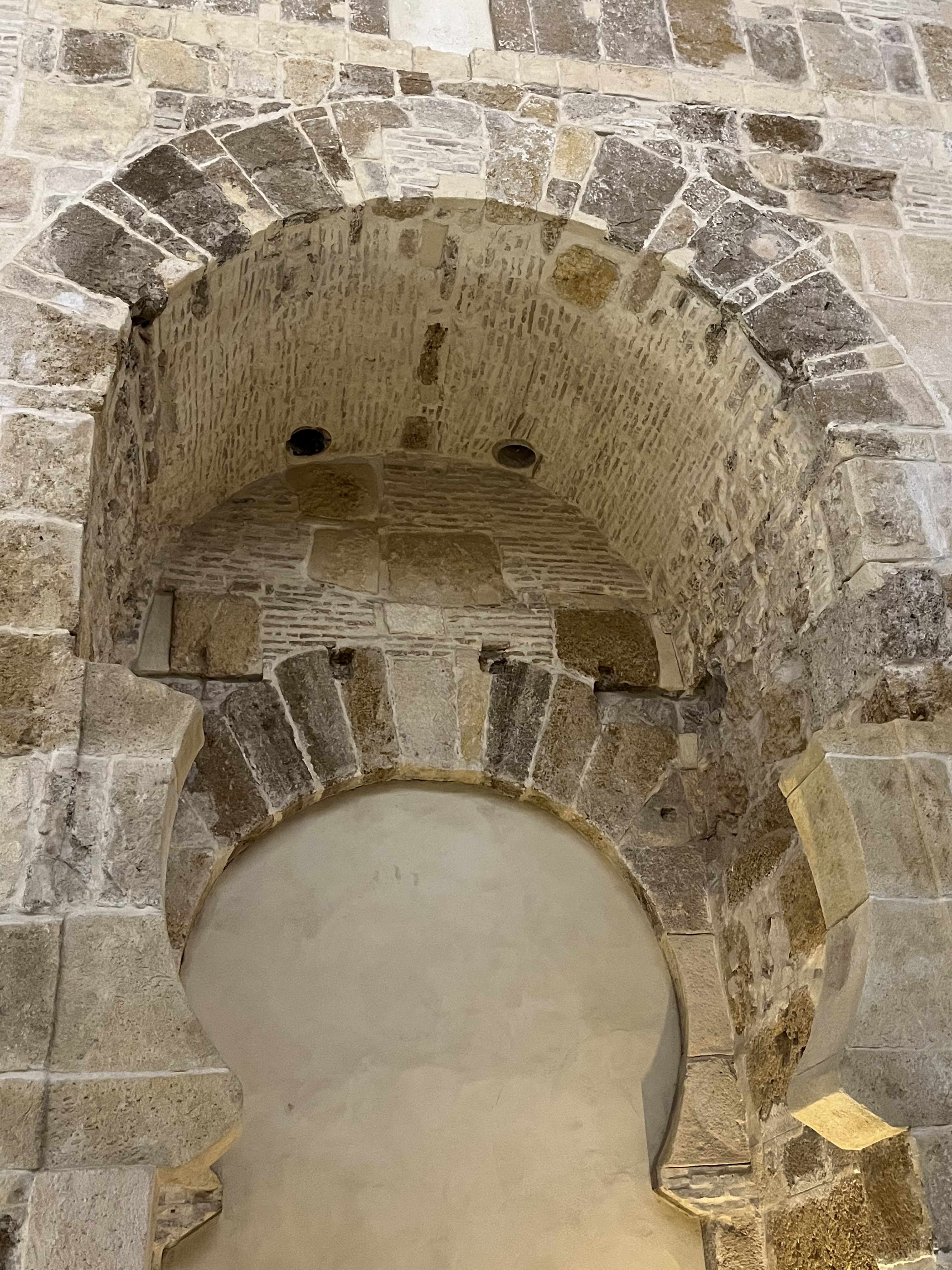
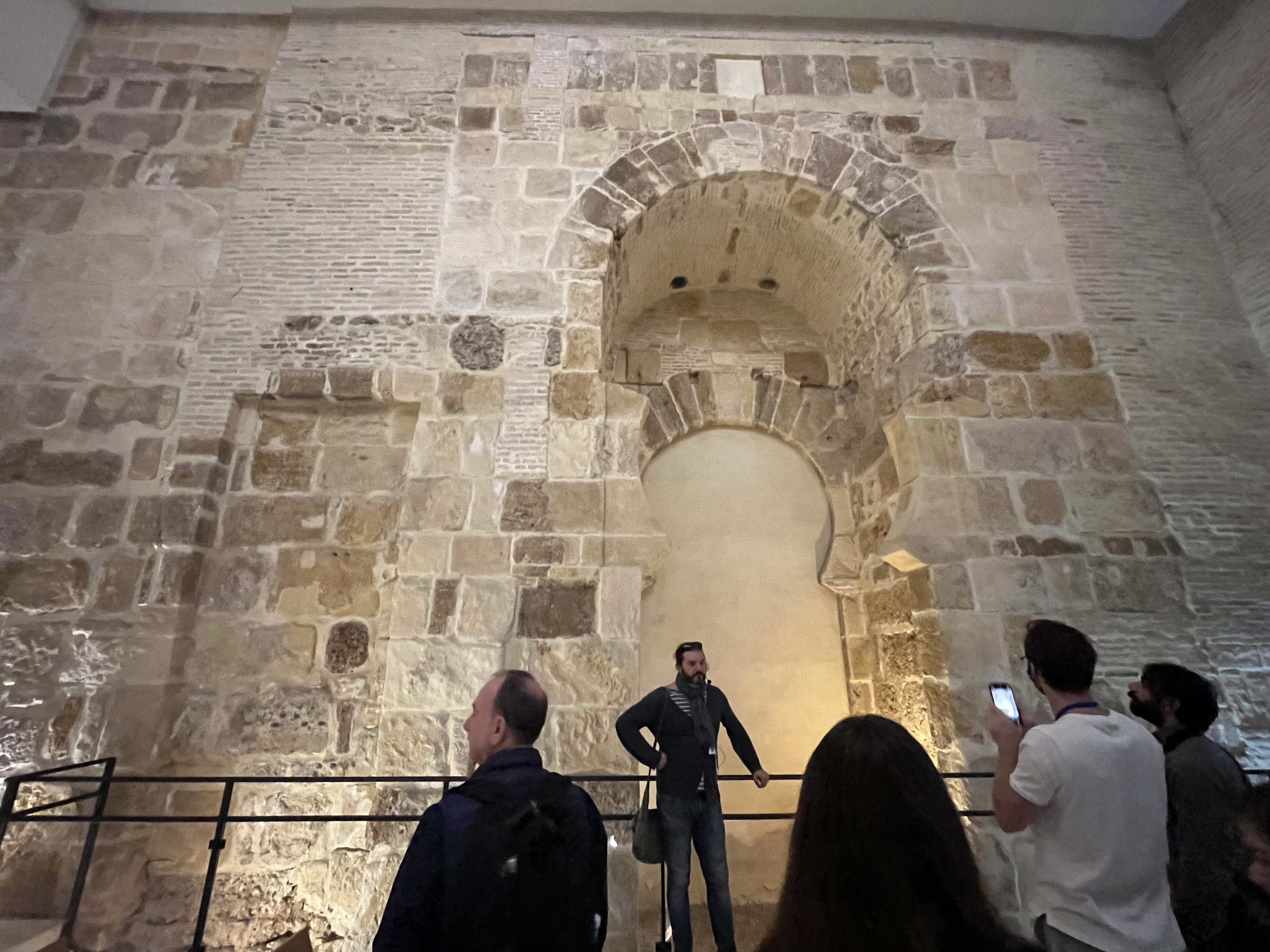
Because of the torrid summers in Sevilla, the Moors built narrow stone streets that let breezes form to cool the outside. Their houses always had a space between the entrance and the main house, including an open foyer that allowed cooler breezes to rise and cool the upper floors. There are countless examples in the old town.
The jewel of Sevilla is the largest Gothic cathedral in Europe, which is also the third largest Christian church after St Peter’s Basilica and St Paul’s in London. It was constructed during the 15th century, several centuries after the recapture of the city by the Christians under Ferdinand III in 1248. Here are views of the cathedral and iconic symbol of Sevilla, the 166′ Giralda, originally built as the minaret for the Great Mosque of Seville in 1198. The mosque’s original doors still remain, with Arabic script.


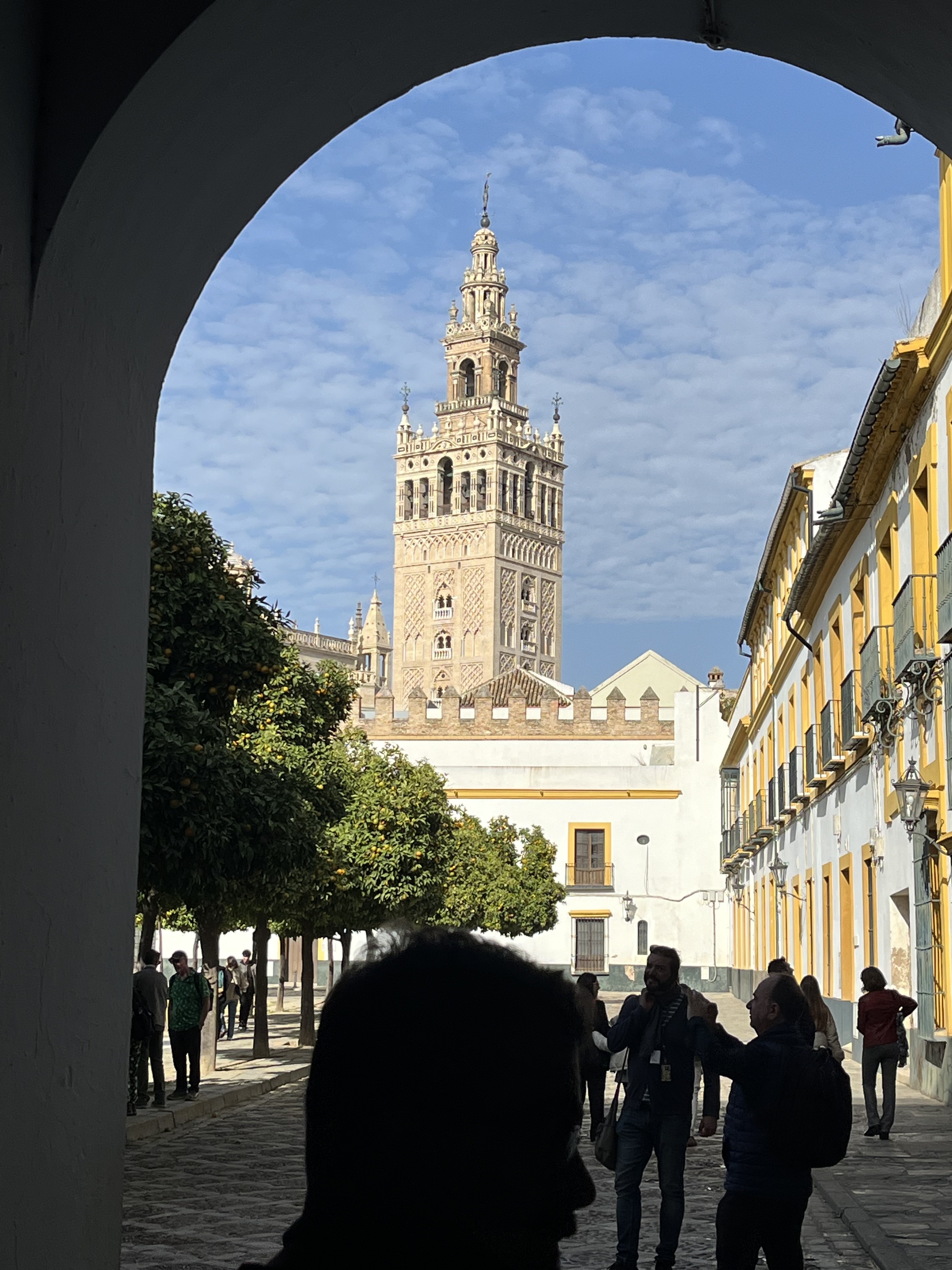
From the cathedral, we made our way through the ancient Moorish streets and plazas to the Plaza de España. You can see the charm and beauty of the old city in the following slideshow. Later in the afternoon, I wandered through other narrow streets and discovered even more old houses, palaces and plazas.




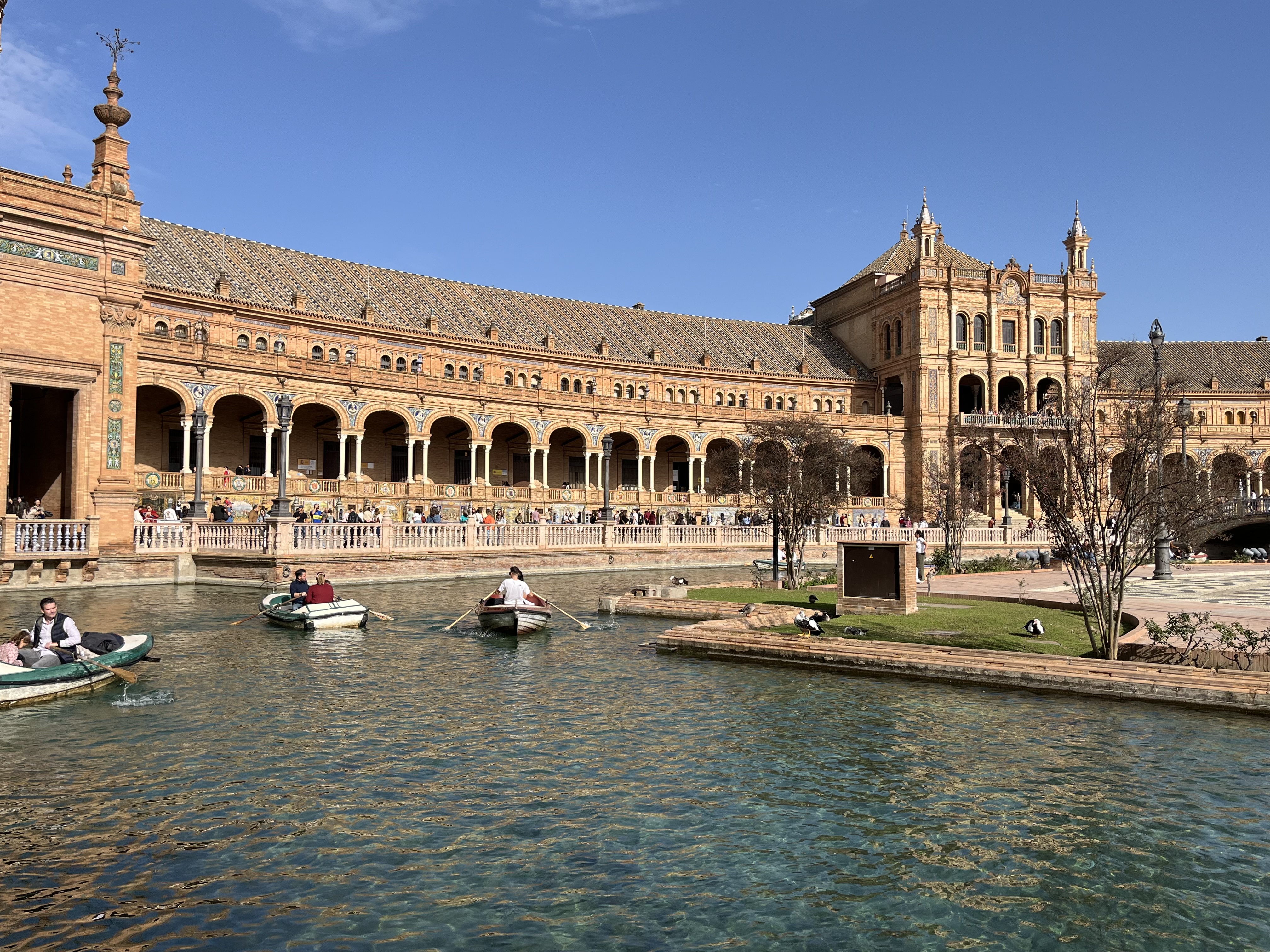
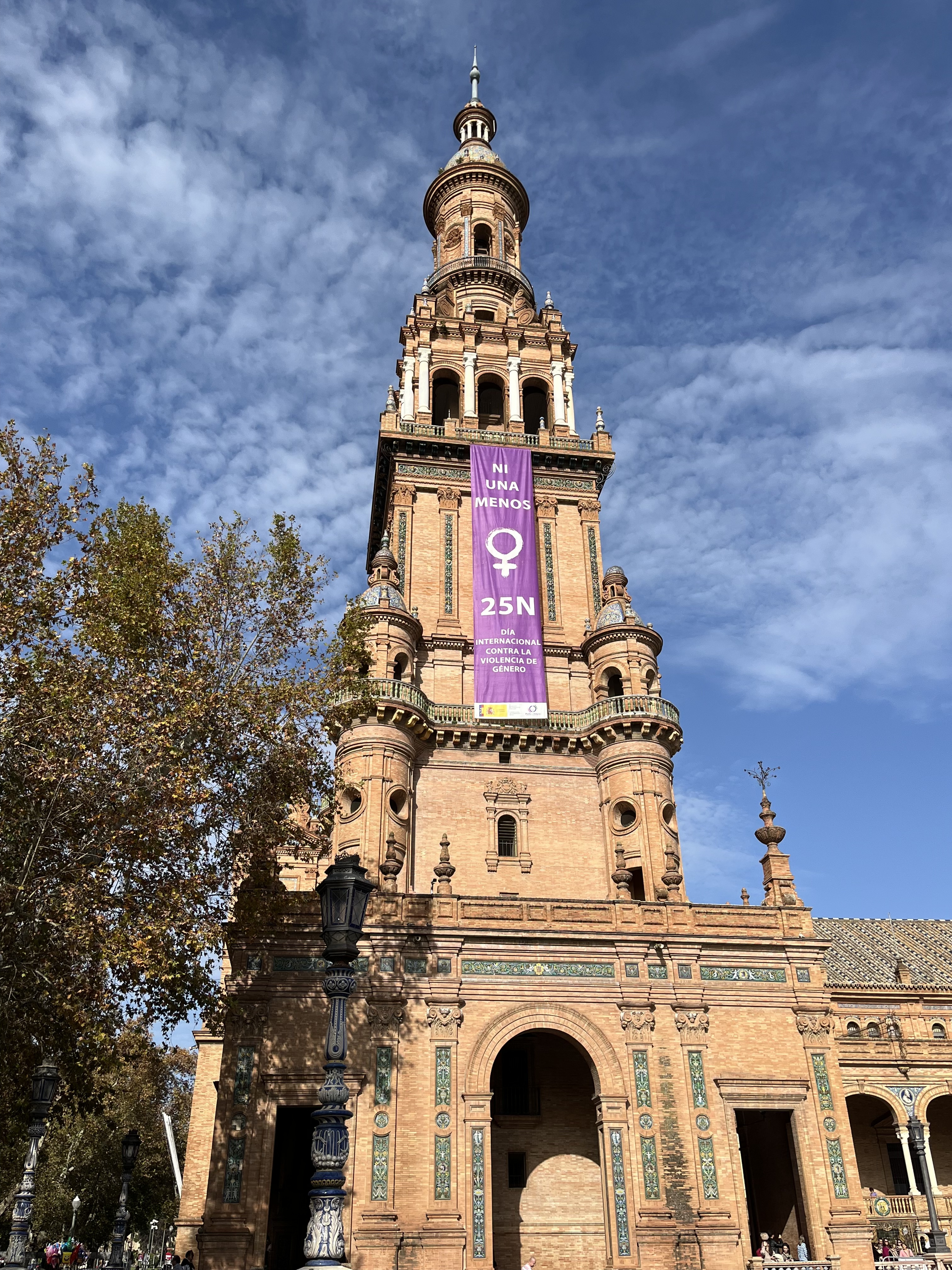
We passed the Torre de Oro and the University of Sevilla en route to our final stop, Plaza de España, built in the 1920’s and completed in 1929 for the Pan-American Exposition. It’s the largest plaza in Spain and was designed in an eclectic style by the famous architect Anibal Gonzalez and is the main meeting plaza in the city.



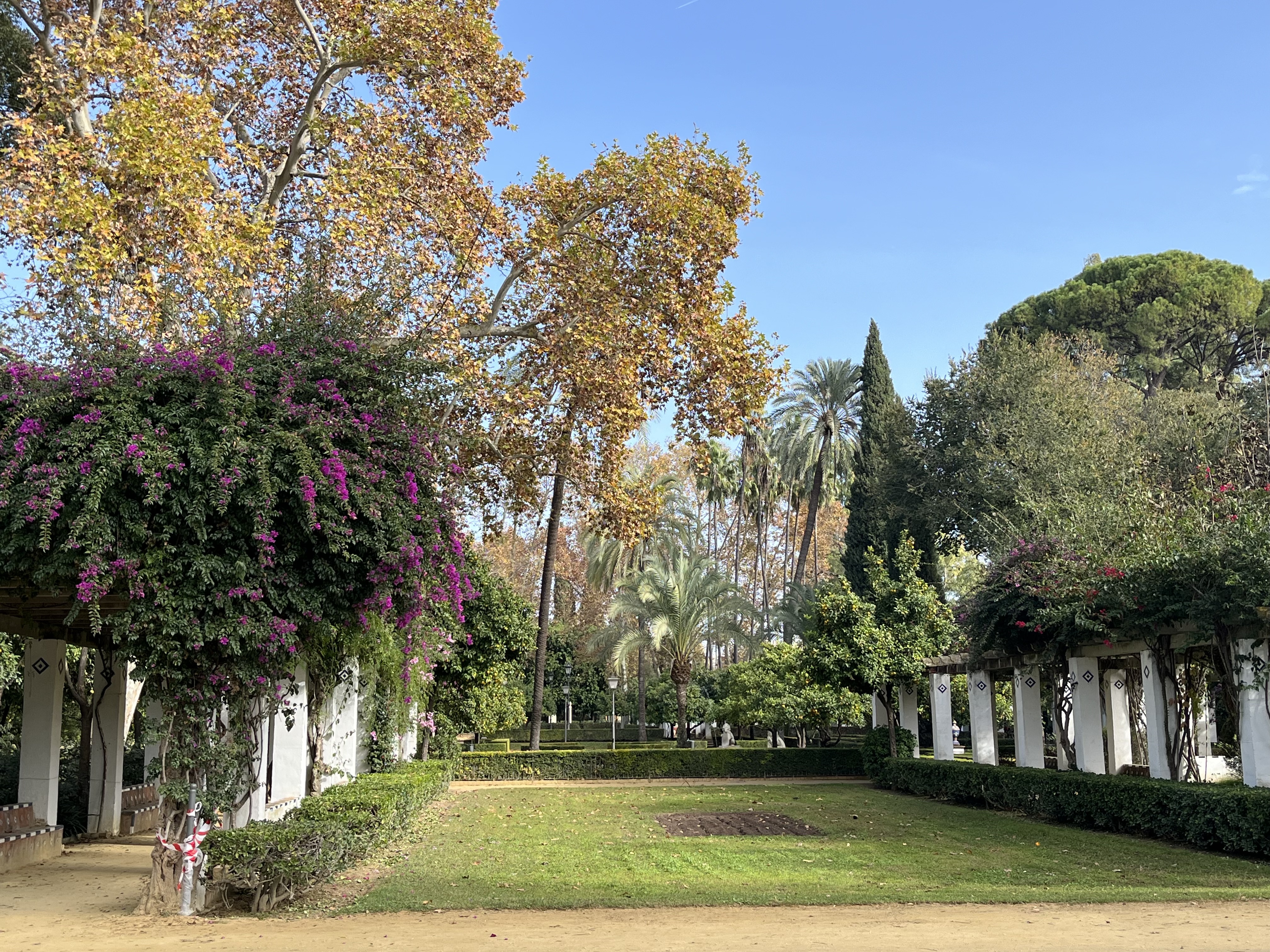
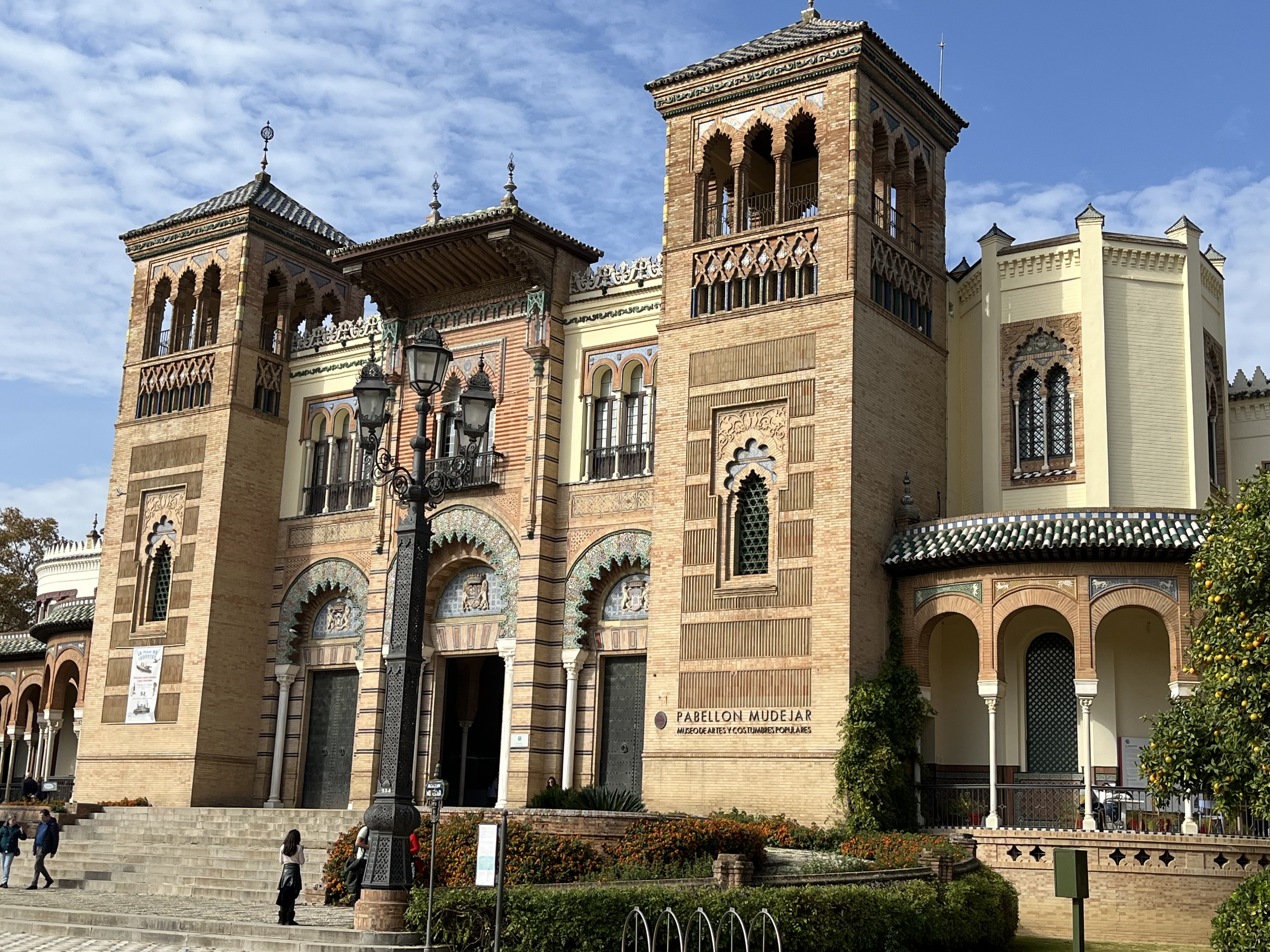
Across from the Plaza de España is the beautiful Parque de María Luisa, which is full of statues, tropical plantings and the Museum of Archeology and the Museum of Fine Arts and Crafts. Like all parks in Spain, it’s litter and graffiti-free.



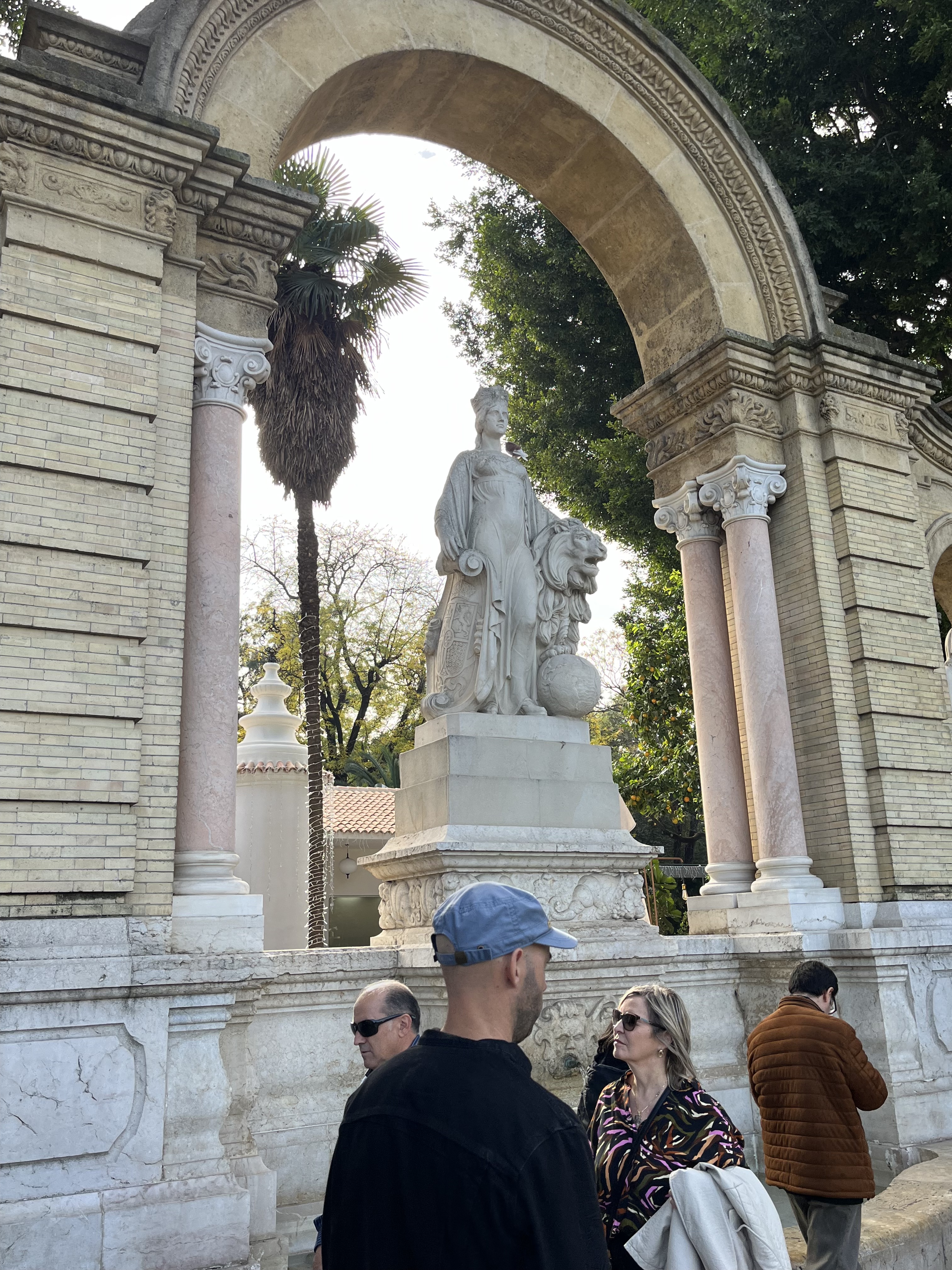
I also walked around the stately university grounds.

After another few miles of exploring, I found a great little bistro for a late lunch. When traveling solo, my routine is to have a very late lunch at a fine restaurant when it’s easy to grab a table for one before the rush. I was craving vegetables and finally found a spot to enjoy a huge grilled vegetable plate.

Tomorrow, I’ll go for a long walk before my reservation for a tour of the cathedral and the Giralda. Reputedly, the cathedral has the finest art collection in Spain other than El Prado in Madrid.
 Curated Carlos