-
An afternoon in Potsdam: April 27, 2024
Although I had planned to visit Kustrin, just over the border in Poland, I decided to stay in Berlin and take the train 30 minutes’ west to the city of Potsdam. I wanted to visit Frederick the Great’s Sans Souci, which is now written as Sanssouci.
As our guide explained during yesterday’s bike tour, Frederick the Great (Frederick II) wanted to be outside of Berlin owing to his obsession with privacy. He let his younger brother, Heinrich, live in the two city palaces. Young Frederick is alleged to have had two intimate male friends, one of whom was beheaded by his father while he was forced to watch. Although Prussia was a garrison state during his father’s reign, young Frederick preferred more rarified pursuits, including music, philosophy and art. He was a close friend of Voltaire, from whom he acquired his humanistic character. Nonetheless, he developed notable military prowess after becoming king, and after a series of successful military campaigns, especially against Austria, he established Prussia as a major European power and greatly expanded his crown lands.
His father forced him to marry Elisabeth Christine of Brunswick-Beven, but they separated early and rarely saw one another. They never had children.
From the Potsdam Hbf, I took the tram to the vast Sanssouci Park, which covers 300 hectares. There Frederick built his favorite palace, Sans Souci, where he is buried. It was completed in 1747 and has been referred to as the Prussian Versailles. In 1769, he completed a much larger palace, the Neues Palais, although Sans Souci was his favorite. He also built massive gardens dotted with classical statues, a huge Orangerie and other large buildings, including the currently closed Chinese House. The forest also has a botanical garden and dozens of pathways, so it’s not hard to get lost.
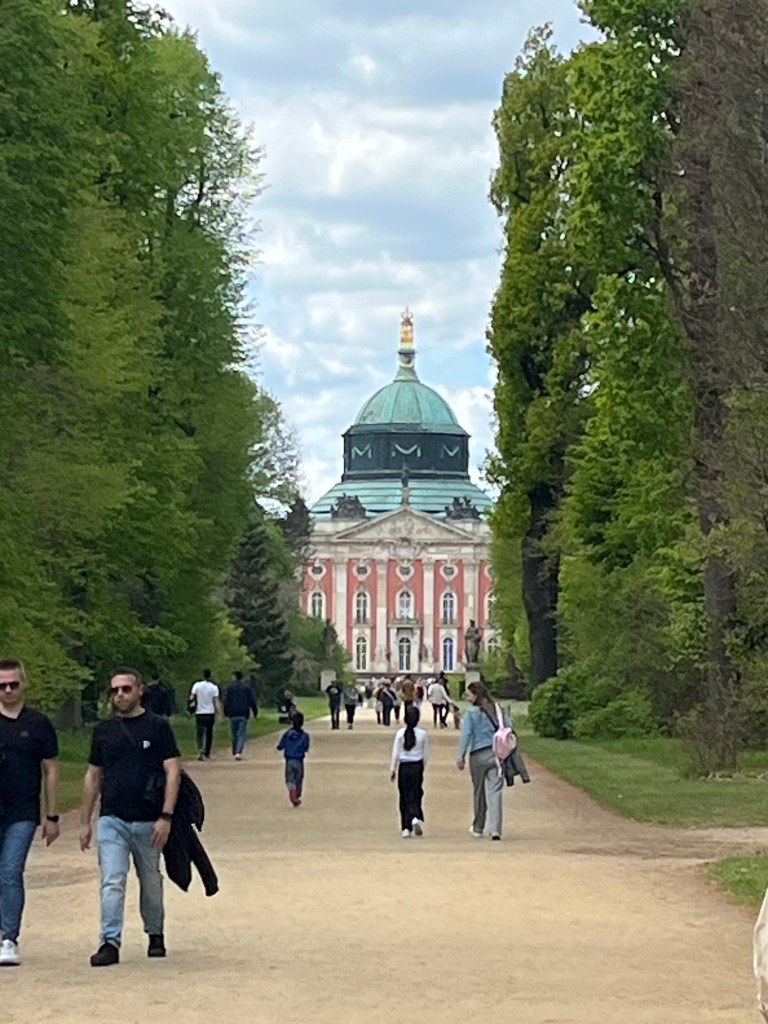
Approaching Neues Palais from the park 
Rear view of the Palais 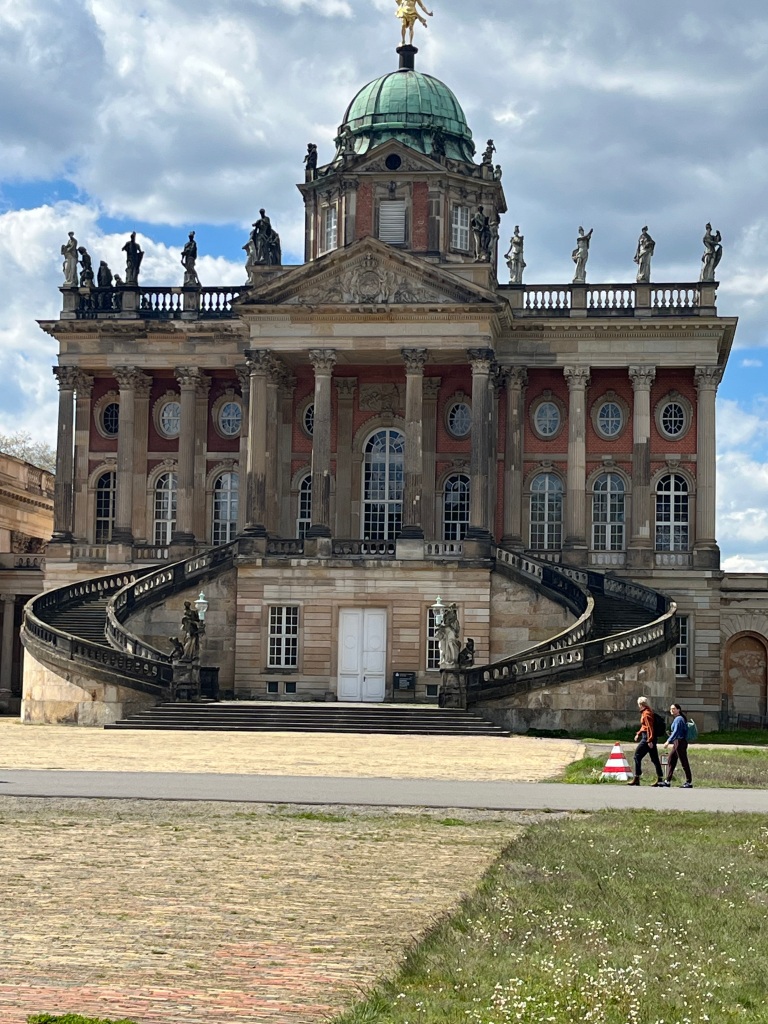
One of two identical entry rotundas 
Main entrance of Neues Palais 
The southern rotunda 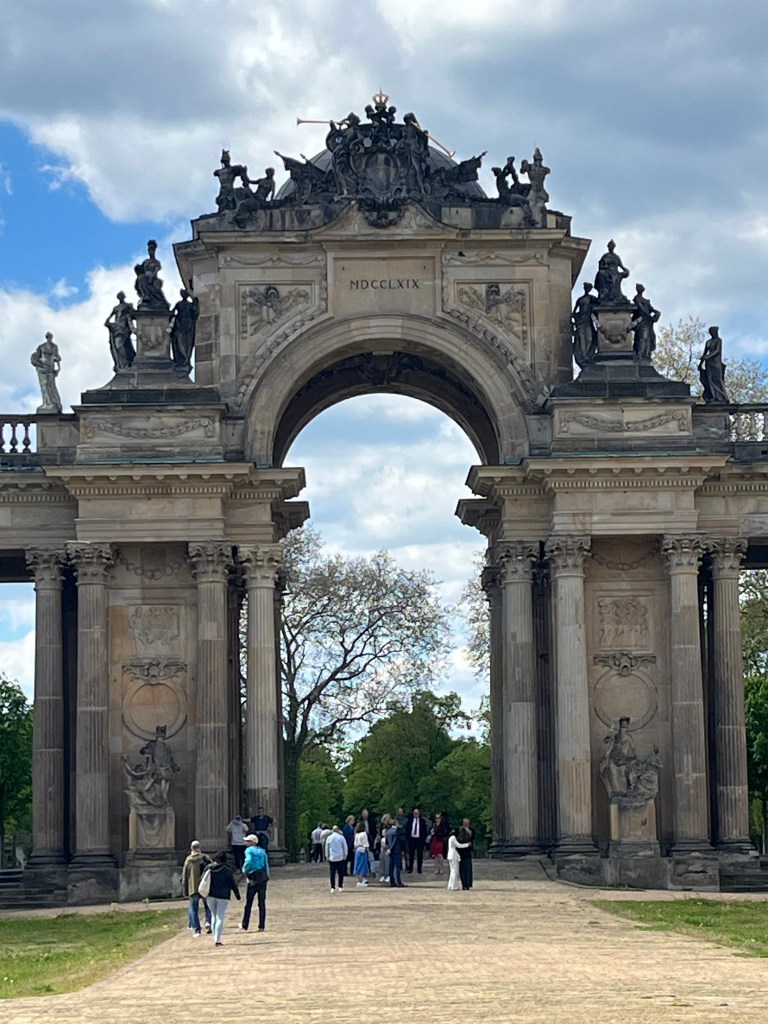
The grand arch entrance Sans Souci is a long walk from Neues Palais. There are other notable sites along the way, including the Orangerie and a number of statues. I imagine today’s pathways were originally trodden by Frederick and his courtiers on horseback.

Map of the Royal Park 
Orangerie 
Copper classical archer Finally I arrived at San Souci itself. In the front of the palace are immense gardens and a fountain. I had hoped to see the interior, but timed reservations had to be made in advance.
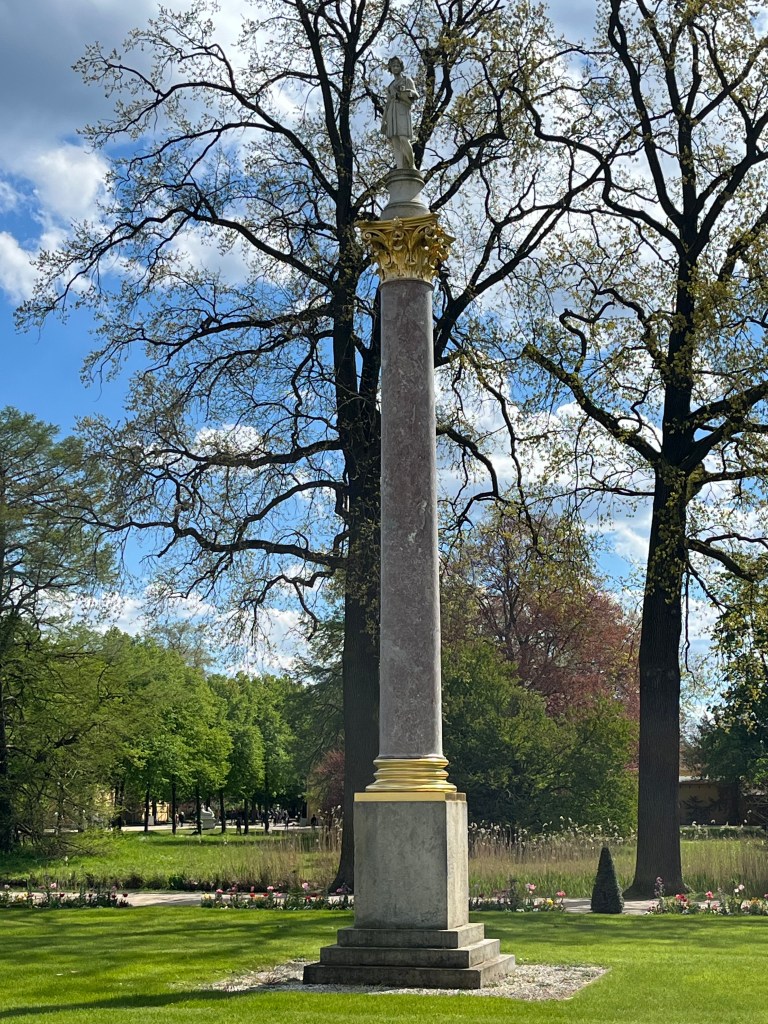
One of many classical statues 
The hilltop Sans Souci 
Tulips 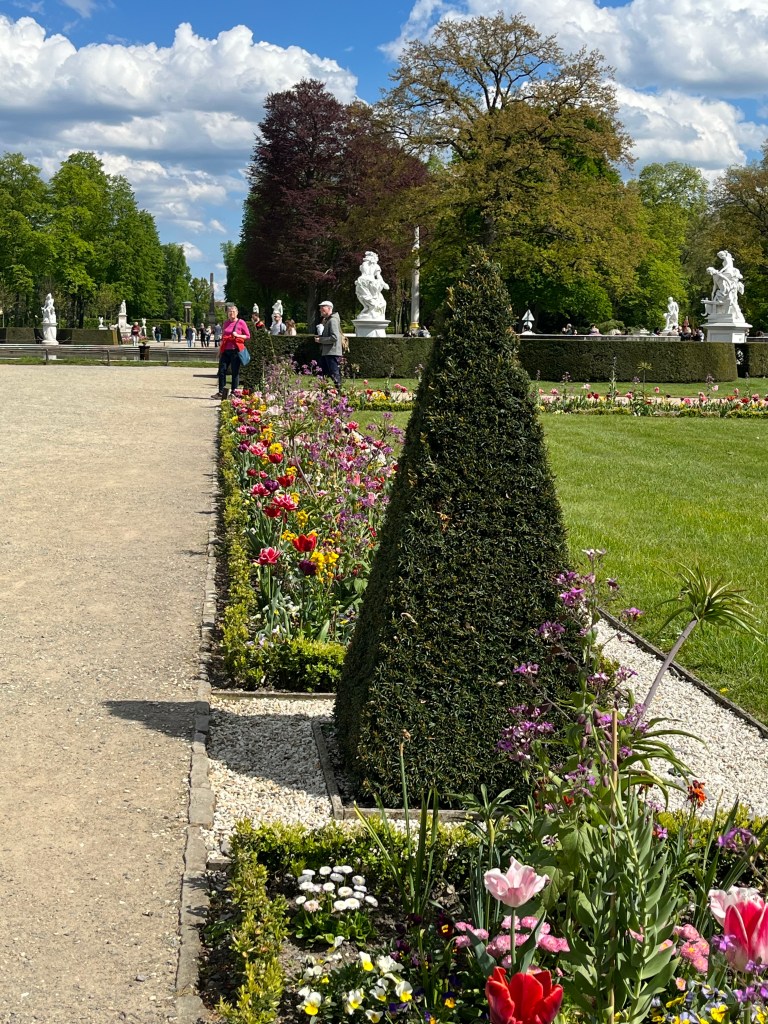
Part of the front gardens 
Looking towards Potsdam over the pool 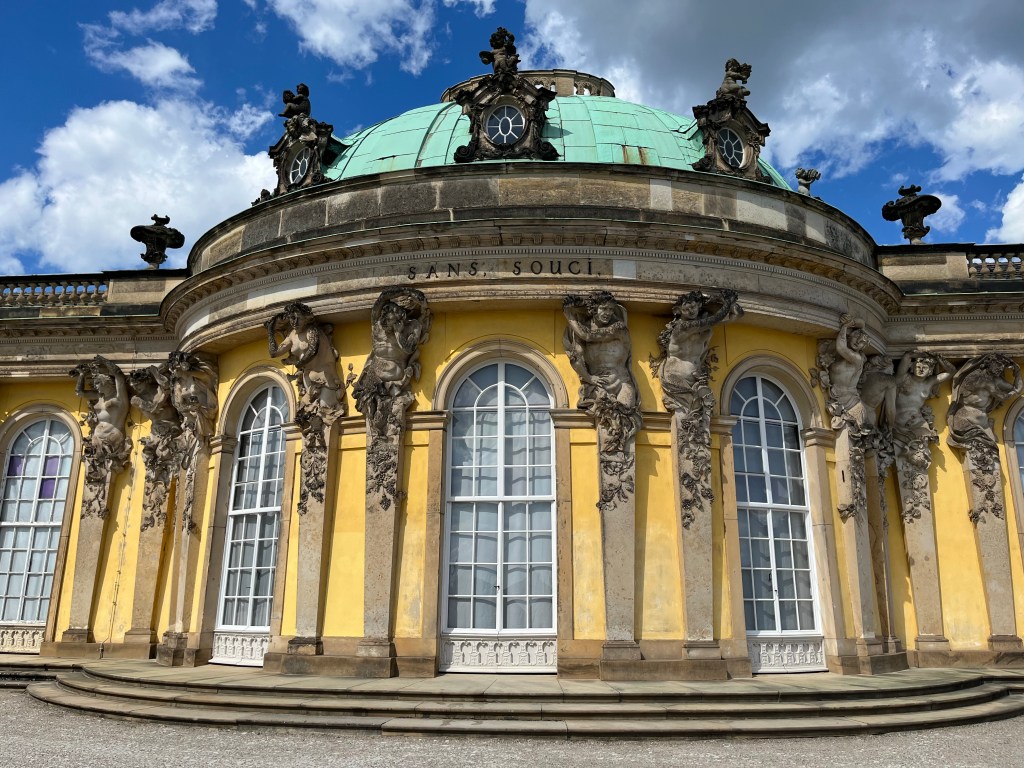
Iconic view of the palace front 
The rear colonnade 
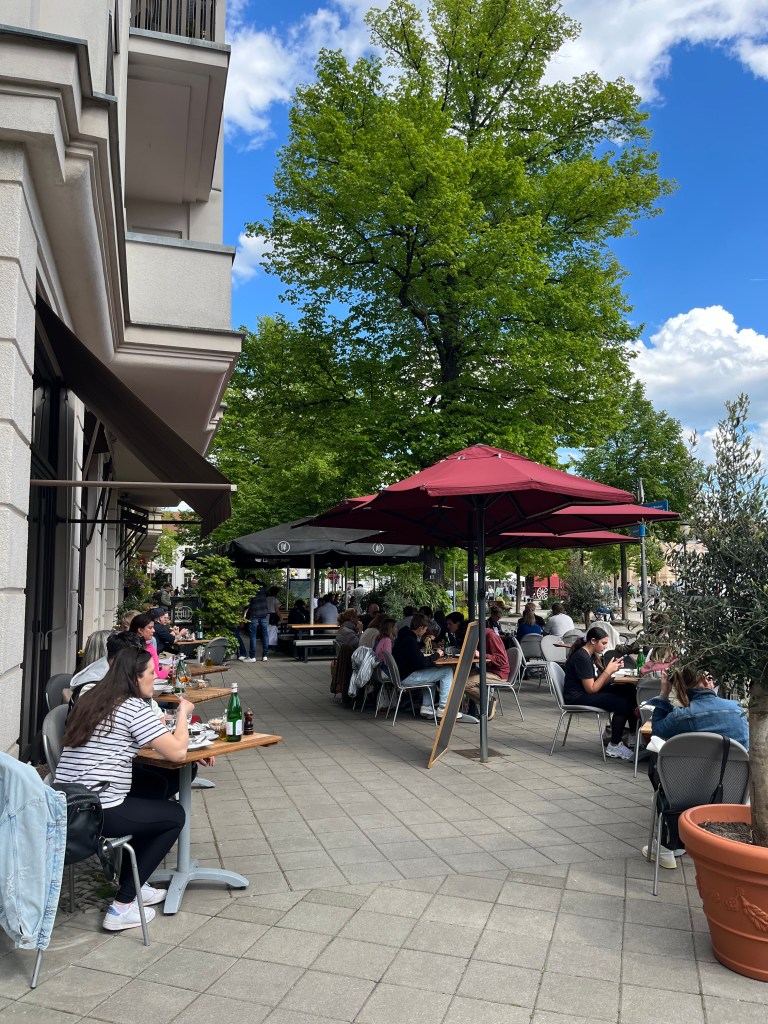
Looking toward the Roman Baths from the rear plaza After spending about thirty minutes enjoying the palace grounds, I walked down a hundred steps to the broad pathway leading to the Luisenplatz, where visitors were enjoying the spring afternoon eating al fresco. From there I grabbed a tram back to the Potsdam Hbf and was lucky to jump on the S-1 back to Schöneberg just as it arrived.

Tonight I’ll research some local restaurants. Tomorrow I plan to visit Tempelhof Airport and the Olympiastadion, two structures that weren’t destroyed during the WW2 Allied bombing campaigns.
-
Berlin Walking & Biking Excursion: April 26
Since the weather had improved, I decided to walk to the center and kill some time before the 2:00 pm three-hour bike tour. With its broad boulevards and landmarks, Berlin is pretty easy to navigate; nonetheless, it’s a huge city.
Notably, Berlin is a very green city. About 2 km in, I was in the vast Tiergarten, where I caught some glimpses of the Victory Column. Later, Anton, our bike tour guide, informed us that the original column was near the Reichstag, but Hitler moved it farther away to be a focal point on the new East-West Axis, which his court architect, Albert Speer, designed. He also built four buildings with tunnels to go under the boulevard to get to the column. Our guide pointed to the many bullet holes left over from the street fighting during the Battle of Berlin in April 1945 as the Soviet forces fought their way into central Berlin.

Tiergarten path 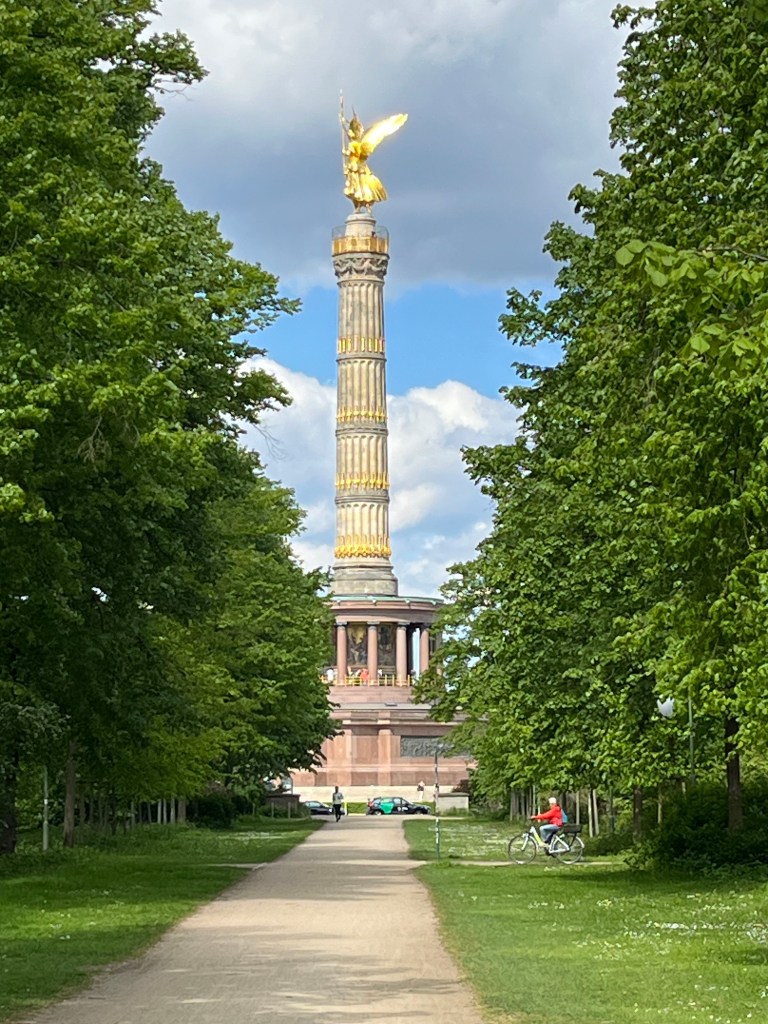
Victory Column from Tiergarten 
Victory Column From the Victory Column I continued east towards the Brandenburg Gate, passing a heavily policed pro-Palestinian demonstration near the Reichstag. I also passed the Bellevue Palace, where the largely unknown Bundespräsident lives. It was formerly the palace of Frederick the Great’s younger brother Heinrich, who held sex parties there in the 18th c.

Bellevue Palace 
Close-up 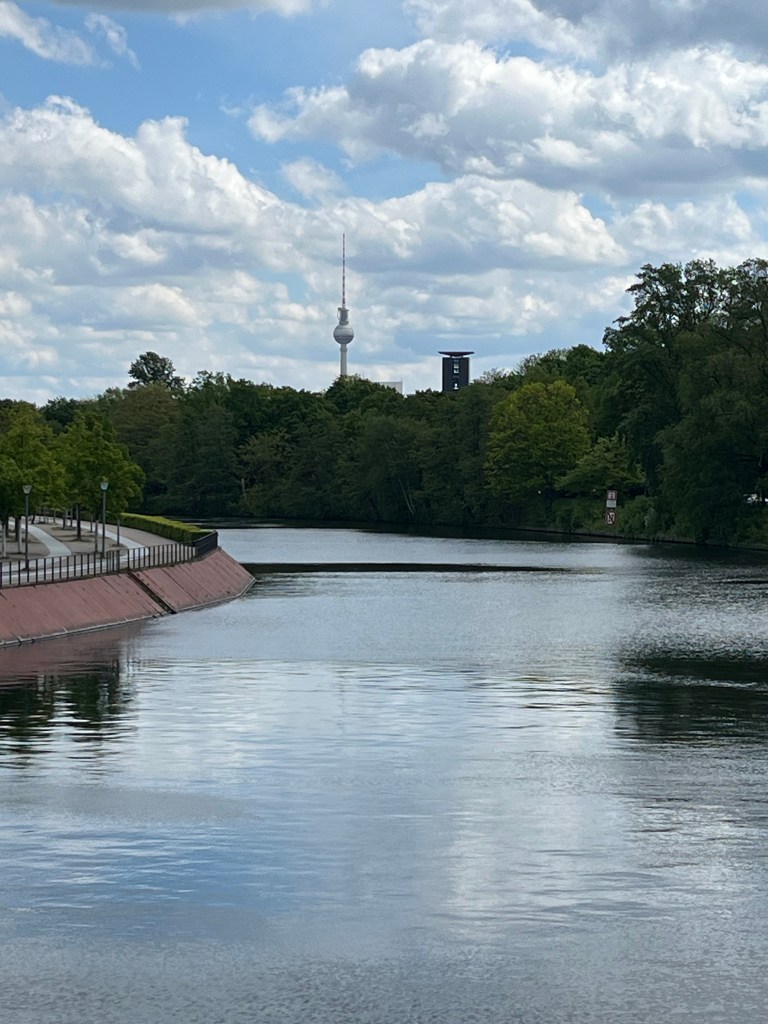
River Spree looking east 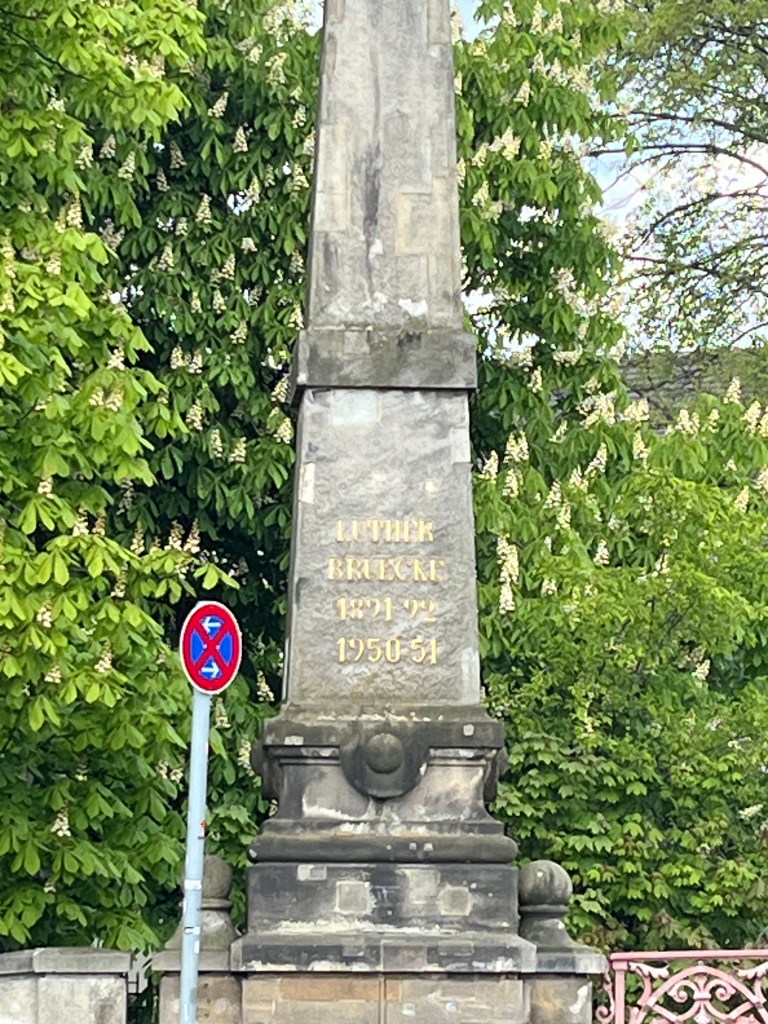
Martin Luther Bridge over the Spree 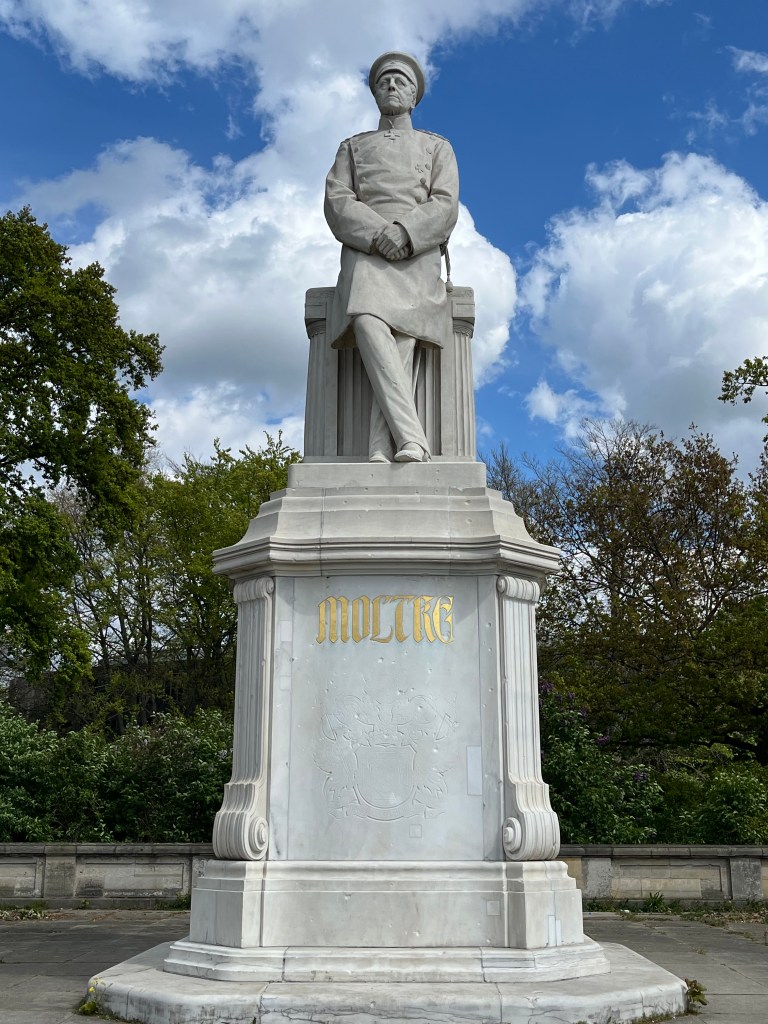
Field Marshal von Moltke from WWI 
Demonstration As I neared the Brandenburg Gate, I realized that the former DDR (Deutsche Demokratische Republik) retained the monumental buildings of the old Germany. Although 70% of the city was destroyed by the Anglo-American air raids and the Red Army artillery in the Battle of Berlin, the Germans have managed to rebuild all of the lost buildings. The Berlin Wall encircled West Berlin and even the Brandenburg Gate was in East Berlin. The equestrian statue of Frederick the Great, Humboldt University, the State Opera and the Neue Wache are all situated along the Unter den Linden. During the DDR era, goose-stepping National People’s Army honor guards were a regular sight at the Neue Wache, which used to have an eternal flame to the memory of “victims of Fascism and militarism”. Videos are easily found on YouTube.

Russian Embassy gate 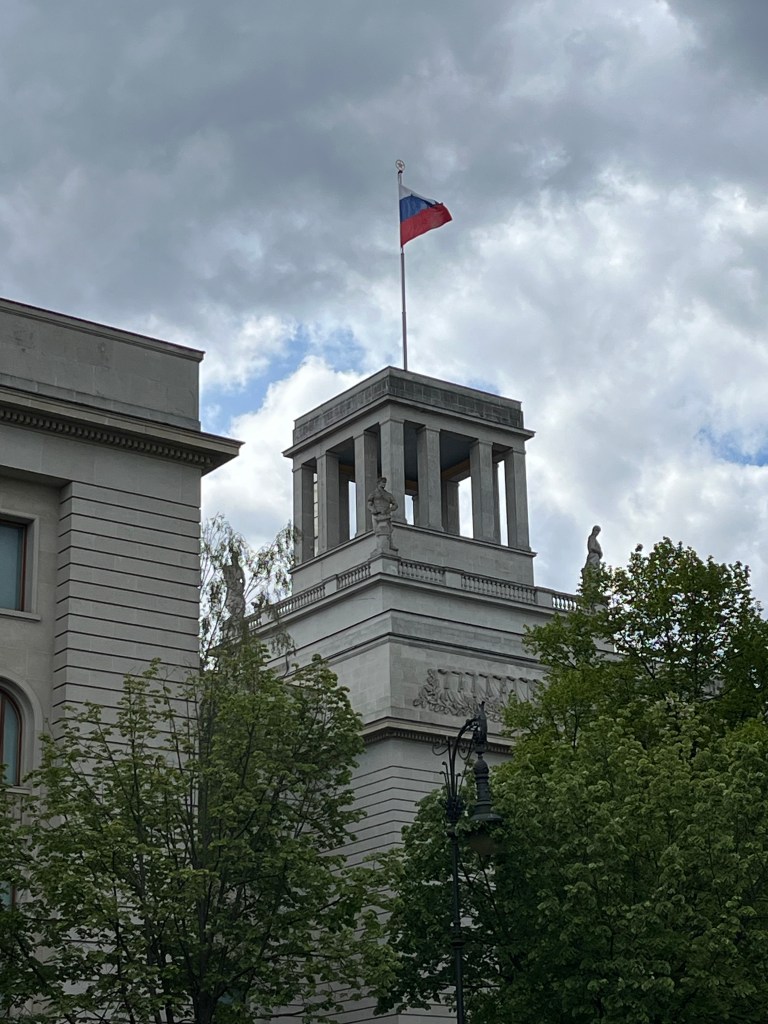
Russian Embassy 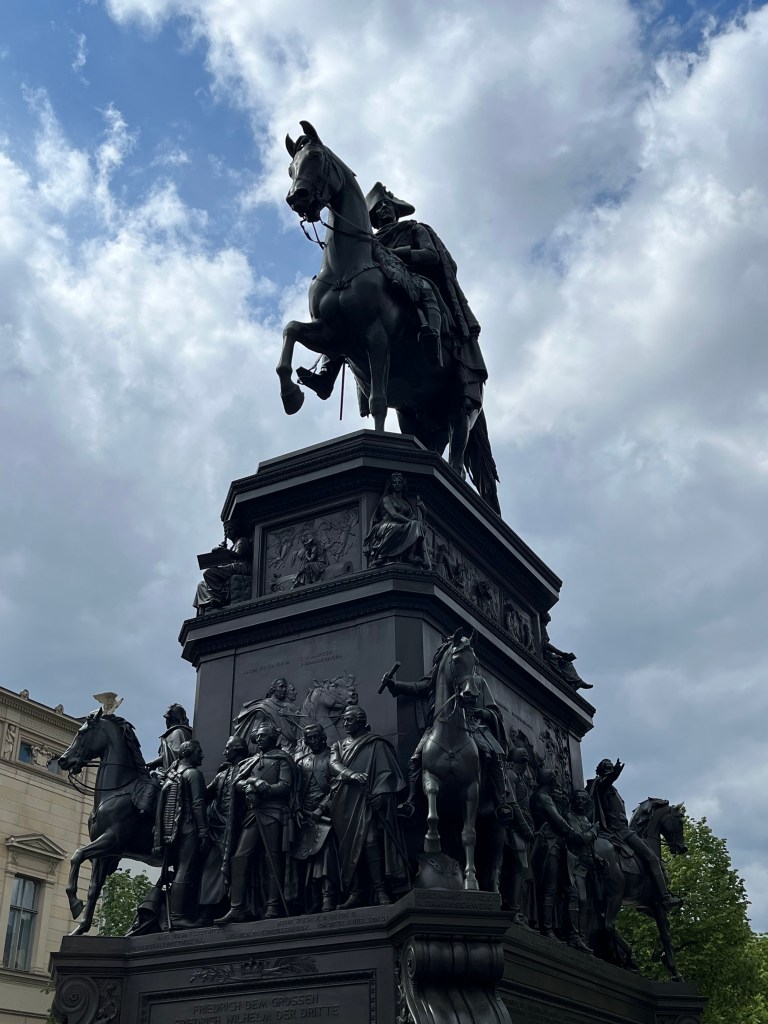
Frederick the Great 
Detail 
Humboldt University 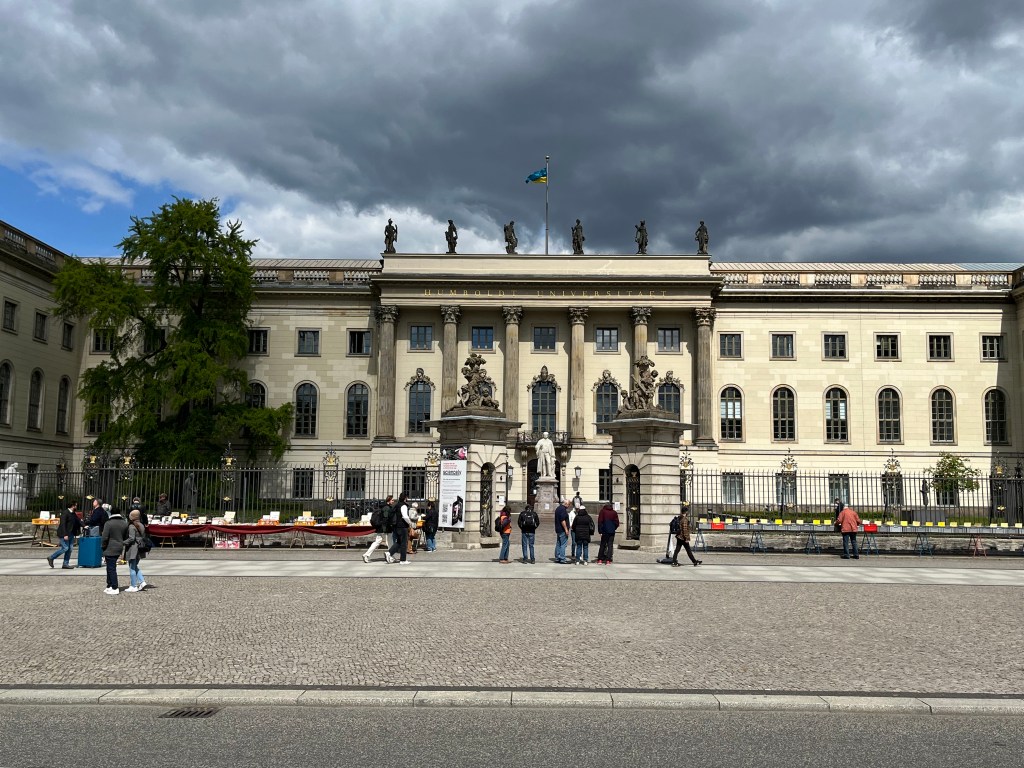
Humboldt University 
18th c. Berlin Palace of Frederick the Great, recently rebuilt for €800 million 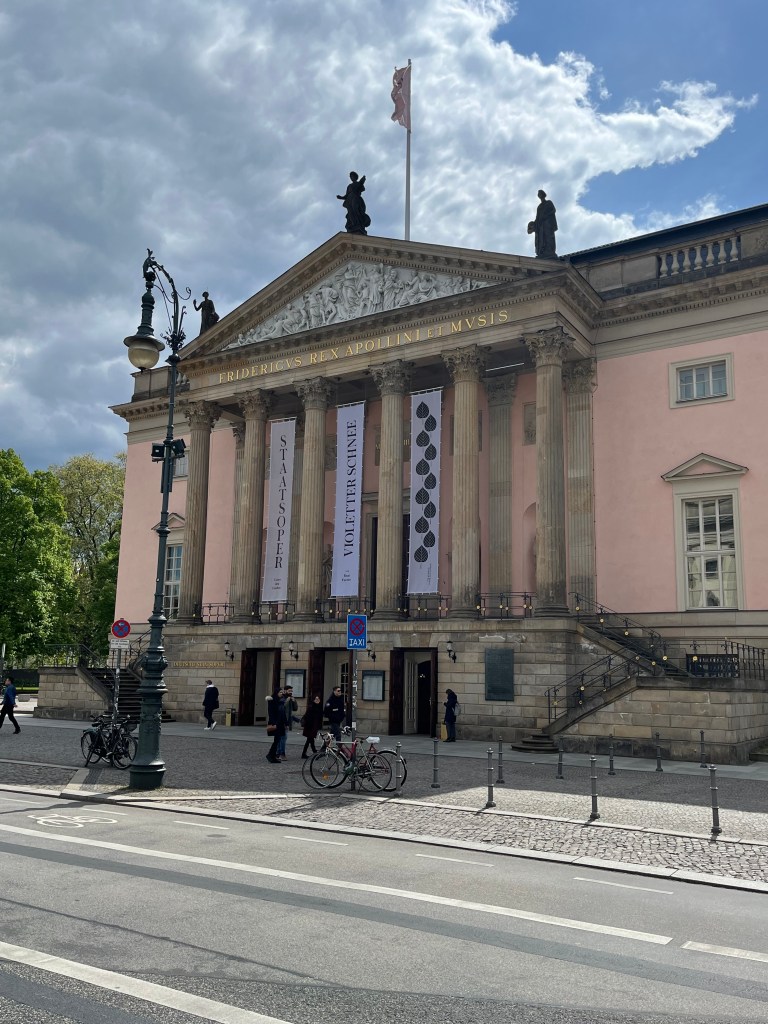
Berlin State Opera 
Interior of Neue Wache 
Neue Wache 
Unter den Linden looking East 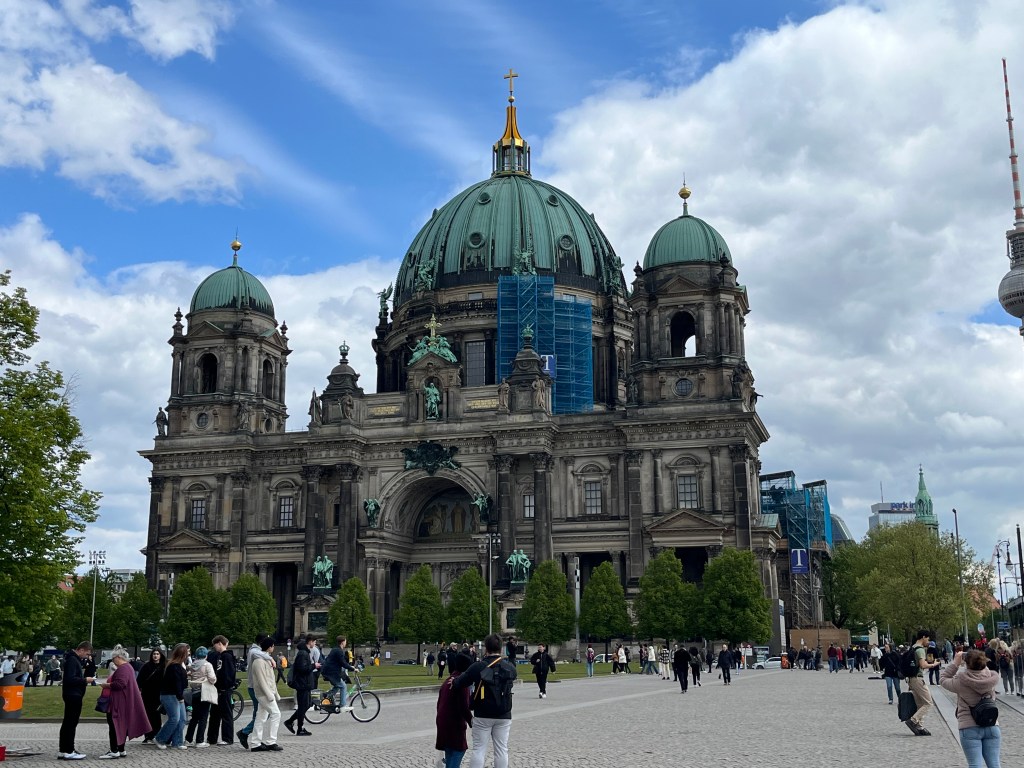
The Protestant Cathedral 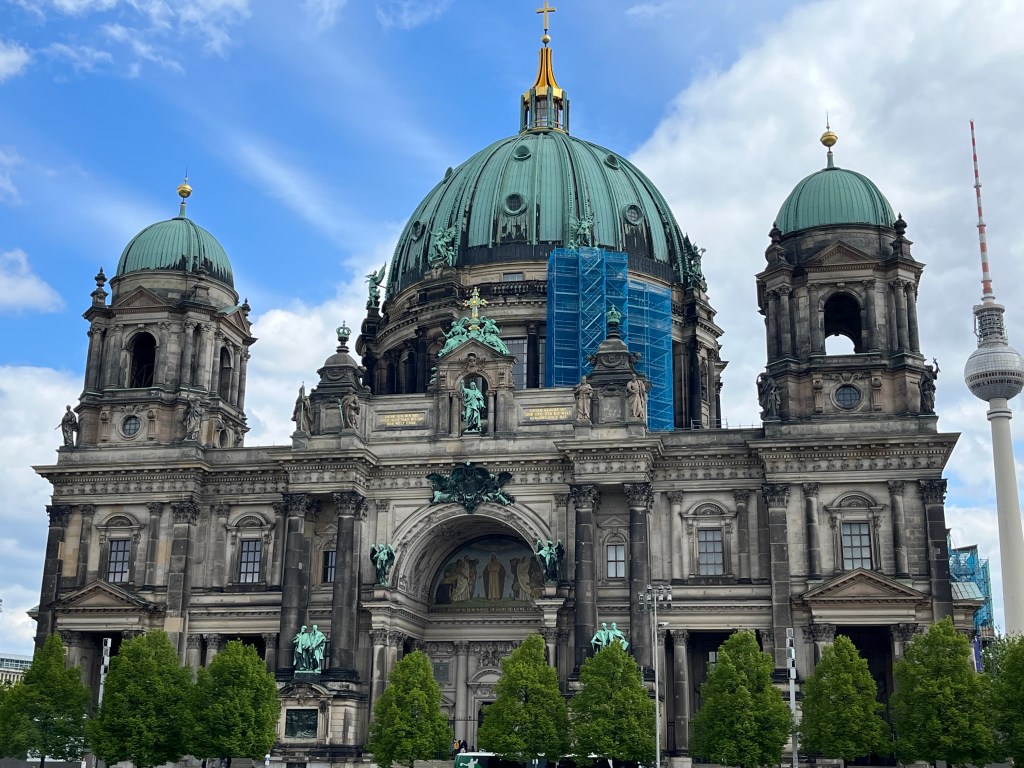
Close-up 
Humboldt University Museum 
The DDR TV tower, over 1,000’ tall 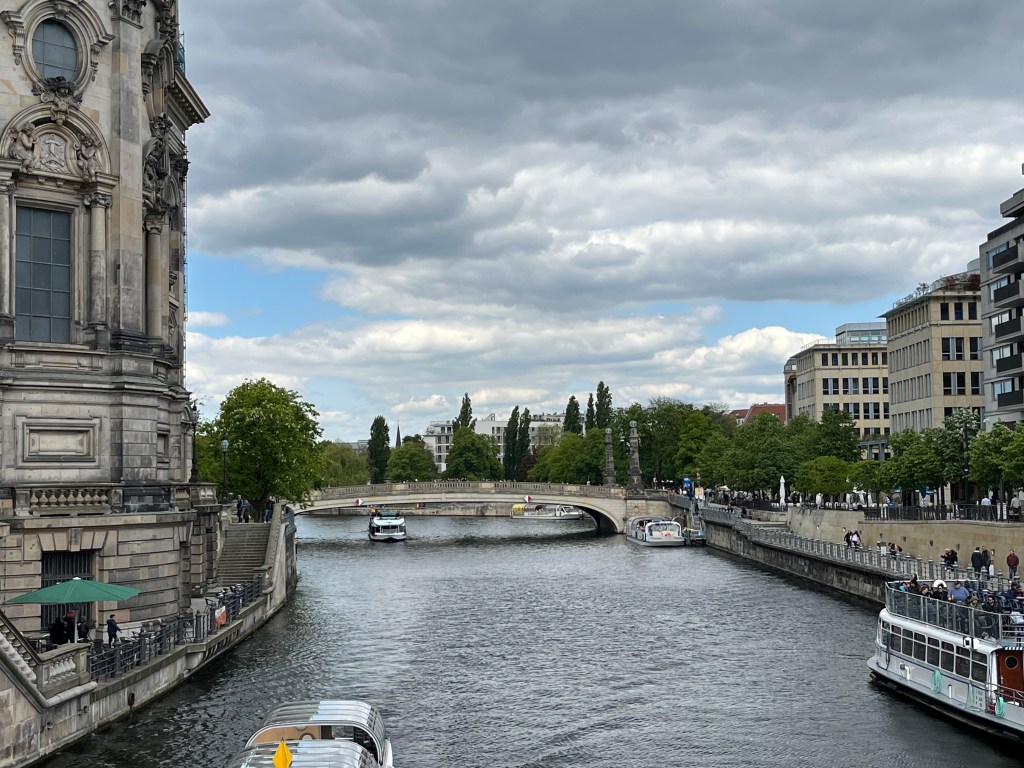
Museum Island 
St Mary’s Church 15th c. The bike tour was fun. Anton, a history graduate from Humboldt, spoke perfect English and had a great sense of humor. The group was small: an English woman, two guys from Boston, a couple from New Zealand living in Switzerland and me. It’s wonderful biking in such a bike-friendly city. Germany and Northern Europe are way ahead of us in bike safety and dedicated lanes.
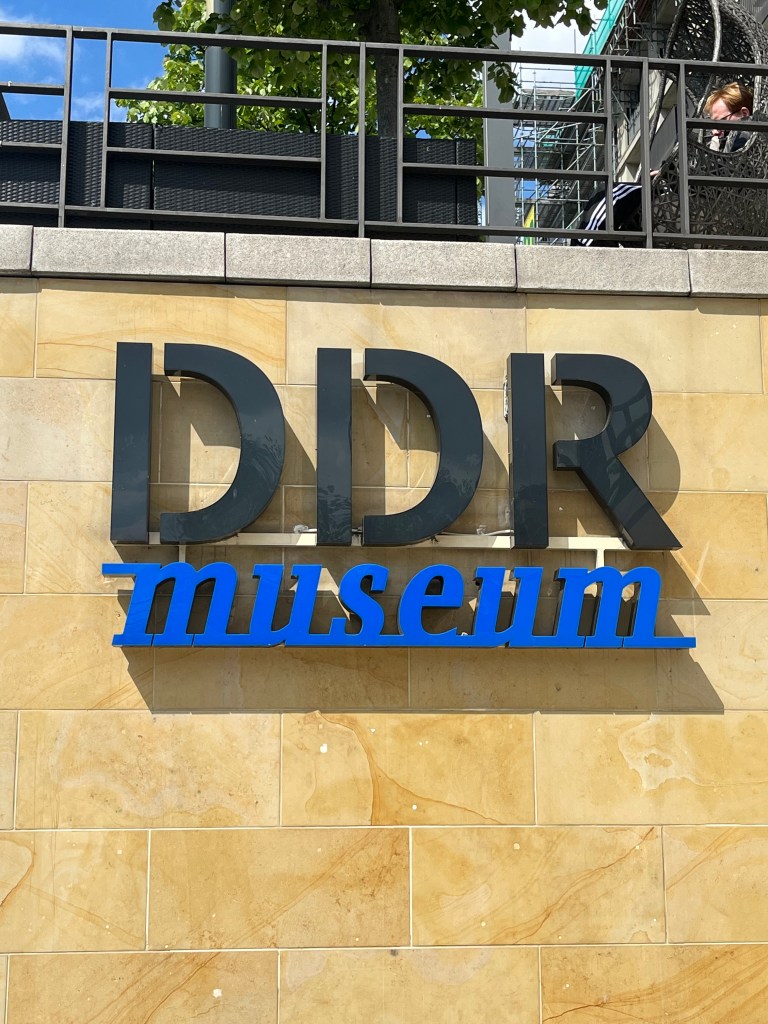
Before joining the tour, I went through the DDR Museum. I’ve always had a fascination with the old East Germany, from my early philately days. I always found their stamps interesting. The DDR was a curious state, unrecognized by West Germany until 1972. They always pointed to West Germany as the Third Reich successor state, thereby absolving themselves of any guilt. They established the most totalitarian regime in the former Warsaw Pact, with the exception of the pre-Gorbachev USSR. A significant percentage of the population collaborated with the Ministry of State Security (Stasi). I recommend the films “The Lives of Others” and the satirical “Goodbye Lenin!” for perspectives of life in the final days of the DDR.

East Berlin city plan with the curious Masonic symbol of the SED (Communist Party) 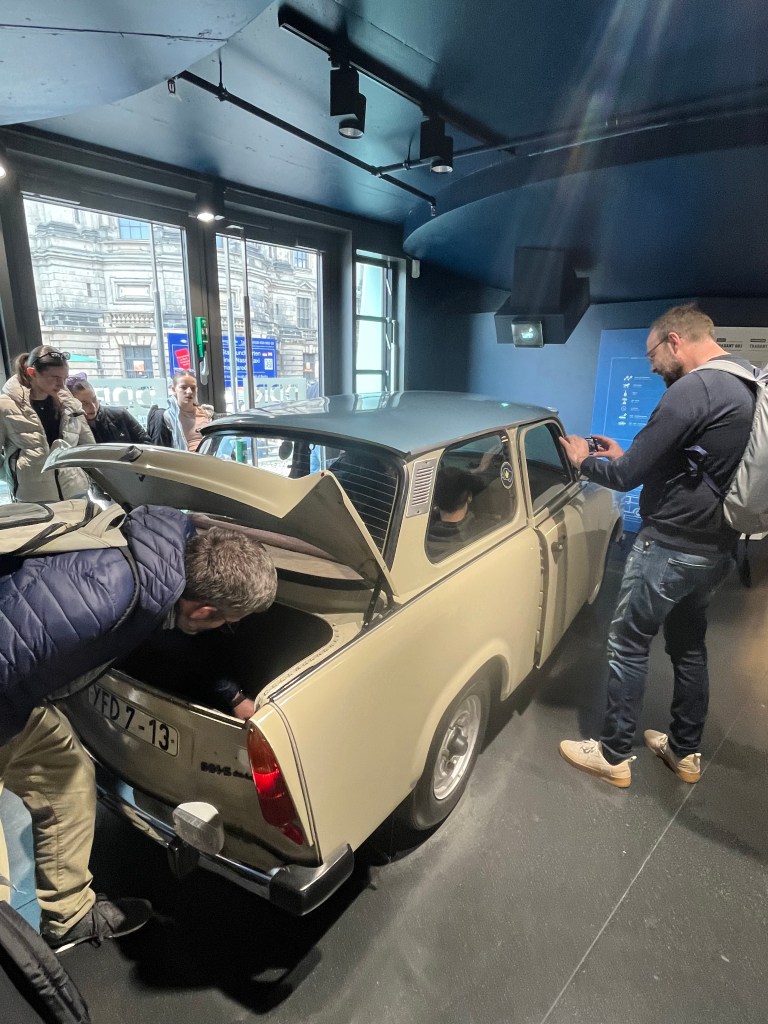
The awful Trabant 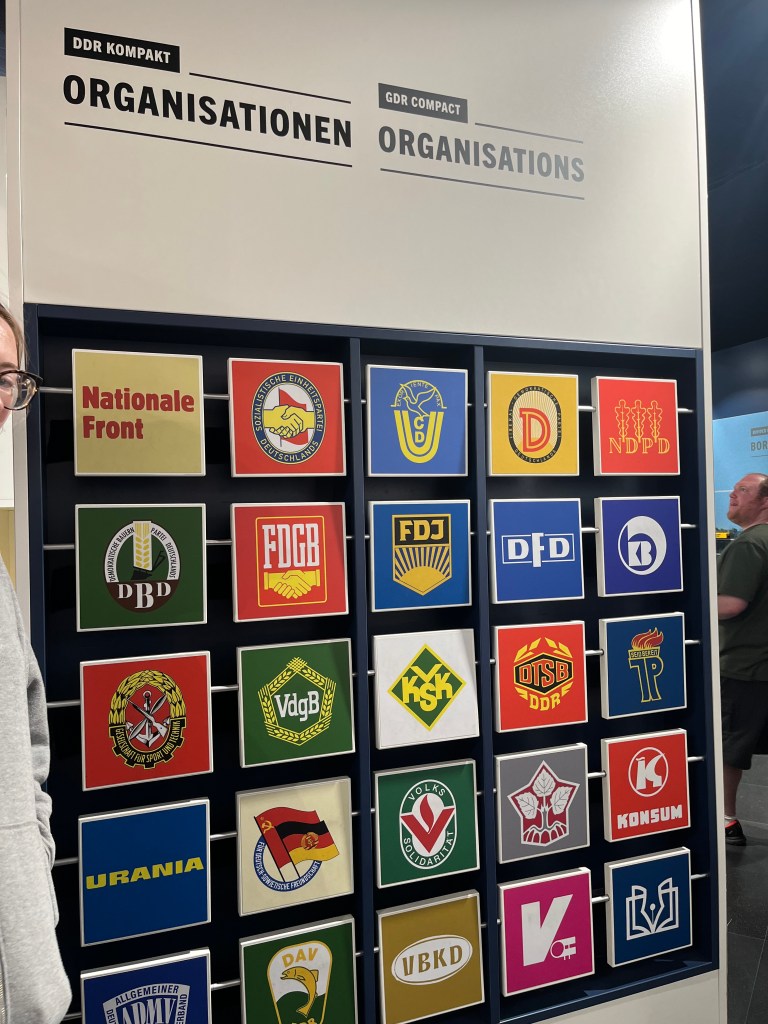
Mass totalitarian organizations 
Nationalvolksarmee Ideal Soldier 
USSR-DDR brotherhood 
Massive celebration a few weeks before the Wall fell 
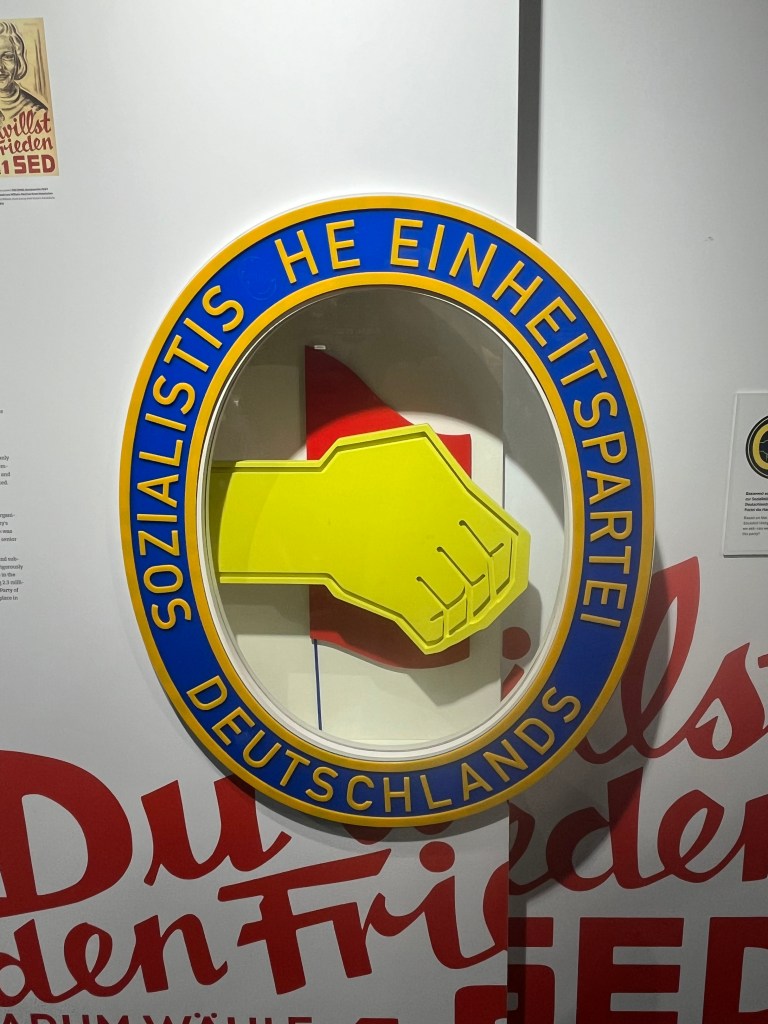
The Socialist Unity Party’s symbol 
A party for ex-Nazis, some of whom became avid Stasi officers! 
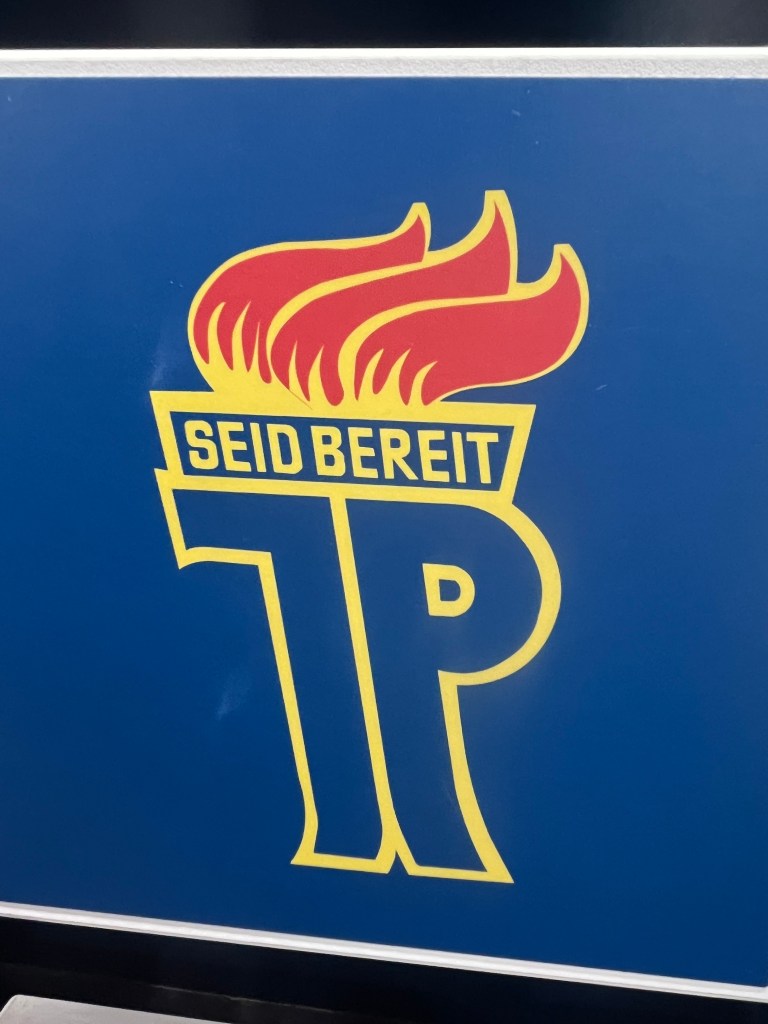
The youth group 
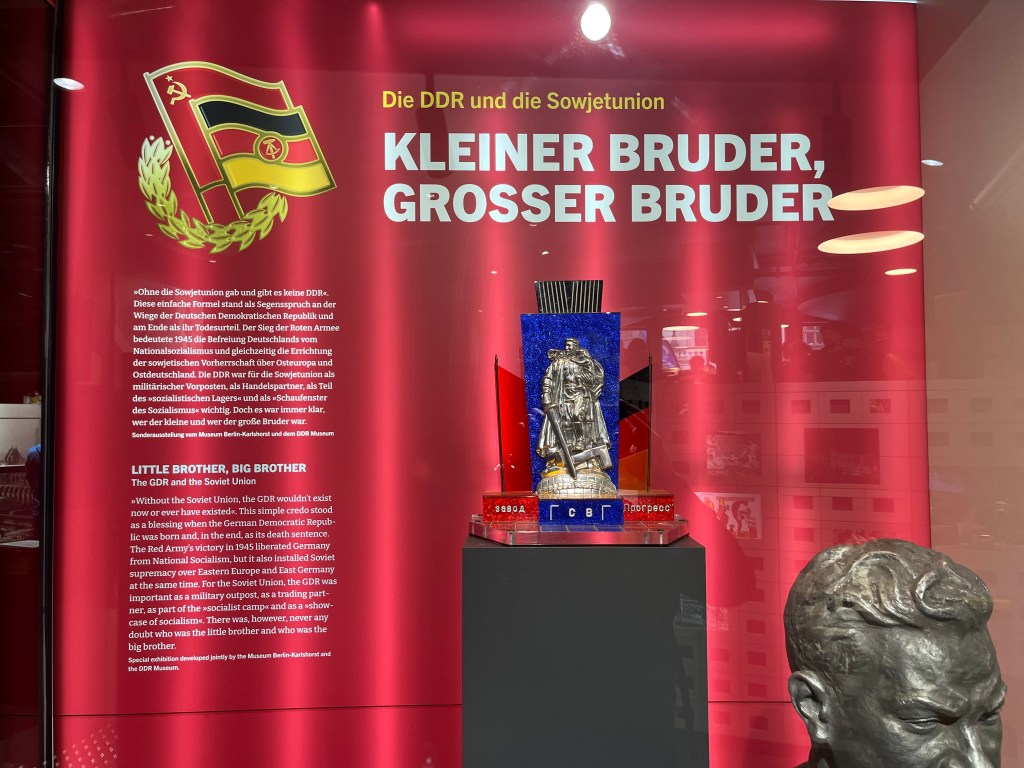
The East Germans were the “little brothers” 
Hygiene was important for die Jugend 
Always the photo of General Secretary Erich Honecker 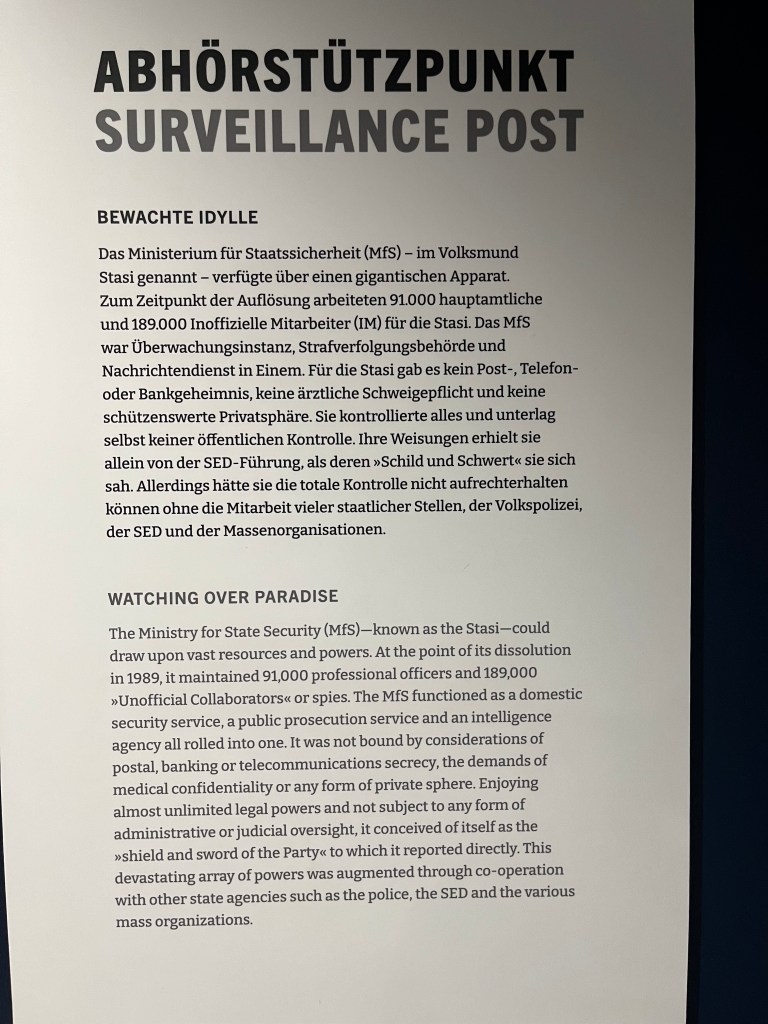

During the bike tour, I took some pictures of the remaining parts of the Berlin Wall, of which only 3 km remain. We also passed one of the few remaining structures from the Third Reich era: the massive Luftwaffe (Air Force) headquarters building. Other interesting sites included the Rote Rathaus, the new City Hall, which was formerly in East Berlin. I mentioned this in the past post.
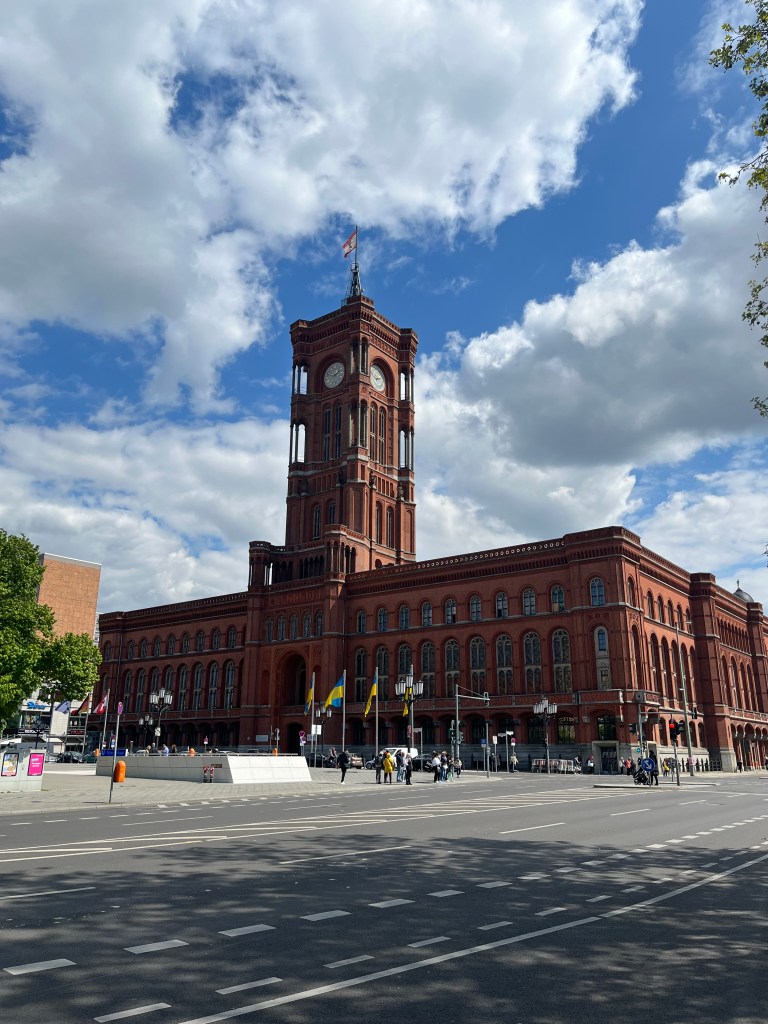
Rote Rathaus 
Former DDR TV tower 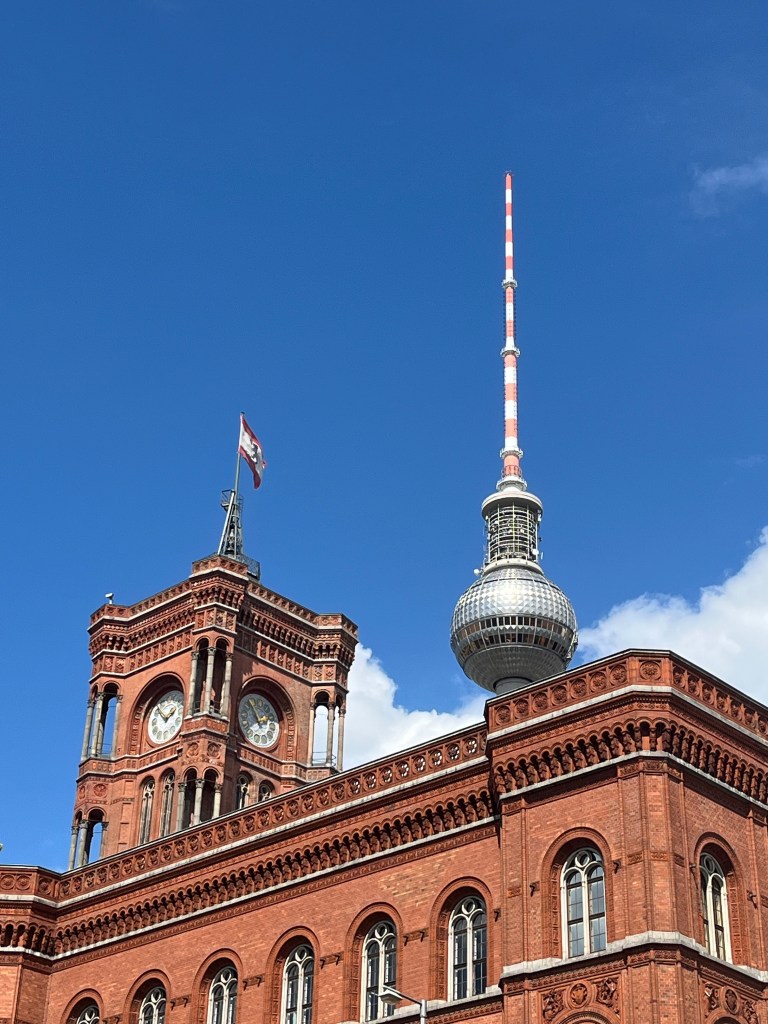
Juxtaposition of Rote Rathaus and Fernsehturm 
St-Nikolaus Church where the bike tour met 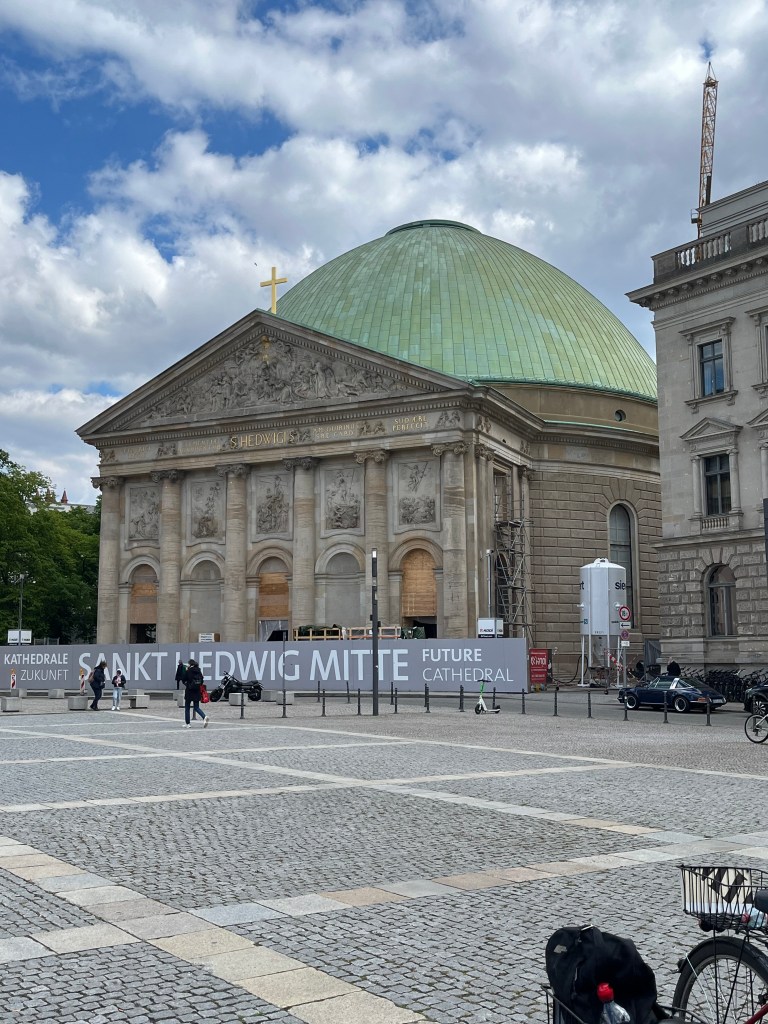
St-Hedwig Catholic Church funded by Frederick the Great 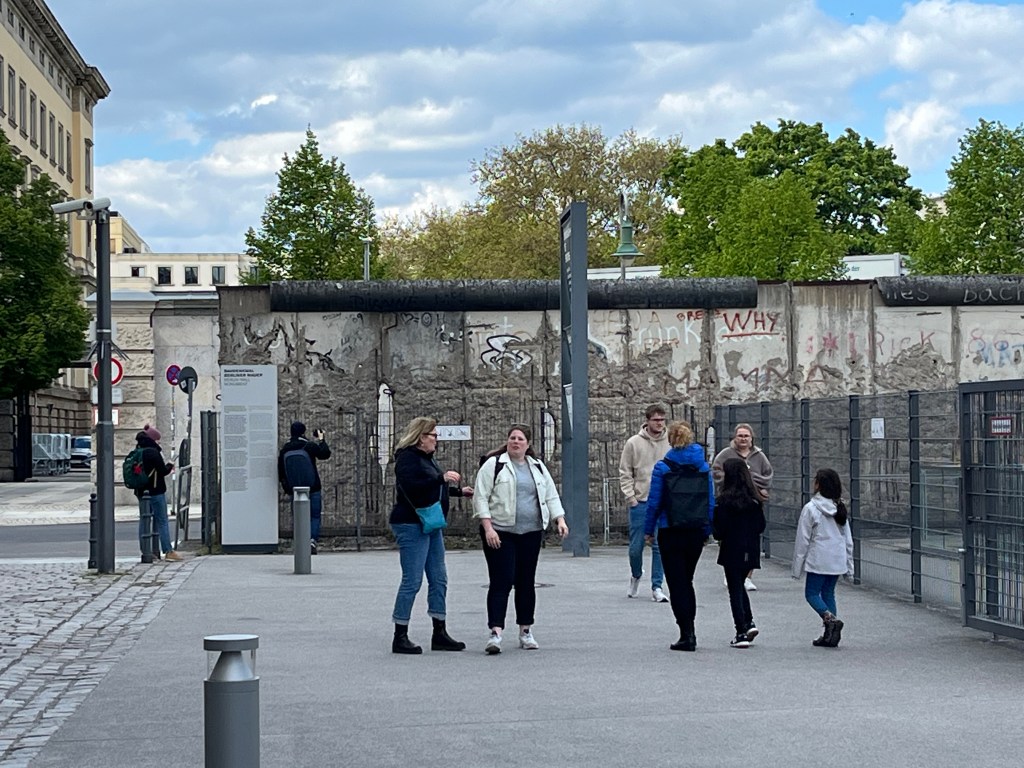
A remaining portion of the Wall 
Third Reich-era Luftwaffe Headquarters After the tour, I walked back to my Airbnb after clocking in 15 miles and three hours on a bike tour. I suppose I got my cardio in for the day!
-
Berlin: April 25 & morning of April 26
After a pleasant ride on the high-speed ICE to Berlin Hbf , I walked out of the massive glass station onto a vast plaza and was pleased to see the famous Bundestag, originally known as the Reichstag, looming in the near distance. Readers may be familiar with the famous 1933 Reichstag fire, which Hitler used as a pretext for claiming dictatorial power and later the sight of the choreographed raising of the Soviet flag over its semi-ruins in April 1945. Unfortunately, an ongoing construction site obscured the full view, but I was able to grab a few decent shots.

Arriving in Berlin 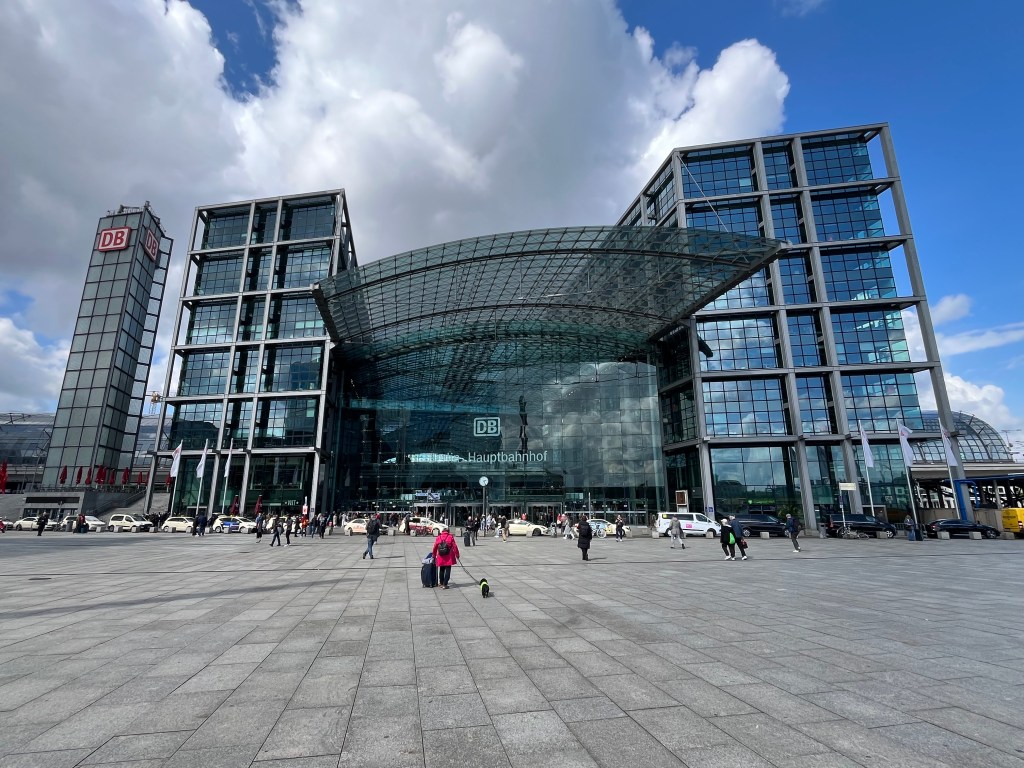
Berlin Hauptbanhof 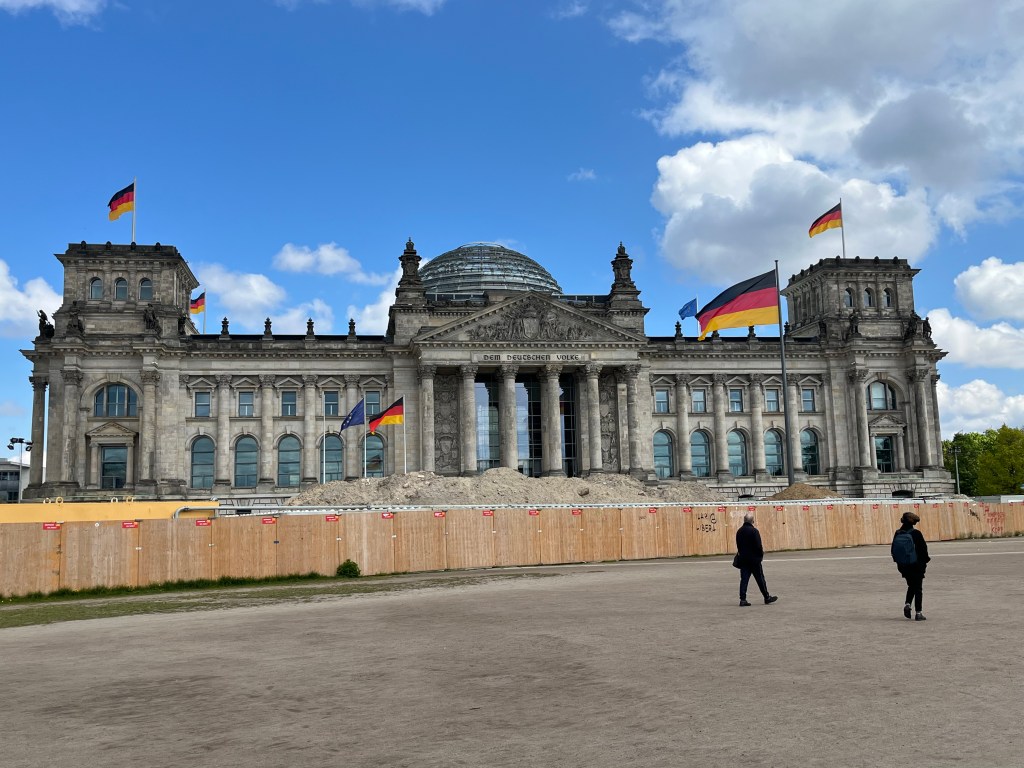
Bundestag, seat of the German government 
Front view over construction 
Iconic columns & inscriptions From the Bundestag, it was a short walk through the park to Unter den Linden and the famous Brandenburger Tor (Brandenburg Gate) on the Pariser Platz. Looking north, I could see the 368 m. Fernsehturm TV tower and the Rotes Rathaus, both in the former East Berlin. I also saw the venerable Adlon Hotel, famous from Nazi and Cold War spy novels and movies. Looking down the Unter den Linden, I could pick out the 67 m. Victory Column, built after a 19th c. victory over Denmark.

Walking toward the Brandenburg Gate 
Brandenburg Gate 
Looking toward the former East Berlin with the TV tower & Red City Hall 
The TV tower 
Hotel Adlon 
Looking down Unter den Linden towards the Victory Column I considered taking the U-Bahn to my Airbnb in Schönberg, but given how massive Berlin’s transport system is and with my luggage in tow, I called an Uber, which is cheaper than in the US, and rode a nice Mercedes sedan to my destination.
The host met me at the door and even carried my bag to the apartment, which I imagine was built over 100 years ago and escaped the bombing campaigns. He showed me how the washing machine worked and told me to call if I needed anything. He’s a student at a local university and had a big exam the next day, so I wished him luck. His family owns several apartments in the area. The entry with two keys was a bit tricky. When I returned from the grocery store, I had a tough time getting in. I told him they needed to install a modern lock.
As readers of my blog are aware, over 90% of the accommodations I choose are excellent, but there are always a few misses. While this Airbnb is in a nice neighborhood and is very quiet, it won’t work for me. For example, it has a small twin bed, no coffeemaker and drapes that are missing a hook. I haven’t told the host yet, but I’ll check out tomorrow and stay at a luxury hotel (Hotel Luc, a Marriott property) near the center since this location is a bit far. Hotels are pretty cheap in Berlin compared to comparable US cities. I also decided to spend Saturday night just across the border in Kostrzyn. I want to check out the former Prussian city where the Red Army launched its final drive to Berlin. I’ll write about this later.
Last night I slept until about 4:45 am. After a few minutes, though, I fell back to sleep and arose around 7, feeling well rested. My lower back was sore from the bed, so I sat in a chair and put my hands on the floor while stretching for a minute, which felt great. With no coffeemaker, I walked down the Martin-Luther Strasse a few hundred meters and had, in succession, a cappuccino and a flat white, the price for both less than for one latte in Nashville. The morning is sunny and finally warming up, reaching about 60 today and hitting the 70s by Sunday.

My street 

Ah! Caffeine! On my way to the cafe, I noticed that I was passing through John F. Kennedy Platz, adjoining the Schönberg Rathaus. I read that this was the exact spot where JFK delivered his famous “Ich bin ein Berliner” speech on June 26, 1963. The Rathaus was West Berlin’s temporary city hall since the original Red City Hall was located in East Berlin.

JFK Platz 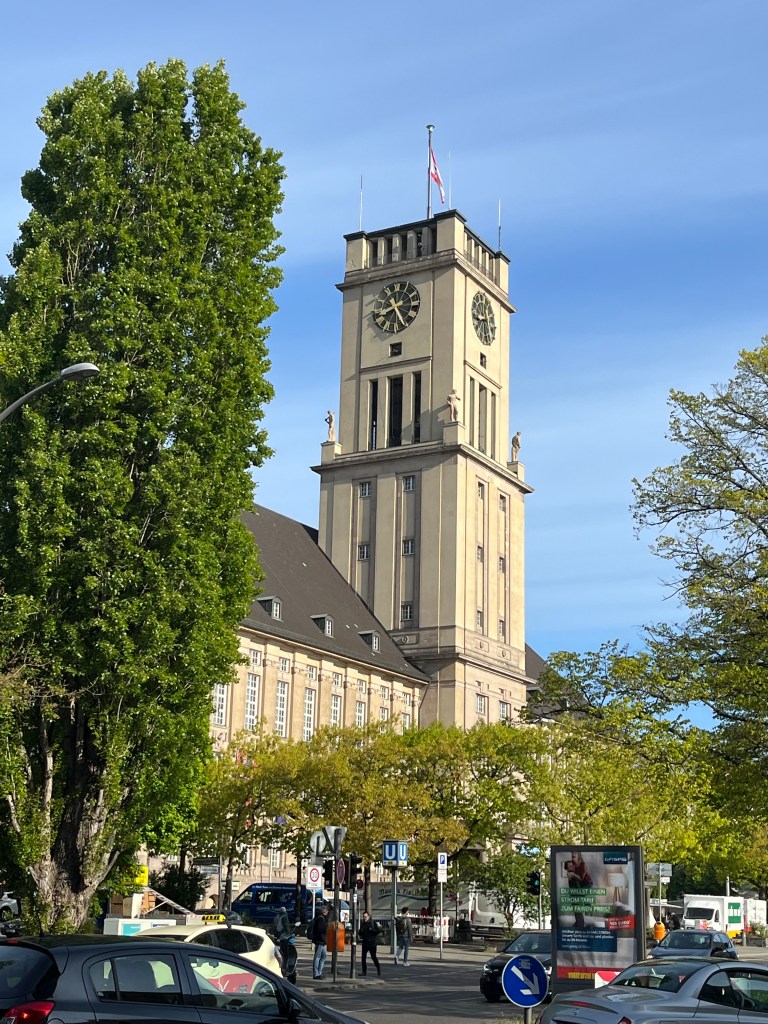
Schönberg Rathaus Later this morning, I’ll head back to the center for a long walk and then join a small group for a 3-hour guided bike tour of the sites. Looking forward to much warmer cycling weather than in Amsterdam a week ago!
-
Hamburg Day 3: April 24, 2024
I slept over nine hours and awoke around 8:30 to a grey and rainy day. After coffee and some yogurt, I decided to take the S-Bahn into town to visit the highly regarded art museum built at the end of the 19th century—Hamburger Kunsthalle.
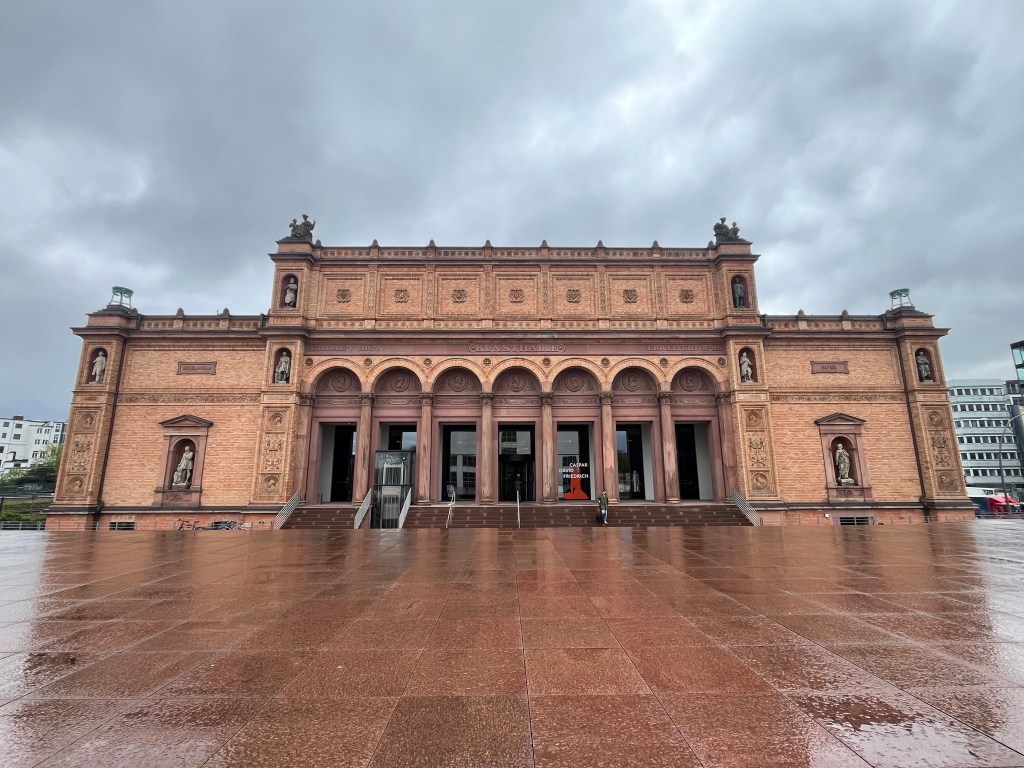
Kunsthalle front view 
Side view 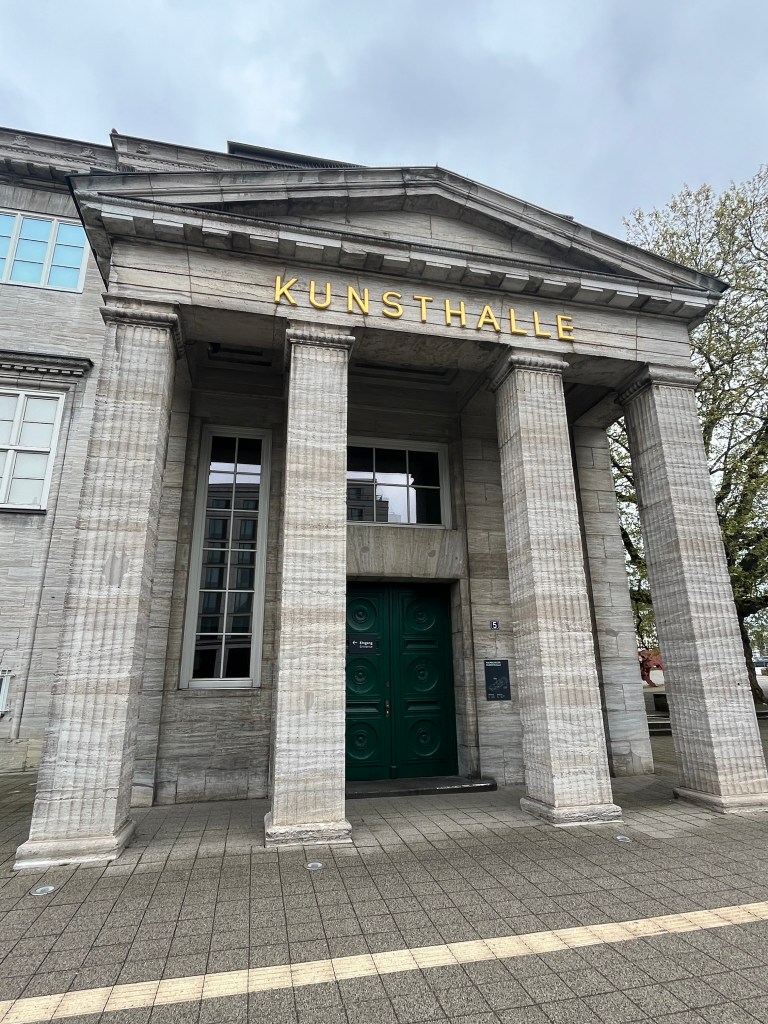
Rear view 
Grand entrance 
Side view with Central Station tower The museum is easy to navigate and has an impressive collection of European art from the medieval period through the early 21st century. There’s a large array of French and German Impressionists including the famous Caspar David Friedrich work “Wanderer Above the Fog” c. 1817.

Wanderer Above the Fog 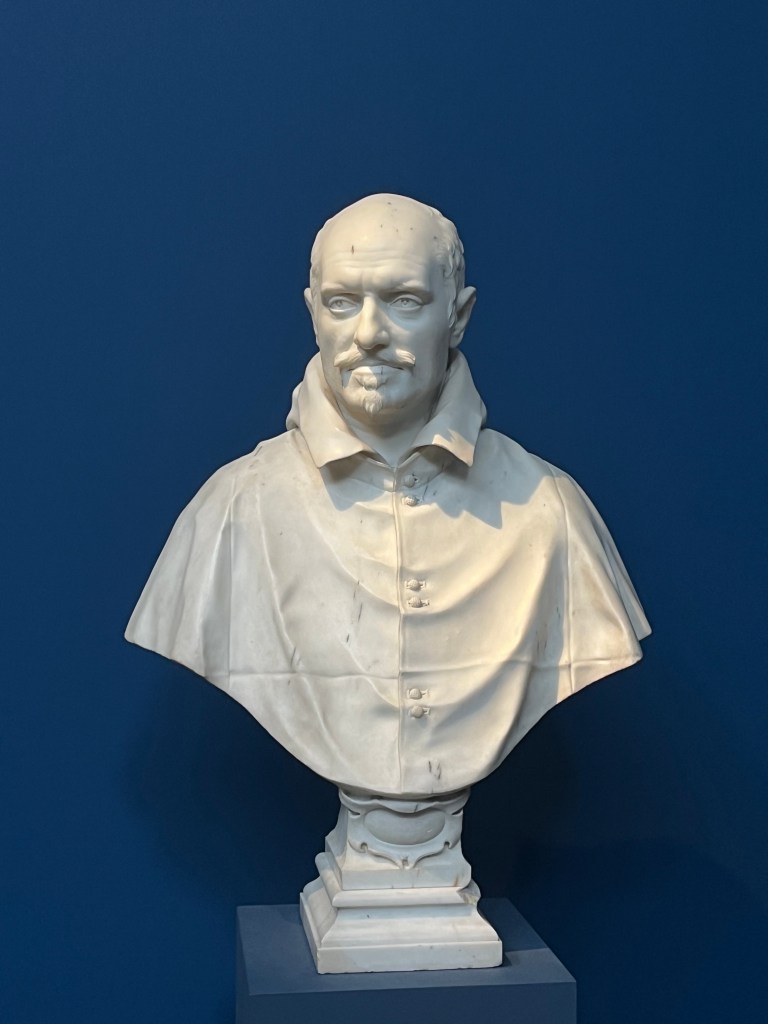
Bernini 1622 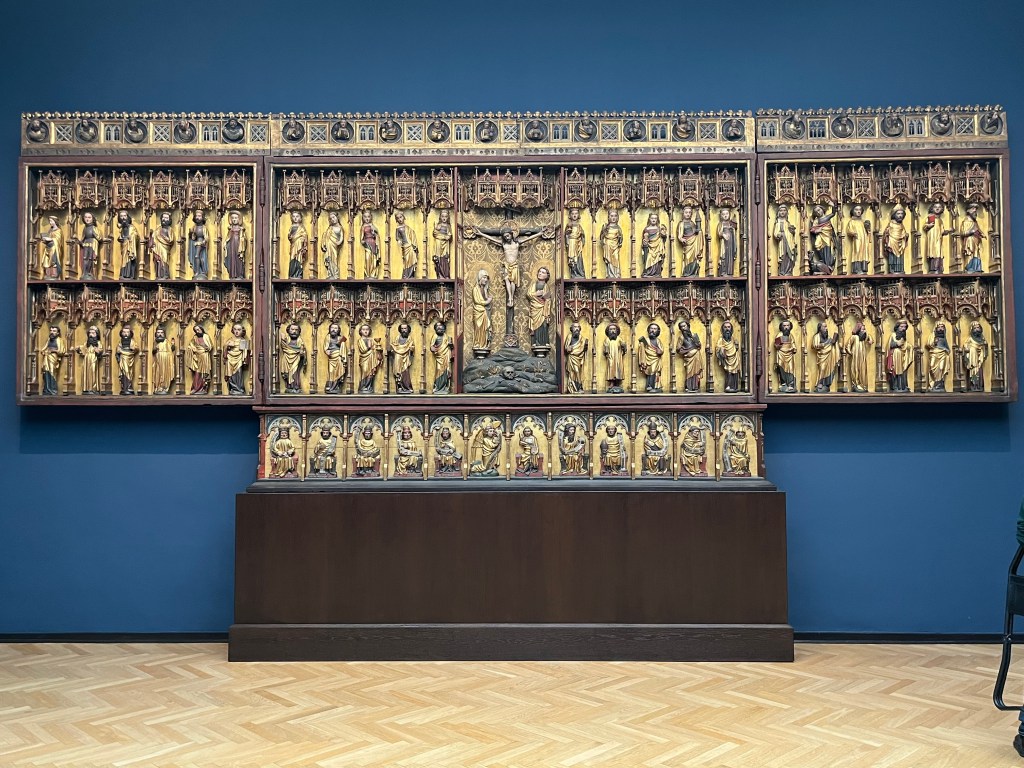
Medieval Retable 
Degas “Grand Arabesque” bronze 
Jacob Gensler 
Delacroix “Lion and Alligator” 1863 
Renoir “Riding in the Bois de Boulogne” 1873 
Gensler “Girls from Probstei” 1844 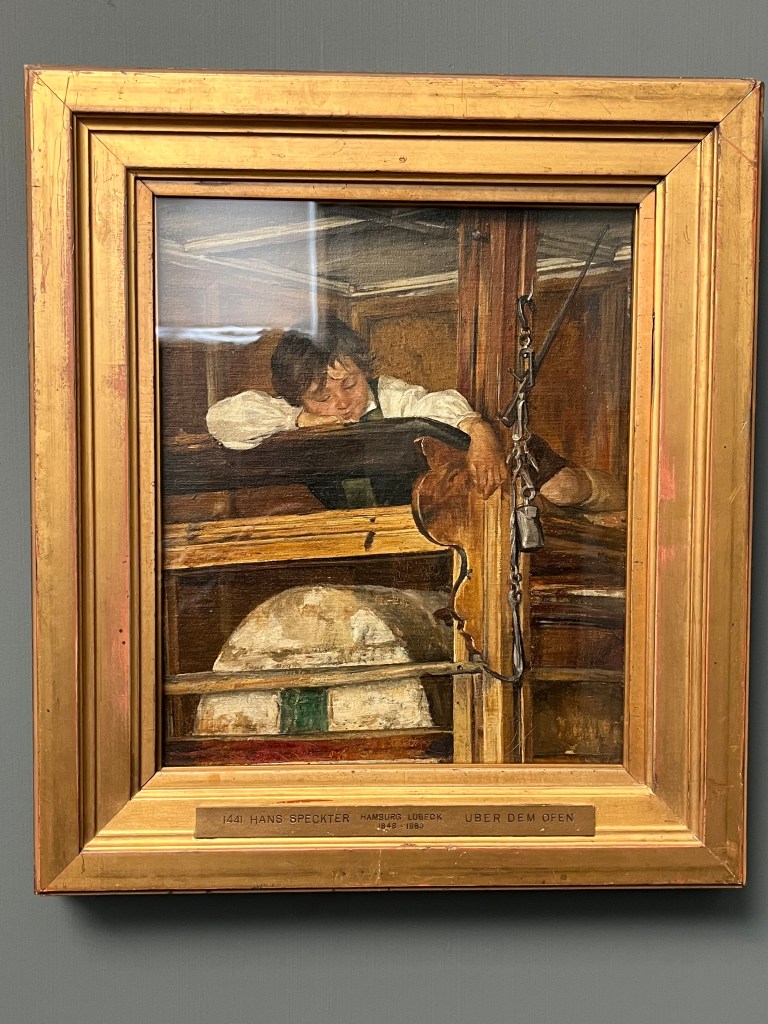
Hans Speckter “Above the Stove” 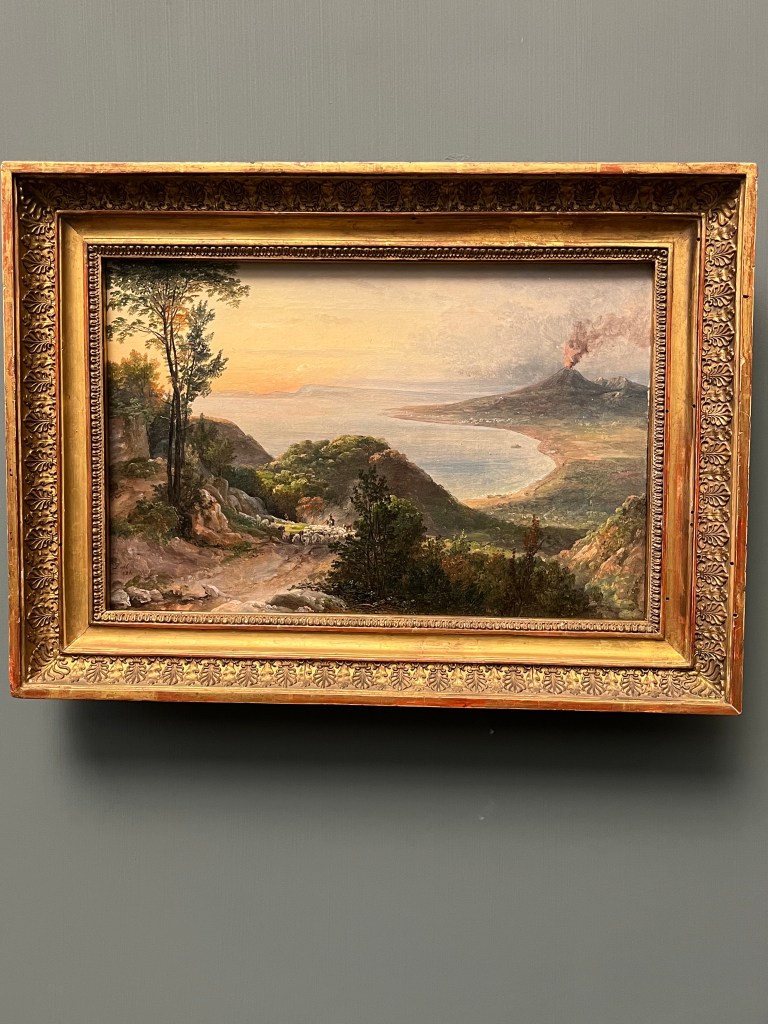
Johan Christian Dahl “View from Pimonte over the Bay of Naples” 1821 After wandering around the St-George retail district, I found an interesting “concept” store for Closed, an Italian brand. I rarely buy anything when traveling, but I bought a cool Oxford cloth striped shirt with a Henley collar, which I’d never seen before. I hadn’t packed any similar shirts, so it will come in handy as the weather warms up over the weekend.

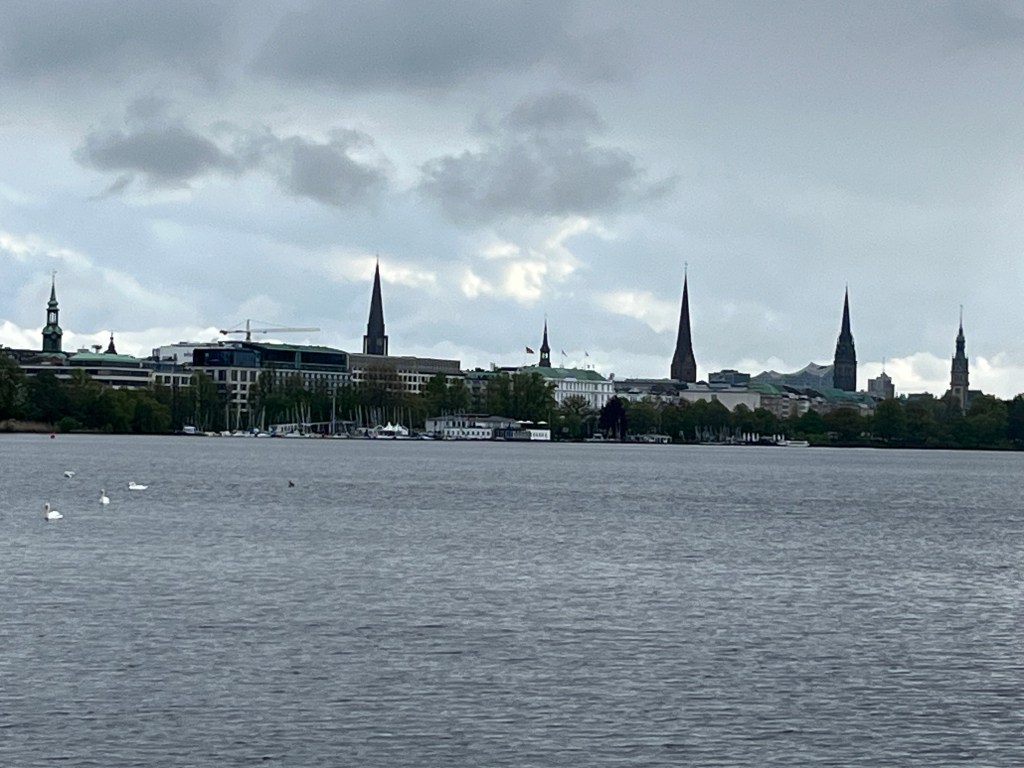
Later in the afternoon, I took a nice walk along the River Alster and enjoyed the upper-end residential district and the views of the city’s spires on the other bank. The rain was on and off, but there were plenty of runners, pedestrians and cyclists along the way. After about a 2.2 mile walk, I headed back to the Airbnb on the S-Bahn from Central Station.

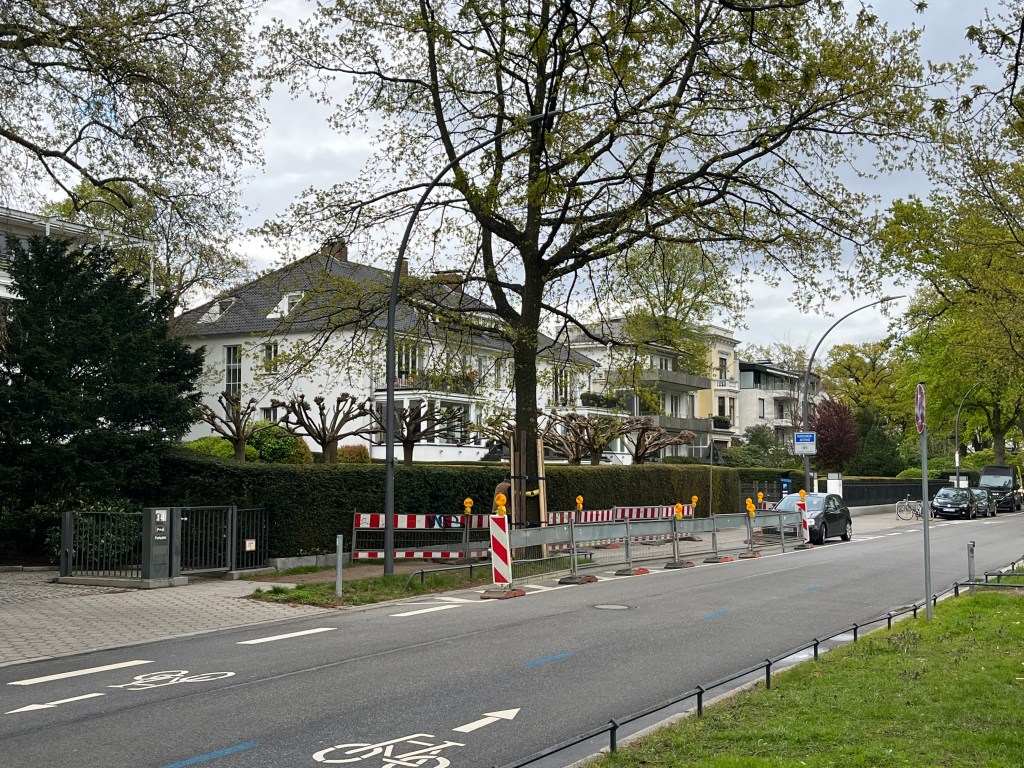
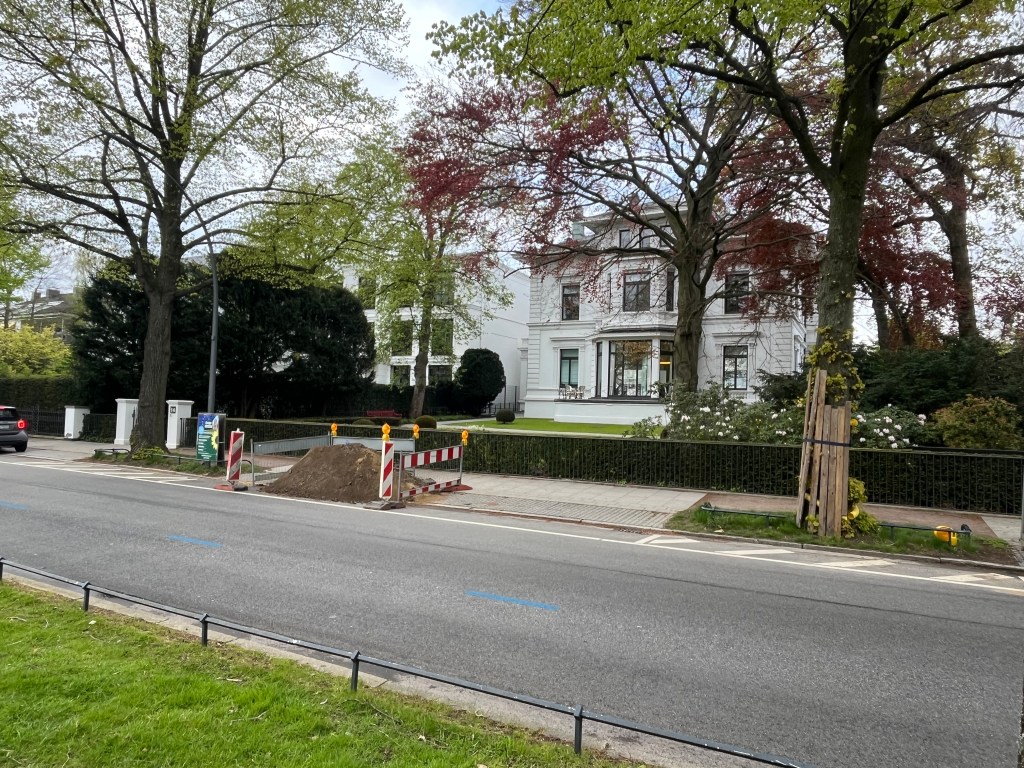

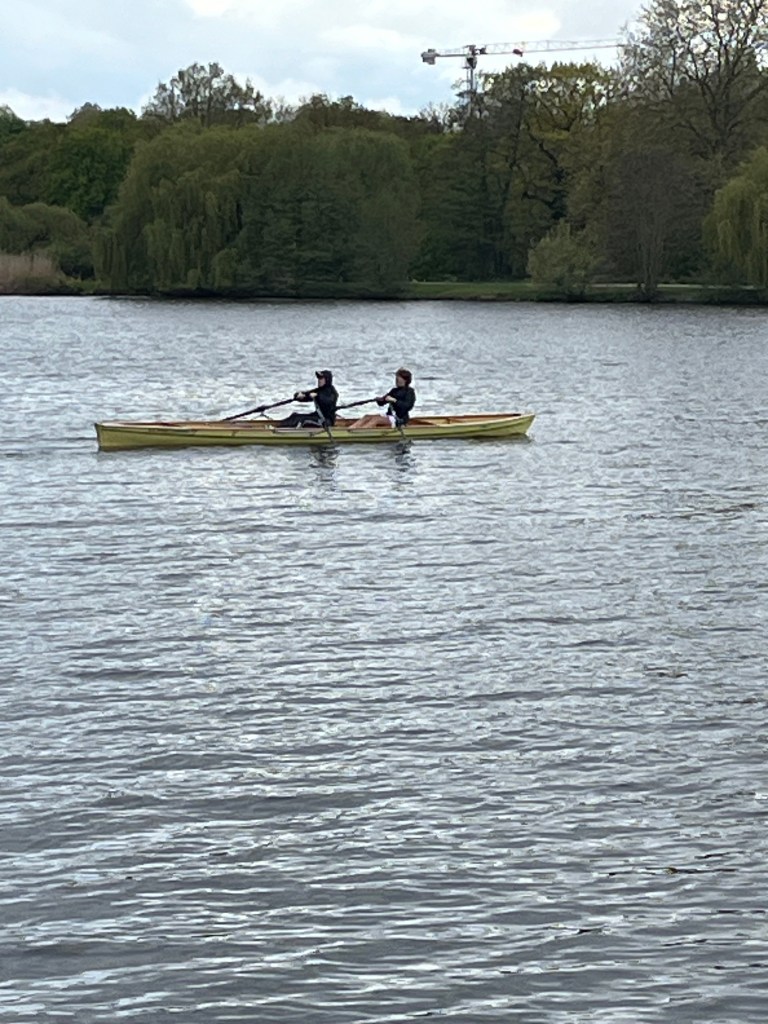
I occasionally enjoy a vegan restaurant when traveling in Europe, so I took a long walk to central Ottensen and had a delicious dinner at Froindlichst, which also has a restaurant in Berlin. Afterwards, I stopped by a hipster bar on the way home and had a nice chat with the bartenders. Joanna had lived in Texas for a while and was planning a trip to LA. Like most younger Germans, her American English was excellent.
PS: I just got a Steps notification that I walked 10 miles yesterday.
In a few hours I leave for five nights in Berlin: my first visit to the capital.
-
Day 2 in Hamburg: das Zentrum
At latitude 53.5, dawn comes early. I didn’t close the drapes completely, so I woke up around 6:00. I ground some beans and enjoyed two cups of coffee. The Airbnb host had an ab roller so I pumped out 4 sets of 20.
I walked about .75 km to the Ottensee S-Bahn station to grab a train to the Jungfernstieg station, where I was to meet my small group city tour at the magnificent Rathaus (City Hall), rebuilt in the 1890’s after the original was destroyed in the catastrophic fire of 1842. It miraculously survived the late July 1943 Anglo-American bombing campaign that devastated the city. I was early, so I bought two amusing postcards for my little grandson and posted them.

Hamburg Rathaus 
Close-up view As I mentioned in yesterday’s post, the late spring weather is unseasonably cold, with highs only in the 40’s. At least we had sunshine until the early afternoon.
The tour guide was an engaging fellow, with a loud voice. There was a family from Minnesota with a precocious 11 year old son, two guys from New York, a young couple from Córdoba, Argentina and a couple from Denver. The Argentines were big fans of their new president. Also part of the group was a recently naturalized Chinese businessman from New York, who was traveling without his family. He and I hit it off and had a fascinating conversation, which I’ll recount below.
Some of the things our guide mentioned stand out. Hamburg is the second largest city in Germany, but has the largest number of millionaires. Like Bremen and Berlin, it retains the historical designation of a Freistadt, or Free City, with its own Senate. Its official name is the Free and Hanseatic City of Hamburg. It’s also the third largest port in Europe.
The Hanseatic League was a centuries-old trade confederation in the North Sea and the Baltic Sea. I’ve visited several of its former members, including Copenhagen, Gdańsk (formerly Danzig), Riga and Tallinn.
We then headed over to St Nikolaus Church, one of five soaring Gothic Protestant churches in the center (Zentrum). This 14th century church suffered a double-jeopardy: it was destroyed and rebuilt after the 1842 conflagration and then again in 1943’s Operation Gomorrah. It wasn’t rebuilt after the bombing and stands as a war memorial. Since I can read some German, I saw an inscription to die Opfern (victims) of the 1943 raid. Our guide mentioned 700 fighters, but I privately told him that it was over 700 “bombers” that conducted the raid. He was thankful for the correction.

St Nikolaus Church ruins 
The steeple from the harbor area Operation Gomorrah occurred at the end of July 1943 and lasted for eight days and seven nights. It was conducted by the RAF Bomber Command and the US Army Air Force 8th Bomber Command. It was the first mass incendiary attack on a city and occurred after a spell of particularly dry and hot weather which made for ideal incendiary potential. The bombings led to a disastrous firestorm which was whipped up by hot southern winds which reached speeds of 150 mph. People were literally vaporized. 45,000 people died and many more were injured. Over 60% of the housing stock was destroyed. A number of defense plants were destroyed. It’s amazing how the city was completely rebuilt after the war. Apparently the copper roofs with the characteristic green patina were the ones that survived.
After the tour, the Chinese-American fellow and I had a lengthy chat. He’s a huge soccer fan, so he’s been going to games all over Germany. He left China 20 years ago since he could see the direction in which the country was headed, although he still has family and friends in the Beijing area. He feels that China’s economy is far worse than claimed and that Xi is an ignorant despot. He claims that the Chinese high command understands that they’d lose a war against the US and that no middle-class Chinese would want to fight against Taiwan. He said that their military equipment is sub-standard because of rampant corruption in the defense industry. He warns his family to get their money out of the Chinese banks since they’re already limiting withdrawals and asking what customers plan to do with the money. He’s planning a trip back to China to visit relatives but is afraid to contact some of his old colleagues for fear that they’ll report him to the secret police as a foreign agent. The Ministry of State Security gives tattletales a $75,000 bonus for turning alleged agents in. He plans to keep a low profile and carry a lead lined bag for his computer and cell phone. The way he described Xi’s background made me laugh, and he joined in. When I asked him about the Uighurs, he told me about a high-ranking general who his family knows who was also the regional commander of Xinjiang province. He told me that initially the Uighurs attacked and killed Chinese officials and that they ignored the general’s warnings to desist. When they continued the attacks, the People’s Liberation Army wiped out a number of Uighur towns and even killed all the animals in a scorched earth operation. I wished him luck on his travels and marveled once again at the people and conversations that occur when I travel abroad.
I took my acquaintance’s advice and went up to the viewing deck of the massive Elbphilharmonie and took pictures of the city and the new Hafen City, which will house over 30,000 people when it’s completed in 2030.

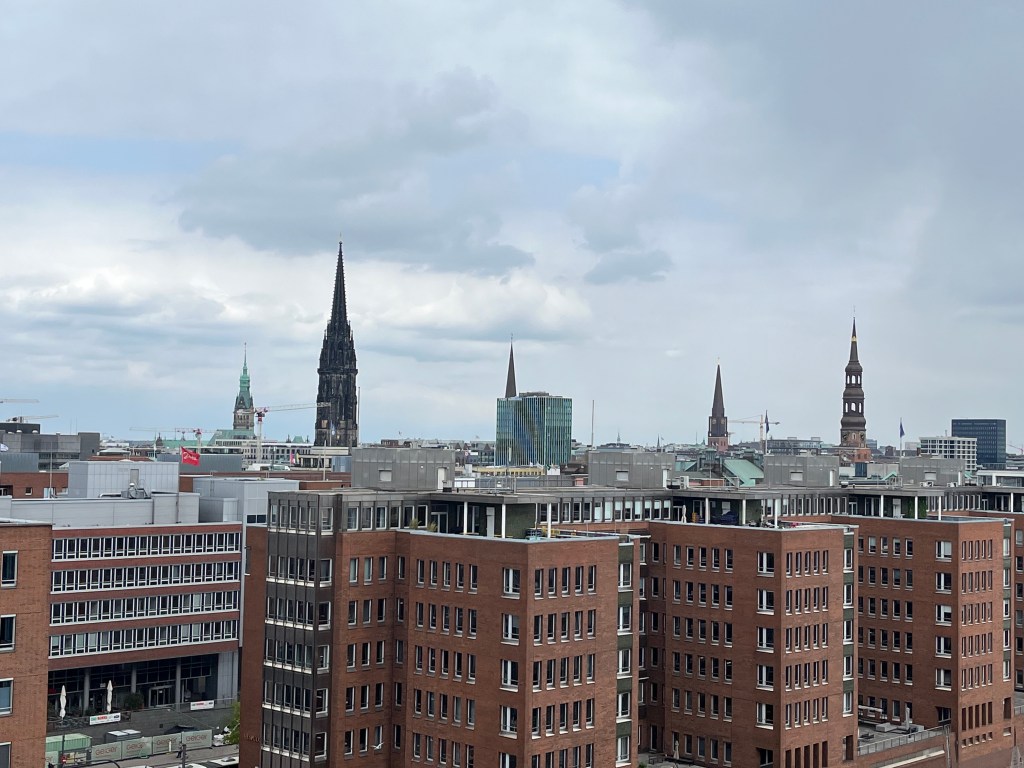
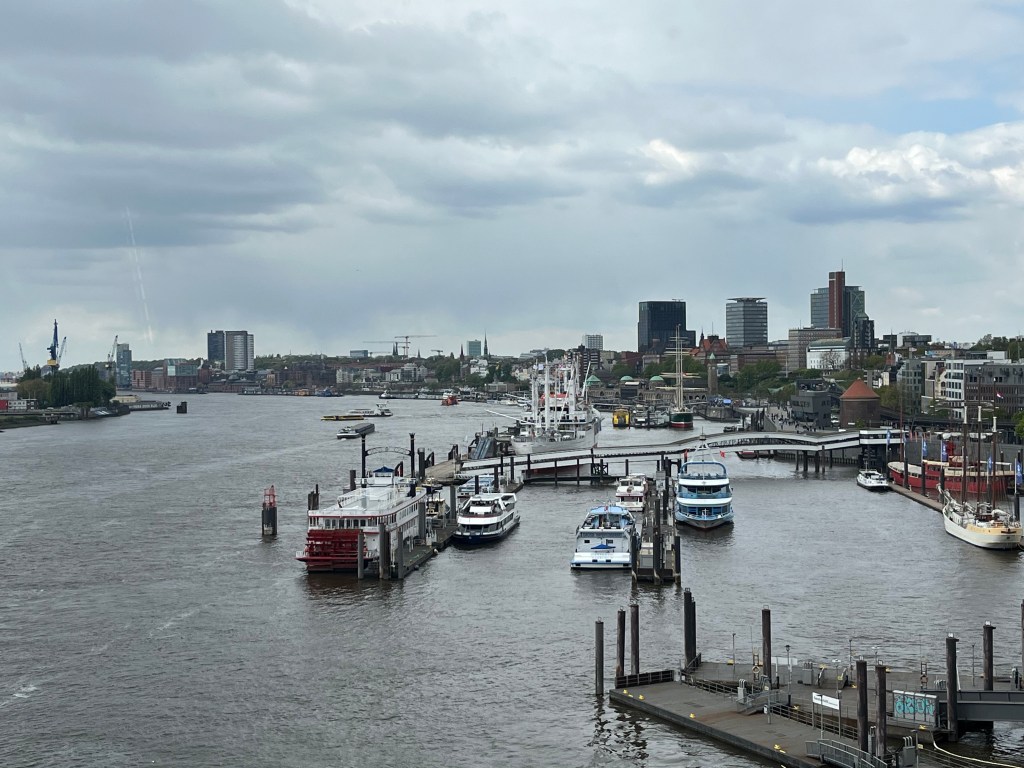
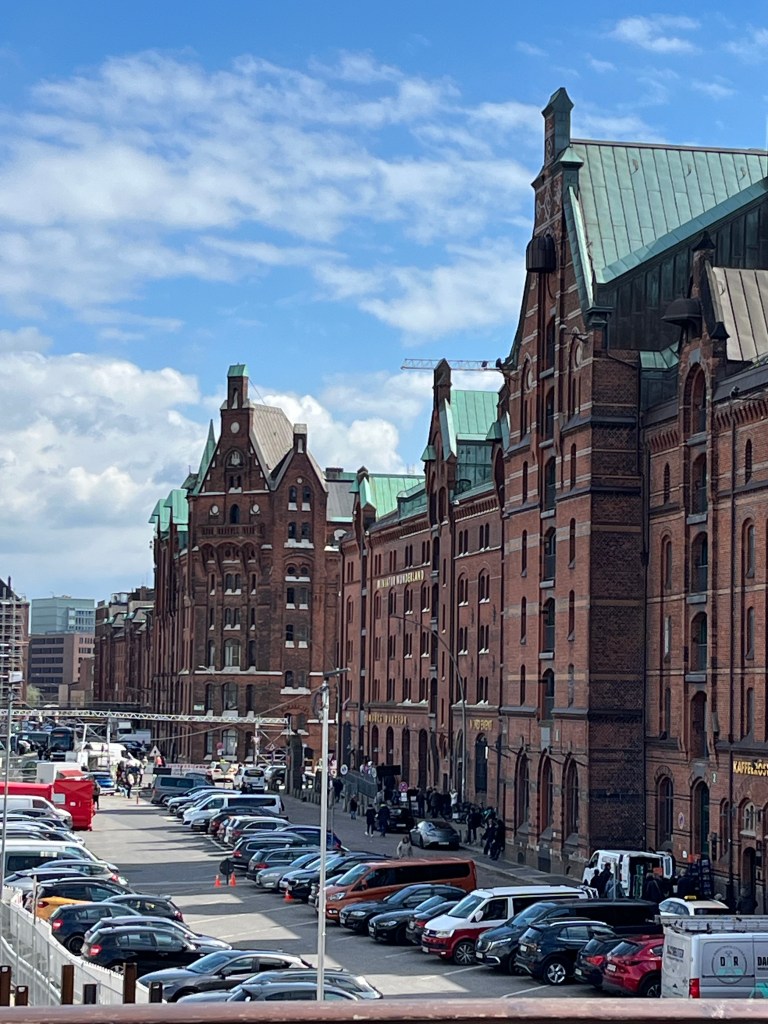


After a late lunch I visited the outstanding Museum für Kunst und Gewerbe near the Central Station. They have three floors of applied arts and statuary from ancient Egypt through the Art Nouveau and Art Deco periods, in addition to a fascinating gallery devoted to water and its conservation. After about 90 minutes I started to yawn, so I went back to the S-Bahn station for a quick return home. Grabbed some takeout and spent the evening at the Airbnb and then slept soundly for over nine hours. It’s currently raining, so I’ll wait for it to clear before heading out.
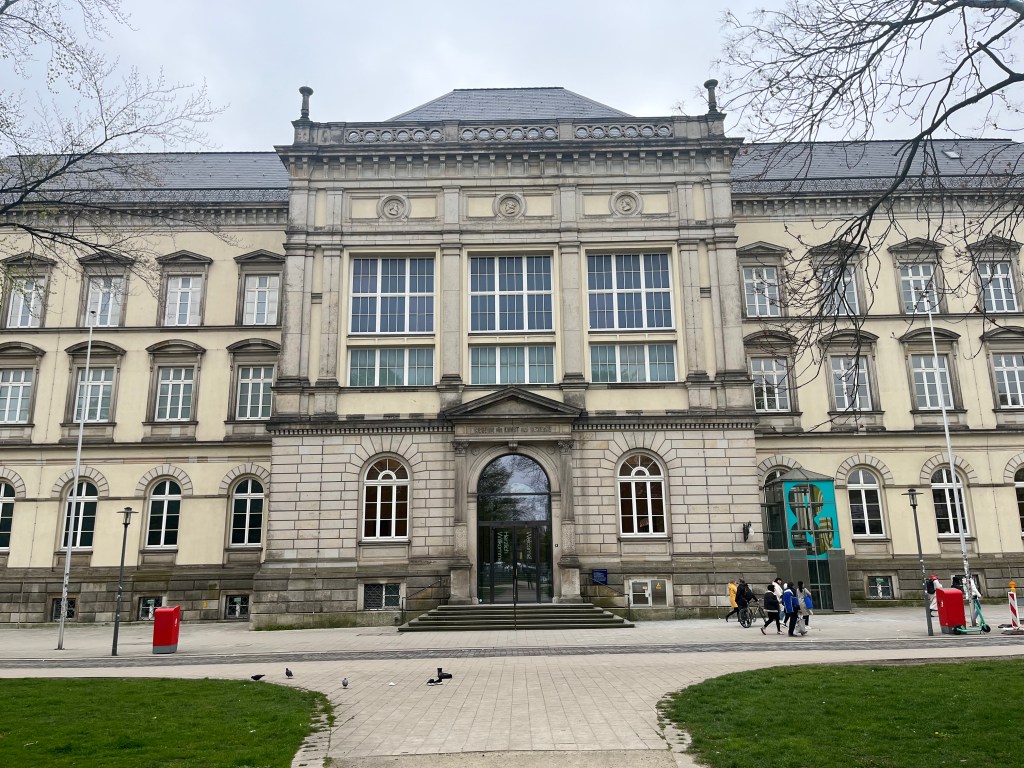
Museum facade 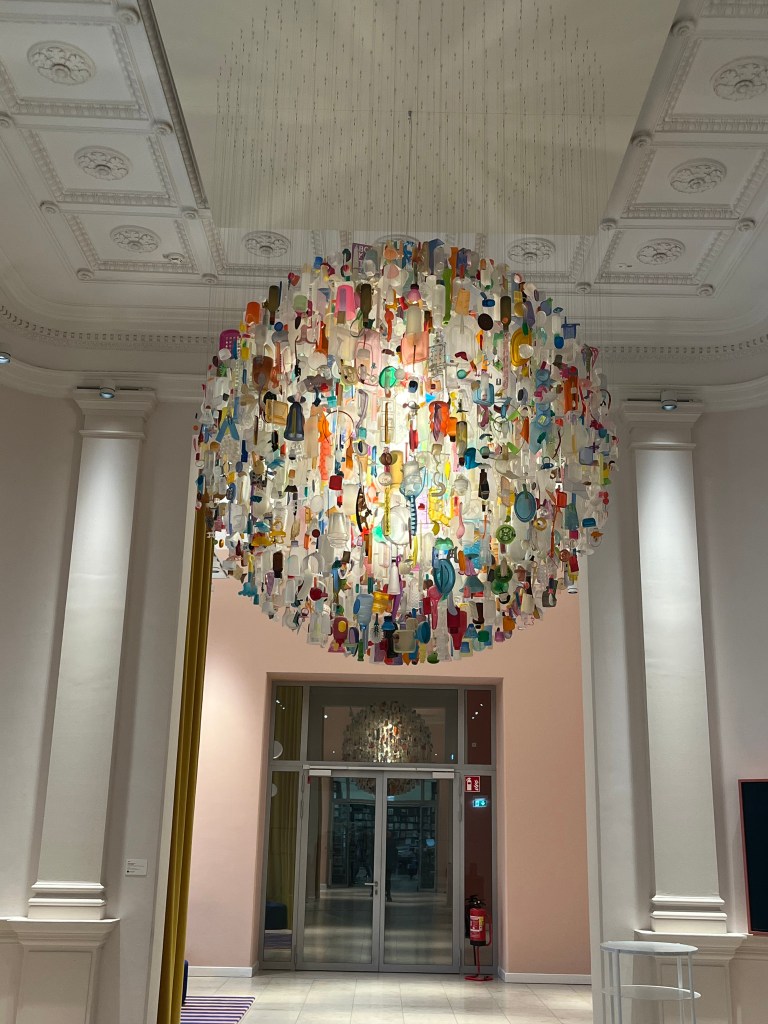
Museum entry 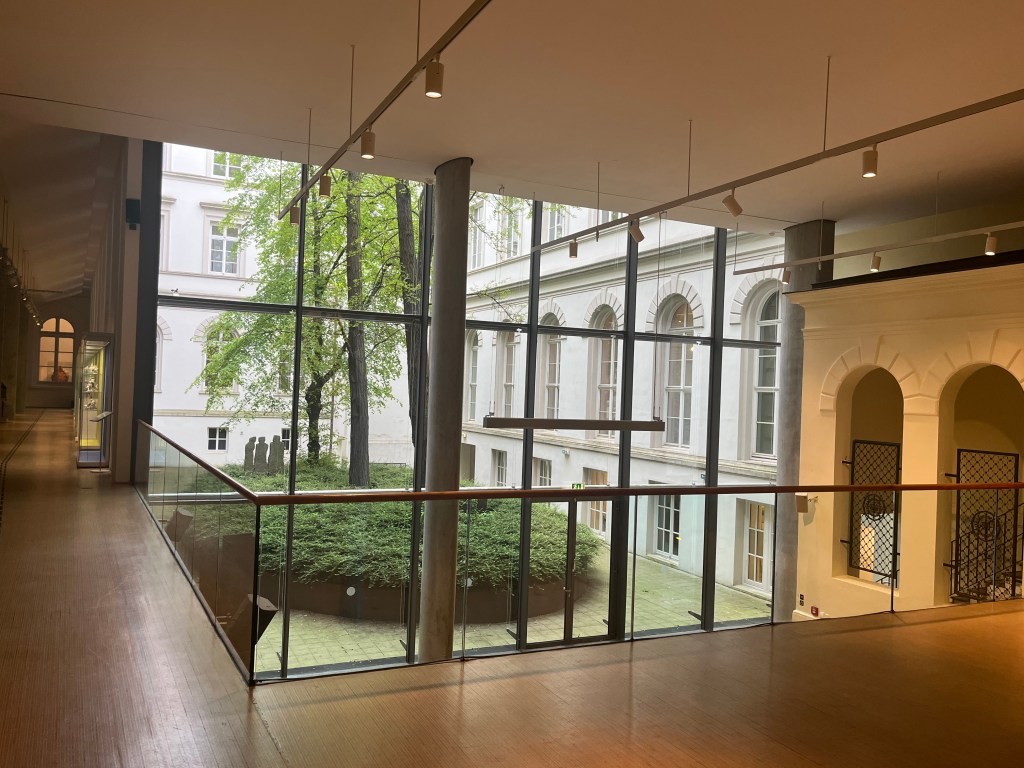
Interior garden 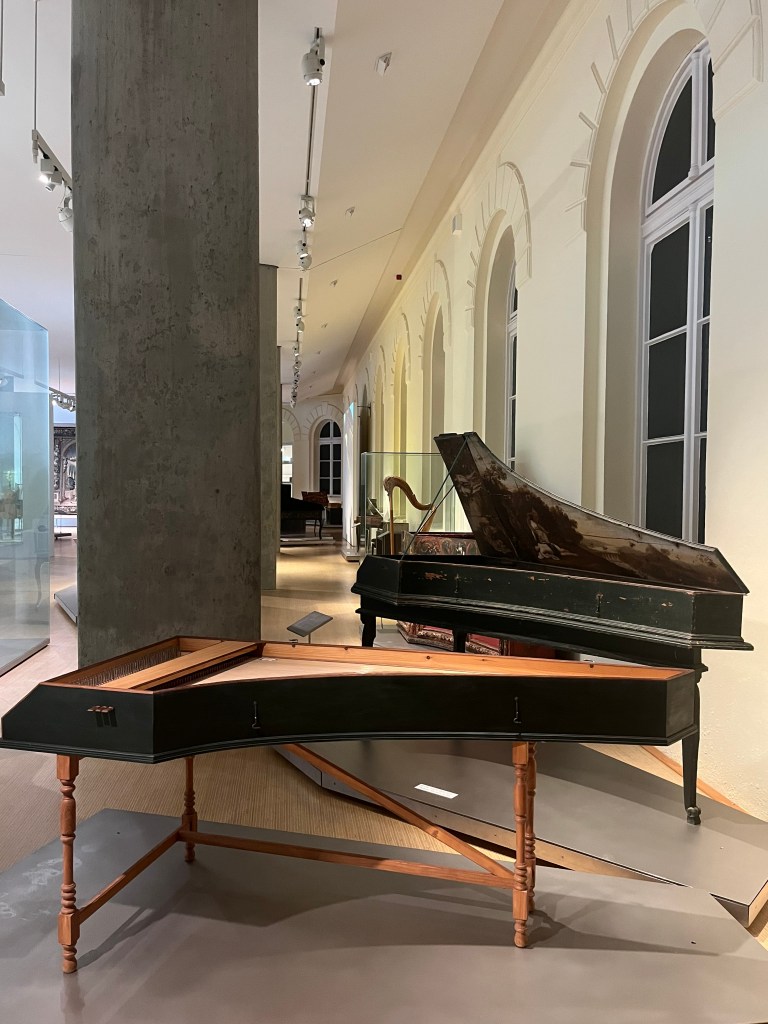
Ancient instruments collection 
Water and the human body 
Warehouse District 
Warehouse district looking west -
A Chilly Day in Hamburg: April 22, 2024
I took the fast ICE (Inter City Express) train from Münster to Hamburg this morning, arriving at Hamburg Hbf right after 1:00 pm. Since I had some time to kill before my Airbnb was ready, I had a nice lunch at Mutterland, a delicatessen with a restaurant. After lunch, I took an Uber to my place in the leafy Ottensee section of the city, near Altona. My host met me at the door and carried my bag up four flights of stairs to the apartment. After he left, I got settled and went online and got an HVV (Hamburger Verkehrsverbund) three-day travel pass. Later I found out that the HVV S-Bahn stations don’t have turnstiles.
Although the weather was partly sunny, it was freezing cold—in the mid-40s and gusty. I waited for a bus to the center, but decided to walk to the S-Bahn stop in Ottensee instead and take the train to Reepersbahn in the St -Pauli district, where the Beatles famously played before becoming rock stars. By the way, I was never a big fan.
The St-Pauli district is seedy, but adjoins a nice neighborhood with views of the harbor and the iconic Elbphilharmonie. I walked up to a large park dominated by a gargantuan statue of Otto von Bismarck. As the wind picked up, I decided to take the S-Bahn back to Altona, to explore that neighborhood.
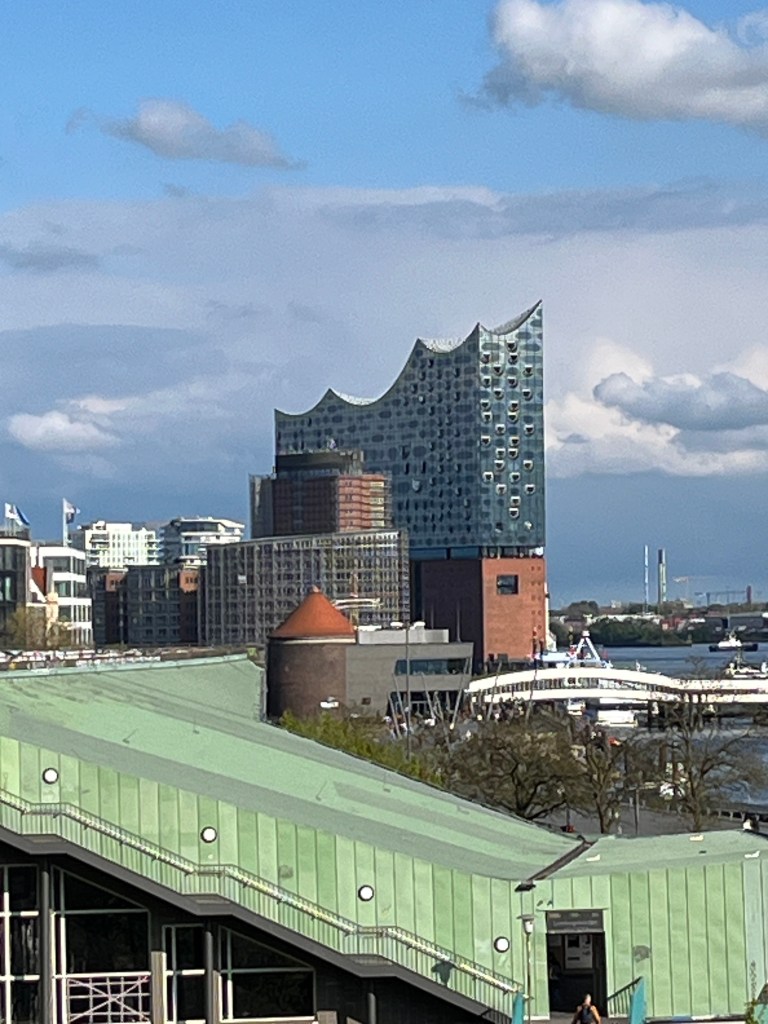
Elbphilharmonie 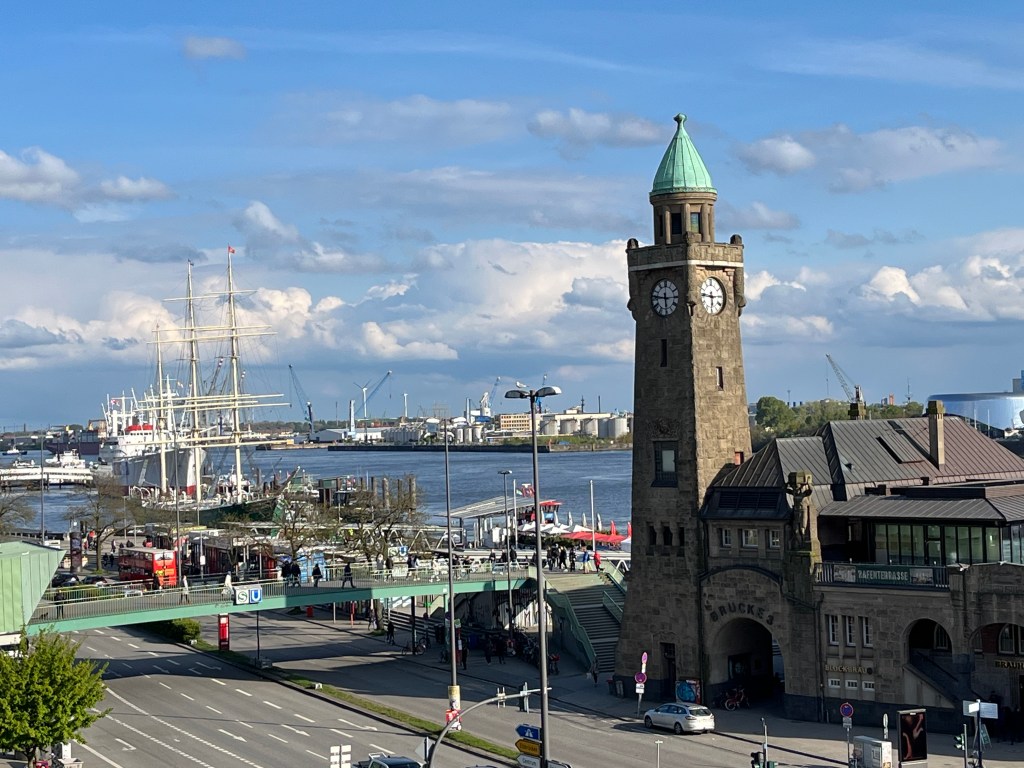
Harbor view 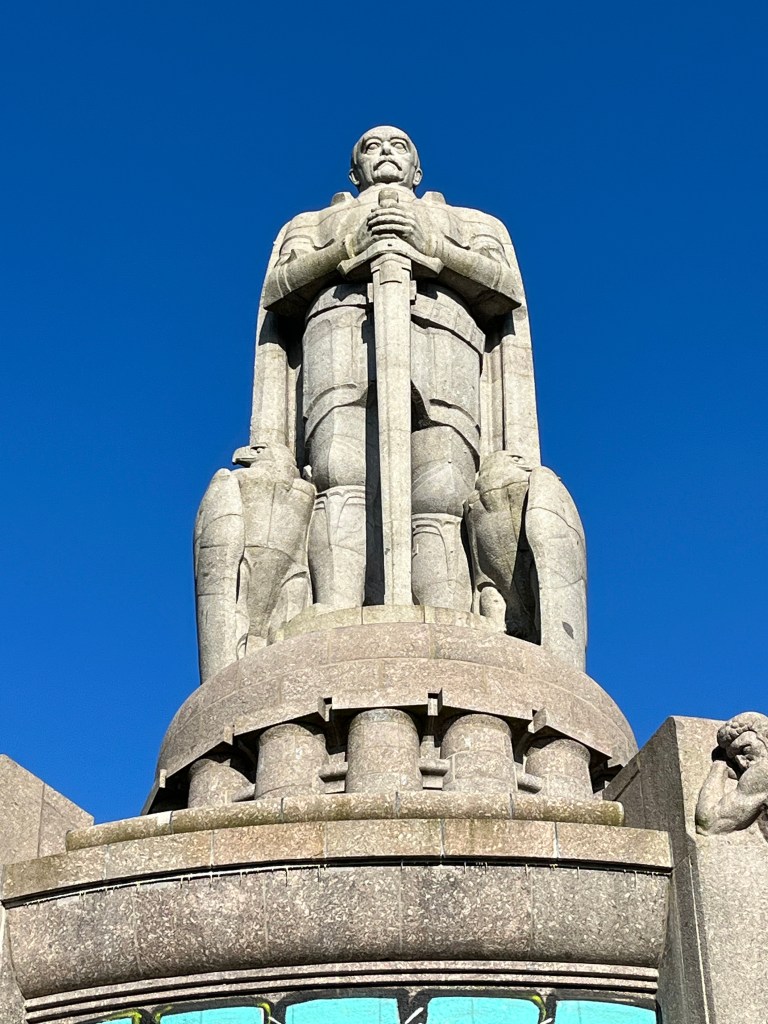
Bismarck statue 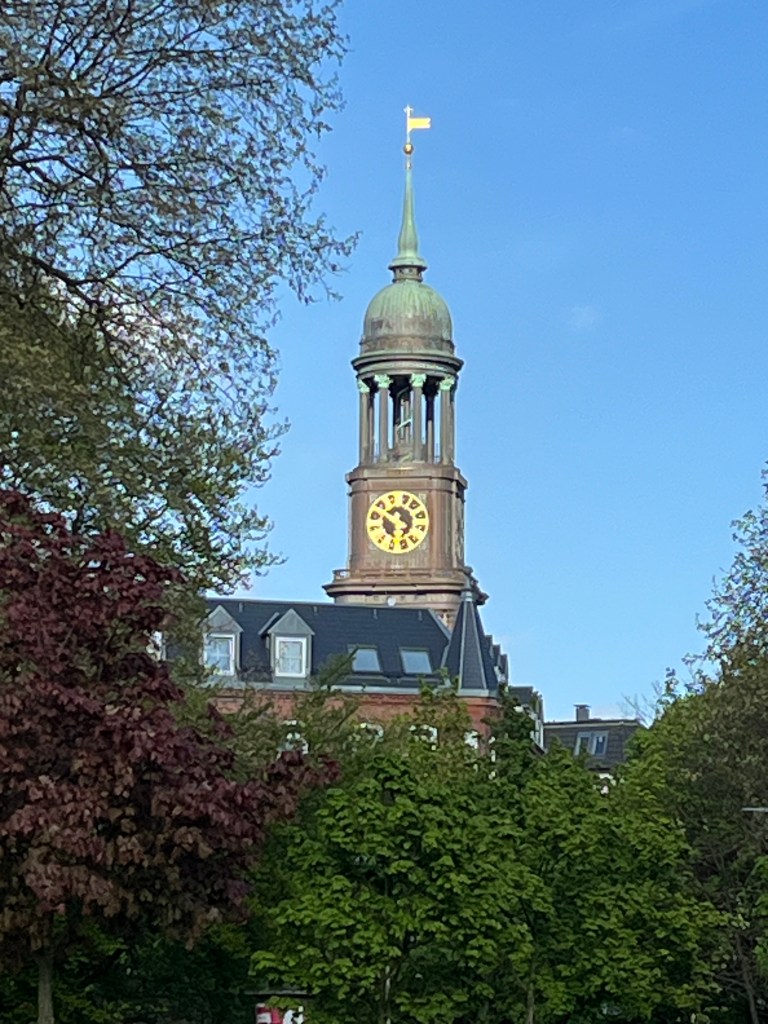
St Michael Lutheran Church 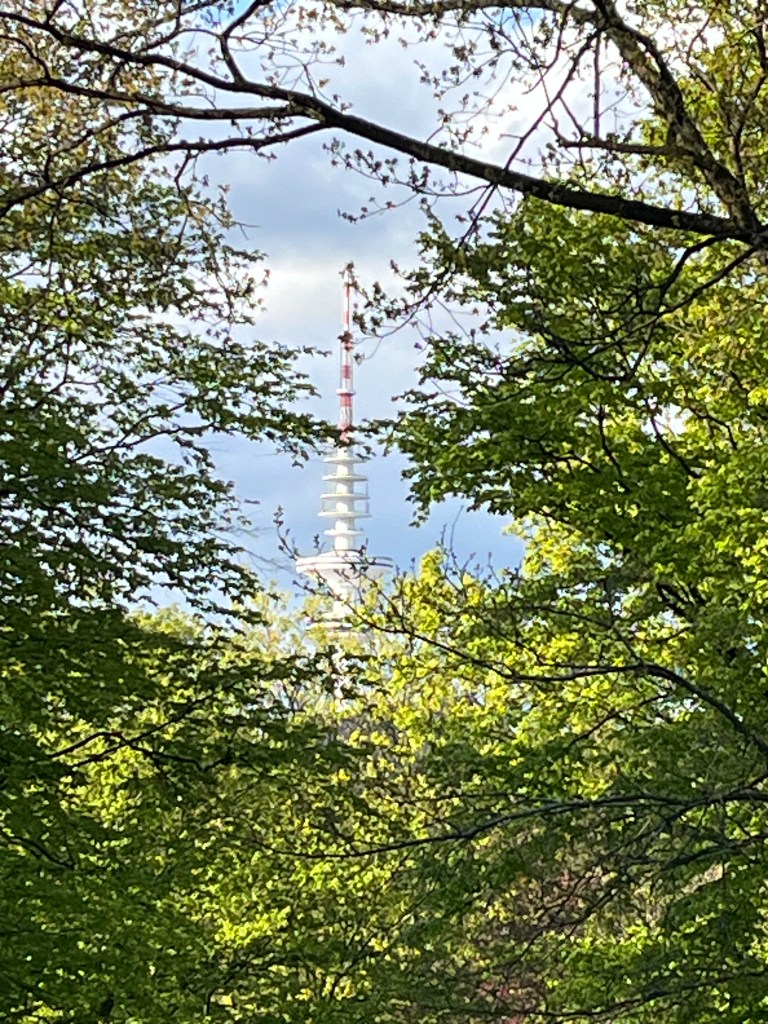
276 meter Heinrich-Hertz-Tower Altona is another leafy district of Hamburg, with attractive parks and a neo-classical City Hall (Rathaus). I walked around a 17th-century Protestant church and graveyard before heading back to the train for the short hop to Ottensee.
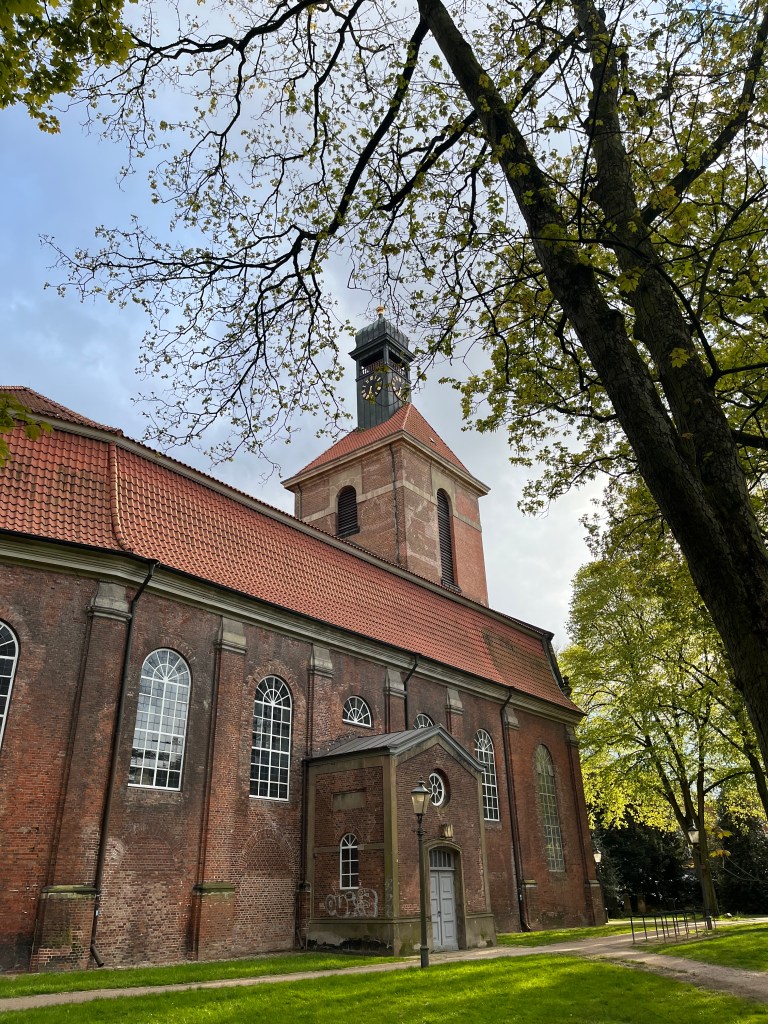
Protestant church 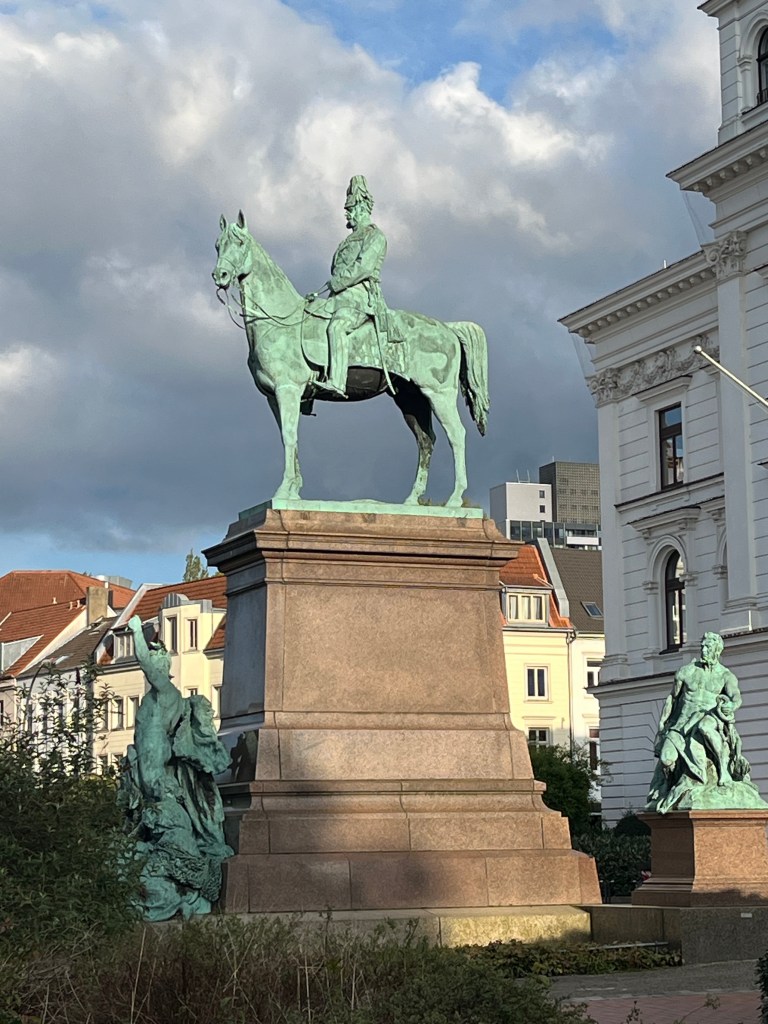
Equestrian statue in front of the Rathaus 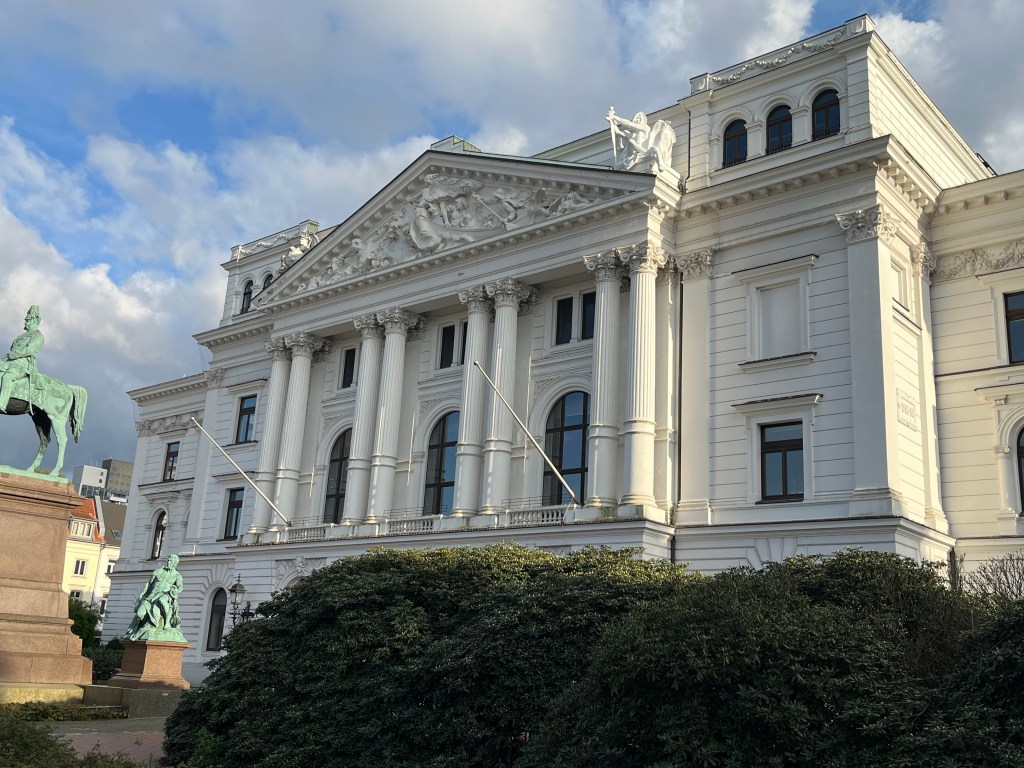
Altona Rathaus When I got back to my Airbnb after logging almost 8 miles, I looked for a local market to grab some food since I didn’t feel like going out for dinner at 8:00 pm. The E-Center Struwe is a superb grocery story a short walk from my Airbnb situated in a redeveloped industrial space that used to be a gasworks. As is universal in Europe, unlike the US, all sidewalks and open spaces are finished in pavers. I’ve never seen poured concrete streets which are ubiquitous in the US. It always seems that we Americans do everything on the cheap. Asphalt roof shingles are another hideous feature that one never sees in Europe. These are some shots of the redeveloped gasworks. The final shot is of my building.
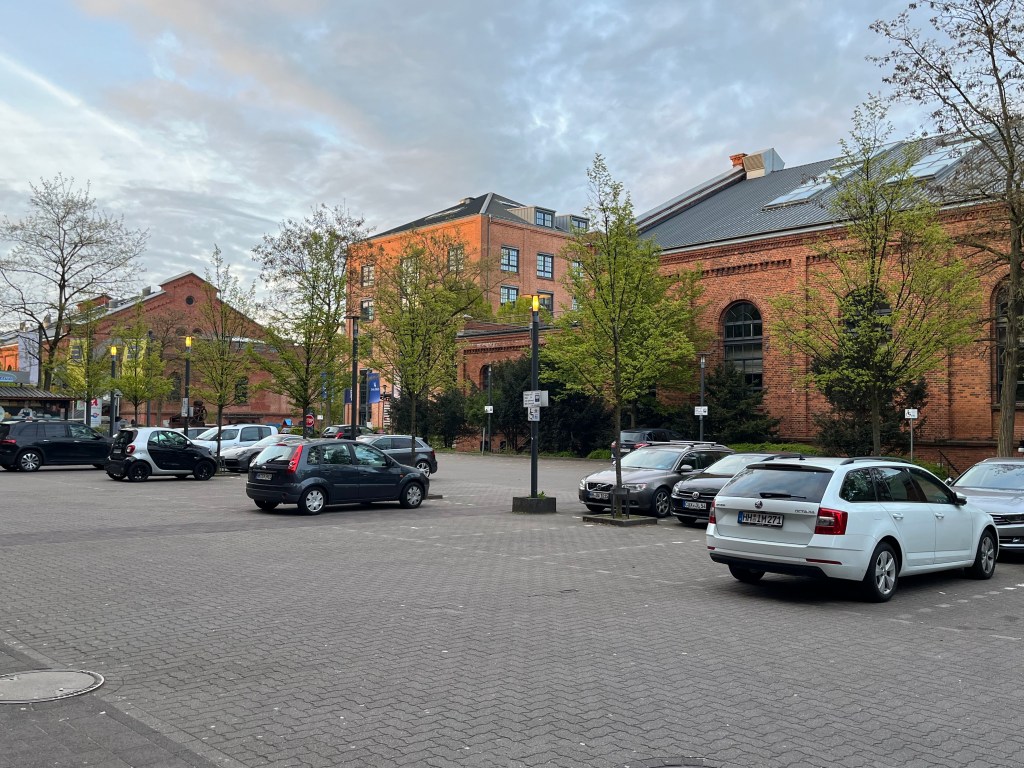
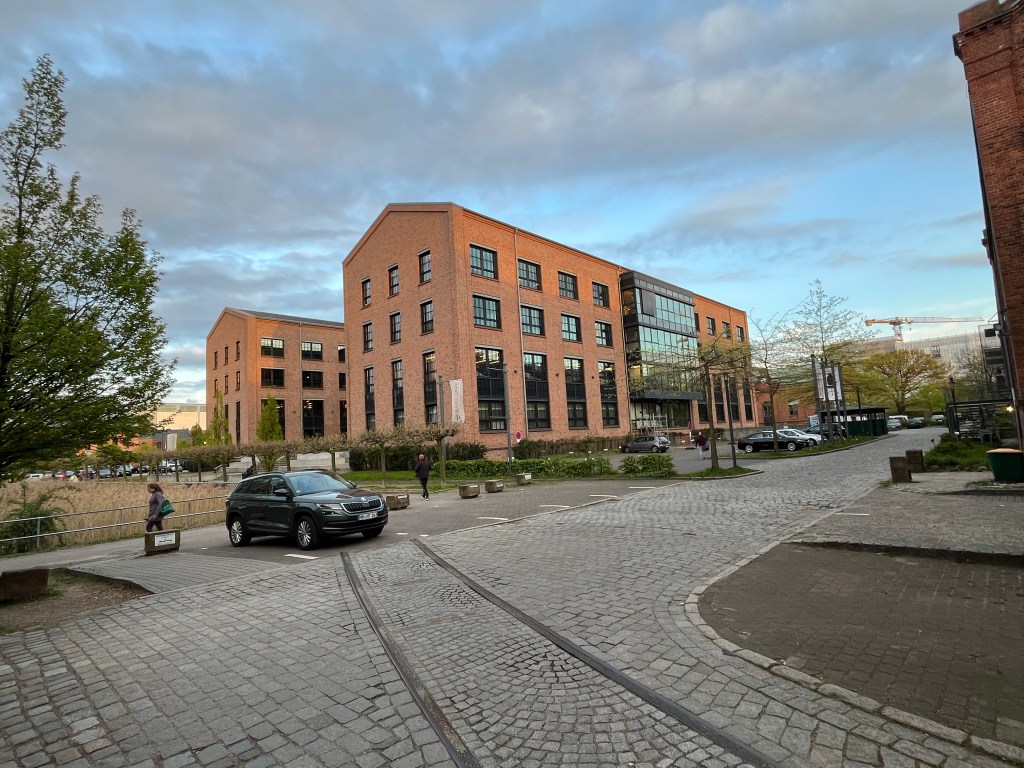


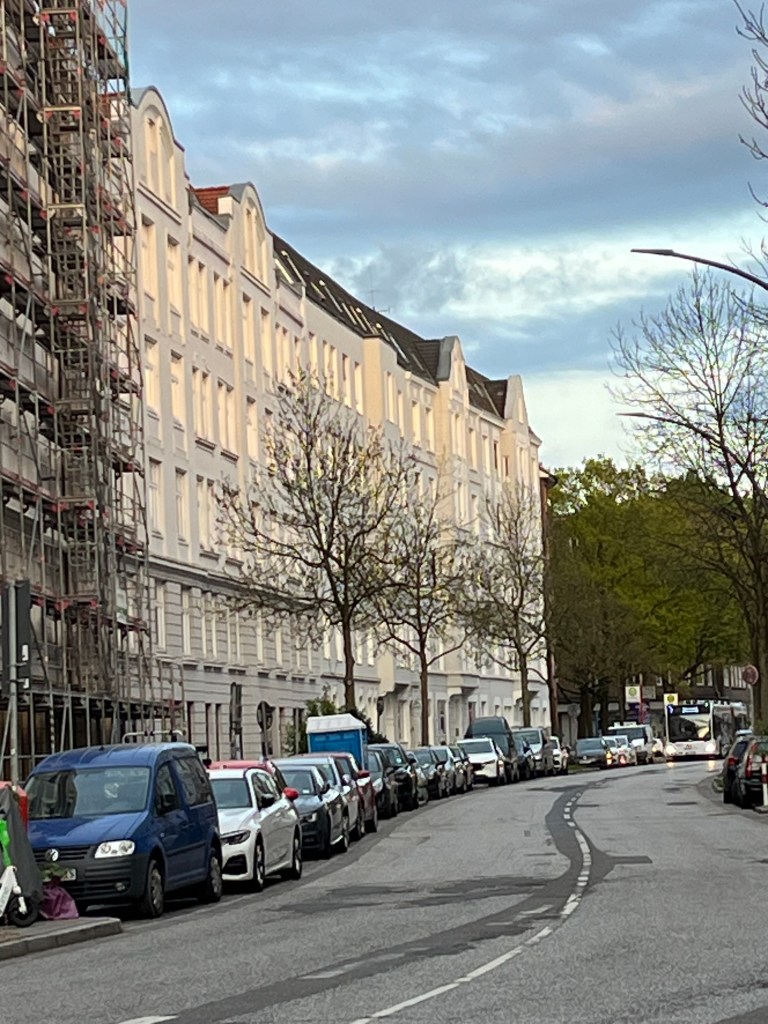
I had to turn the heat on since it’s going to dip into the 30s overnight. Tomorrow I join a walking tour at the civilized hour of 11:00 am. My host has three coffee machines plus a grinder so I’ll be well caffeinated tomorrow morning. Guten Abend!
-
Amsterdam Day 2: April 19, 2024
-
Münster Day Two: April 21,
-
Münster Day Two: April 21, 2024
After coffee at my Airbnb, I took a brisk walk through the Altstadt. The weather was sunny and chilly. All retail stores were closed on Sunday, which is common in Germany. I actually went on three long walks today, including dinner with an old American friend and his wife and three young children, which was the result of a morning email. I was pleased that they lived close to Münster. We ate at an Italian place, Mocca d’Oro, one of his wife’s favorite restaurants while she was a student at the university.
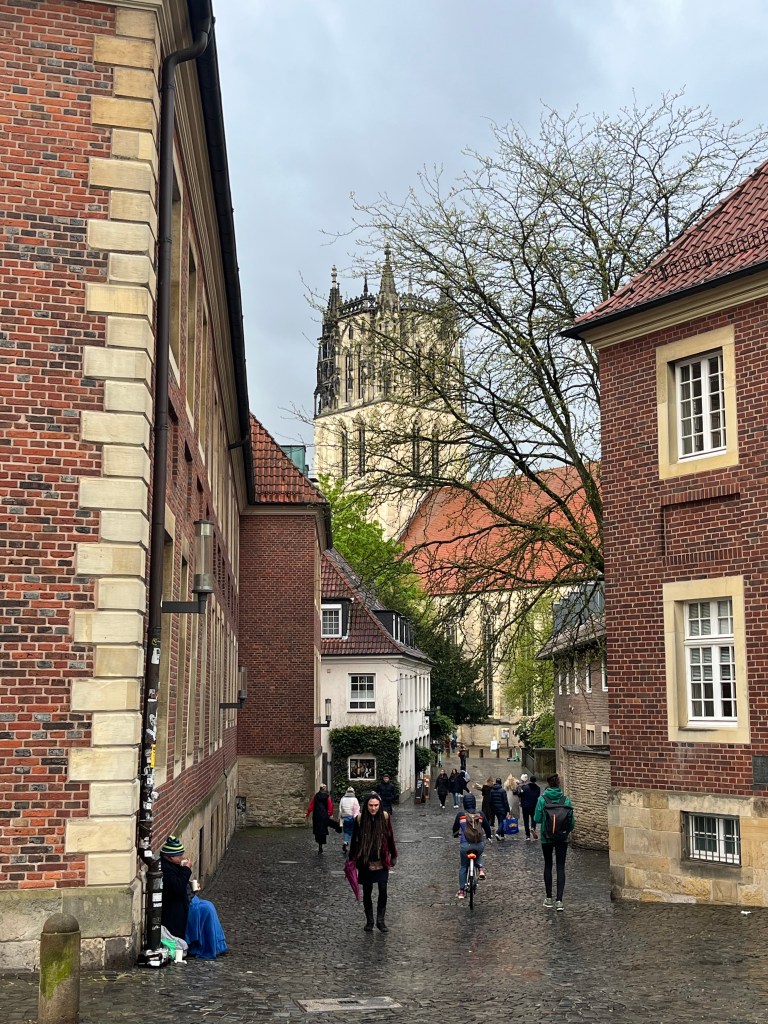
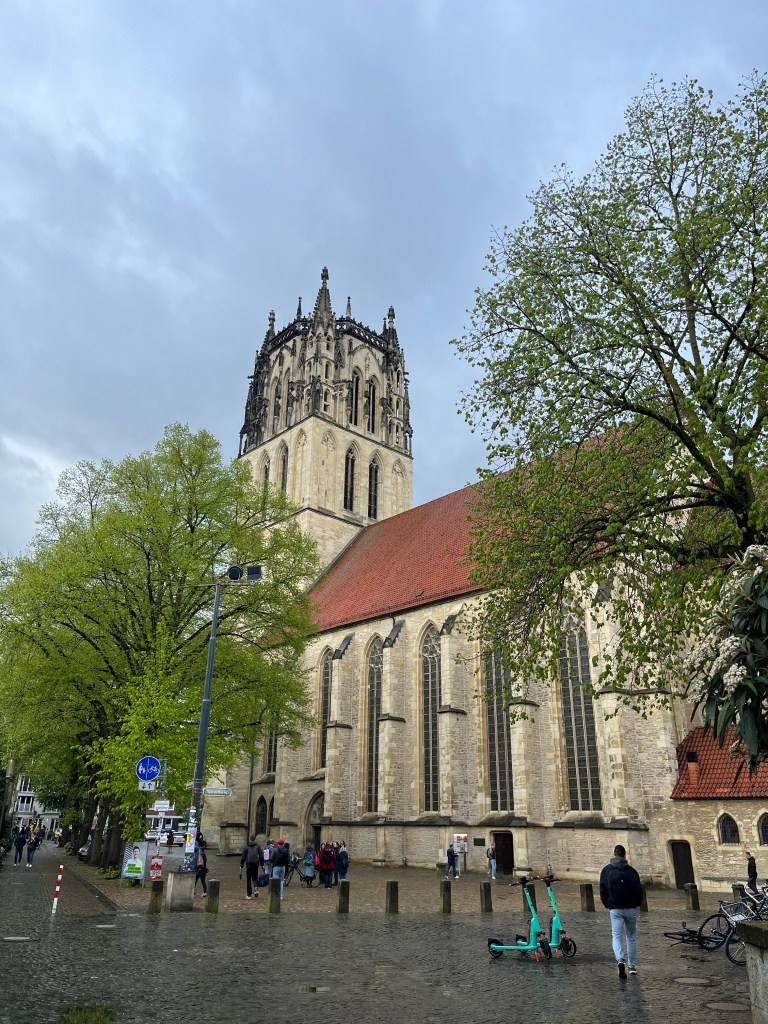

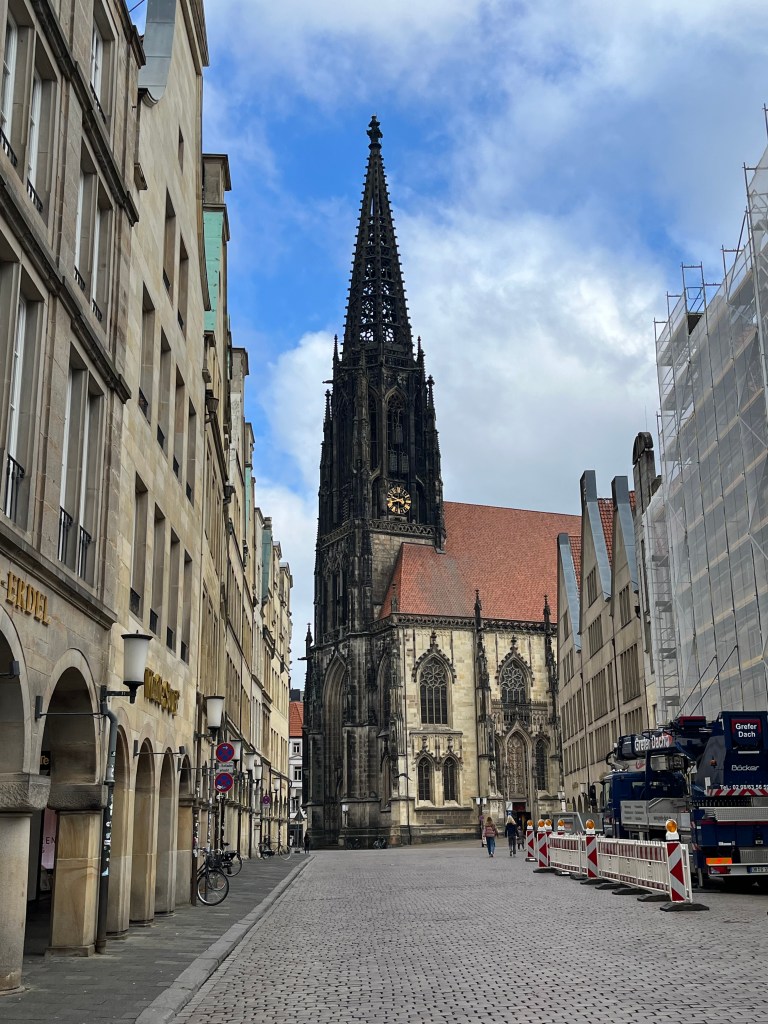
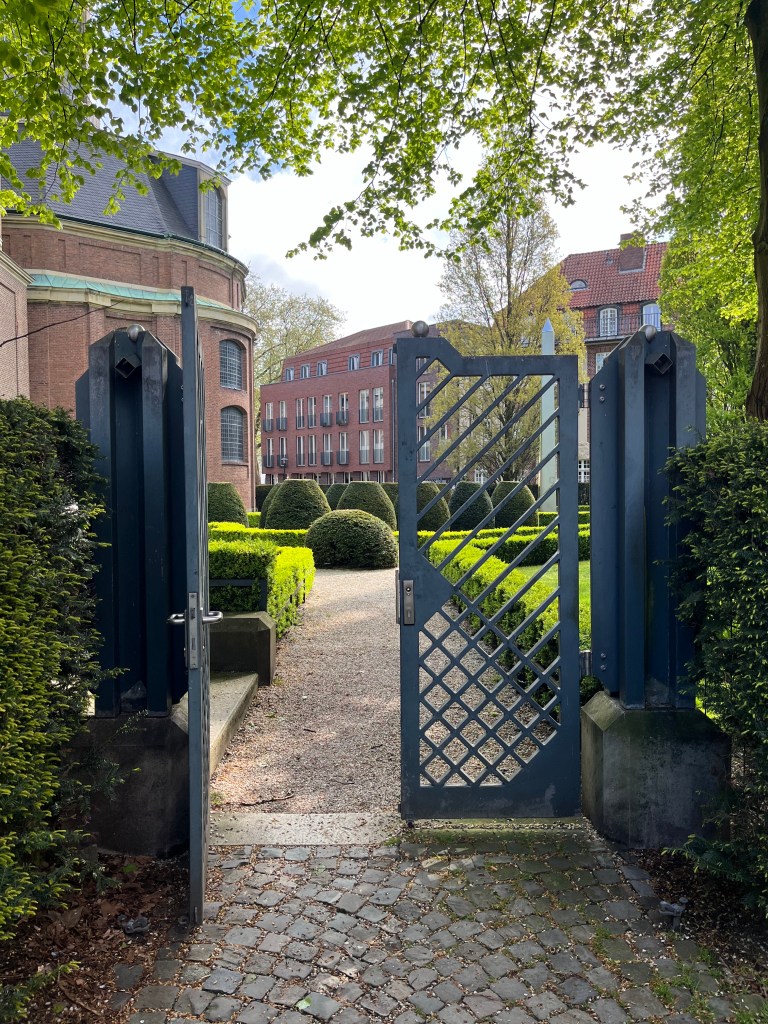
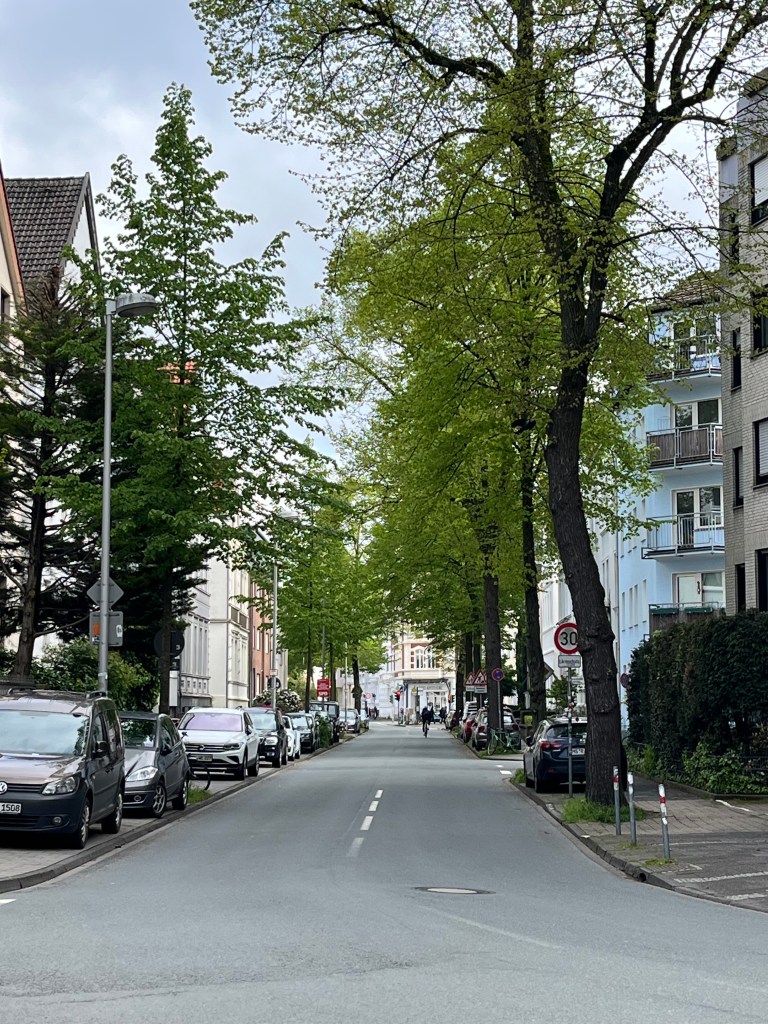
The food was excellent. I had the dorado. Again, meeting an old friend was the highlight of the day!
Earlier, I stopped at a cafe for a glass of wine and enjoyed watching the locals walking about. It was a bit chilly but sunny.

Walking back from dinner, I snapped a picture of the Cathedral in the twilight. Since Münster is so far north, twilight lingers until 9 in the spring.
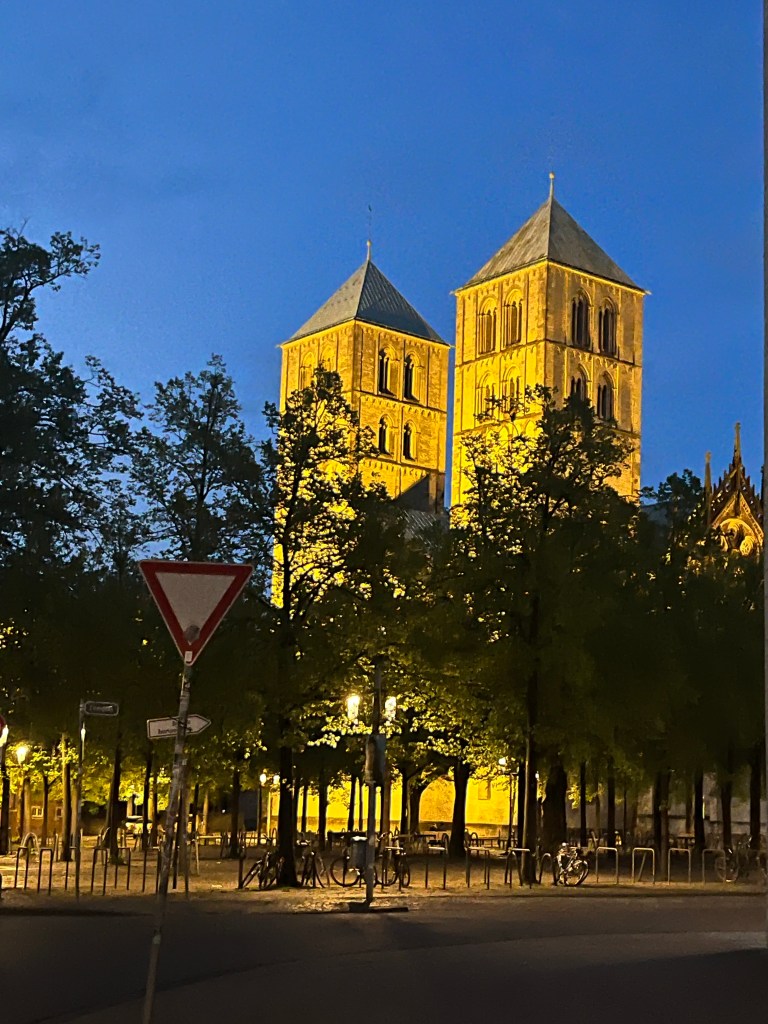
I’ll be walking over to the train station for my train to Hamburg in a few minutes. As I said in my last post, Münster is really a beautiful city. Its size makes it walkable and there are plenty of sites to visit, including a number of ancient churches. It’s a city worth spending time in.
-
Münster, Germany Day 1: April 20, 2024
After a pleasant 3 hour train trip from Amsterdam, with one change in Rheine, I arrived at Münster Hauptbahnhof and walked the short distance to my exquisite Airbnb. Although small, it’s equipped with a brand new kitchen and bath with German faucets, appliances and even a DeLonghi espresso/cappuccino maker. There’s also a Sonos, so I’m listening to some baroque music after a lengthy walk around town.
I’ve had a somewhat morbid fascination with Münster since I read a book about the Hapsburgs in high school, where a number of the students were Mennonites. They were mildly antipathetic towards Catholics, despite their pacifist leanings. After reading the book, I understood why, even if they didn’t.The Mennonites are Anabaptists, and their origins lay in the German Peasants’ War of the early 16th century. While the revolt was eventually suppressed by imperial forces under the Catholic Hapsburg emperor, radical Anabaptists later seized the Catholic Westphalian city of Münster in 1534 and established a radical theocracy with a proto-communist patina. The churches and monasteries were sacked and the local priests and nobles were executed. The bishop fled and the Anabaptists set up a communal state. Even the Lutherans were appalled and left the city. The imperial Catholic forces besieged the city for 15 months before finally entering the city and crushing the rebellion.
The Anabaptist leaders were tortured and placed in cages that were hoisted up the steeple of St. Lambert’s Church where the carrion birds feasted on their emaciated bodies. The Anabaptists were then expelled from Germany and Holland and fled to Switzerland. There they renounced their radicalism and adopted pacifism under the leadership of Menno Simons, who helped organize their emigration to Pennsylvania in the early 18th century. I occasionally told Mennonites about Münster, much to their consternation!

Side view of the cages 
St. Lambert’s Church 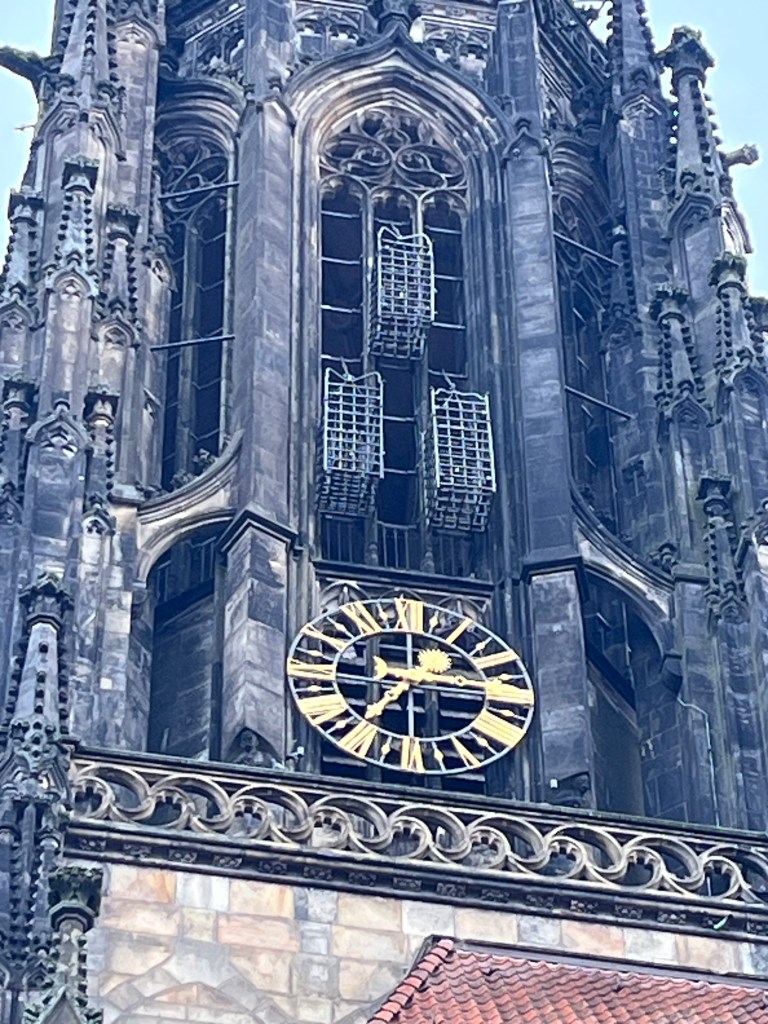
Front view of the cages Like Vilnius in Lithuania, Münster is a fascinating city that is still somewhat unknown to the tourist crowds. It’s full of lovely medieval streets and churches and beautiful parks and residential areas. It’s the kind of city to meander about in.
Its citizens are also friendly, perhaps because it’s also a university town. I stopped by a chic little cafe and had a pleasant conversation with a young woman who was the server that day. I was even able to recall some German, even though her English was perfect.

Entering the Altstadt (Old Town) 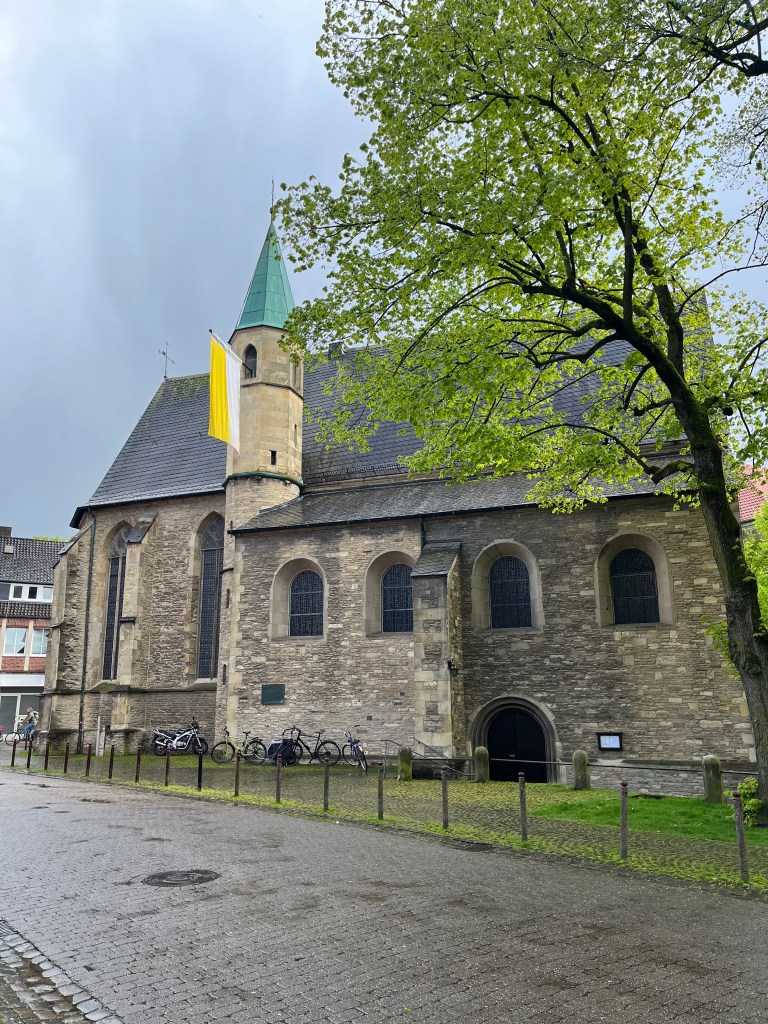
Servatii-Kirche 1230 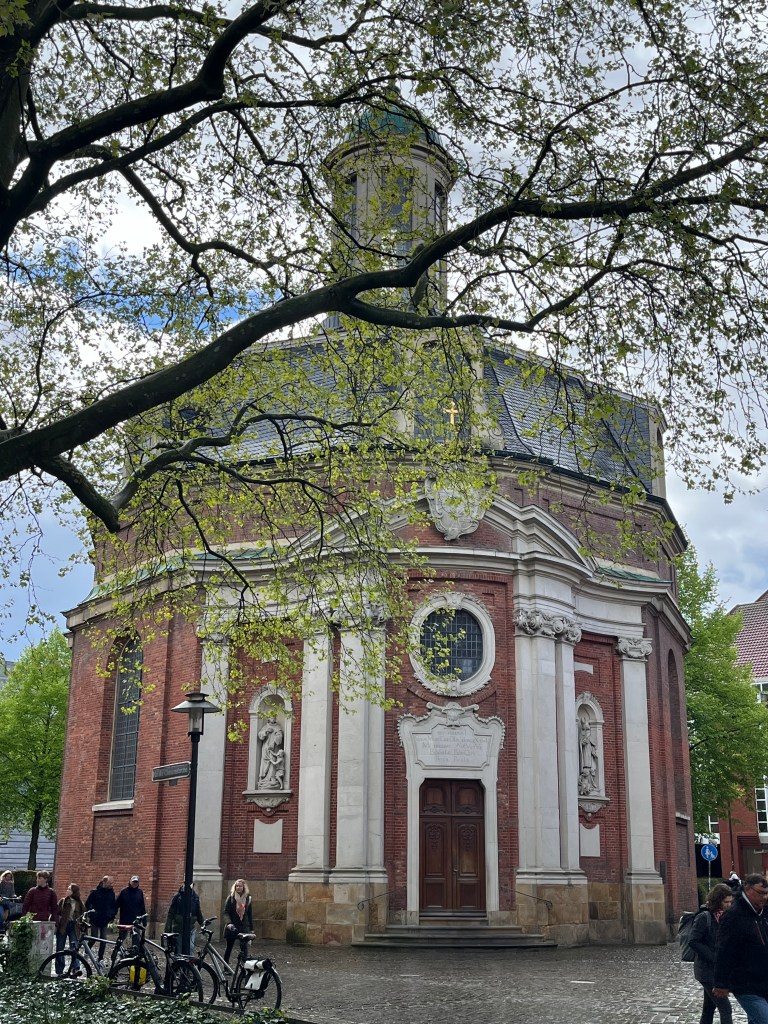
St Clement’s Church 1745 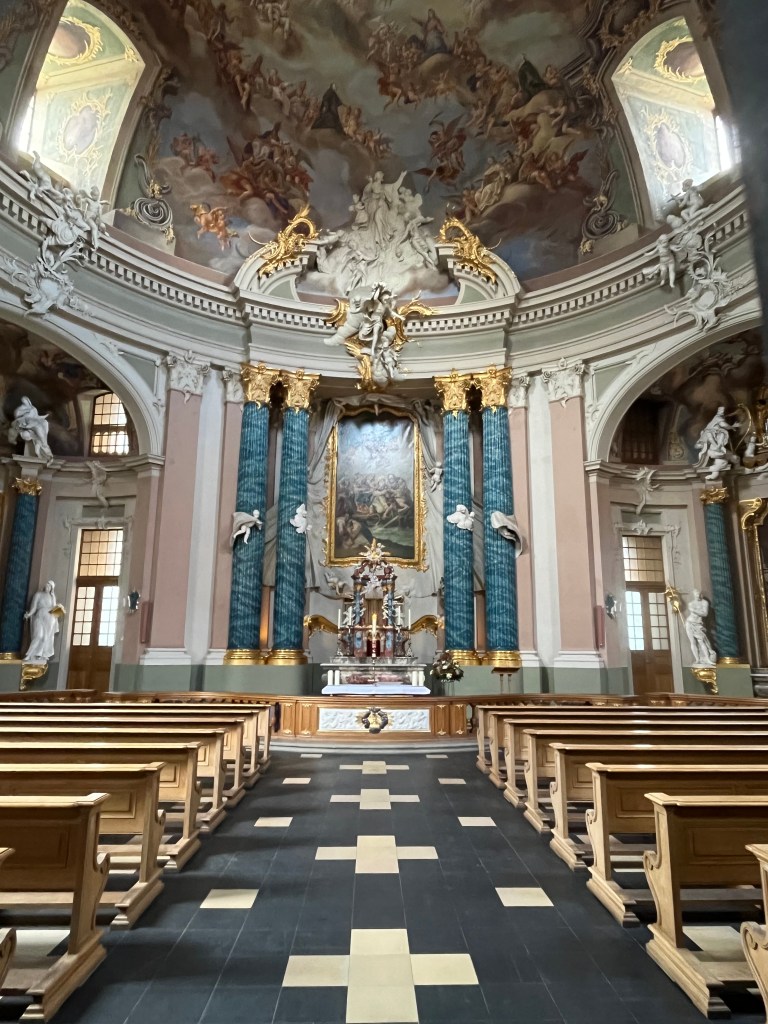
St Clement’s interior 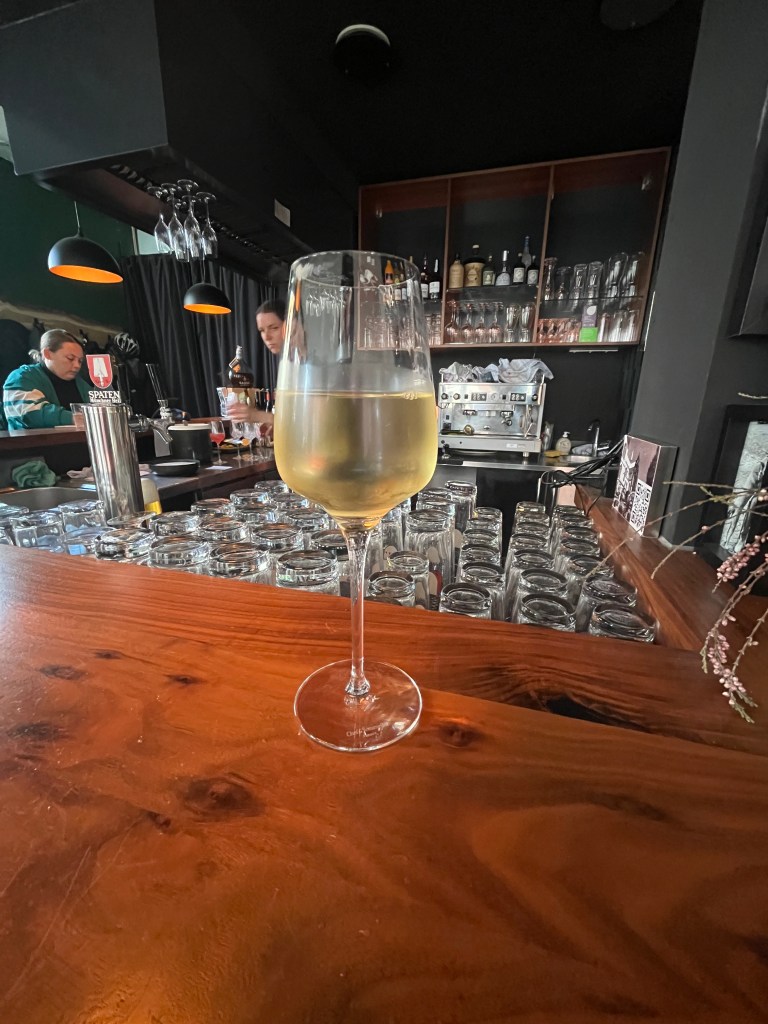
A German Sauvignon Blanc at Noennekens Bar After the wine stop, I walked through a cold rain to St. Lambert’s to view the infamous iron cages. From there, I made my way to the St Paulus Dom (Cathedral).
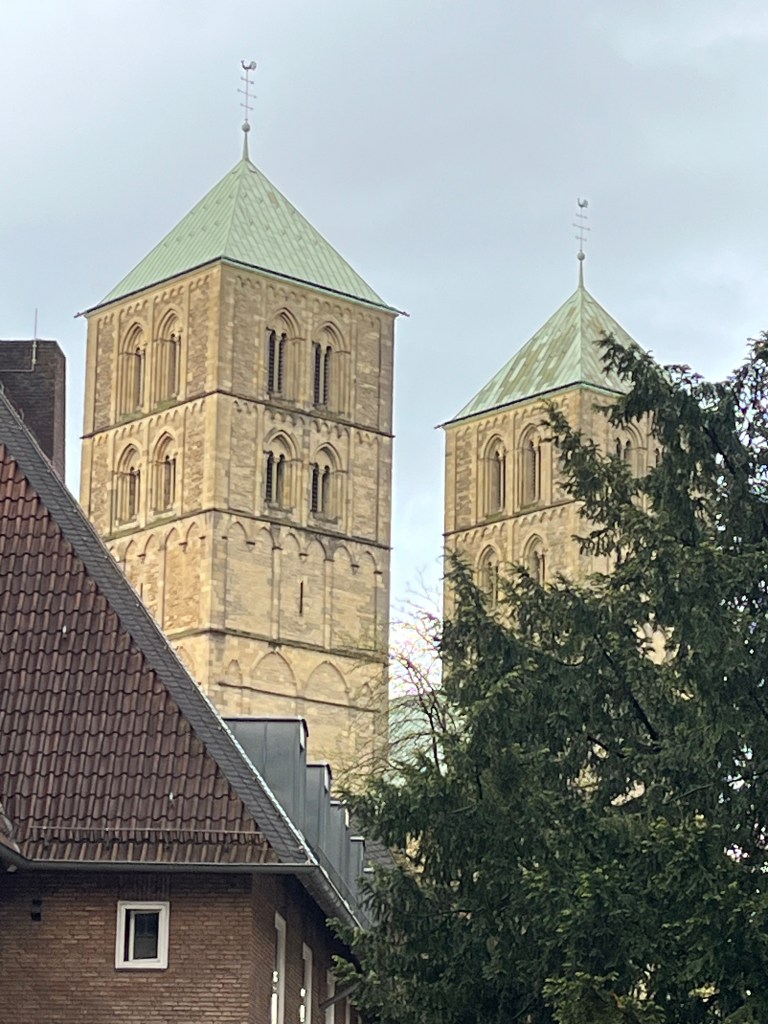
Cathedral 1 
Cathedral 2 
Cathedral 3 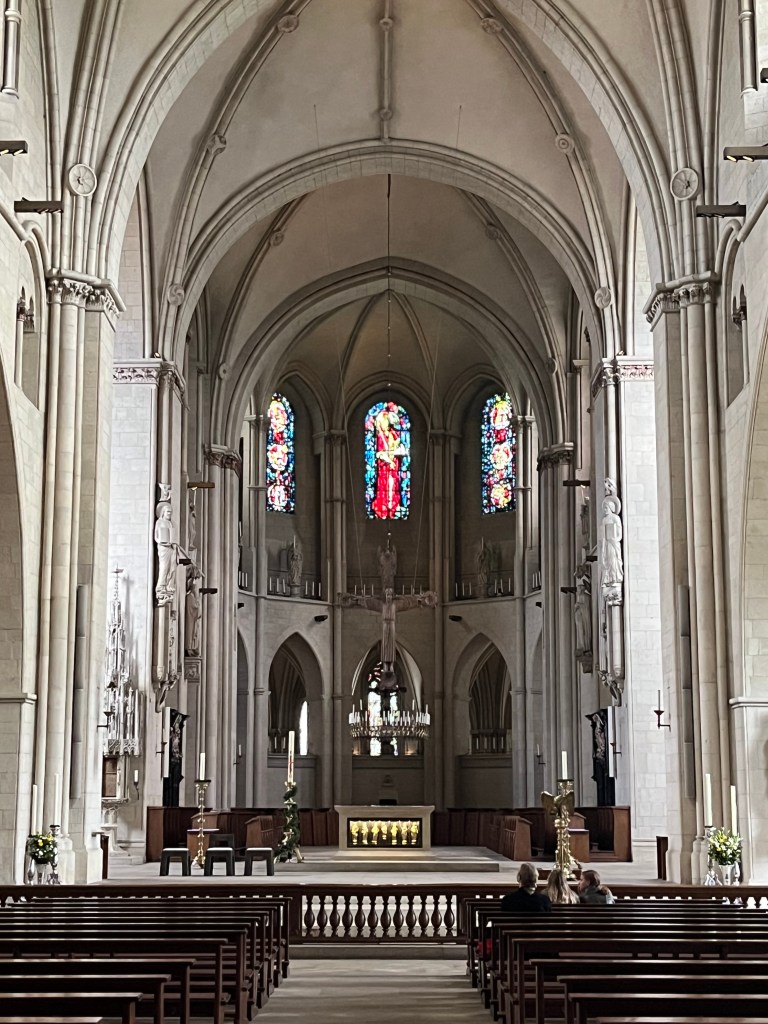
Cathedral interior 
Cathedral towers from the pocket park A docent at the cathedral invited me to come by around 6:30 for an organ concert. After another bout of rain, I took her up on her offer and stayed inside for about a half-hour enjoying some Bach and Liszt works before heading back to my Airbnb and grabbing a quick dinner at a cafe. I’m looking forward to perhaps renting a bike and exploring more tomorrow.
-
Subscribe
Subscribed
Have a WordPress.com account? Log in now.

