-
Braga: Day One
The express train to Braga from Porto Campanha station took under 40 minutes. While I was at the station, I bought a first-class express train ticket back to Lisbon so I wouldn’t have to worry about it Monday morning. I called an Uber and was at my Airbnb just outside the historic center in 6 minutes. The self check-in was flawless and I was impressed with the size of the apartment and how well provisioned it was.
Earlier, I’d received an email from FreeTours changing my city tour from 3 pm to 11 am, even though I wouldn’t be in Braga until two. Oh well, I booked the 5:00 tour but that, too, turned into a no-show, despite the email confirmation. Oh, brother! I just visited the key sites on my own.
My impression of Braga is quite favorable. It’s a traditional and elegant city. Another notable difference is how more religiously observant it is. Its many churches were having First Saturday masses.
It’s the oldest city in Portugal and was founded by the Romans in the 1st century AD before falling to the Visigoths in the 5th century. It was under Moorish rule from the early 8th century until its reconquest in 1040. The Sé, its 11th century cathedral, still stands. It’s a combination of styles but still serves as the seat of the archdiocese, the oldest in Portugal.
Much of the historic core is pedestrianized and is full of families with children, often with grandparents in tow. It reminds me of Salamanca, which I visited in 2013. It’s a glimpse into the old, traditional Portugal. For example, since tomorrow the weather will be sunny with a high of 85, I’d hoped to rent a bike; but the shop told me that most businesses are closed on Sunday.
I passed by a beguiling cheese shop, CorriQueijo (cheese is normal), which was closed in the early afternoon. When I came by later I bought a few hundred grams of Portuguese cheeses, including a raw goat milk one, a blue, and a soft cheese from the Azores. They also had a little tasting along with a glass of Alvarinho, produced in Braga. I bought a bottle.
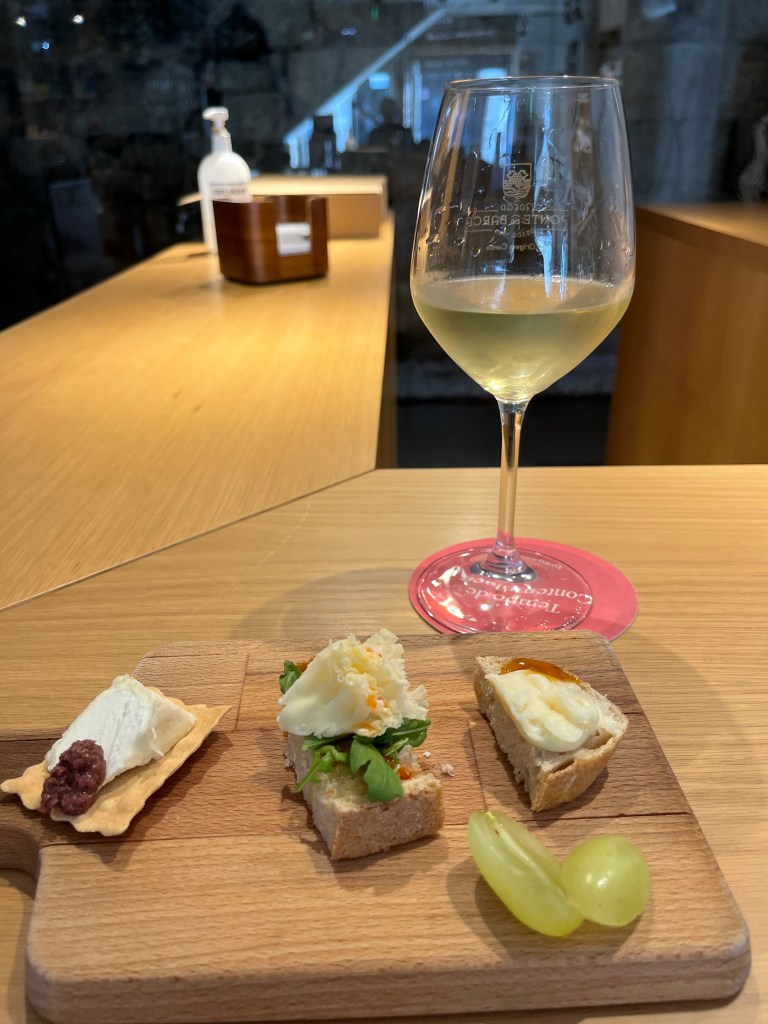
Alvarinho with cheese samples for €3,50 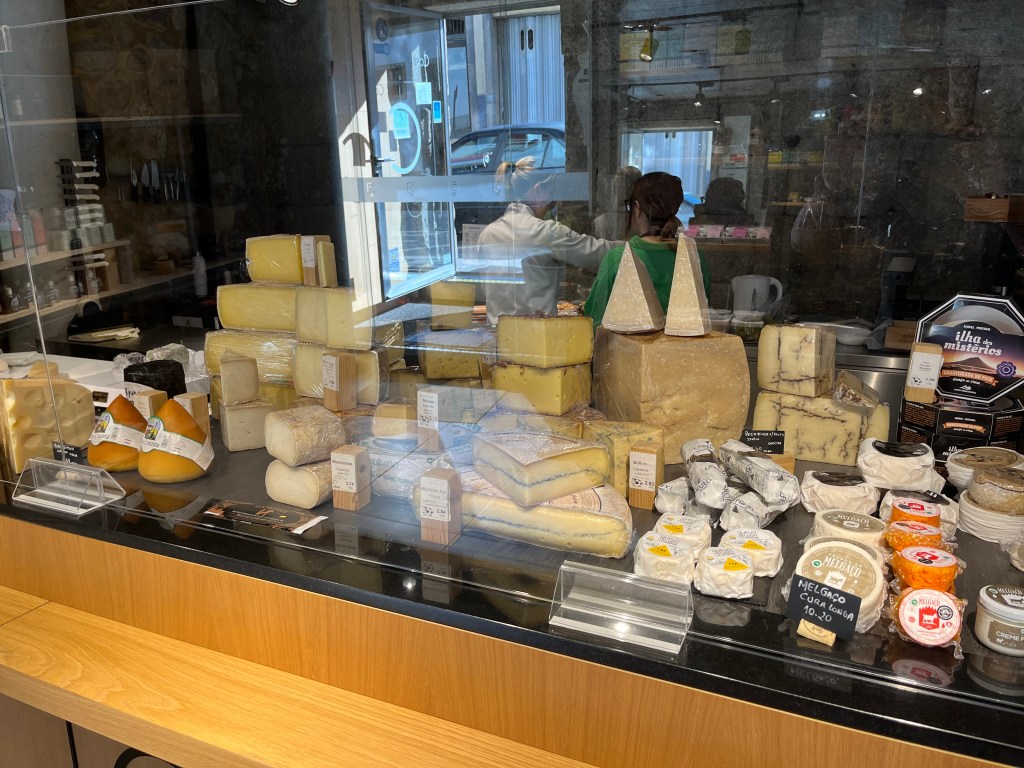
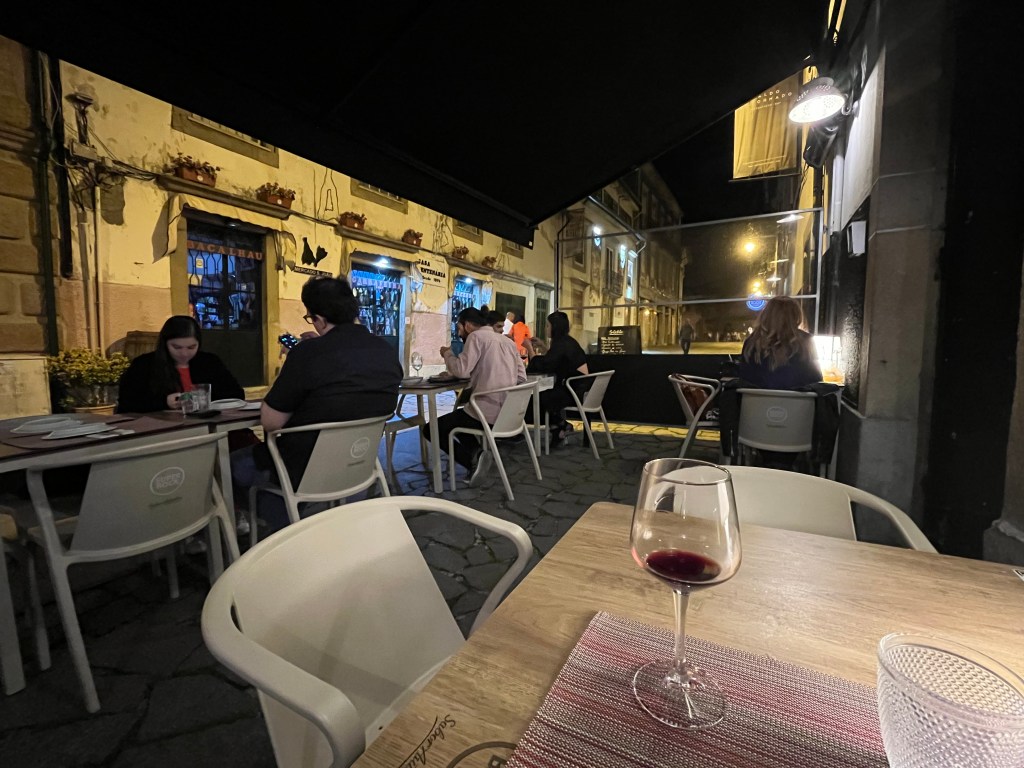
CorriQueijo I decided to eat dinner at Caldo Etornado. The advantage of coming from a culture where 7:30 pm is a civilized dinner hour is that one can always snag a great outdoor table in a country where 8:30 to 9:30 is the preferred time.
I ordered the roasted pork shank with a glass of 2019 Tons Duorum and a side of sparkling Pedras water, the go-to in Portugal. The serving was enormous, but I got through half of it and all of the spinach.
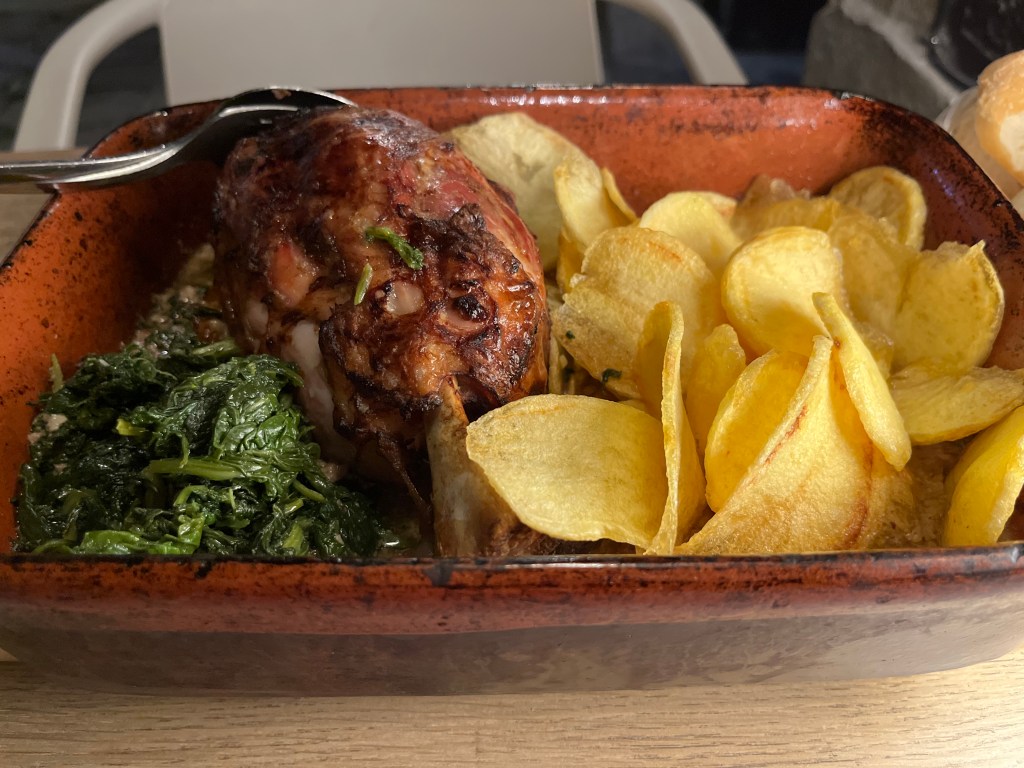
Although they look like French fries, they’re called “sliced” French fries.
I walked the dinner off with a stroll around town. It was pretty quiet since Braga was playing a football match against their rival, Porto.
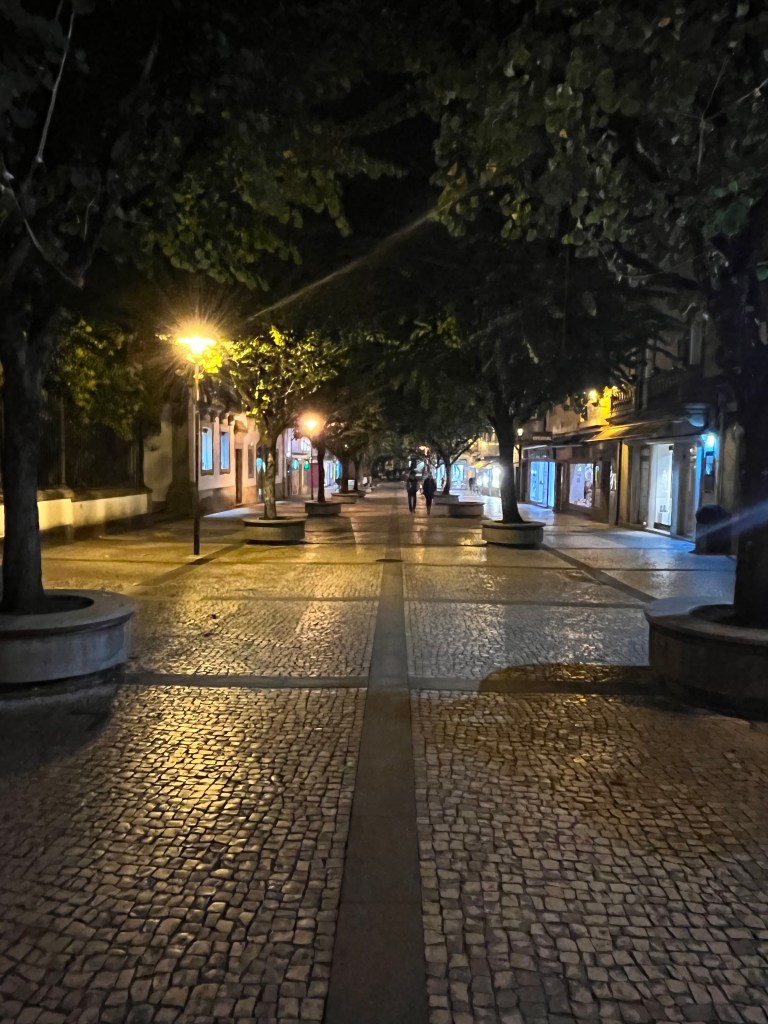
Quiet street scene 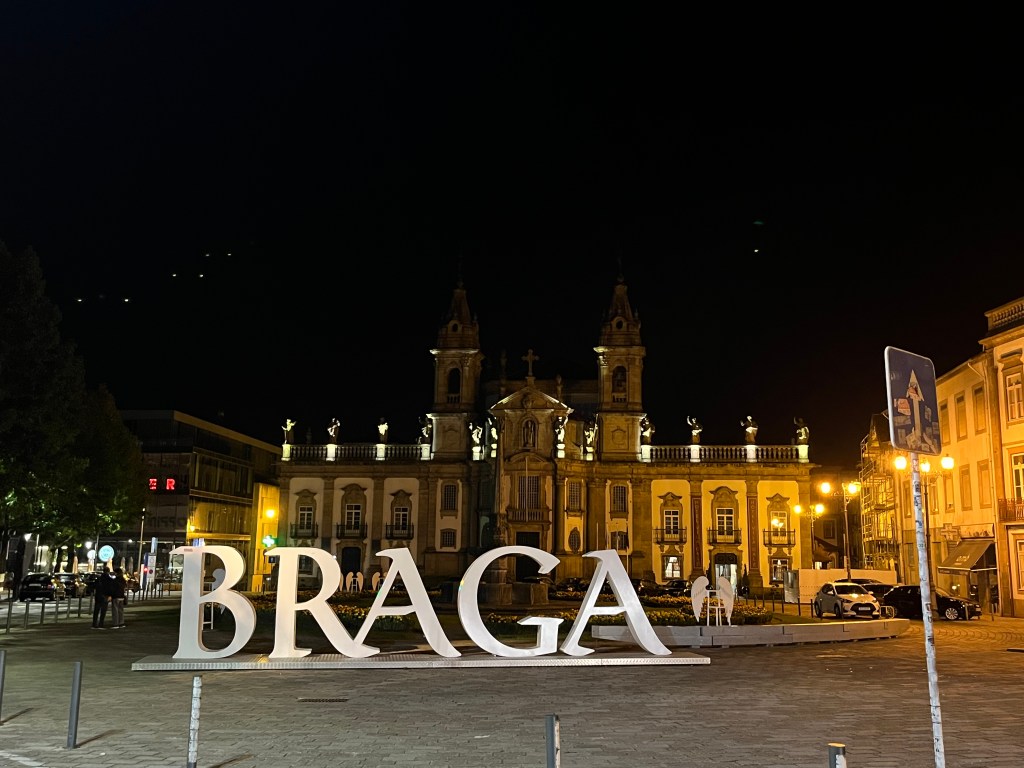
Town Hall 
Igreja de Santa Cruz, circa 1625 -
Porto in the AM
Earlier, I stated that my opinion of Porto had vastly improved after spending the first part of the week there. It’s improved even more.
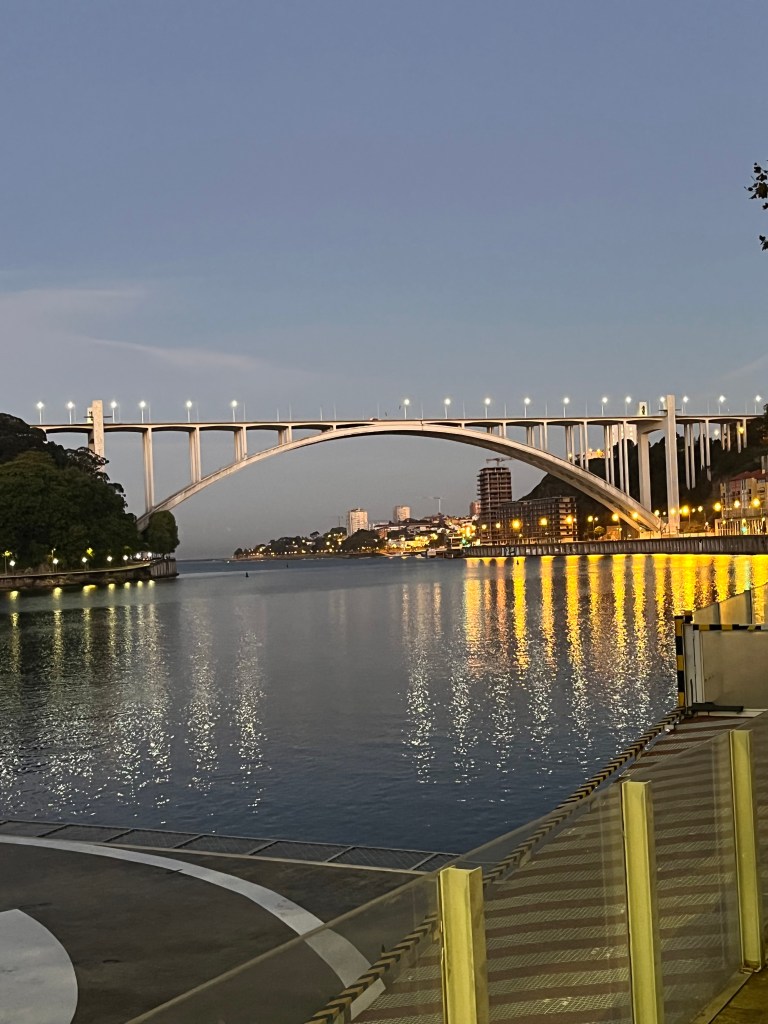
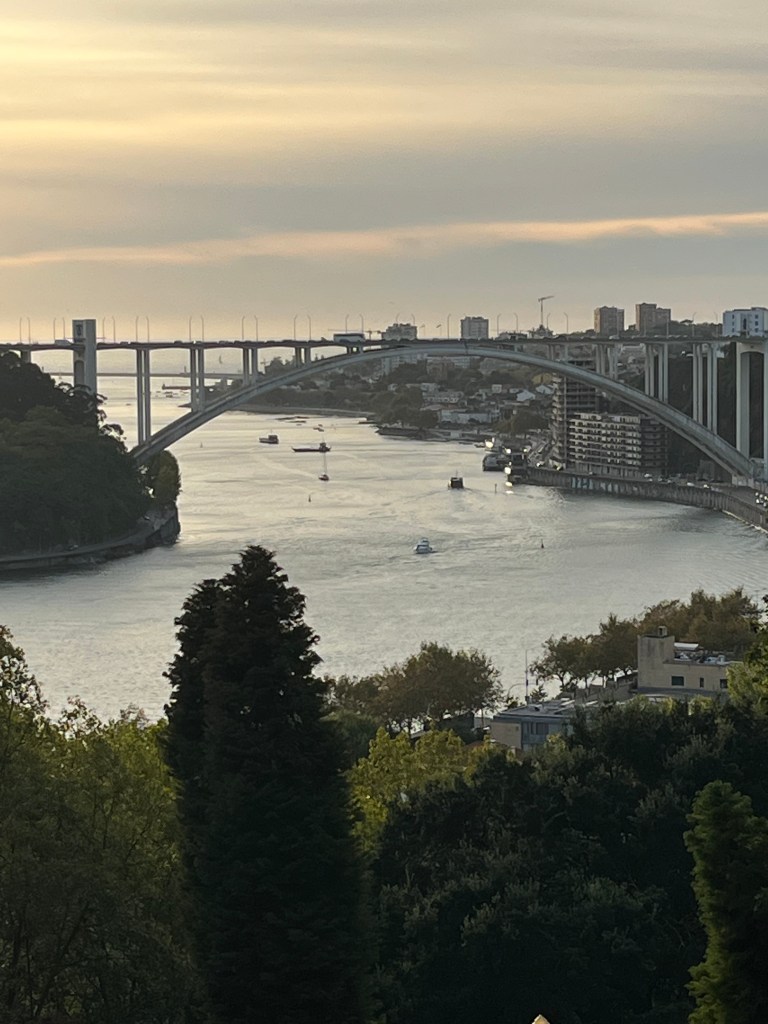
After a well needed sleep I arose around 5:30 and enjoyed two Nespresso espressos in the room and checked messages. I decided to go for a long walk down the hill to the Douro riverfront and walk to the lighthouse on the Atlantic in Foz, which I’d passed on the bike ride on Tuesday. It was still dark when I left and the streets were empty. After descending the Rua da Restauração I reached the riverfront and headed west under the high arch bridge, Ponte da Arrábida. As the sun began to rise some walkers and runners appeared. I took a photo of the lighthouse and turned around as the sun was rising. When I climbed back up the hill to my hotel, I checked Strava to see that I’d gone 7.2 miles.


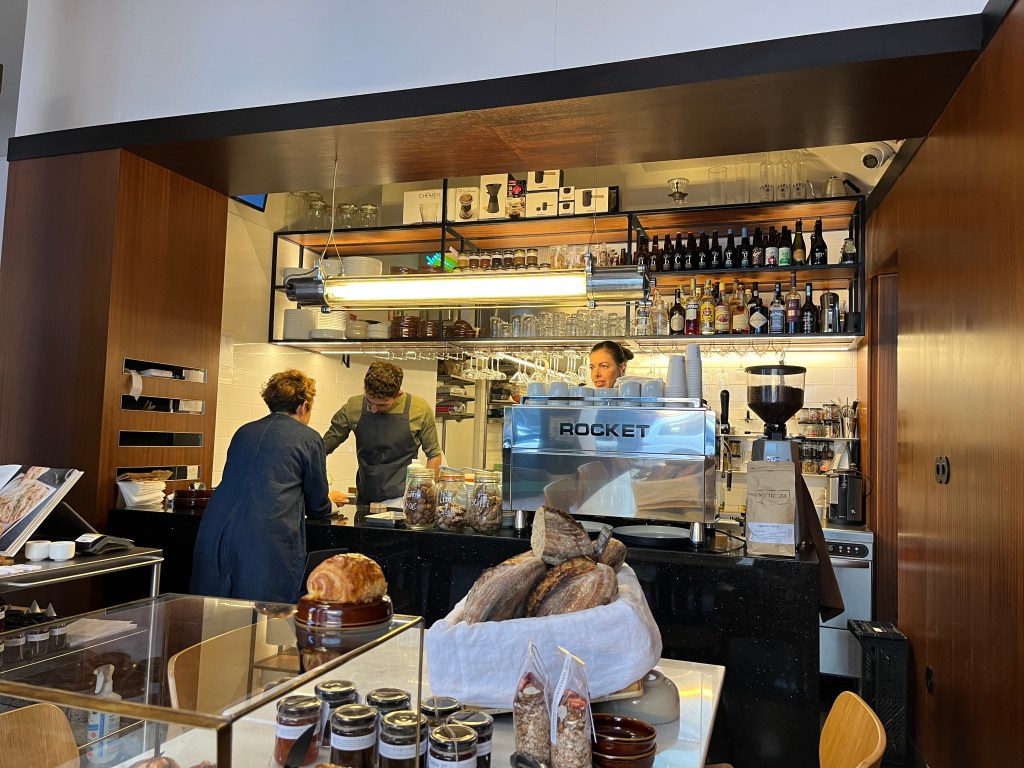
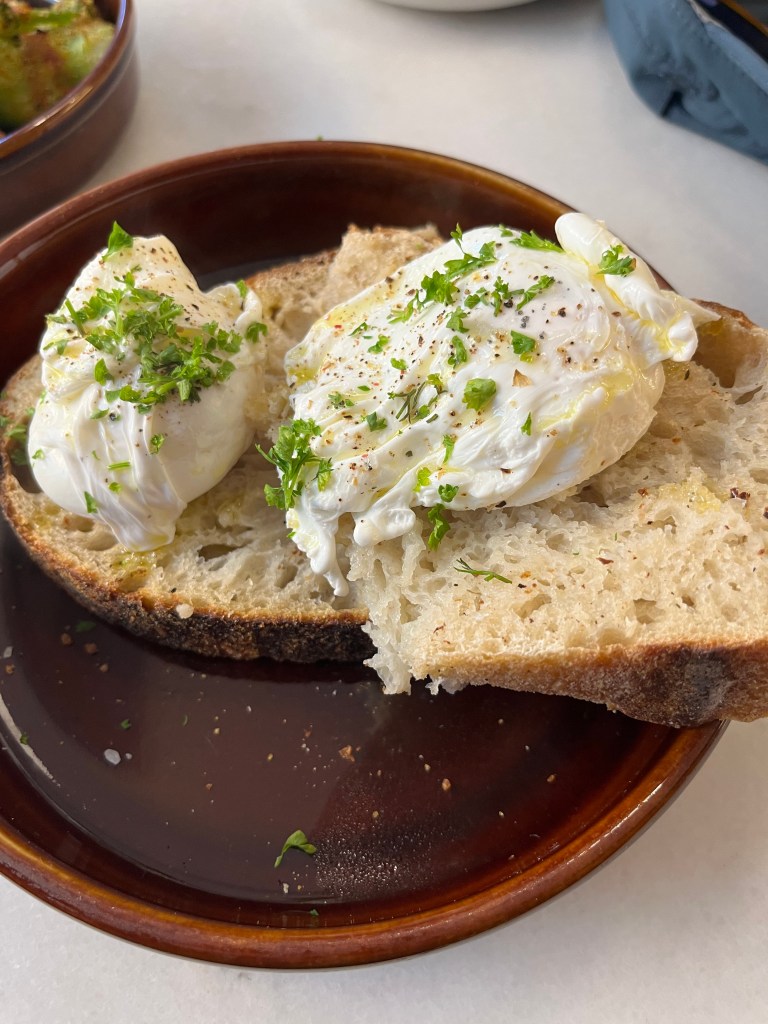
After a trip to the room, I Googled breakfast spots and saw that highly-rated Early was only 5 minutes away. I’m glad I checked it out. At 9:30, I was the first customer. I joked with the server about the lamentable cappuccino scene in Portugal and she promised that they knew how to make one. It was delicious. I ordered two poached eggs on their freshly made bread and a side of seared broccoli with carrot kimchi for some missing probiotic action. The food and ambience were perfect.
While I was eating, I saw one of the staff speaking with a woman who I thought might be the owner. After she left with a carton of pastries, I asked the server if she was the answer and she said “yes”.
On the walk back, I saw her getting out of her Audi and I asked if she was the owner. She was and she asked if I wanted to see her guesthouse and brunch area and she showed me an extremely well executed interior including a wall filled with their curated wines, spices and olive oils. She then showed me their rear garden, which interestingly adjoined that of my hotel next door. She and her brother own the guesthouse, a shop called Earlymade and the restaurant. She had been an asset manager and her brother had earned his PhD and had lived in New York and London. Patricia said they dropped it all and followed their passions. They’ve been in business since 2015 and have been featured in The New York Times and The Telegraph. Their elegant guesthouse is called Rosa Et Al. The people I meet!


-
Back to Porto for a night
Took the noon train back to Porto. I’d screwed up a reservation and ended back in Porto tonight, but there were a few things I’d missed earlier in the week. I spent some time on the phone trying to resolve a travel issue with Amex and was routed to the dreaded overseas call center. Wasted time while I was put on hold. Finally told them I’d hang up if the issue wasn’t resolved and I got it handled. Has anyone had a pleasant experience in these situations? I think the covert goal is to get the customer so enraged that they abort.
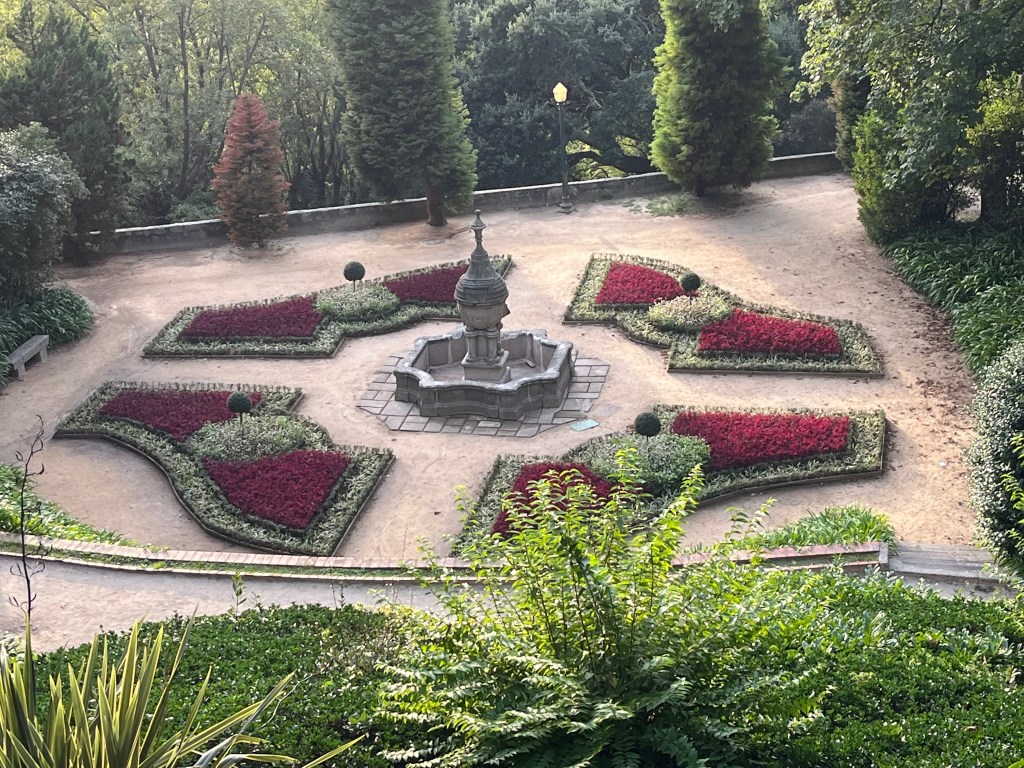
The Jardins do Palácio de Cristal are worth a visit. This expansive park also has attributes of a botanical garden. It’s perched high above the Douro in the northeast part of the city and has views of the Atlantic. The SuperBock Arena is also worth a visit. It’s named after the Portuguese best-selling beer.

I was a bit tired from all the hiking the day before, so I went to a very hip place called Apuro, around the corner from my hotel. The food was great and the staff very friendly and eager. 7:30 is a slow time for dinner, so I found a great spot overlooking the kitchen.
On the short walk back to the hotel, the temperature had cooled. There’s definitely an autumn feel in the evenings and I noticed that the plane trees were showing yellowish tints.
My hotel, Rosario Luxury Suites, is really a cool place. There’s a nicely lit garden out back with a huge persimmon tree. They have Nespresso machines in the rooms, so I know I’ll have a passable espresso or two in the morning. I plan to retire early and take a long early morning walk before grabbing an Uber to the train station for the ride up to Braga.
-
Pinhão: Rainy Day One

(Morning notes) I slept soundly and woke up to the sound of steady rain. This is the first day since arriving in Portugal that it’s rained consistently. It’s actually a pleasant change, although I’ll have to shelve the morning bike ride since it’s forecasted to last through the early afternoon.

The proprietor left a covered basket with breakfast outside the door, containing an enormous bottle of some fruit juice, a beaker of milk, what I thought was a hard boiled egg, meat and cheese, and fresh rolls and butter. The suite features a coffee maker, which a close friend likes to call a “drip-o-lator”. I brewed a half pot with the coffee provided and was treated to the most tasteless cup I’ve ever had. Should I see if there’s a decent espresso place in the village?
So, my visit to a cafe down the street was disappointing. I’ve come to accept that outside of Lisbon and hotel machines, the locals simply have no idea how to make a proper cappuccino. At least I was fully caffeinated!
As it turned out, when I cracked the egg it was a raw one! Oops! I bought a half dozen fresh eggs from the market that morning for €1 and scrambled three of them for breakfast.
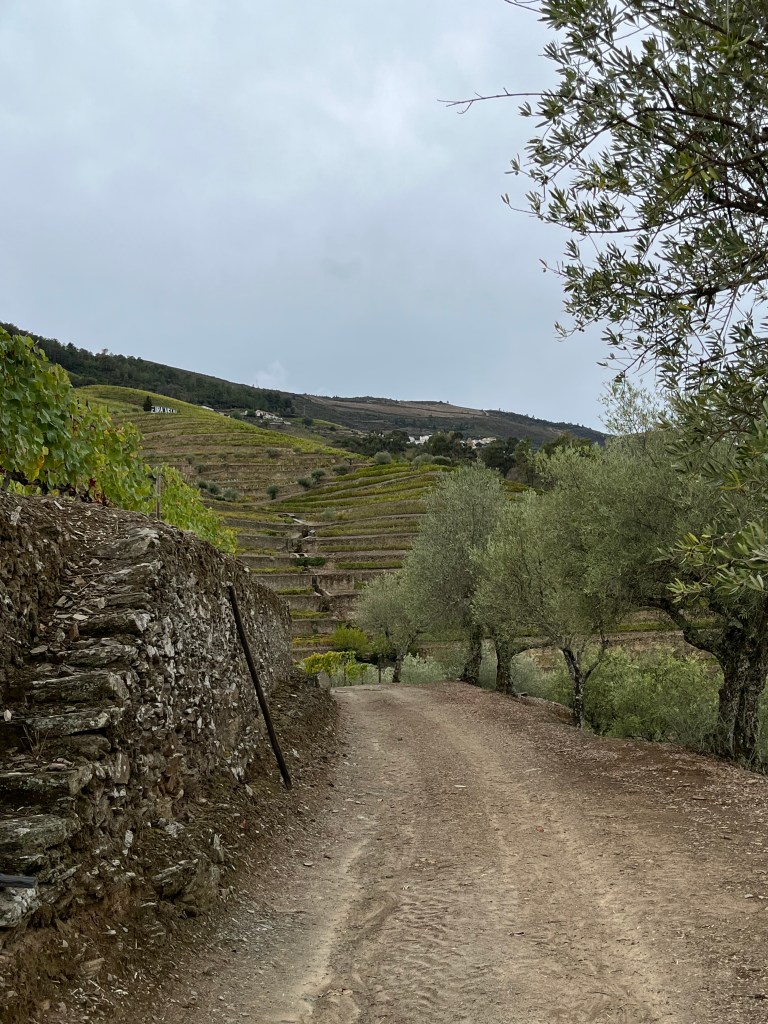
The rain abated and I headed out for a long hike/walk through the mountainside vineyards and olive groves. The weather was cloudy and overcast, so perfect weather, since the summers here can be brutal. The rain held off until I returned to Pinhão, so I lucked out. The area is stunning and the chance to walk 5+ miles without seeing anyone was wonderful. In town, people walk at a funereal pace. I lost the trail once and had to scale a rocky wall. I recalled the time in Cinqueterra in the spring of 2004 when I was walking along a similar mountain trail and accidentally toppled an ancient wall. Fortunately, the wall I climbed stayed whole and I didn’t suffer the Martyrdom of St Stephen redux!


When I started my mountainside vineyard hike around noon at Quinta da Foz, the manager, Christophe, advised that I climb up the mountain behind their quinta because it connected with the road back down into town. The tasting room didn’t open until 4:00 pm, so I promised to come by then.
I headed over to the Quinta as the skies started to clear and met some winsome and quite fit middle-aged American women on a trekking tour. I took their pictures on the pedestrian bridge. Around 4:30, I arrived at the Quinta. I sprinted up the stone steps and met Christophe and Joana at the top. They were so impressed that they gave me a glass of red (vinho tinto) and invited me to walk around the winery, which was full of crushed grapes.
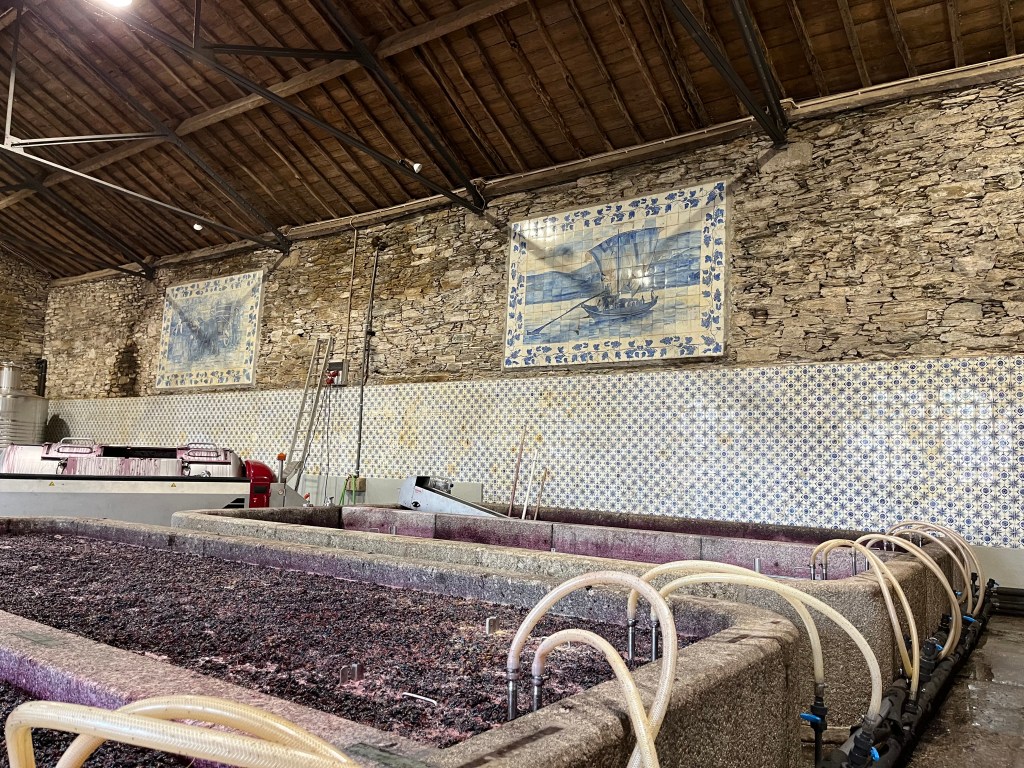
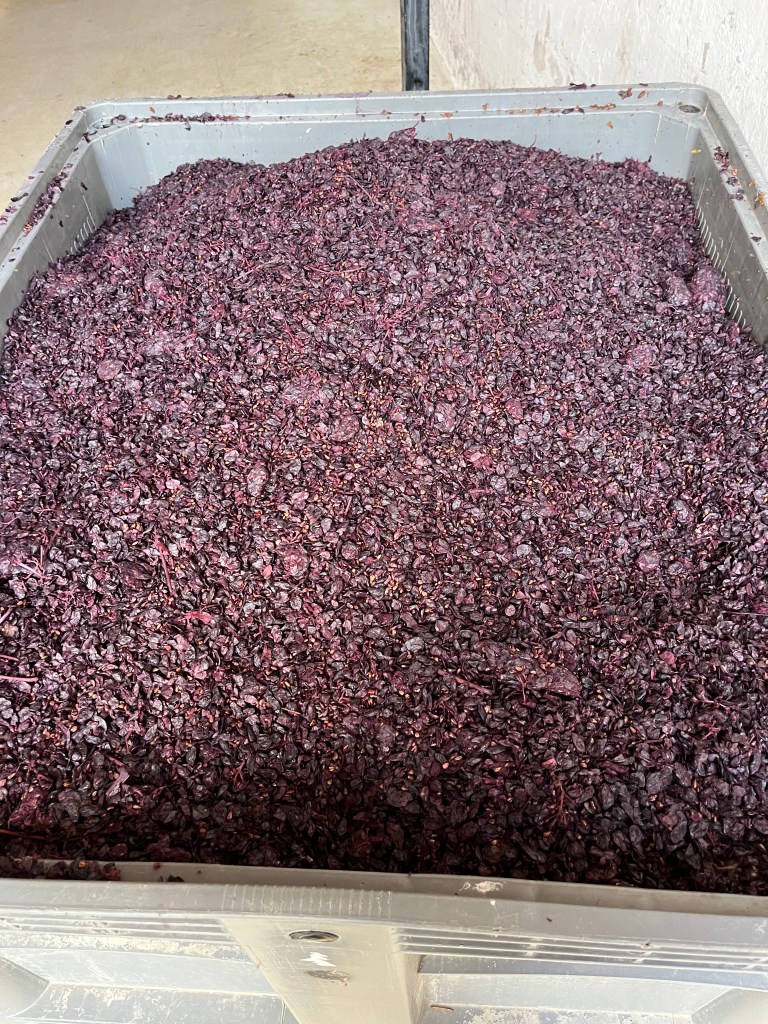
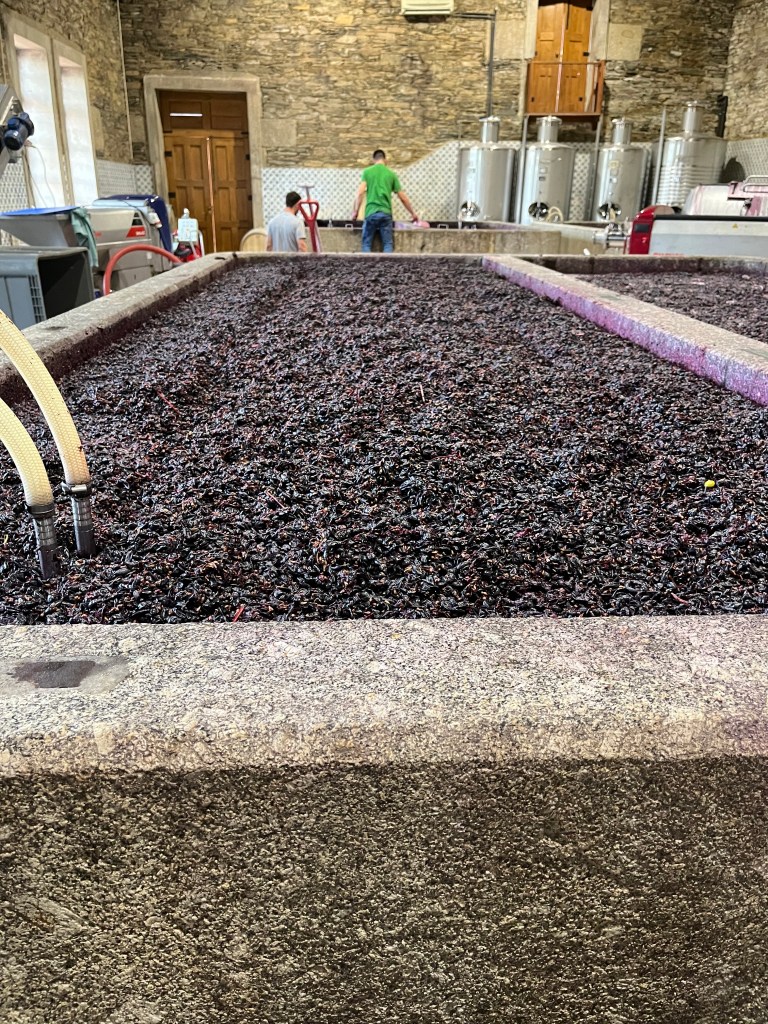
When I walked into the tasting room, I chatted with a group of young Germans, who are uniformly delightful people. Then it was just me and I did a full tasting as Joana described the various selections, which ranged from a dry white aged in mahogany barrels through four reds aged progressively in Portuguese, Hungarian and French oak, to the finale, a surprisingly semi-dry ruby port.
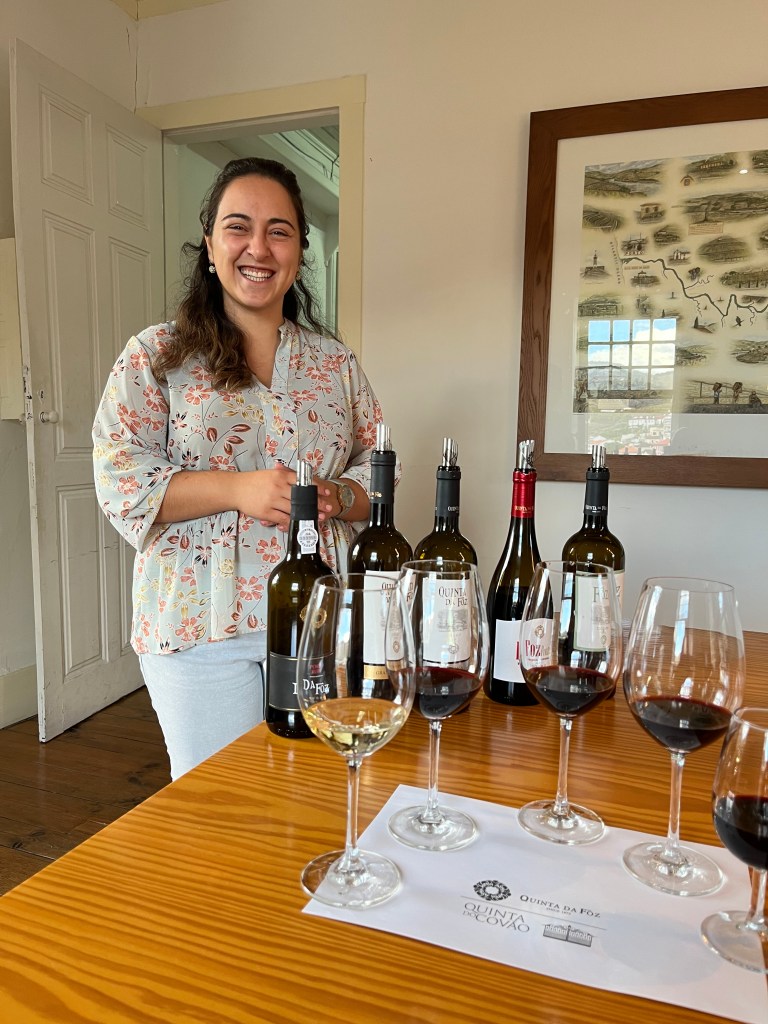

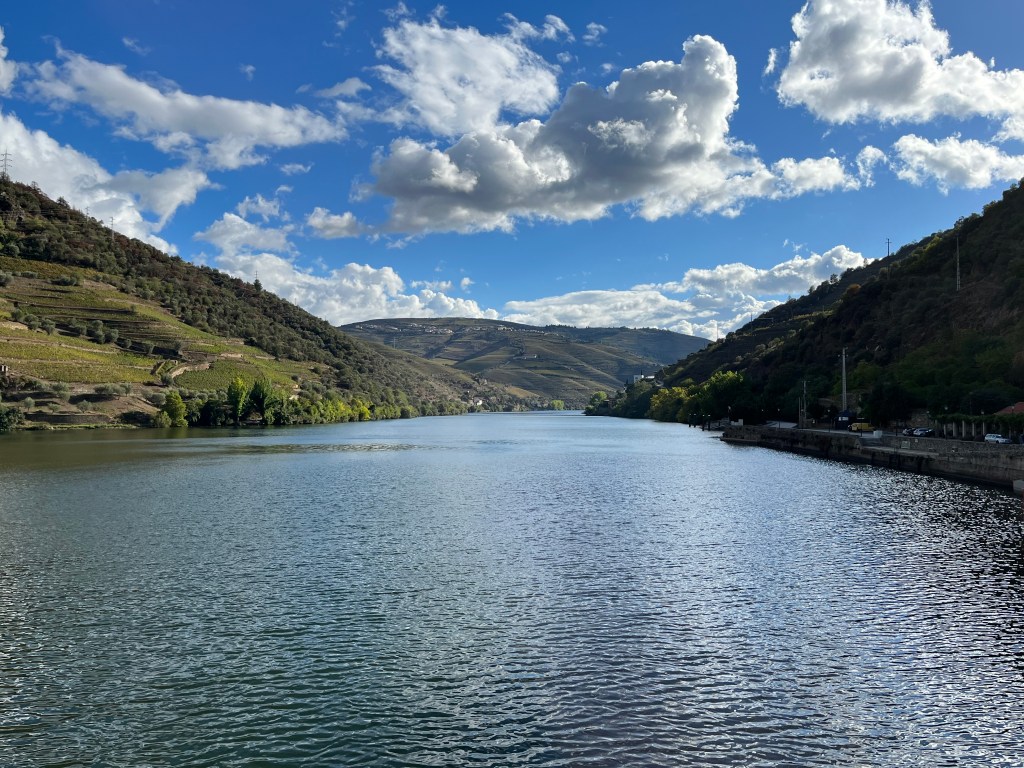
Needless to say, I was a bit tipsy afterwards. Although this may sound like hyperbole, many of the people I’ve met in Portugal seem suffused with joy. I suppose when you see vistas like this after a rainy morning, it’s hard to feel otherwise.
-
Porto to Pinhão in the Douro Valley
As soon as I walked into his shop this morning, the owner said “dois cappuccinos?”. I wondered if he would hand me a little bottle and, of course, he did! Walking back to my Airbnb I noticed a plaque on a stately building that stated that it was the birthplace of Prince Henry the Navigator. There are always surprises like this in Porto.
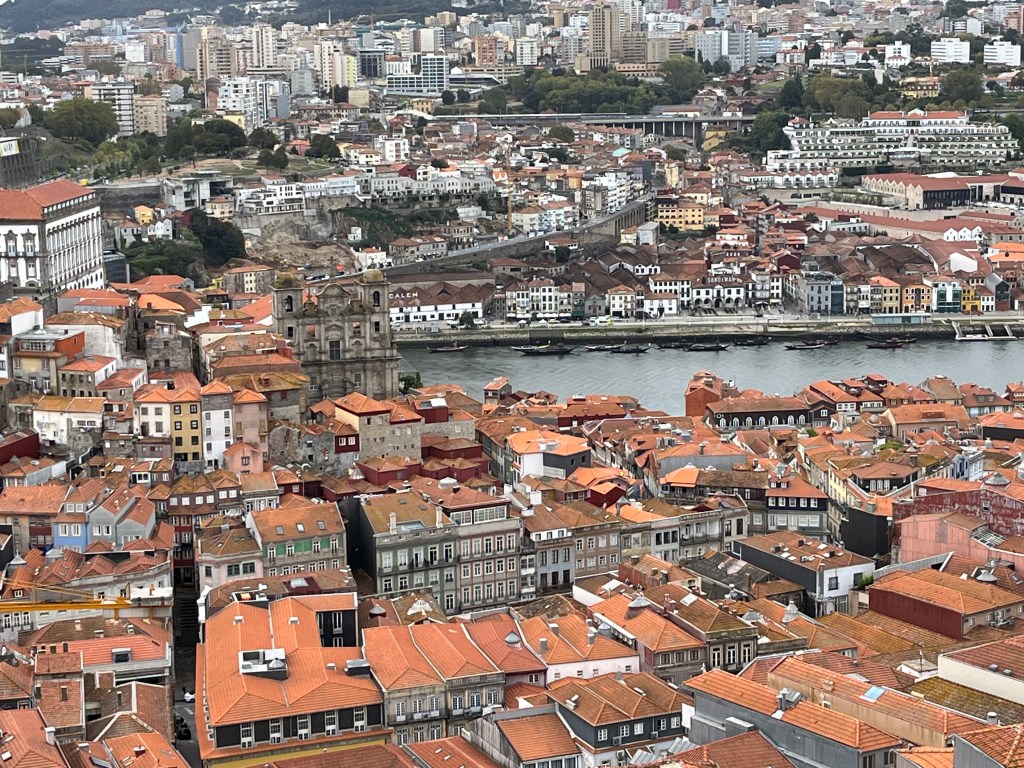
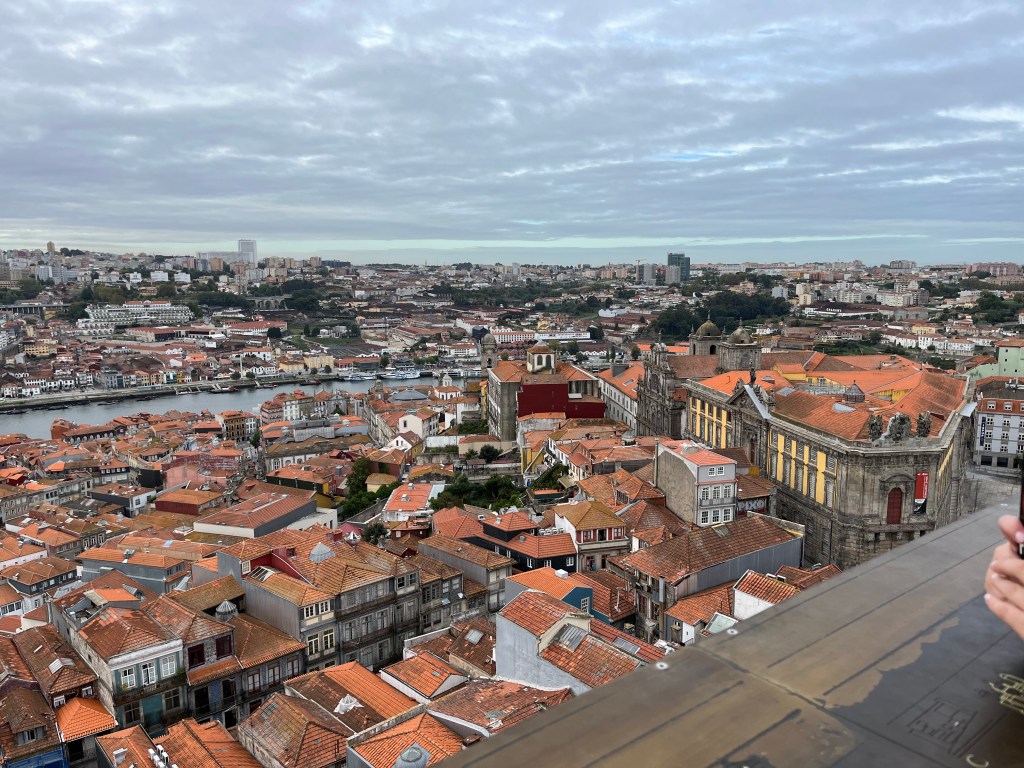
On the advice of my Swiss friend, I’m going to walk up the hill to the Torre dos Clérigos and ascend the 225-step spiral staircase. I did and it was well worth it. A 360-degree view of Porto stretching to the Atlantic was the prize at the top.

A note about ordering anything other than espresso in Porto: be prepared for the most mediocre cappuccino ever. No taste of milk whatsoever and often made with Nescafé. I was almost tempted to pop into Starbucks as much as I loathe them in the US.
There was an ominous incident about 30 minutes into the train ride to Pinhão. Someone hurled a rock through the train window a few rows ahead of me. Fortunately no one was hurt. One couple fled their glass-strewn seat to sit across from me. They didn’t recognize me in my sunglasses and cap, but they were the couple with whom I’d chatted in the vegetarian restaurant in Porto on Sunday night. They were Dutch living in Oslo. It was fun marveling at the coincidence.
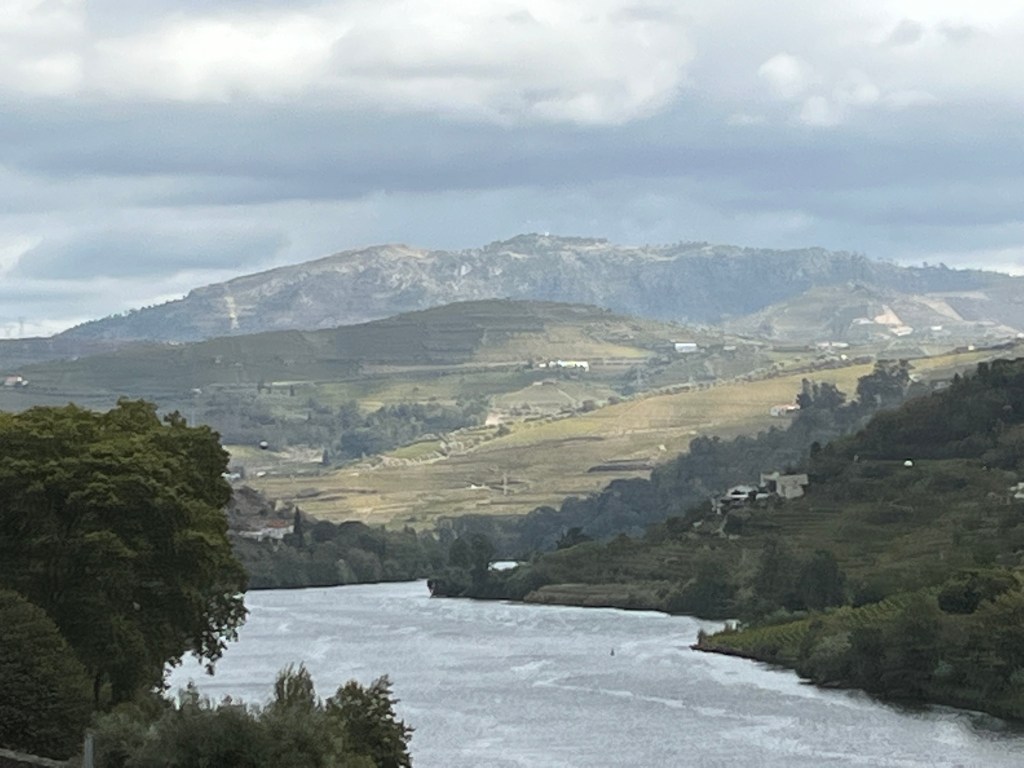
The train ride up the steep Douro Valley is everything described in the guidebooks. A broad curving river cuts through canyon-like slopes covered with vineyards. The scenery and the river had us standing at the open windows snapping photos. After three hours, we arrived at Pinhão, a photogenic wine village deep in the valley. The walk to my little hotel, Casas Botelho Elias, was short and steep. The place is just fine and has a nice outside patio. The shortcoming is that I can hear a drunk villager yelling at his wife and the occasional annoying dog barking. Ah, the charms of rural vineyard life! There’s also a sodium vapor light on a pole outside, but the drapes cut off the glow.

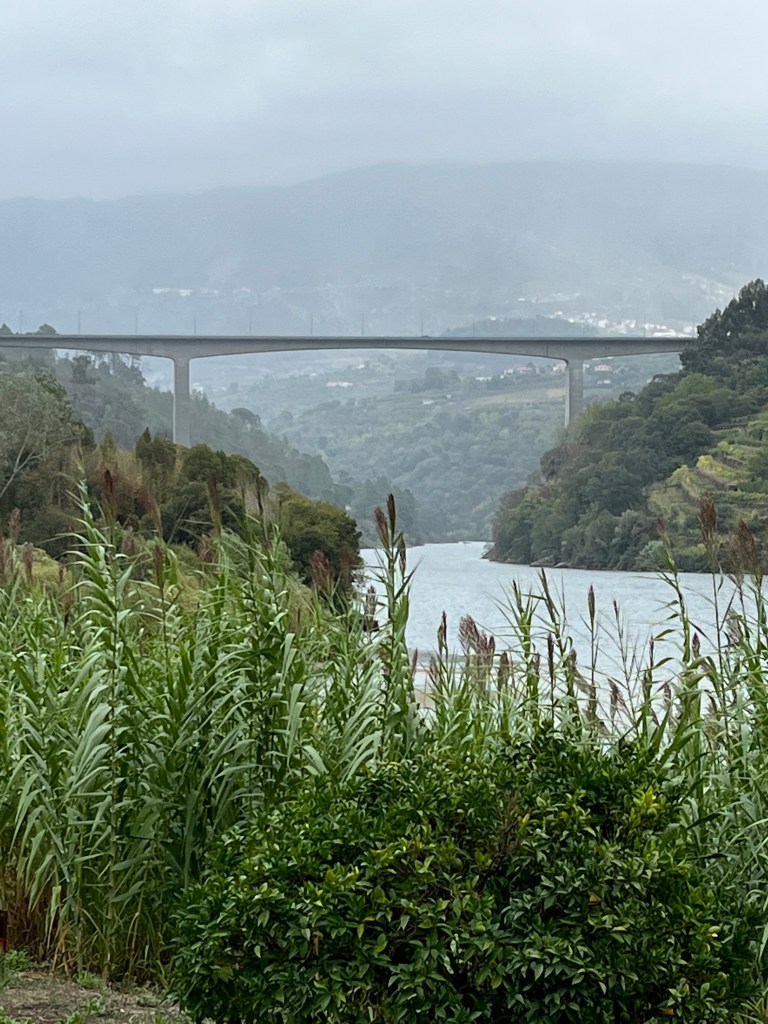

My hotel neighbors, a Czech couple, invited me over for a drink and we shared travel stories. They are hugely well traveled and are great fans of Africa. They’ve been to Botswana five times, along with trips to Malawi, Zambia and Namibia. Their safari stories were fascinating, especially the ones about the sentient elephants that pay homage to their dead. Tomás is retired while Zuzana still practices medicine. I’d never considered a trip to Botswana, but it sounds intriguing. Instead of saying “good day”, Africans greet each other with “how did you sleep”. The neighbors were bushed from a day of exploring, so I wandered into the village in search of something light and had a reasonably pleasant salad.
The weather has temporarily turned rather cool with forecasted rain tomorrow, which means that I’ll probably be visiting some nearby quintas (wineries) rather than renting a bike. All is now quiet and I’m ready for a good night’s sleep.
-
Porto: Day 3
I walked around the corner to grab two cappuccinos to go and the nice attendant handed me a tiny bottle of Moscatel do Douro, maybe because I was the first customer of the day. Perhaps the sign of a good day to come!
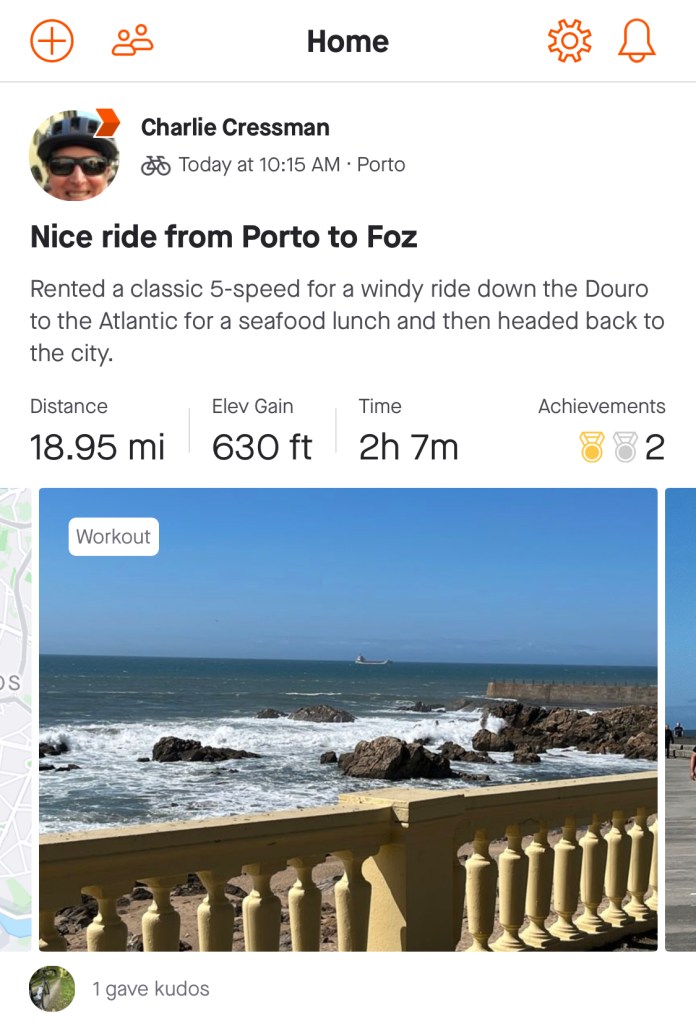
I rented a bike and was happy to see that the shop was about 200 meters from my Airbnb, right on the river. It was a classic 5-speed hybrid, perfect for cobblestones. I set off west for the mouth of the Douro and the beach town of Foz, on the Atlantic. En route, I took a detour through the Parque de Cidade, winding through the gravel paths and ponds. I headed back to the seaside bike trail through Foz and then over a bascule bridge (Ponte Móvel) up through Leça de Palmeira, before heading back for lunch in Foz. The owner of the bike shop recommended Salta ó Muro, and I’m glad he did. I ordered the grilled dorado. The serving was generous with some vegetables on the side. It was delicious. The man seated behind me was from Lucerne, Switzerland. He told me that he and his family visit Portugal all the time. He expressed surprise that I was so well informed about European politics and culture (for an American) and I joked that people imagined that I worked for an intelligence agency (my standard go-to in these situations). He gave me some Algarve recommendations. He also asked to follow my blog. I worked off the lunch on the 19 mile round trip ride, a nice break from the city crowds.
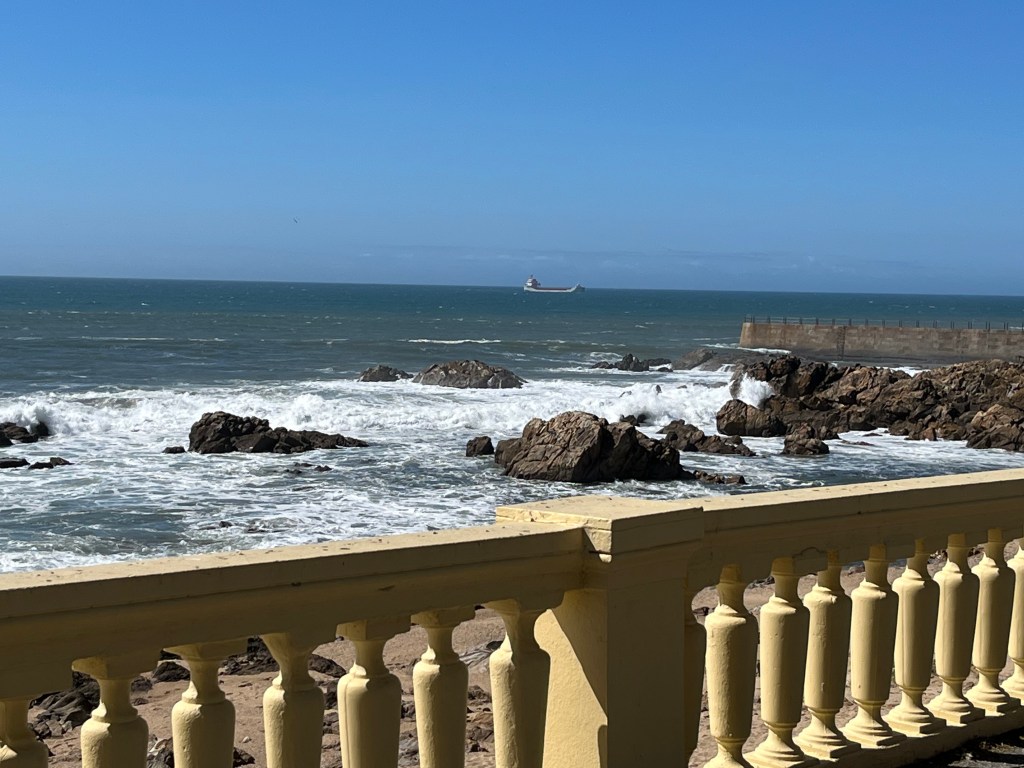

Grilled dourado at Salta ó Muro After dropping by my flat, I thought I’d trudge uphill (always) to revisit the Sé do Porto (cathedral). On the way I was sidetracked by an intriguing wine bar. The owner features wines and ports from his vineyard and we had a nice chat, with me getting more free Portuguese lessons. I also spoke with a young German couple from Hamburg. The woman had lived in Hatboro, PA of all places, working as an au pair. Her partner’s father had served in the Luftwaffe and they lived for a time in Alomogordo, NM near the now-closed airbase and he spent part of his childhood there. They both spoke with the perfect neutral American accent. I told them I was planning to visit Germany in the spring and they gave me some neighborhood recommendations in Hamburg.
Walking around the cathedral area and then meandering down cobbled streets to the riverfront made me appreciate the charms of Porto even more. Really, three days is the minimum to really appreciate this lovely city.
-
Porto: Day 2
My Airbnb is so luxurious that it was hard to get in gear this morning; nevertheless, I’d booked a city tour beginning at 11, so I walked out of my flat around 10. The day was cool and sunny and the main drag up the hill was noticeably less crowded. My view of Porto was growing more favorable by the moment. Since it doesn’t take long to get anywhere in the old city, I walked around some pedestrian streets and admired the great architecture. Our meeting place was by the lions statue in front of the former main building of The University of Porto. Since I was early, I wondered through the 16th century Carmelite church and its adjacent museum. The crucifixes from that time are truly gruesome. I’d never seen so many with multiple wounds streaming blood, including deeply abraded kneecaps. There were also many statues of St. Anthony, a particular favorite of the Portuguese.
I booked the tour through Freetours.com. Over the years, I’ve found the free city tours to be the best. The guides are uniformly well-educated and love the history of their cities. They attract the top guides since, when you consider the generous tips at the end, they make far more than the paid guides who advertise on TripAdvisor and other sites.
Felipe, our guide, was particularly fun. He showed our group of about 25 several secret and occult sites, including the Masonic pentagram carved into the stone of the main cathedral, construction of which started in the 12th century. He also told us the story of the beloved King Pedro III, who ruled in the early 19th century and was simultaneously Emperor Pedro I of Brazil. He granted Brazil its independence and is revered there too. The whole saga of his life and rule is very Game of Thrones-like. When his younger brother Miguel tried to usurp the crown while Pedro was in Brazil, the king returned to Porto, the only city that remained loyal to him. After Miguel and the entire Portuguese army and navy were miraculously defeated, the whole country rallied around their true king. Rejecting the advice of his counselors, Pedro spared Miguel’s life and exiled him to France.
He sired 100 children even though he died at 35. He willed that his heart be removed from his body and stored in his favorite church in Porto. Currently, his heart is on tour in Brazil. Another great story provided by Felipe!
As Felipe said at the outset, there’s no need to visit the sites recommended by the guidebooks since we would be showing us them all.
We ended our three-hour tour by crossing the famous iron bridge built by a student of Eiffel and named after King Luiz I. It also doubles as the Metro yellow line, so pedestrians need to pay heed. In ends in Maia, which is a suburb high above the Douro that commands majestic views of the hills of Porto and the Douro River and its bridges. Felipe took a group photo, which I’ve already received. After a break here at the Airbnb, I’ll head out to explore more. By the way, Portugal is derived from Porto! They’re very proud of that attribution at the expense of their national rival, Lisbon
One is as likely to run into a Brazilian as a Portuguese in Porto. Our guide, Felipe, was from Brazil. Their advantage is that they speak the language and fill in a needed gap in the economy of a country with a diminishing population. They’re well integrated into the country and happy to be here.
Did a major walking program this afternoon and dropped by for a glass of vinho branco (white wine) at an outdoor cafe high above the Douro. My server, Sara, was from Rio de Janeiro and is a student at the university. She guessed that I was from South Africa! Now I’m back at the Airbnb thinking about dinner. Seven miles of up and down walking so far. The weather is perfect. Low humidity and high 60’s!
Back at my place. The restaurants are just getting crowded. Low of 54 by tomorrow morning. I’ve reserved a bike for tomorrow and plan to ride west along the Douro to the Atlantic coast at Foz. It’s not that far. Now it’s time for a Port and a piece of dark chocolate with hazelnuts.
-
Porto: Day One
I took the express intercity train to Porto and changed to the interurban line which ended in one stop and walked down a steep hill to my Airbnb a block south of the Douro. The host had sent me the codes to enter. I was delighted with the ultra-modern and well appointed flat on the 4th floor. It’s the nicest Airbnb I’ve ever rented. It’s in the rear of a 19th century building and absolutely quiet. After settling in, I took a pic of the washer controls and googled them. This is my usual routine in Europe since the machines have an array of somewhat inscrutable directions. I accidentally poured the detergent into the fabric softener slot, so I had to wait and then rewash the clothes with the proper detergent program. The machine also doubles as a dryer, but I wasn’t about to tackle that task. Air dry is the best option.
While load two was in progress, I decided to circumnavigate the historic core, which involved some formidable stair climbing on the most arduous route, which of course I happened upon. At the base of the ascent, I bumped into a young Portuguese couple and we discussed my itinerary. They were eager to add their suggestions. While I was talking about Braga with Tamara, her boyfriend rolled a joint. He offered me a hit but I demurred…?
After cresting the heights, I headed toward a big shady park. I noticed a monumental building on my right fronted with an enormous statue of a Greek goddess. Aha, I thought, another Salazar building! It was the House of Justice, with columns and statues and crests written in Latin.
I should mention that drivers in Portugal scrupulously stop at pedestrian crosswalks, unlike Nashville where they try to mow you down. While stepping into the crosswalk, a motorcyclist ripped through. I involuntarily barked “mother….er” to the horror of a few Boomer couples behind me. I laughed and continued on my way. Bad Charlie!
From there I headed downhill to my place to finish the laundry and check emails.
Porto’s streets are absolutely thronged with tourists. It must be the great post-Covid getaway, but it seemed more crowded than Lisbon since it’s a much more compact city. Mainly French, American and English tourists. I’m not a fan of mass crowding in narrow streets, so my enthusiasm for Porto waned a bit, echoing the sentiments of the English couple I’d met in Coimbra. Perhaps three nights here before heading down the Douro for a few days is overdoing it.
I was craving greens, so I walked up the hill to a well-reviewed and excellent vegetarian restaurant, Da Terra Baixa. After dinner, I walked along the waterfront and snapped a pic of the magnificent bridges spanning the Douro while dodging tourists. The riverside bars and cafes were absolutely mobbed at 10:00 pm. I couldn’t wait to get back to my quiet Airbnb.
-
Coimbra: Day Two
Sophia Residences, my hotel in Coimbra, is ideally located and well appointed. I’m in a suite on the second level and, even though the building is old and somewhat unappealing on the street side, inside the rooms are beautifully decorated with a minimalist aesthetic. The bathroom is huge and everything is stainless steel and white porcelain. The A/C is robust and the windows are double-glazed. There’s even a dishwasher, which is a bit incongruous. A washer would be much more useful for guests. The only drawback is the street noise. You never know about room location when booking; but in my review I’ll suggest staying in the rear of the property. The hosts are solicitous and Ricardo, the manager, brought me a room fan to provide white noise. With some high-end ear buds, I slept soundly.
Across the street is a pasteleria that opens at 7. I made two espressos in the room machine and then walked over to grab two cappuccinos to go: 3 EUR!
On the advice of my English dinner companions, I booked the 3-hour city tour beginning at 10. Our guide, João, graduated from the university with an anthropology degree, but he stated that he was working as a substitute teacher since there was no demand for his field of study. We were a group of eight, mainly retired Canadians who were planning to cycle to Lisbon the next day. The weather was cool and cloudy, but the sun came out in the middle of our three-hour tour.
João was a excellent guide. Although I’d walked through 90% of the route the evening before, he added significant details. There are 35,000 students in the city of 140,000, 24,000 of whom attend the University of Coimbra. Yesterday, I overstated the number, based on the recollection of my English acquaintances.
The tour began in the Baixa district of town. A few of the churches and cloisters dated from the 11th and 12th centuries, while the city was still under Moorish rule. We climbed the hill to the main campus and spent some time near the 18th century Joãnina Library, named after its benefactor, King João III. They have a nest of bats that operate at night, consuming insects that would otherwise attack the collection of 200,000 rare books and manuscripts.
The plaza that features the library has an iconic clock tower and commands a panoramic vista over the city and the Rio Mondego, which runs broad and swift and is the only river that begins in Portugal; the others originate in Spain.
Much of the university was built by the Marquis da Pombal, who served as prime minister and virtual autocrat in the mid-18th century. He also rebuilt much of Lisbon after the epic 1755 earthquake. Like many of the Portuguese elite of the time, he was a Freemason and anti-clerical. He banished the Jesuits and other orders from the kingdom and confiscated a number of church holdings. He recruited top intellectuals from Europe to staff the university and introduced the sciences into the curriculum.
The other significant builder was one of its graduates, the dictator Antonio Salazar. Before assuming power, he was a finance minister. He built a number of faculties, including the well-regarded medical and mathematics schools. He also built a number of monumental buildings, as discussed in yesterday’s post. He had strong Hellenist leanings and strove to model the university after Athens, with gigantic statues of Greek gods and goddesses. Despite his reputation, it is agreed that he was not corrupt and lived simply. Ironically, the movement to overthrow his Estado Novo began with student protests in Coimbra in 1969.
At the end of the tour, we tipped him well and went our separate ways.
I decided to sit in a shaded cafe and enjoy the street activity before taking a long walk along both sides of the river. A group of pharmacy students in their traditional black capes were playing Fado music with their guitars, mandolins and drums. I learned from João that Coimbra Fado is more romantic and wistful than the Lisbon variant, which is sadder.
On the other bank of the river, I watched a group of young ballerinas demonstrating their skills to the music of Johann Strauss and later entered a large sports exhibition and watched a few rounds of young boxers. I recalled how popular boxing was in the US a hundred years ago and could understand why.
Walking along rivers is one of my favorite activities while traveling. With glorious sunny and breezy weather with just a hint of fall, my 5-mile walk was invigorating. I recalled similar walks in Salzburg, Kyiv, Salamanca, Florence, Rome, Prague and Kraków, to name a few.
I wasn’t sure where to eat, so I headed up the hill to the university district where I’d noticed some attractive restaurants. I didn’t want to eat in the Baixa area near my hotel because it was too touristy. Today was a fasting day, so after 8 miles of hilly walking I was ready for a great dinner.
I chose well. O Trovador (The Troubadour) had no inside availability, but luckily I had donned a navy blazer and was pleased to eat on the terrace, across from the Romanesque 12th century Sé Velha (Old Cathedral). I ordered the salmon and a glass of red Douro wine. I cook fresh salmon regularly when I’m at my summer house in Langley, on Whidbey Island, so I’m familiar with all sorts of preparation. That said, this dish was superlative. I declined dessert, since I still had that chocolate from the night before. I’m happy that I waited until 8 to eat so I wasn’t the obvious Anglo-Saxon early diner. On the walk back down around ten, I noticed that the restaurants and cafes were buzzing.
Next stop: Porto!
-
Coimbra: Day One
The hotel in Tomar was really nice. I went down to the breakfast around 7:30 to grab some coffee before heading to the little hotel gym for a quick workout. As those who travel in Europe know, the breakfast buffets are pretty lavish compared to the meager breakfasts on offer in most American hotels and motels. And, they’re included in the price of the room. Most of them have high quality espresso machines, so I usually get two cappuccinos and two shots of espresso. I crave early coffee, but never drink it later in the day. There were several tours staying at the hotel so the mainly senior crowd had to get up at dawn to head out for the day’s touring. At the espresso machine, several befuddled guests weren’t sure which buttons to push, so I stepped in and did it for them. Hopefully, someone will return the favor for me in the not too distant future!
The train ride to Coimbra was a two-step affair, with a change in Entroncamento. During the second leg I saw some areas that had been burned during the summer’s apocalyptic fires. They looked like eucalyptus trees, which, from my experience living in California, explode during wildfires.
While waiting for my Uber at the Coimbra station, I spoke with a young couple waiting for theirs. I said “you’re from Canada” and they replied “how could you tell?”. I replied “I always can tell” and we chuckled.
When I arrived at my hotel, I was a bit dismayed by its exterior and the fact that it was on a busy street. Uh oh, I though. Noise! When I got to the room, however, it was quite modern and had double glazed windows and air conditioning, so the outside noise was barely discernible. Ricardo, the manager, brought me a fan for white noise.
I wanted to wait till the early evening before heading out so I took a nap. After grabbing my stuff, I walked up an extremely steep hill to the University of Coimbra, one of Europe’s oldest, founded in 1290. It has an enrollment of 30,000 and is one of the top universities. The campus is beautiful and its massive and multi-tiered botanical gardens are far superior to Lisbon’s. In addition to the earlier architecture, the history faculty and the main library are built in the Art Deco monumental style, with socialist realism-type statues of powerful half-naked men and women. Unsurprisingly, these were constructed under Salazar in the 30’s. This style wasn’t at all just relegated to fascist and authoritarian regimes. Examples abound in the US as well; for example, 30th Street Station in Philadelphia and the Hoover Dam, to mention a few.
The university district also contains several notable churches, including the “new” cathedral and museums. I’ll have to revisit tomorrow and explore more deeply.
I wasn’t in the mood for a lengthy heavy dinner, so I stopped at a little outdoor place on the walk down to the Baixo, or lower town. It was rather quiet, so I sat near a young couple and we struck up a conversation. They had ordered a salad with figs and other tasty vegetables, so I did the same. They were visiting from their home in the Lake District in the north of England and they’d just arrived from Porto. They felt that Porto is overrated and really isn’t worth more than three nights. They were disappointed that 75% of the buildings in the central area had been built since WW2. They told me they were renovating a 300-year old farmhouse and they showed me photos. Jamie, the husband, was doing much of the renovation himself. We all decided to order a tawny Port but our server, who strangely enough didn’t speak English, thought tawny Port meant tonic and Port. He graciously took that witches’ brew back and brought us what we’d been expecting.
After bidding one another good-bye, I headed home, but was lured into an amazing chocolate shop. I bought some dark chocolate with ginger and another small slab with orange and walnuts. I also bought a bottle of tawny Port, hoping to have a glass with a little of the chocolate. While I was waiting, the young attendant was gift-wrapping some chocolate for a nice couple from America but couldn’t manage to tie the bow, so I gallantly stepped in to finish it for him. The Americans gave me a chocolate bar, which I shared with two American women who were perusing the chocolate offerings. I could comment more about these patrons but suffice it to say that I had a good chuckle after leaving the shop!
I decided to leave the Port for another day since I was afraid that it might leak during travel.
-
Subscribe
Subscribed
Have a WordPress.com account? Log in now.

